

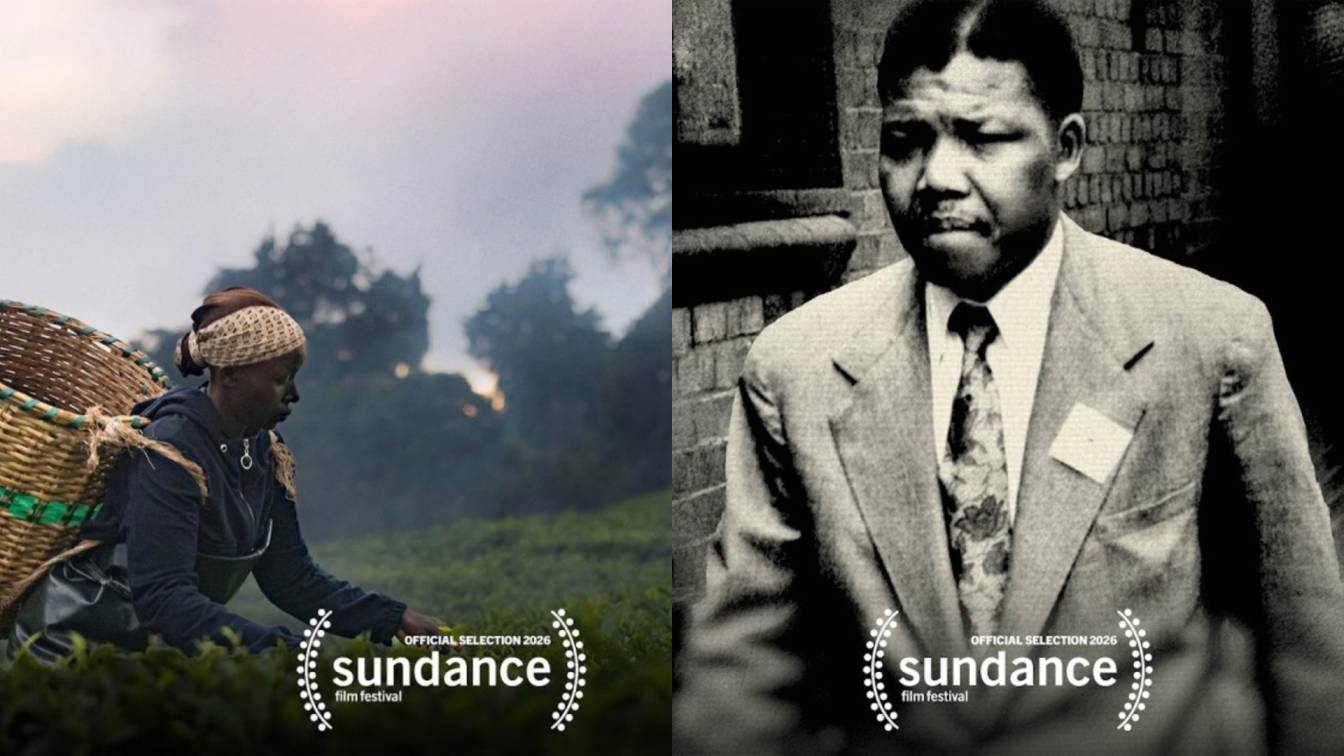

If Troublemaker recalls the horrors of colonialism and apartheid, and the hard-fought battle to win freedom in Africa, Kikuyu Land exposes the infuriating ways the colonial legacy continues to devastate African lives in the present.
By Vivian Nneka Nwajiaku
Africa’s colonial history and its enduring impact on the continent’s political and socioeconomic conditions emerged as a predominant discourse, directly and indirectly, in Africa’s representation at the recently concluded 2026 Sundance Film Festival. Unsurprisingly, this theme was most overtly explored in the two African documentaries that premiered at the festival: Kenya’s Kikuyu Land and South Africa’s Troublemaker: The Mandela Tapes.
The directorial debut of Kenyan producer Bea Wangondu, co-directed with Emmy Award-winning American filmmaker Andrew H. Brown, Kikuyu Land uncovers the harrowing realities of the global agrobusiness industry, focusing on the inhumane and violent conditions suffered by workers on Kenyan tea farms—farms upon which some of the world’s largest multinational corporations are built.
The investigative documentary traces the ownership of these farms from the colonial era, when natives were forcibly displaced by colonial authorities, to present-day Kenya, where the lands have now been inherited by some of the Western world’s biggest producers of consumer goods. These multinationals, the film reveals, employ, exploit and oppress impoverished Kenyans who remain spiritually tied to the lands across generations.
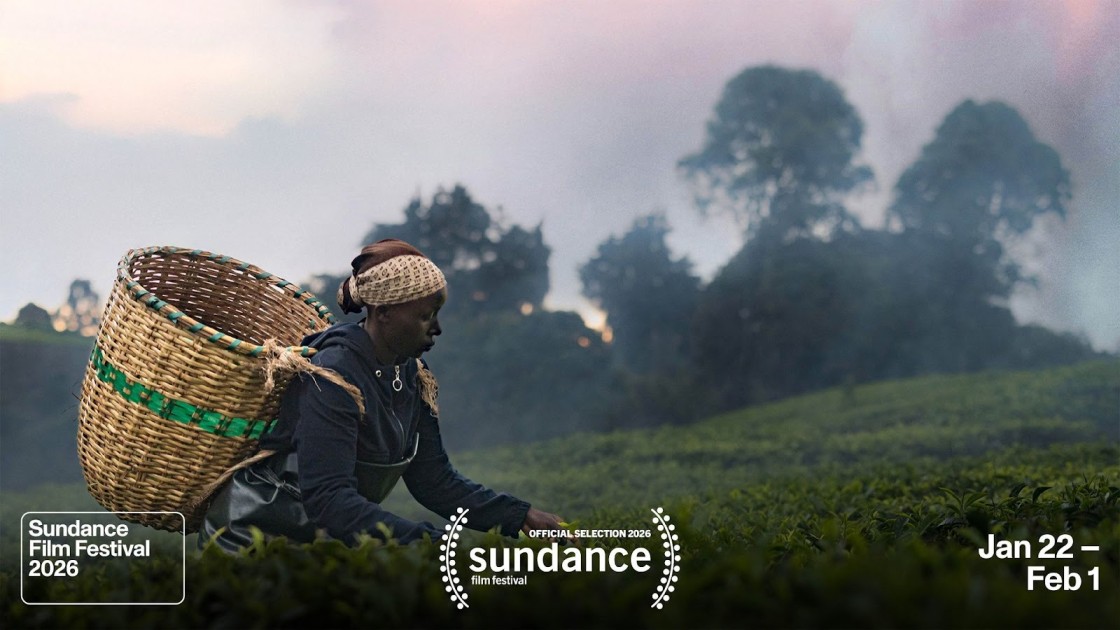
Wangondu anchors Kikuyu Land as a journalist excavating the truth, an investigation that leads to the stunning discovery of her own family’s participation in Kenya’s sordid land history. Supporting Wangondu’s inquiry is Mungai, an engineer on a crusade to reclaim his family’s ancestral lands through a historical land injustice claim filed with Kenya’s National Land Commission.
The contrast between their positions is quite striking. In one scene in the final act, Mungai visits his contested ancestral homestead where his grandfather was buried. “I want to write, “Here lies N’gotho Gotho,” he says, wishing he could mark his grandfather’s final resting place. A few scenes later, Wangondu visits her own grandfather’s grave, clearly identifiable by a marked headstone.
Kikuyu Land unfolds amid a regime change, with the swearing-in of President William Ruto, whose administration is framed by the documentary as hostile to criticism and averse to land reparations. The documentary fearlessly confronts the risks of its own existence, making several references to critics, journalists and filmmakers who have allegedly been arrested, abducted or killed for criticisms levelled against Ruto’s government.
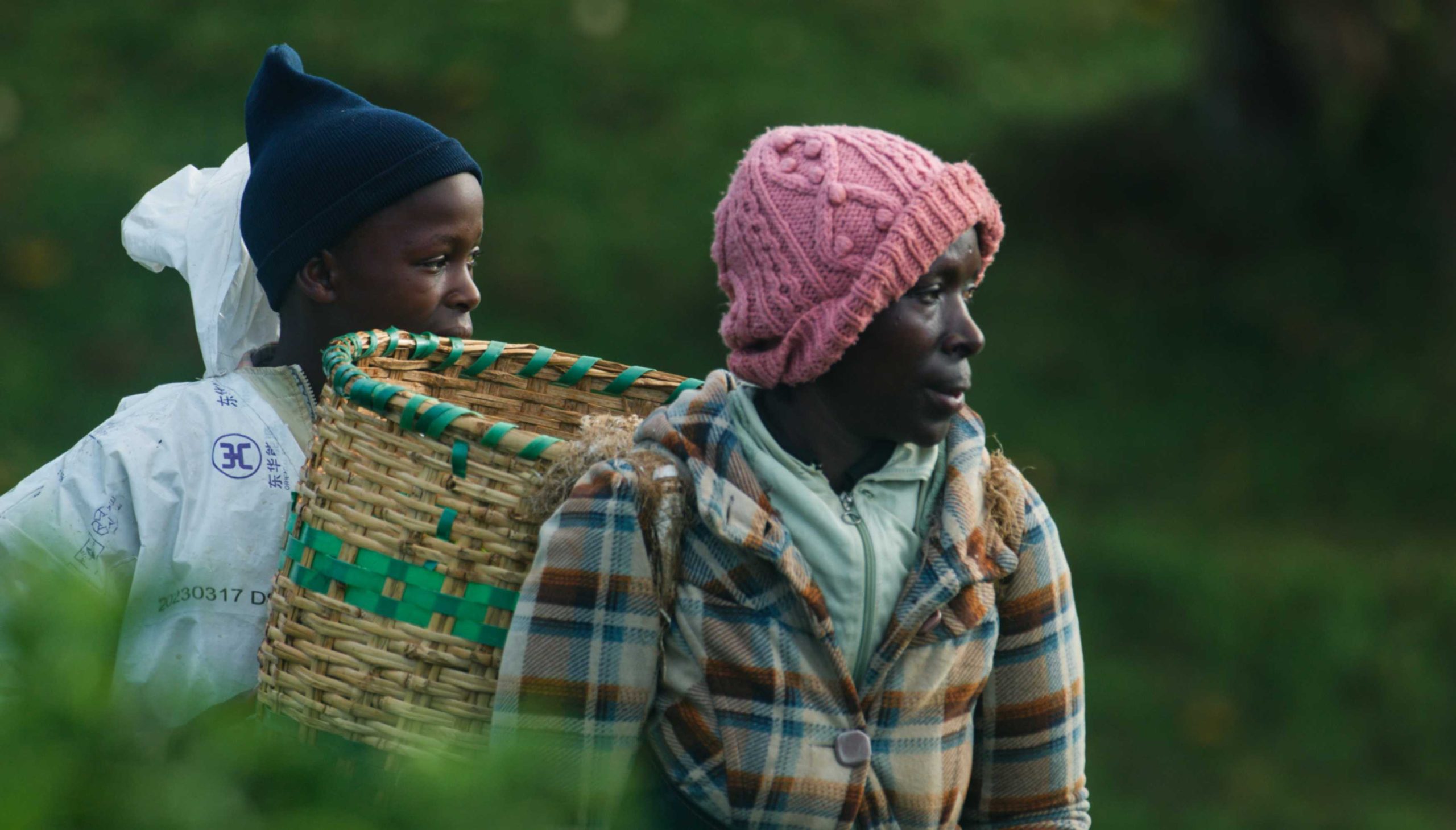
In one chilling interview, Wangondu sits with an officer of the National Intelligence Service (identity concealed) as he describes the use of criminal activities, including assassinations, by political and corporate interests to maintain poverty and fear while protecting personal and Western interests.
“When the colonisers left, the African middlemen stepped in,” the officer says. “Any African leader that refuses to be a middleman for the West is eliminated.” The documentary bridges this assertion with recorded instances from history, including the involvement of the United States’ CIA in the arrest of Nelson Mandela, South Africa’s anti-apartheid activist and first Black President.
It is through Mandela that Troublemaker confronts similar themes of land, colonialism and oppression, this time within the South African context. A co-production between South Africa, the United States, and the United Kingdom, directed by renowned American director Antoine Fuqua, Troublemaker is a straightforward documentary. While it may not be as expansive as one might hope for, considering the magnitude of Madiba’s life, it holds its own as a Mandela biography that doubles as a crash course in South African history.
Troublemaker recounts the struggle against apartheid through audio recordings that were made in the course of an interview with American journalist (and the ghost writer of Mandela’s 1994 autobiography, Long Walk to Freedom) Richard Stengel, supported by evocative animations, oil paintings, video footage, photographs, newspaper and letter clippings, and a sole live interview.


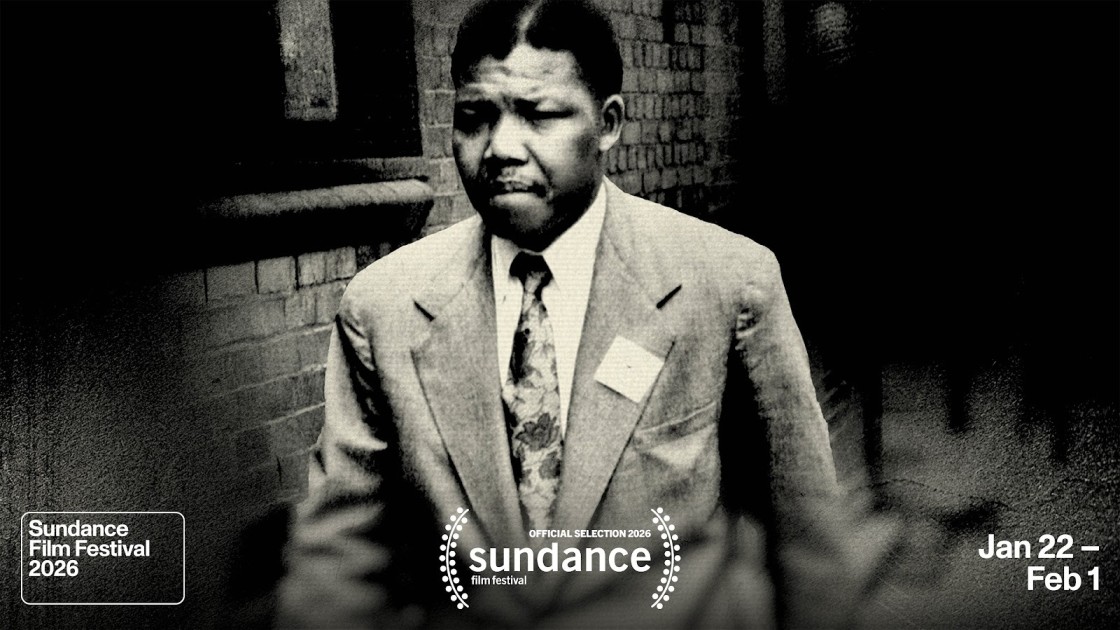
The documentary traces South African history from the precolonial era through apartheid, interwoven with Mandela’s story—from childhood to his entry into politics, activism, 27 years in prison, and eventual election as South Africa’s president—as narrated by the late Mandela himself as well as the retired South African-Indian statesman and anti-apartheid activist, Mac Maharaj.
Inevitably, there is too much that Faqua’s documentary cannot capture, owing to both time constraints and the directorial choice to rely almost entirely on Mandela’s own voice. But this choice introduces sentimental value, allowing the documentary to move beyond fact into Mandela’s feelings. At the very least, several key figures are named and pivotal events highlighted—enough to provoke curiosity and motivate further study. And fortunately or unfortunately, Mandela’s activism remains profoundly relevant today.
As the world stands, acknowledgements of historical injustices are rare, and reparations are scarcely considered. Instead, neocolonialism reigns supreme. If Troublemaker recalls the horrors of colonialism and apartheid, and the hard-fought battle to win freedom in Africa, Kikuyu Land exposes the infuriating ways the colonial legacy continues to devastate African lives in the present.
Runtime:
- Kikuyu Land: 96 minutes
- Troublemaker: The Mandela Tapes: 94 minutes
*Kikuyu Land premiered in the World Cinema Documentary Competition of the 2026 Sundance Film Festival, while Troublemaker: The Mandela Tapes screened in the Premieres section.
Vivian Nneka Nwajiaku is a writer, film critic, TV lover, and occasional storyteller writing from Lagos. She has a master’s degree in law but spends most of her time watching, reading about and discussing films and TV shows. She’s particularly concerned about what art has to say about society’s relationship with women. Connect with her on X @Nneka_Viv