


Michael reveals nothing that is not already well-established about the pop star, nor does it complicate our understanding of him.
By Michael Aromolaran
A biopic about an outsized figure like Michael Jackson is unlikely to reveal anything new. The late pop star, who began performing at five, spent nearly five decades in the public eye until his death in 2009, his life extensively documented and dissected. It has long been understood, for example, that he was an ardent student of Hollywood and a magpie in his borrowings. Take “Smooth Criminal” (1988), which incorporates CPR training jargon and winks at Fred Astaire and neo-noir. Jackson’s infantilism and serial cosmetic surgeries are just as familiar, as are the attendant theories that point back to his childhood.
The challenge for a biopic on such a storied figure is to tease emotional truths from well-known facts. Michael—directed by Antoine Fuqua, of Training Day (2001) and Equalizer (2014) fame—falls short in this regard. It reveals nothing that is not already well established about the pop star, nor does it complicate our understanding of him.
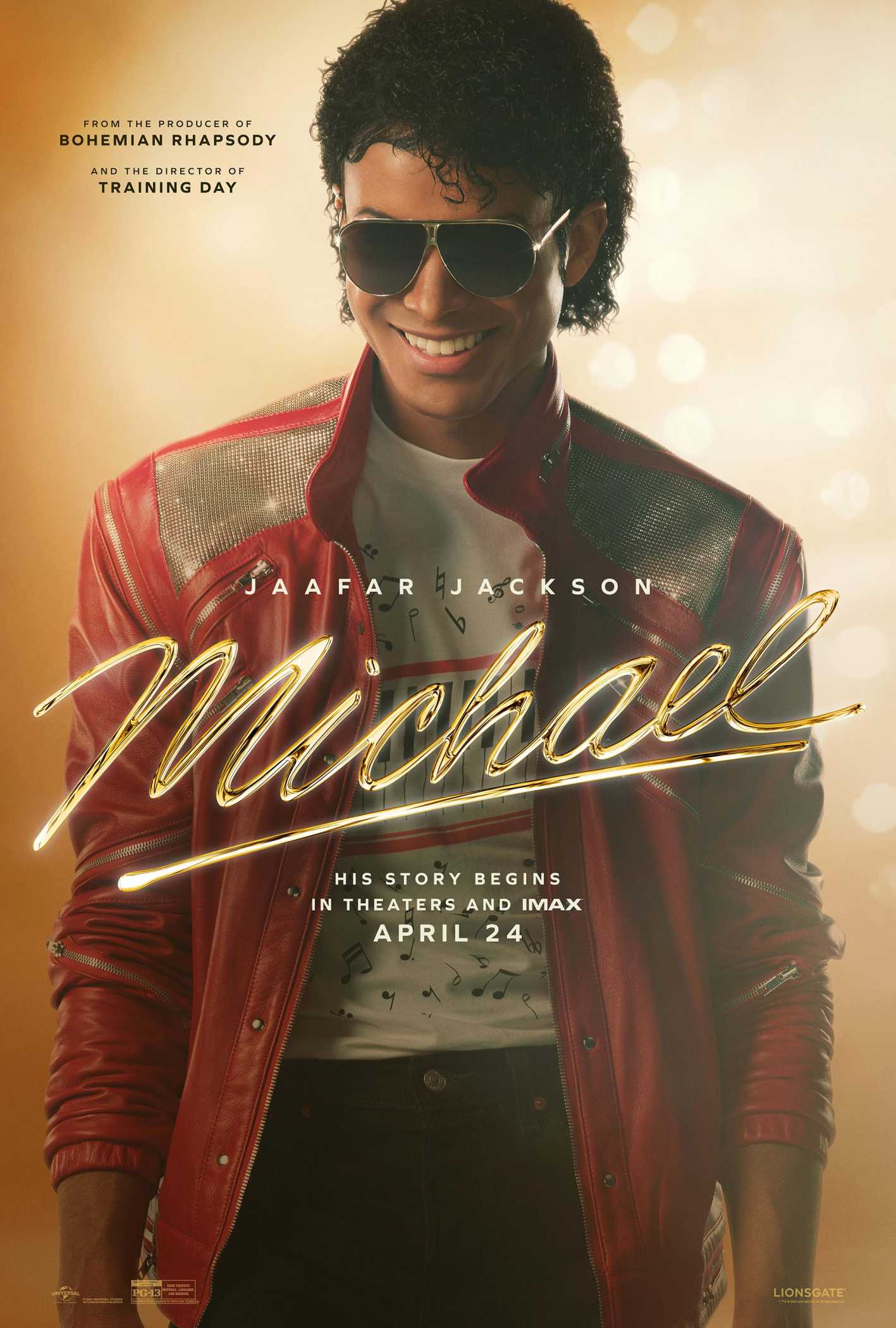
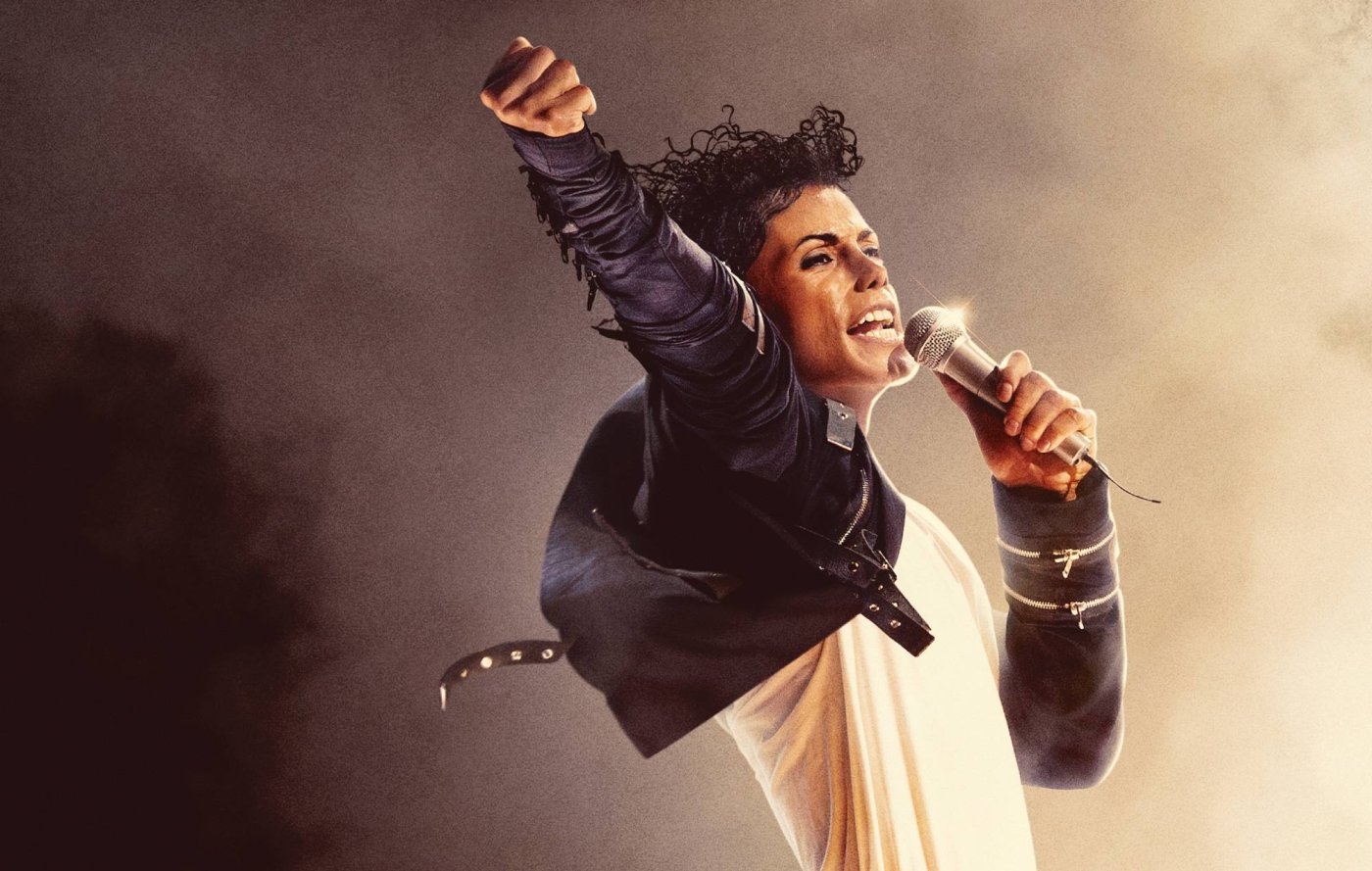
Where it succeeds is in showing why Michael Jackson burns so incandescently in the global imagination. The finest moments are when Michael, played by the pop star’s real-life nephew Jaafar Jackson, is on stage or in a music video, showcasing the otherworldly qualities that would arguably make Jackson the most famous person after Jesus—the liquid swag, the whimsy, the moonwalk, the crotch grabs and cool-as-ice shuffle taps.
The biopic opens in 1966, in the living room of the Jackson family home in Gary, Indiana. Ten-year-old Michael (Juliano Valdi) rehearses with his four brothers under the hawkish gaze of their father, Joe Jackson (Colman Domingo). This is before their signing with Motown, which would introduce them to the world as the Jackson 5. Dread settles quickly: Joe orders Michael to look him in the eye as he sings. Fearful, the boy averts his gaze. His brothers watch with bated breath, while their mother, Katherine (Nia Long), hovers uneasily in the shadows.
The threat soon takes shape. After a successful performance that leaves the boys exhausted, Joe demands more rehearsal and beats Michael with a belt when he protests—a pattern of abuse that is implied in later scenes. Joe remains a domineering presence even as his son becomes more successful, at one point forcing Michael to tour with his brothers despite his desire to go solo. The central conflict derives from Michael’s struggle to break free of Joe’s vice-like grip—and since Joe’s control also infantilises the pop star, what he is truly desperate to escape is his own boyhood. “I’m not a child anymore,” he insists, again and again.
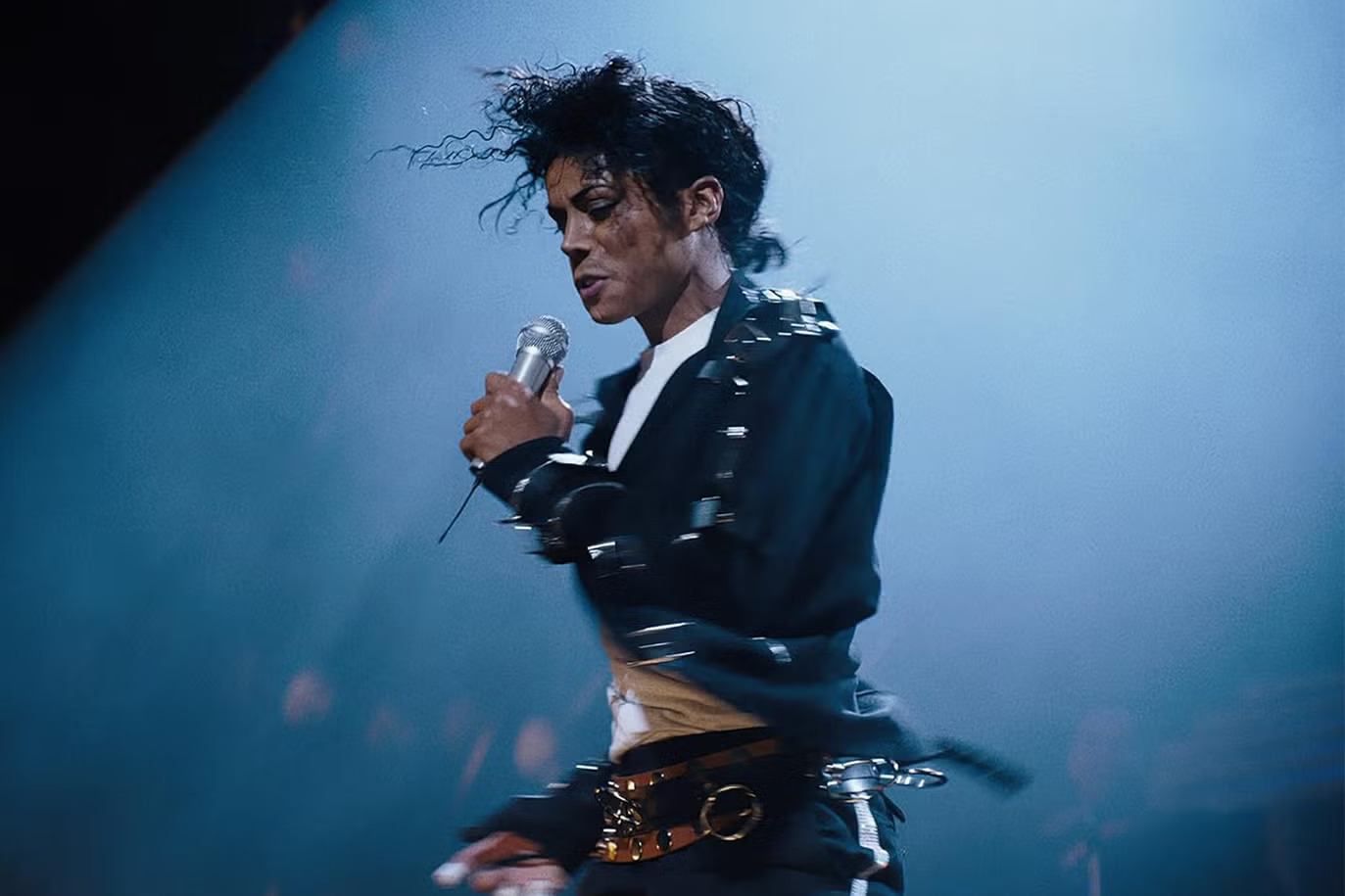
The scenes pulse with energy, growing more visually expansive as Michael’s celebrity burgeons. With little in the way of dialogue and story, the film leans on performance, and Dion Beebe’s dynamic camerawork turns Michael into an action figure. Factor in the crowd noise and fainting groupies in the performance scenes, and it feels as though you are at an actual Michael Jackson concert.
What truly sells the illusion is Jaafar Jackson’s uncanny embodiment of his uncle. He nails it to a T, the flair and drama of Jackson’s dancing, his mannerisms, his childlike voice. The illusion is also sustained by meticulously constructed sets that are dead ringers for the real-life equivalents: the scene with Jackson’s iconic Motown 25 performance recreates the look and feel of the real-life version. But the biopic resists a stenographic depiction by adding flourishes to its source material: the Motown performance introduces new camera angles, and the Wembley Stadium concert in the final scene blends multiple performances of Bad. And it’s bad (in a good way), really, really bad.
Off-stage, Jackson is portrayed as a kind of tortured Gandhi. Michael has no human friends and confides instead in a llama, a python and a chimpanzee. When he is not comforting Make-A-Wish kids, he is donating to charity, all while managing vitiligo, body insecurity, second and third-degree scalp burns, and a Captain Hook-type villainous father. The way he gives himself to the world, even as his own world crumbles, puts him in the company of the most stoic martyrs.
Though this may be a true account of the real-life Jackson (his public persona and many independent accounts tell of genuine kindness), it does make for uninteresting drama. It’s also hard to reconcile this near-flawless figure with the Michael Jackson who admits his own imperfections in songs like “Man in the Mirror” (1988). Nor does he resemble the young Jackson described by his sister Janet Jackson, who claimed that the young Michael’s teasing about her weight—he supposedly called her names like “pig” and “slaughter hog”, although both siblings understood it as a well-intentioned joke—contributed to her body image issues. Considering Joe mocks Michael as “Big Nose” in one scene, the biopic misses an opportunity to interrogate the ways that Michael’s abusive childhood may have informed his own behaviour.
His relationships are not handled any better. He barely interacts with his brothers, leaving us guessing how they feel about his success and eccentricities. Though it’s clear that the young Michael’s career foreclosed any possibility of friendship, we don’t see how the grown-up Michael relates to the adults in his life. The film is generally silent on his relationship to money, sex, politics and religion, although we do get the sense, in one scene where he admits his rivalry with the singer Prince, that he thinks of his gifts as divinely inspired.
The fault lies with the screenplay and Fuqua’s predilection for incident over psychological insight, a throughline in his action-heavy filmography. These shortcomings are also possible because the biopic was produced in collaboration with the Jackson family and estate (two of the three producers, John Branca and John McClain, are co-executors of the Jackson estate). The film thus had to work within similar legal and reputational constraints that hobbled music biopics like Straight Outta Compton (2015), Bohemian Rhapsody (2018), and I Wanna Dance with Somebody (2022).


This would explain its silences: Janet Jackson is notably absent, and Kat Graham has said her scenes as the singer Diana Ross—who was named in Jackson’s will and was central to his personal life—were cut over “legal considerations”. Most significantly, the film originally portrayed the 1993 child sexual abuse allegations against Jackson, but removed them due to a legal clause.
The absence of these allegations will inspire claims that the biopic sanitises the pop star’s image—especially as it arrives on the heels of Leaving Neverland, a 2019 documentary that aired new allegations and caused the public, which was still reeling from the Me Too movement, to reconsider Jackson’s legacy.
But criticisms based on this omission would be a category error: a biopic’s authenticity does not depend on whether or not it covers the darkest or most interesting episode of its subject’s life. This is especially true when there are temporal boundaries: Michael covers Jackson’s life from the mid-1960s to the late 1980s, years before the first allegations. A biopic on Chairman Mao would not be inauthentic just because it ends before 1949.
Whether we like it or not, Michael Jackson was more than just an alleged abuser. He remains the greatest entertainer in modern history, and revolutionised music, dance, stage performance, music videos and fashion. So expansive was his life and career that the Thriller video could by itself be the subject of a biopic. If Michael fails, it’s not because it elides the most contentious period of Jackson’s life, but rather because it does not sufficiently complicate the material it works with.
None of this will stop it from becoming a global hit: it earned $217 million in its opening weekend, a record for a music biopic. Its appeal lies in how palpably it incarnates the Michael Jackson that the public both fell in love with and misses dearly—not the flawed Man in the Mirror, but the surreal, hee-hee-ing presence outfitted in a fedora and a dazzling rhinestone glove.
Rating: 3/5
Michael Aromolaran is a writer and journalist writing about religion and pop culture. A former sub-editor at The Culture Custodian, his works are in the National Catholic Reporter, Open Country Mag, and OkayAfrica.