


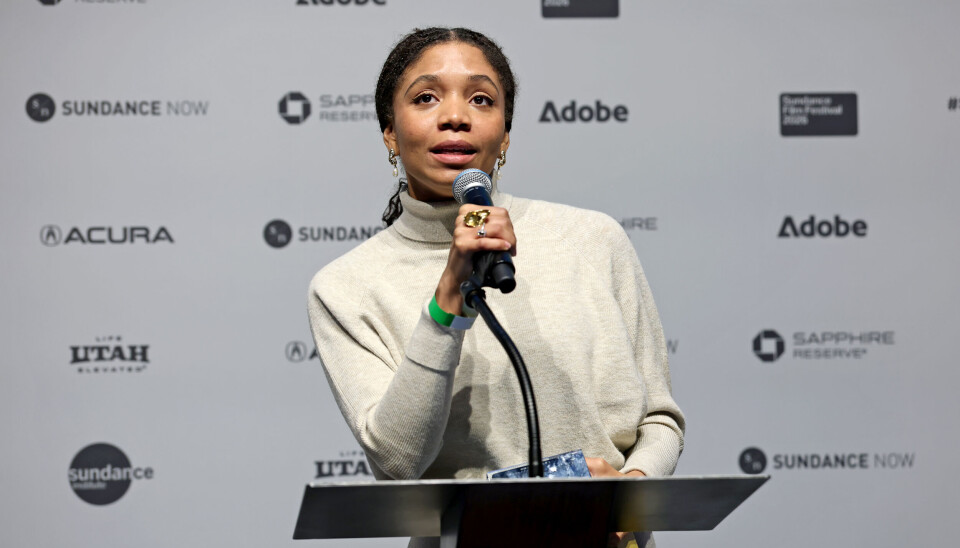
“For me, it’s about making a body of work that is emotionally resonant and speaking to urgent questions that we are facing today, especially communities on the margin. Making visible people who have not been visible for a long time.” – Olive Nwosu
By Vivian Nneka Nwajiaku
Trauma and survival converge in Lady (2026), the debut feature of Lagos-born, London-based Nigerian filmmaker Olive Nwosu, a master’s degree holder in both filmmaking and psychology. As an Afrocritik review observes, Nwosu weaves dreams, trauma and chaos into a political, gender-aware debut that grapples with governmental failure, colonial legacy, and the idea of revolution.
A United Kingdom/Nigerian co-production, Lady follows the eponymous Lady (played by Jessica Gabriel’s Ujah), a fiercely independent young woman navigating both the chaos and calm of the Lagos metropolis as a rare female taxi driver. As revolution springs up across the city in response to fuel scarcity and the removal of fuel subsidies across oil-rich Nigeria, Lady’s employment as a driver for a band of sex workers clashes with a childhood trauma and pushes her towards danger and transformation.
Lady had its world premiere at the Sundance Film Festival in January 2026, where its predominantly female cast—featuring Jessica Gabriel’s Ujah alongside Amanda Oruh, Tinuade Jemiseye, Eva Ibiam, Precious Agu Eke, Fadesaye Olateru-Olagbegi, and Agu Chinenye Esthyraph—won the World Cinema Dramatic Special Jury Award for Acting Ensemble, followed by a Berlin International Film Festival screening in February.
Olive Nwosu is not a newcomer on the international festival circuit. Troublemaker, her 2019 Eastern Nigeria-set student film, featuring entirely non-actors and noted as the first Igbo-language film on the Criterion Channel, screened at multiple reputable international film festivals, from the Clermont-Ferrand International Short Film Festival in France to the Raindance Film Festival in London. In 2021, her second short, Egúngún (Masquerade), premiered at the Toronto International Film Festival (TIFF) before making a stop at Sundance in 2022. Yet, official selections at both Sundance and the Berlinale for her debut feature remain a remarkable feat.
In this exclusive interview with Afrocritik after Lady’s Berlinale screening, Olive Nwosu discusses naming her female lead after a Fela Kuti song, casting the award-winning ensemble, the psychology of shooting safe intimate scenes, Nollywood references, and the underbelly of post-colonial Lagos.
*This interview has been edited for clarity.
Lady is such an interesting name for a female lead in a gender aware film, and it calls to mind Fela Kuti’s song, “Lady”. Your character feels very much like the “Lady” Fela was criticising. Was that a connection you intentionally made?
Yeah, thanks for picking that up. It’s a great question. And it was very much. I wanted to name Lady after Fela’s “Lady”, but to celebrate her, you know, for all her complexity and her agency and her strength and her power. And also because the film is about one lady, but it’s about women in Lagos. And so, to have an all-encompassing archetype of Lady felt right.
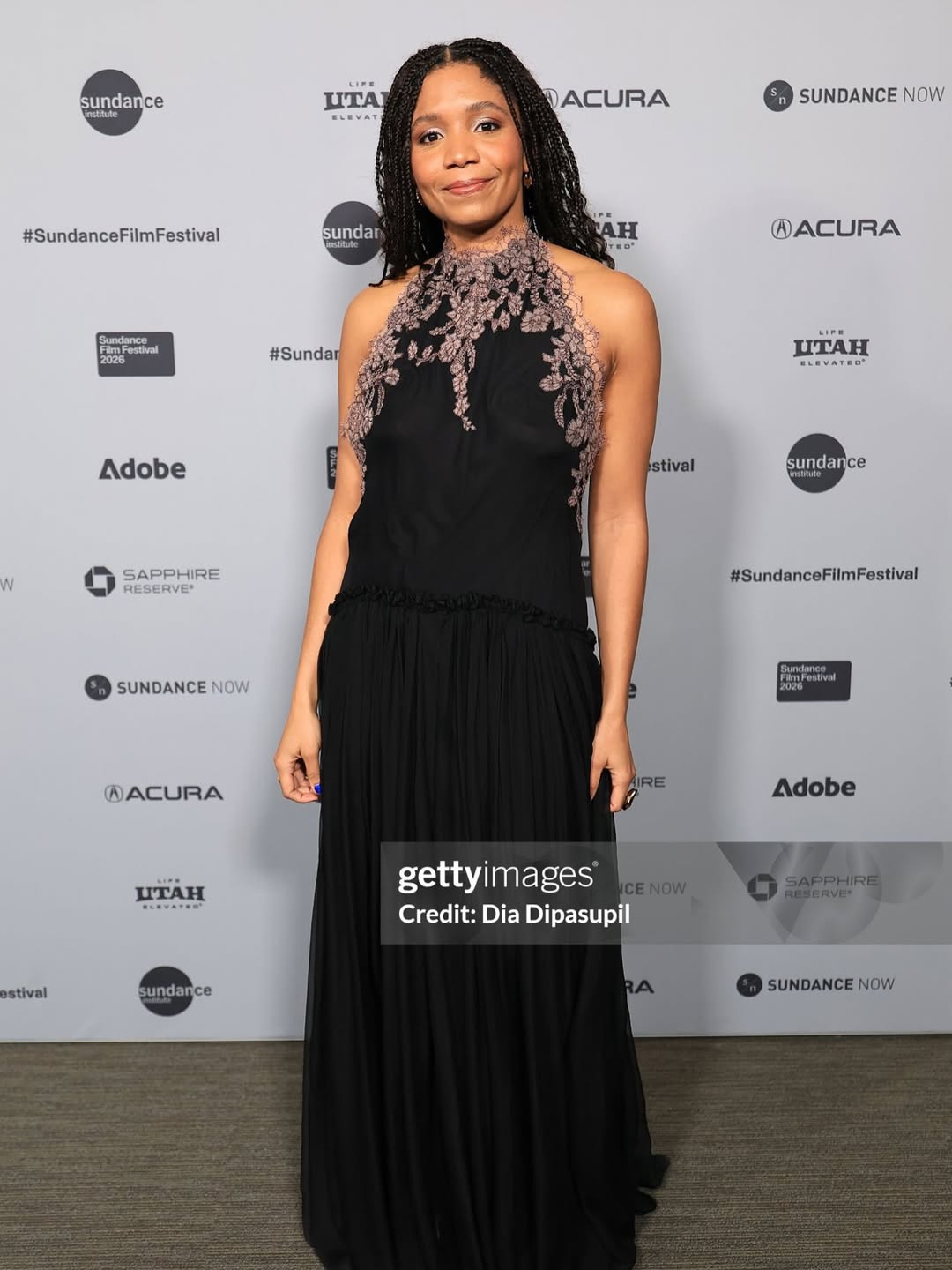
You approach Lady from a very psychological perspective—how the lead character’s trauma affects her sexuality, the power dynamics that bear on sex. You have a master’s degree in psychology in addition to your master’s degree in film. How did those two educational backgrounds come together in writing and filming Lady?
They definitely played a massive part. When I was doing my master’s in psychology, a lot of the work I did was in trauma, and how a person can be resilient to trauma. We all go through difficult circumstances in our lives, and some of us build resilience, and we shake it off, and we move on. And some of us get stuck in the power that that event can have on our lives.
And so, I wanted to tell a story about a young woman who was shaped by this traumatic past, by her relationship with her mother, her mother’s work and her abandonment, and to do it with care and with real ethical intention. So, not just in the themes of the film, but how the film was made, right? How do we create a space that feels emotionally safe for our actors? How do we tell a story about trauma in a trauma-informed way?
In Nigerian cinema, we don’t have many conversations about shooting intimate scenes and how women’s bodies are photographed, especially in films that contain sexual content. What safeguards did you put in place to ensure fidelity to the subject, but also the safety and protection of your cast?
From the beginning, we were thinking about this. I was thinking about this in a few ways. The first was, because the themes of the film are so delicate and because we’re inviting young women into a story that takes real vulnerability from them, how do we create a protective environment for that to happen?
So, we worked with a psychologist from the beginning who did psychological profiles on the cast to make sure they were robust enough for the process. From the beginning, really, I invited the cast to be a part of the process, right? So a lot of improvisation, a lot of creating trust between the group of women, so that that also formed a protective bond between them.
We worked with an intimacy coordinator, two intimacy coordinators. One, Sara Blecher, who is from South Africa, who flew in and she worked with a local woman (Yeside Olayinka-Agbola) who runs a sexual empowerment program in Lagos, to design a process of shooting the intimate scenes where the women felt that they weren’t being taken advantage of.
We were really choreographing the exact actions of what was going on, making sure everyone was asking for consent before it happened, educating the crew around, and respecting boundaries on set. We shot on closed sets, so only the necessary parties were present when we were shooting those scenes.
And always checking in with the women, like, how do you feel about this, right? And really, I think, documenting what they were comfortable with and what they weren’t comfortable with. So, it was quite a detailed process. Hopefully, it becomes a precedent for how you make a film like this, because, again, if you’re making themes about women and care, then the way you’re making that film has to reflect those themes as well.
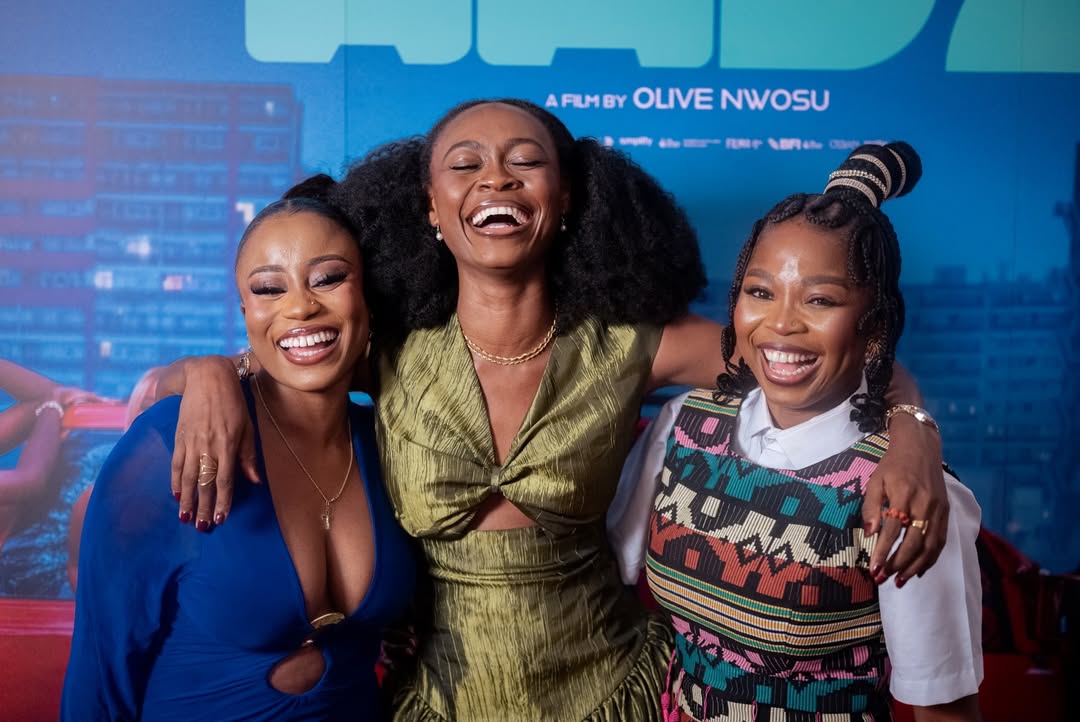
As you mentioned, you worked with several young, newish home-based actors. How did you discover your actors and then create that chemistry that would eventually win the film a Special Jury Award for Ensemble at Sundance?
Yeah, the Ensemble Award. Oh, I’m so proud of that award, honestly, because the women are just fantastic. From the beginning, I was working with an amazing casting director, Sukanmi Adebayo, who is mostly based in Lagos, and I said to him, it’s about finding young women who, in some way, embody the truth of these themes already.
Because in my short films, I worked a lot with non-actors and first-time actors, so for me, it’s less about the persona of the big actor and more about whether this person is really connecting with the material, and whether there is an openness to the process.
So, Sukanmi went everywhere in Lagos, meeting young women everywhere, like malls, beaches, churches, theatre groups, and also actors he knows, and asked young women if they were interested in the film. He told them a little bit about it, asked them to send in little self-tapes.
We got about 300 of those, watched them all, narrowed it down to 100, and then invited about 100 women into auditions—and that was all kinds of women, actors, non-actors, new and old—and off that, then selected 20 women, and invited them into this four-day workshop that was a lot around improvisation, creating trust, but also just seeing who was connecting with each other. There’s a natural connection that happens between people or not. And again, who, in some way, had the core of the character I’d written already in them.
But I would say a lot of those trust exercises, we went out to brothels to see what women were up to, we went out on the streets, so that you’re building experience that becomes very real.
How much engagement did you have with sex workers while working on the film? How did you navigate establishing that access in a place as conservative as Lagos, where sex work is practically illegal, and how did that shape the work?
I think finding ways into the community, people who already have trust in those communities. We were lucky we had a fixer who was already trusted in Makoko, where I did a lot of my research, but also in Surulere, and in Allen, someone who already knew some people who worked in those parts of town, and that, they can make that introduction for you.
You also kind of have to want to do it, to be honest. Like, you have to want to meet people, and meet them openly and honestly, without judgment, with real curiosity, with care. I found that the women really just responded to that. It’s very human. You meet someone, you ask them their story, you don’t judge them, and they tell you, and you do right by them, really. I feel like it’s very simple.
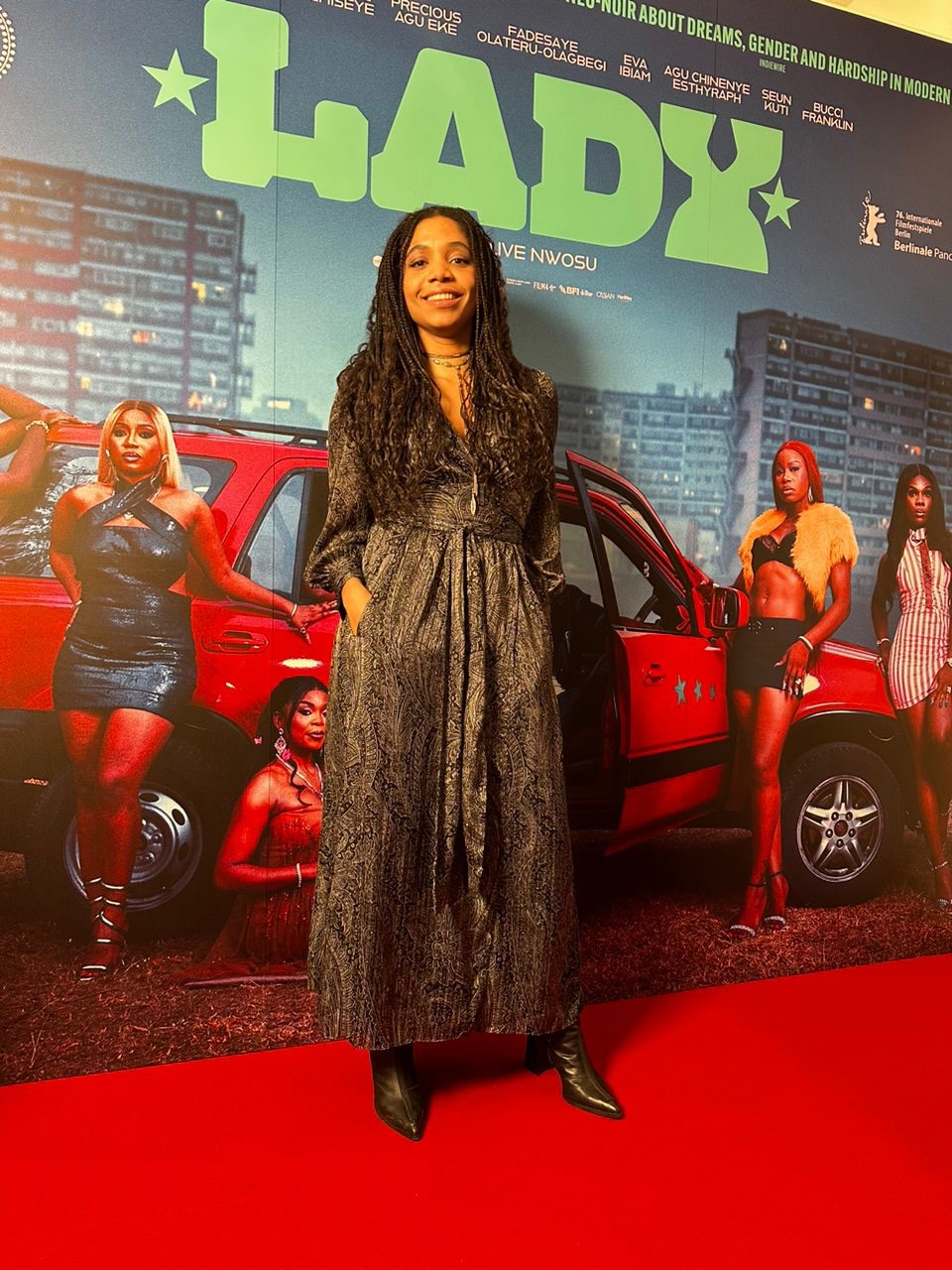
The world of Lady is one that’s very familiar to Nollywood. At the same time, it’s also an independent, festival-friendly film, which you must have had in mind, considering your production backing and your history on the international film festival circuit. Were you looking to balance those two different filmmaking sensibilities? And did you have Nollywood and Nigerian cinema references in addition to your international references?
I was, yeah, I was. Because of that, I really wanted to make a film that could speak across languages, like across film language. That could speak to the Nollywood genre and moods and audiences, and also speak to global audiences. It’s possible, like, it has to be possible. And that was the challenge.
Yes, it’s about making choices that are legible or familiar to all audiences. So, I watch Glamour Girls a lot, you know, and there’s that world. And also a lot of Nigerian music videos, actually, for a big reference. As well as the Taxi Drivers, the Do the Right Things, and the Beanpoles of the world.
Yeah, because again, at the end of the day, I feel that if a film is emotionally authentic and done with care, then anyone should be able to find a way in to access it.

Speaking of international cinema and festival filmmaking, I’ve noticed a common theme around a number of African films on the international festival circuit this year. There are conversations on colonial legacy, and that’s of interest to Lady as well. Why was it important for you to bring that in as one of the driving forces of the film?
Yeah, it’s a great question. Because with Lady, really, I’m trying to create something that really can be post-colonial. And by that, I mean, not catering entirely to the Western gaze. To this point of the conversation we’re having about Nollywood films, which are made by Nigerians for Nigerians, right? And which are really told from the inside of the country. And so, to celebrate a film that comes from that tradition as well, that is speaking from those modes, and to be bold in doing that, for me, that is working against the colonial gaze.
And there’s a reference in the film as well to trying to satisfy Western ideals, but they weren’t made for us. And why is that our meter, you know?
Shooting Lady in Lagos, capturing daytime Lagos with the energy, the protests, the fuel scarcity, the traffic, and then leaning into the calmer nighttime, and doing all that with your lead character as a driver, how was the experience?
Shooting in Lagos is a beautiful challenge. You kinda have to embrace the chaos and make order out of chaos somehow. It was a challenge, I won’t lie. But I really love it.
I love that it makes you think outside the box. I love that you’re problem-solving constantly. I love the passion of the crew, honestly. People are so passionate and will go the extra mile. And I love the authenticity. It’s very special. It feels like home, so it’s great to do it.
But I’m also hopeful that the more we do it, the more we can create systems that are more precise. And I think we’ve started to do that. More people are doing that. So that it’s not always improvising; you can actually have a blueprint and then execute your blueprint. So, that is kind of the challenge, but that’s the drive as well, you know, to create something. It’s exciting to be part of the building of something.
On the subject of building systems, it’s so important to turn the entire system inside out. And Lady really speaks to that in the sense that Lady is a person just looking to adapt and save herself personally. And we see her go through that whole process of transformation. But that’s also different from the conversation on sex work. Was that always the idea, to move into the Nigerian political system and have her confront it?
Yes, it was. From the beginning. Because we’re all confronting it, whether we want to, whether we see it or not, whether we want to admit it or not. It’s inescapable, I think, if you’re Nigerian, because the system is so broken. And Lady is experiencing that. She has so much drive and yet, drive can only take you so far when your environment is not working alongside you.
To bring it back to the sex work, how it’s connected is that I felt that the women I met who were choosing sex work were often also choosing that work because of the few economic choices they had, right? Like it’s their own version of the system failing us. So really, in that underbelly of Lagos, everyone is just hustling and doing the best that they can.
What’s next for you and film? What can we look forward to?
More films, more films, more films. Honestly, for me, it’s about making a body of work that is emotionally resonant and speaking to urgent questions that we are facing today, especially communities on the margin. Making visible people who have not been visible for a long time. And those are the stories I’m drawn to. Creating beautiful cinema and moving people, and making them face urgent questions.
*Lady premiered in the World Cinema Dramatic Competition at the Sundance Film Festival in January 2026 and screened in the Panorama section at the Berlin International Film Festival in February 2026. HanWay Films handles worldwide sales and distribution.
Vivian Nneka Nwajiaku is a writer, film critic, TV lover, and occasional storyteller writing from Lagos. She has a master’s degree in law but spends most of her time watching, reading about and discussing films and TV shows. She’s particularly concerned about what art has to say about society’s relationship with women. Connect with her on X @Nneka_V
Cover photo credit: Arturo Holmes/Getty Images