

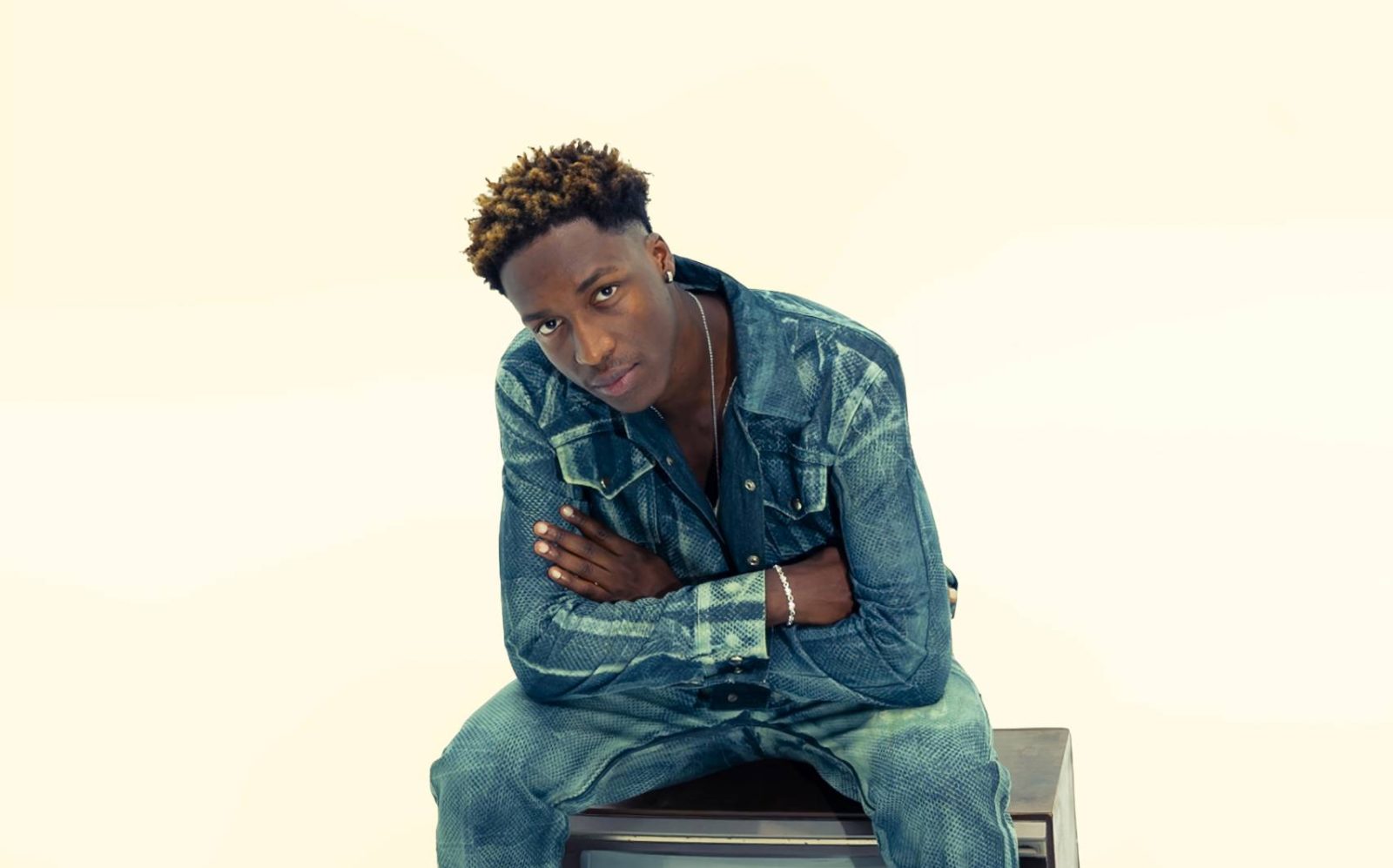

“My job now is to put my culture on the map, and that is exactly where I have been ever since”. – oSHAMO
By Emmanuel “Waziri” Okoro
There is a peculiar kind of courage in arriving somewhere new and refusing to shrink. Idris Lawal Oluwadamilare, who the world is beginning to know as oSHAMO, moved from the organised chaos of Lagos to the grey sprawl of London, not as someone running towards a sound, but as someone carrying one.
Earlier this year, Shazam named oSHAMO among its Fast Forward 2026 class, a global shortlist of artistes whose trajectories the platform’s data suggests are pointed firmly upward. Coincidentally, oSHAMO is on Afrocritik’s Emerging Artistes to Watch Out For in 2026 list. It is the kind of validation that confirms the momentum and vision that was already there.
Born in 2003, his steady rise has been anything but conventional. His debut EP, First of My Kind (2024), and its follow-up, IDRIS (2025), announced an artiste uninterested in fitting a mould, blending Afrobeats, Fuji, Amapiano, and Hip-Hop in a seamless fusion. His notable singles include “Why You Lying?”, “SuperFuji (Gobe)”, “Life of the Party”, helping to crystallise his artistry. His latest single, “Shina Rampe”, suggests the story is far from over.
What makes oSHAMO particularly compelling, though, is not just the music but the thinking behind it. Whether it is his multilingual songwriting across Yoruba and English, his deliberate effort to reintroduce Fuji to a generation that is only now making sense of it, or his awareness of what it means to be a cultural bridge between Nigeria and a broader global audience, there is an intentionality to everything he does that belies his age.
In this exclusive interview with Afrocritik, oSHAMO talks about all of it: where he came from, what he has built, and where exactly he intends to go next.
For some of our readers who may be meeting you for the first time, who is oSHAMO?
oSHAMO is a boy from Agege. My name is Lawal Idris Oluwadamilare, and I was born in Agege in 2003. Growing up, I listened to the likes of King Wasiu Ayinde, Baba Ara, and Yinka Ayefele — all of those OGs. So I had that musical upbringing from a very early age, but I did not fully realise I wanted to make music until I moved to the UK in 2019. That was when everything started happening.
How does it feel to be spotlighted by Shazam Fast Forward 2026, amongst other global artistes?
To be honest, it gave me a lot of reassurance. When this year started, there was one thing I said to my manager and the whole team: that this year was going to set me apart, because I was planning to fully lean into the cultural side of my sound. I was planning to go deep into Fuji, and I knew that doing that in a space where the mainstream conversation is largely dominated by Afrobeats was going to be a statement. So I knew I needed support, not cosigns exactly, but visibility. I needed the DSPs and the right platforms to actively put my music in front of the audiences I was making it for.
So when I saw the Shazam recognition, I was like, this is crazy. They actually see what I am trying to do. They looked at everything seen the vision, and confirmed that this is an artiste people should be paying attention to this year. That meant a lot. I remember when I was posting about it, I was literally shaking. It was that deep for me.

Growing up in Agege means you were quite exposed to several musical influences. You’ve already mentioned some of them, but which other names come to mind?
There’s Prince Debo, and honestly, a lot of names that are not necessarily mainstream — but their music made a real impact on my sound in ways I still feel today. Then, on the Gen Z side of things, when I started getting serious about music around 2019, I was heavily into the Street Pop wave: Zinoleesky, Hotkid, all of those guys who were doing freestyle stuff on the streets at the time. That energy genuinely inspired me.
And then there is Olamide, of course. I think any Yoruba artiste you meet today, about 90% of us got inspired by Olamide at some point. He is just one of those figures you cannot ignore.
You studied Metallurgical & Material Engineering at the University of Lagos before fully committing to music. Was that a personal choice for you?
To be honest, when I started university, music was not even on my radar. I actually wanted to be a pilot at some point. Music did not truly come to me until around 2019. I knew I had a musical upbringing and that it was a part of me, but I had not fully reckoned with it yet. So when I was at Unilag, I was studying engineering and completely locked in. I was focused on my grades, trying to excel in the course and set myself up for a solid career with my degree.
It was in my 200 level that everything changed. I had an issue with the university, and my admission was withdrawn. That was what prompted the move to the UK with my family. And it was there, in that new environment, that I discovered what I was really supposed to be doing: music.
As a UK-based Afro-Pop artiste, you are somewhat a cultural bridge between Nigeria and the world that listens to our music. But bridging cultures can sometimes feel like you’re pulled in two directions. Has there ever been a moment when you felt caught between the two, and how did you navigate that?
For me, it took years of mistakes to arrive at the realisation that there is no truer way to make music than by being completely original, especially in a foreign land. And I think this is something that happens to almost every Nigerian who moves abroad. There is a part of us that, wherever we go, we want to absorb everything around us and find a way to do it better.
So, when I moved to London, I was surprised. Back home, I assumed Afrobeats would be everywhere over there. But when I arrived, I realised that even my next-door neighbour did not know who our major artistes. As big as Afrobeats had become, there was still a large audience that had no real relationship with our sound. And that disoriented me.
So I lost myself for a bit. I started doing Drill, Grime, UK Rap, writing songs the way the boys over there were doing it, trying to tap into that audience. I spent about a year just doing random freestyles in that lane, and none of it felt right. It did not feel original. And then there was the accent. I was this Nigerian guy trying to deliver British rap, and it just sounded unpolished. Fake, even.
Then in 2022, I started gaining traction on TikTok, still doing UK-influenced stuff. And then came “Why You Lying”, my first viral record. Most of the lyrics were in English, and the song did well. I was getting called to perform at shows. But every time I held the mic and sang that song, something felt off. It was not connecting to me from the inside. Slowly, almost without realising it, I zoned out of that version of myself. I stopped performing for the Western audience in my head and started just being who I actually was.
By 2024, I was already signed to emPawa and working on my first project. And it was my manager who planted the seed that changed everything. He came to me one day and said, “oSHAMO, why not make a Fuji song?” I looked at him like he had lost his mind. I said, why would I be in London making Fuji? It genuinely made no sense to me at the time.
But then, around June or July of that year, I got linked up with a producer who had worked with Adewale Ayuba. He sent me a Fuji-type beat, I started vibing on it, posted the freestyle on TikTok, and it went crazy. People loved it. And I remember thinking, “I am in London, singing in Yoruba, and this is the reaction?” That was the moment something clicked.
What fully sealed it for me was noticing that the moment I started being my original self, leaning into my culture, Nigerians in the UK started finding me faster than they ever had when I was doing UK rap. I was getting discovered quicker. And from that point, I stopped trying to play by someone else’s rules. My job now is to put my culture on the map, and that is exactly where I have been ever since.
You highlighted that you started singing in English when you moved to London because you thought your indigenous sound wouldn’t sell. Looking back, what would you tell that version of yourself?
Honestly, I would not change it for the world. Even if I knew everything I know now and could go back, I think I would still walk the same path. Because I believe every journey in this life leads you to somewhere specific, and without those early experiences that shape you, you might never fully arrive at what you are actually meant to become.
That phase was necessary for me. Going through the experience of singing in English, navigating all of those sounds and spaces: it built my versatility in ways I still draw from today. Now, in the studio, I can switch freely. I can go from English to Yoruba mid-session without missing a beat. I am not boxed in. Both experiences live in me, and together, they have made me a more complete artiste.
But where I stand now, I know exactly what I want to do. I want to be as rooted in my culture as possible and put it on the map for the world to see. That is the mission
Walk me through your process of making new music. Where does oSHAMO start from?
You know, it’s funny, I only truly clocked this about myself last month. There is no fixed structure to how I make music. It can start from literally anything, anywhere. Right now, in this conversation, I could catch a melody or a top line from something you just said, take that idea to my producer, and build a song from it.
Other times it starts with a beat, or something trending that my brain just rewires into something of its own. There is no set sequence; it is not always melody first, then lyrics. It is just wherever the inspiration lands.
“Shina Rampe”, for instance, was just a freestyle in my room. It was the first song I have ever made entirely in the comfort of my own space. And the moment the freestyle happened, the idea was just there. I am genuinely glad people love it, because it came from the most natural, unforced place possible.
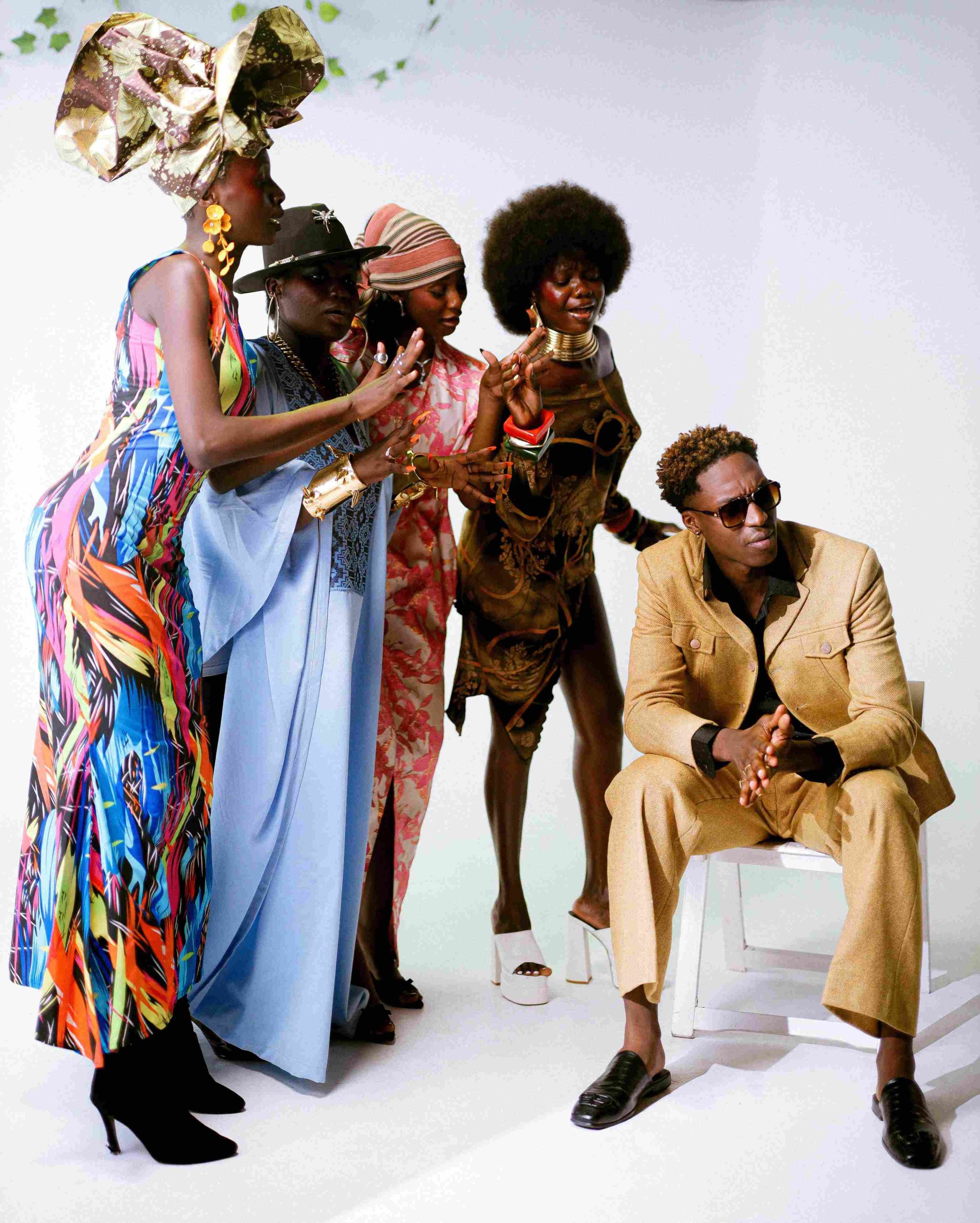
Fuji is making a massive comeback into mainstream consciousness, with the likes of yourself helping to revamp it for a fresh audience. Has there been any challenge with staying as true to it as it should be, and how do you navigate that?
I am going to hold a strong opinion here, but I mean it sincerely; I feel like a lot of the Fuji being put out right now is being made for Western validation. And I want to be clear: the songs are amazing, I am not taking that away from anyone. But there is a sense that Fuji is currently being experimented on rather than being evolved. People are taking it straight from the source and immediately trying to make it sound good in France or Brazil, or in rooms where it has never been heard before. And in doing that, they are skipping stages.
Think about how Afrobeats developed. It did not go from “Shake Body” to the rich, expansive sound of “Essence” overnight. It moved through stages, then foreign instruments were introduced gradually, then production evolved, and then it found its global footing. Fuji is still in its first stage. People are pulling it straight from the root and throwing rock instruments on it, Amapiano drums, Country influences, and that, to me, is not the essence of Fuji.
If the mission is truly to put the culture on the map, then Fuji needs to be allowed to breathe and evolve naturally before it is handed to the world in a form that barely resembles what it actually is.
My position is that we should be at the second stage: make it accessible, but keep the cultural instruments intact. Keep the talking drums, keep what makes it Fuji. Do not skip ten steps and serve ‘futuristic Fuji’ to your audience. Because if you serve the Western audience something authentically Fuji, something they have never encountered, they will respond to it.
So, that is where I stand. I am at the second stage of Fuji’s evolution, and I am holding that position deliberately. The Fuji album I am working on, I genuinely believe it is going to be one of the greatest Fuji projects to come out of this generation. Something that speaks to both the Gen Z crowd and the older audience who grew up with the sound.


emPawa Africa has been a significant part of your journey. But beyond the business and resources, what’s the most important thing the imprint has taught you, directly or indirectly?
One word: business. Business is business, and family is family, and the two cannot be mixed. That is the most important thing emPawa has drilled into me.
When I first got signed, I genuinely did not know what publishing was. I was just a guy freestyling on TikTok, hoping my fans would go crazy in the comments. But from the moment I joined emPawa, there were people who sat me down, step by step, and said, “This is how this works, go and read this book, you need to understand PRS, you need to know your rights”.
All of that knowledge was handed to me deliberately and patiently. Three or four years down the line, I can say with confidence that the single greatest thing emPawa has given me, beyond any resource or platform, is a thorough understanding of the business of music. And that is not something every artiste gets.
Hosting a live event in Nigeria is deemed an expensive venture from a business standpoint. How do you ensure you give your fans back home the best without sacrificing artistic value?
It is actually getting more complex now, if I am being honest, because the Fuji direction I am moving in really demands a full live band to do it justice. But with the music I was making before, it was a lot more manageable. Most of it was DJ-reliant, so all I really needed was my BVs, maybe a talking drummer, a pianist, and myself. A lot of the instrumentation was already baked into the production, so we could perform on top of it without needing a large setup or heavy rehearsal costs.
But to God be the glory, my headline show last year in London was sponsored. Moniepoint and other sponsors came on board, and we had people putting in their chips to make the event work. And that support did not come from nowhere. People in the community genuinely saw what I was building and wanted to be a part of it. I remember sitting in a meeting with Tasty African and just feeling the alignment. That is the kind of organic support that makes everything possible.
So the formula, at least for now, has been sponsorships and keeping live spend as lean as possible without compromising the experience. But I will say this: there is no live performer in the world who does not have to sacrifice something to make a show work. That is just the reality of it. You just have to make sure that what you sacrifice is never the quality of what the audience feels.
Most of your songs are solo records. Which artistes would you love to collaborate with, and why?
Before I answer that, I want to say something about how I approach collaborations in general. This industry has a lot of fakeness, and I have learned that for me, a feature has to make sense beyond strategy. Unless it is one of those label-orchestrated situations where they put you in a room with a big artiste for business reasons, I need to actually know someone. I need to understand how our sounds can meet organically.
The people I have the best relationships with right now are the ones I have sat in a room with — not to make music, but just to talk. To check in. To ask, where are you at mentally? Are you okay? That kind of chemistry is what translates into a song that actually means something. Right now, I have a strong relationship with Pheelz as well. We actually have a song coming out very soon. Then there is TARIQ from Choc City, Major AJ, these are people I have genuinely built with.
But if I am talking about a dream collaboration, Olamide Badoo is the one. I am still waiting on that supernatural verse from him. Beyond that, I am not actively chasing anyone. I am on my own pace, and whatever is meant to happen will happen by the will of God.

First of My Kind and IDRIS EPs are projects that heavily announced your artistry. What’s next?
The debut album is coming this year. It is going to be deeply cultural. I cannot give a specific date just yet, but what I can say is that when it arrives, it will be one of the greatest Fuji albums to come out of this generation.
Finally, what do you think an up-and-coming artiste needs to attain huge success right now?
Three things: prayer, consistency, and discipline. And I want to be specific about why all three matter, because you can be consistent without being disciplined. Consistency means you show up, but some days you are just not feeling it. Discipline means you show up regardless of how you feel. When you combine the two — when you are consistently disciplined — it is a completely different energy. Add prayer to that, and you have the foundation.
Keep posting content, keep showing up, keep putting yourself in rooms, keep trying to get heard. Surround yourself with the right people. Because I genuinely believe that there is no truly good artiste out there who will not eventually have their moment. It is just a matter of time and season. You look back six months and think, wow, I have grown. You look back a year and think, I have grown even more. Before you know it, four years have passed, and you are in rooms with people you used to cold-DM for a collaboration.
The problem I notice with a lot of artistes, particularly in Nigeria, is that they want the Maven story in an instant. Ground zero to superstar in one month. But if you look closely at every artiste who blew up this year, the real work started two, three, sometimes ten years ago. That thing that went global? They had been building it for almost a decade. The breakthrough is just the moment the world finally caught up.
So just be patient with the craft. Build from 1,000 streams to 2,000. From 2,000 to 3,000. That 3,000 will be 1 million someday. Just keep showing up and keep building, brick by brick.
Emmanuel “Waziri” Okoro is a content writer and journo with an insatiable knack for music and pop culture, with bylines on Afrocritik, PM News Nigeria, Tribune, The Sun, ThisDay Newspapers, Vanguard, and The Guardian. When he’s not writing, you will find him arguing why Arsenal FC is the best football club in the multiverse. Connect with him on Twitter, Instagram, and Threads: @BughiLorde.