

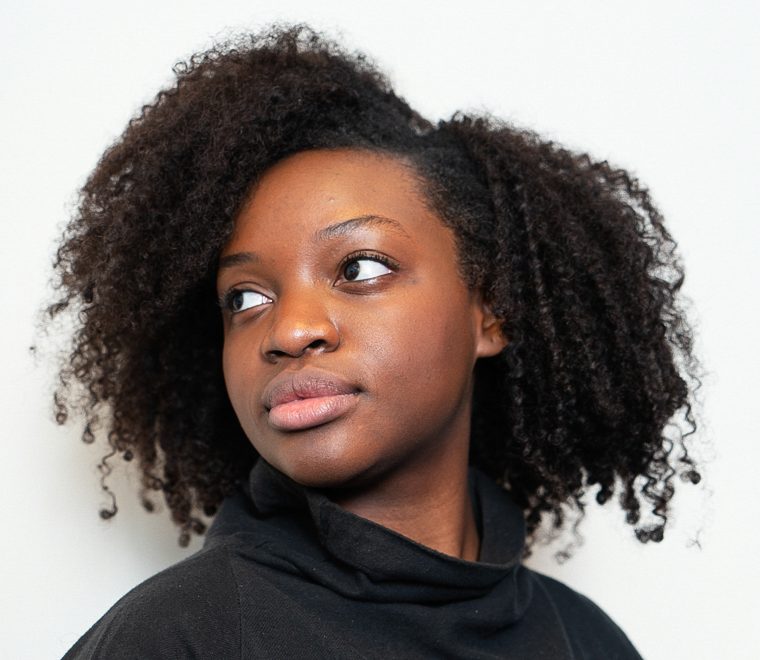

“[This film] is about a chapter of Nigerian immigration history that is incredibly underexplored and about how war and displacement press into the private lives of people” – Praise Odigie Paige.
By Adedamola Jones Adedayo
While many stories about Nigeria’s history exist, not too many address it with the poignancy that such history deserves. Praise Odigie Paige tries to fill this gap in her short film, Birdie, which screened at Sundance 2026. Here, Paige, who is previously known for amplifying the perspective of marginalised women as seen in works such as Simoune (2019), Goodnight Mary (2019) and Imagining Abolition (2022), treads a familiar volcanic historical territory: the Nigerian Civil War (1967-1970). But the approach is unusual. She moves away from the theatre and the gore that is often circulated and settles on the psychological impacts on the lives of some Nigerian women far away from home.
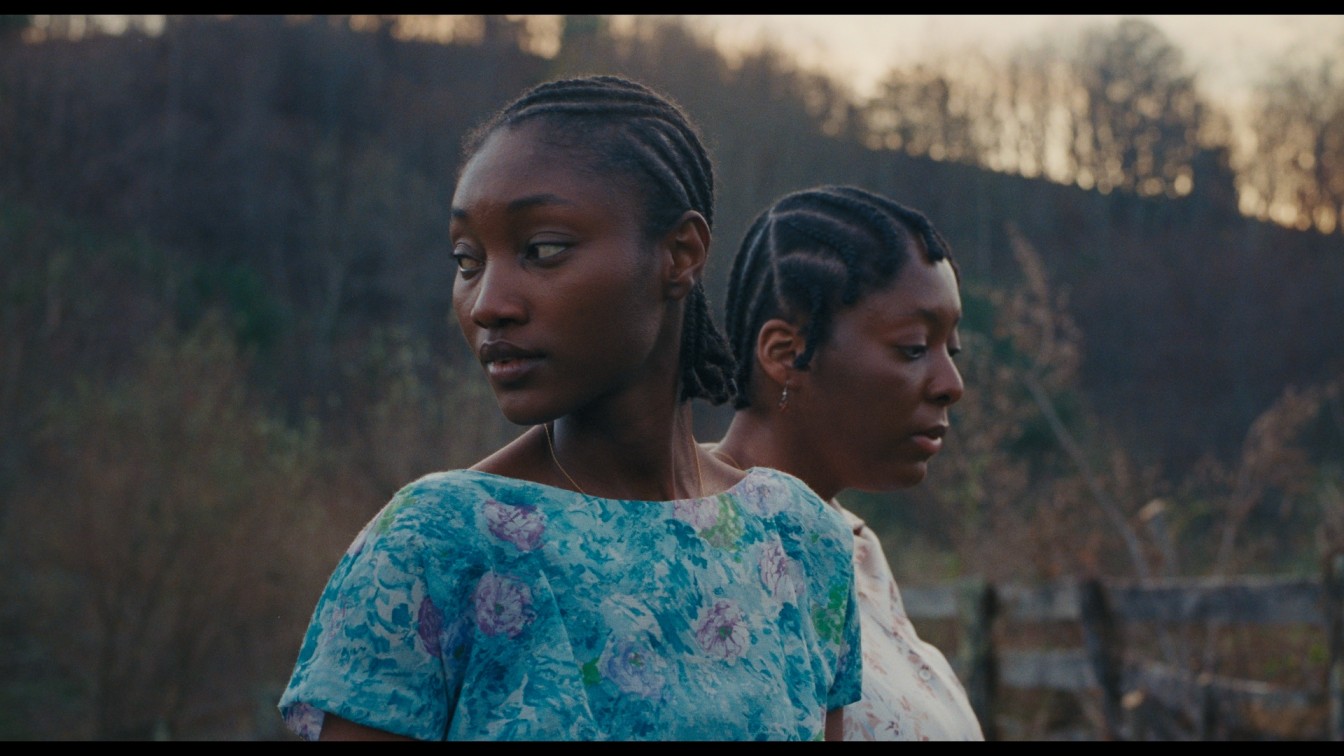
Set in 1970, Birdie follows 16-year-old English (Eniola Abioro), her older sister Birdie (Precious Maduanusi) and their mother Celestine (Sheila Chukwulozie), who live together in a Catholic home in Virginia, US, where they seek refuge from the Nigeria-Biafra civil war.
Through the narrative lenses and insights of Eniola, the film captures the mundane routine of their lives, which includes saying prayers in hope of reconnecting with a soldier-father that is believed to be on the frontline. While the seemingly disenchanted women cling to the faint optimism that faith offers, attention falls on Birdie’s attempt to explore the budding phase of her womanhood through her brief encounter with Justus (Said Marshall), a visiting young soldier.
An Afrocritik review by Jerry Chiemeke acknowledges the filmmaker’s ability to conceive hope in situations where it is rarely thinkable, “where a family fractured by war must navigate the liminal space between home and exile.”
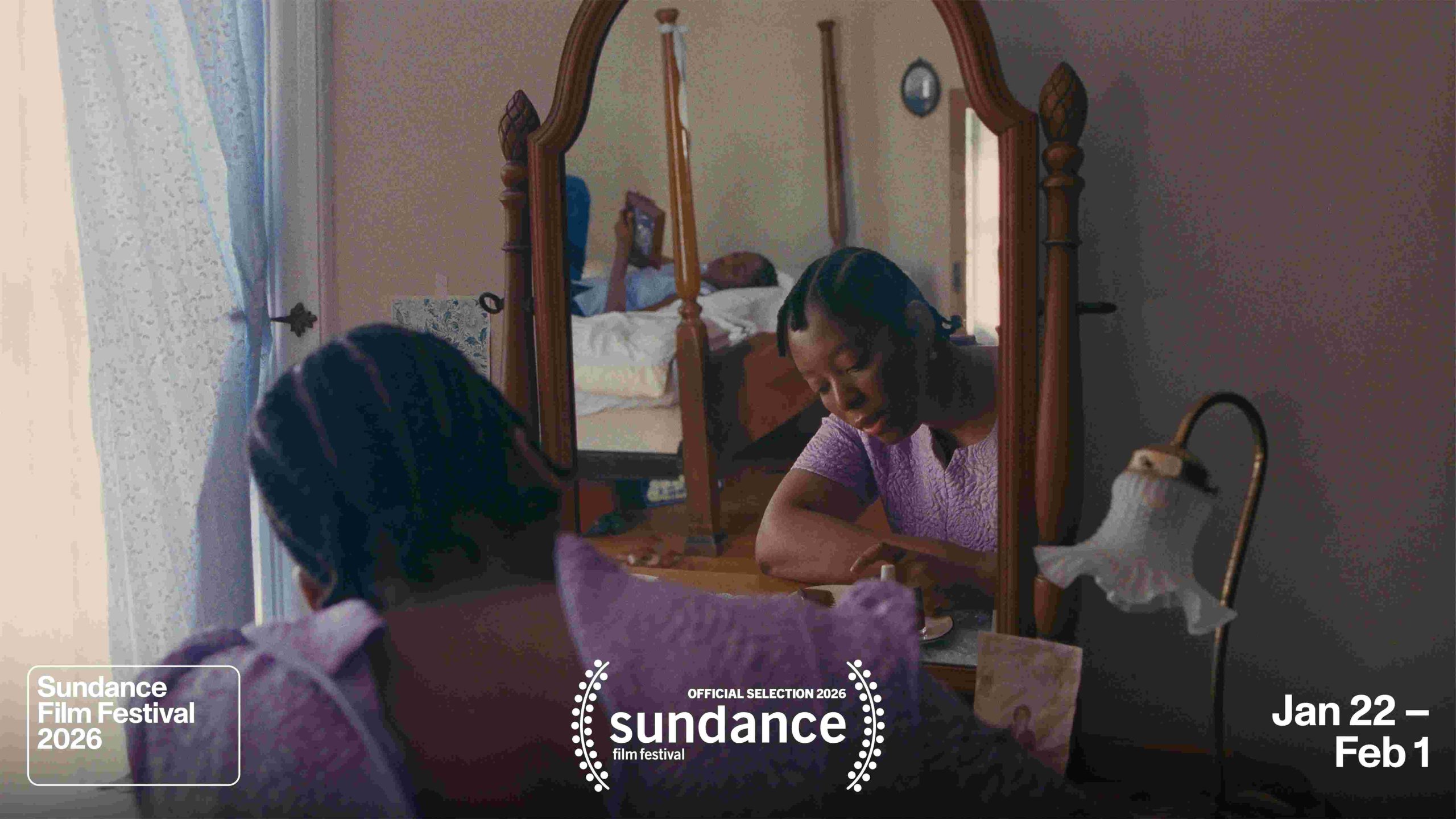
Birdie is written and directed by Paige, and co-produced with Yety Akinola, Nat Majette and Noni Limar, who is also executive producer. Lidia Nikonova, as Director of Photography, champions the glossy, naturalesque, yet tense visual language of the film; while casting director Elina Angel helps to amplify the director’s broader vision with actors who seem to embody the emotional dynamics of post-war survival and identity in the Diaspora. Credits also go to Yety Akinola as costume designer, Andrew Stephen Lee as editor, Vera Jigalova and Anastasia Glushneva as production designers, Andrés Silva as sound designer and Luke Paige as composer.
Shortly after the Sundance premiere, I linked up with Paige for a conversation on her short film. This interview, rendered here with an engaging tone and optimised for clarity, borders on the filmmaker’s creative process, collaborative choices, technical decisions, thematic leanings and distribution prospects.
As a Nigerian immigrant in the U.S., and looking at the dynamics of Birdie, there seem to be parallels between what the film represents and your own background. To what extent were you intentional about capturing or projecting your personal experiences in this film?
If you look at any film, there is always some thread of the filmmaker in it. I believe my personal experience is a thread in this film, but it is not about me or my family. It is about a chapter of Nigerian immigration history that is incredibly underexplored and about how war and displacement press into the private lives of people, particularly young women, which is what interests me most.
The thread that feels familiar to me is the experience of migrating as a teenager. I drew from my relationship with my sister and our experiences of coming to a new country. Our adolescence unfolded in the shadow of adult catastrophes that no one ever fully explained to us. That emotional reality is what I used to craft the characters.
What I find beautiful about your approach is that you do not focus directly on the theatre of the war, but on the aftereffects of the catastrophe, and how a family in the diaspora processes those experiences. I find that very compelling because I have not really seen stories of this nature in terms of scope.
I think that is true, and it also connects to your first question. While doing research for this film, I came across a nonfiction book titled “Nigerian Town: Boston, Massachusetts” by Emeka Anwuna. The book discussed the experiences of immigrants who moved to Massachusetts during the time of the war.
It described a term I had not heard before, but which really resonated with me. The term was “cultural exile”. It refers to the sense of being neither here nor there, and grieving a home that will never look the same as it did when you left. I left when I was ten, and that idea struck me deeply. It speaks to the experience many immigrants had during that time, and it truly hit home for me.
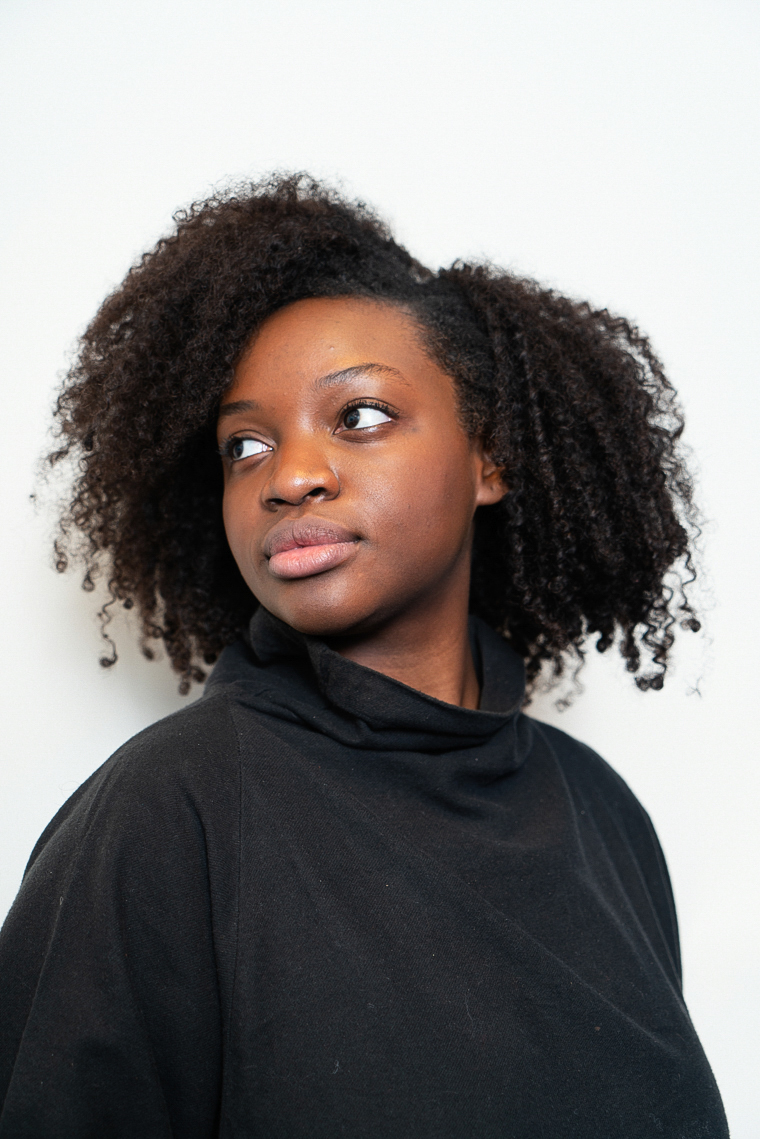
In your film, there is a strong attention to the natural environment. We see the greenery, the vegetation, the water, and the blue skies. It all feels intentional. How important was it for you to contextualise and incorporate these elements into the film?
The film is a visual and poetic story, and nature plays a huge role. I wanted two emotions to come through. One was the feeling of being confined to a limited space, held hostage by a sense of time you cannot control. You do not know when you are leaving or what is next. That tension is reflected in the interior spaces and in the repetition of rituals such as washing dishes and carrying out daily routines, which express boredom and endless time.
The outside environment conveys something different. Its beauty is intentional, reflecting what the characters long for: freedom and a different life. The landscape contrasts their actual experience with the one they wish they could have. The final shot in the film connects to my own experience. When we first came to the United States, everything was not immediately resolved. We were undocumented throughout my teenage years until I was twenty-eight. I could not leave the country without risking the life we were trying to build.
When we found the location for that final shot, the hills felt endless, as though you could keep walking forever. When she walks up that hill in the final scene, it represents that feeling. It reflects the idea that if you could just keep walking, there would be no barriers. A line in the voiceover, about swimming from one river to another, from one sea to another, expresses a world without fragmentation, where one can move freely.
Since you made reference to a sense of freedom expressed through the landscape, could you talk more precisely about how that contrasts with how small the characters’ world feels?
I wanted that sense of freedom to sit right beside how small and limited their world feels. There is also an element of romance and longing in the film. These girls live very restrained and, in a way, repressed lives, so the exterior environment is meant to express the things they cannot say.
Even the sound design plays a role in that. I worked closely with my sound designers to craft a soundscape of birds. If you listen carefully, there are moments where you hear a kind of cacophony of birds that almost feels like they are speaking on behalf of the characters. There is also a recurring moaning bird throughout the film that expresses longing. There is a very direct relationship between the echo, the sound, and what is happening emotionally.
For example, when Birdie is walking up to Justice in that large field, you hear them. Or when she talks about wishing all the rivers were connected so she could swim back home, in her teenage imagination, those sounds come in again. So there is a continuous conversation throughout the film between nature and their inner lives.
I noticed how intentional you are with your use of sound. There is quite a lot of silence, and when there are conversations, they are very measured and often in low tones. It all feels deliberate and contributes to that sense of post-war disillusionment and longing for something they have been separated from. But I would like to circle back to the writing process. How did you go about crafting the story?
I started from an emotional place, the feeling of being in limbo and the restlessness many immigrants experience while waiting for their lives to begin, and the grief of losing connection to something familiar. A lot of the film unfolded by allowing my subconscious to breathe on the page. It felt almost like writing a poem.
I knew there was something I wanted to express visually through the writing, so I let it take its time, and this took a few years, actually, just slowly nurturing it. Then, after I had my child, things really started to move more quickly. I also reflected on childhood memories. Some things had stayed with me without me fully understanding them, like the Catholic nuns around us back then. Later, I began to see their meaning and worked them into the screenplay.
When I started shaping it into a script, I realised that many of these details were real. Even the character of Justice and certain situations came from a deeper place. I looked through archives and war memories to understand how the war might have shaped the characters’ emotional world. I checked out a website with personal stories and spoke with people who had lived those experiences. I also accessed archival materials from universities and old radio recordings.
Let us talk about translating the written work into production. A few names appear in the production credits, which include you as a co-producer and an executive producer. Can you talk about the basis and strategy behind your partnerships with your co-producers?
One of my longtime collaborators is Noni, a friend and sister whose integrity and values I deeply trust. I wanted to work with people who were passionate about the script, the film, and the kind of story it was within African cinema.
My costume designer, for instance, eventually became one of my producers because of her dedication, and the rest of the producing team shared similar dedication. We later brought on Shidana as executive producer. My producer Noni felt there was something about him and his family’s history that connected to the story.
As we got closer to Sundance, we reached out to him. We had an incredible conversation about his father’s connection to Biafra and his family’s migration story. They had moved to places in the Midwest like Oklahoma, Minnesota, and Massachusetts. That experience felt closely tied to the themes of the film. The whole team came together as kindred spirits, all invested in the project.
You also worked with a casting director, Elina Angel. Could you speak a bit about the casting process and the relationships you built with the actors and your casting director?


Elina is another friend of mine. We used to work together at Cold Place and have been close ever since. I wanted to be careful about authenticity and find actors who already had a natural connection to the culture and an emotional connection to the story. Sheila Chukwu was incredible.
I saw her in a film called Igungun and thought she was brilliant. She brought her personal story and her father’s story into the character, which helped in portraying the role of the mother in my film. There were many parallels between her life and the family in the film.
Precious was a first-time actor we discovered on Backstage. I felt I could trust her with the character, and she turned out to be diligent and brilliant. The same was true for Eniola. I am very drawn to faces. I feel like I can read something in a person’s face and sense whether they can carry the emotional weight of a character. That instinct guided much of the casting process.
What was your time management and preparation process on set, particularly balancing rehearsals, location work, and the actual shoot?
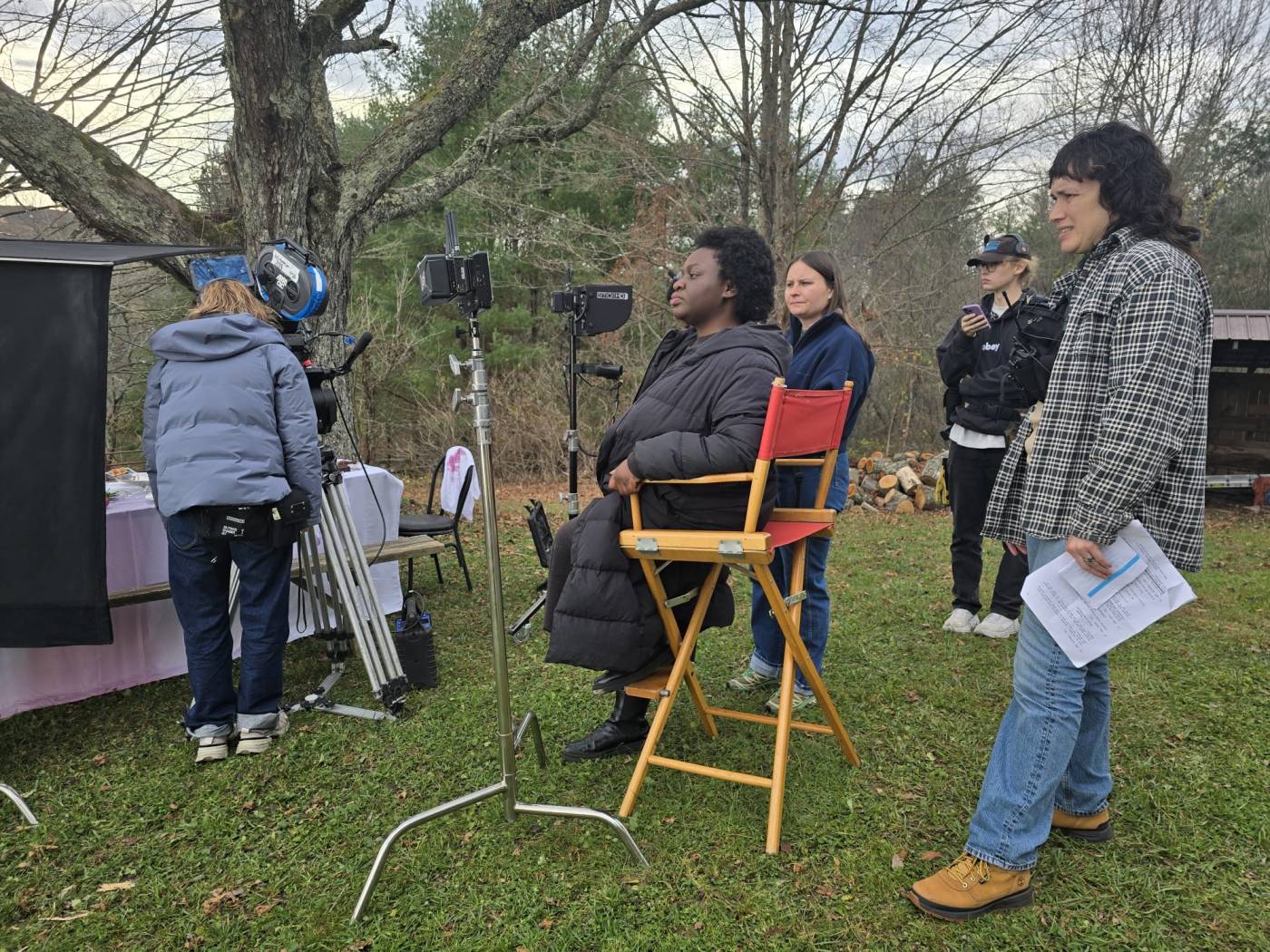
We spent only a week on set. Three days were on location, and that was the most important part to me. There were many things I was ready to sacrifice, but not the time to rehearse in that space. We used those days to go over every scene, block, and let the cast find their place so it would feel like they had lived there for months.
Lilian and I had come up with a shortlist and done our own storyboard, but being on location was where everything became crystallised. It also helped that we were shooting on film, so we did not have many chances to repeat takes. After that, we spent four days on the actual shoot.
Can you speak about the budget for the project and how important it was for the outlook?
We had initially gone into it hoping to spend $50,000 to $60,000, but it ended up being a lot more than that.
Going into production, did you make this film with Sundance in mind or with any solid plans for marketing and distribution?
So much of the process was just me fighting for something I believed in. I was three months postpartum while pushing this project forward, and we did not have time to think about marketing or distribution. I had a strong conviction that I needed to make it and a sense of the community we wanted to share it with.
I did not approach it with any particular festival in mind, especially since it is a 21-minute film that takes creative risks. We focused on telling the story in the way it needed to be told. In many ways, it felt like a gift to myself as a filmmaker to make the kind of film I wanted to see. When festival deadlines came around, we decided to try. We applied to Sundance with an unfinished film: the edit was locked, but sound and colour were not complete. I was quite shocked when they reached out.
How are you thinking about the film’s journey and future now that it has premiered?
We are hoping to land a home with a distribution or sales company soon and continue with a longer festival run. What has been mind-blowing about Sundance is realising how many people are looking for something like this and finding our audience and community.
I was also happy to be in the company of another Nigerian film there, which felt like a wake-up call to take global audiences seriously. I think this film is really scratching the surface of a much larger story that needs to be told, and that is what I am hoping this momentum builds into. The effects of the Biafran War on so many young people is not something we have talked about enough, and that is something I want to explore in a deeper way.
Adedamola Adedayo is a film journalist and critic with special interest in African cinema. Through writing and audiovisual mediums, he creates conversations around cinema in Africa and the Diaspora. You can find him on Instagram @jonesthegoodboy and X on AdedamolaAdeda4.