



Failure to clear samples or interpolations may lead to consequences that extend beyond legal disputes. Releases may be delayed, royalties redirected, or distribution interrupted.
By Deborah Oyedijo
Popular music has never existed in isolation. Every generation of artistes builds on sounds that came before it, consciously or unconsciously drawing from melodies, rhythms, and cultural memories that already live in the public imagination. What listeners often celebrate as creativity is frequently a conversation between past and present, where influence becomes the foundation for innovation.
In Nigerian music today, that conversation is especially visible. Younger artistes regularly revisit older sounds, reinterpret familiar musical ideas, and transform nostalgia into something contemporary. The result is music that feels both new and recognisable at the same time. Audiences respond instinctively to this familiarity because music is tied closely to memory; a familiar progression or melody can immediately trigger emotional recognition. What may sound like a coincidence to listeners is often a deliberate creative choice, informed by musical lineage and cultural continuity.
This creative process often manifests through sampling. Sampling occurs when a portion of an existing sound recording is directly incorporated into a new track. Legally, this involves the use of a master recording, which refers to the original recorded performance owned by a record label, producer, or independent rights holder. Once that recording is reused, the new work becomes connected to pre-existing copyright interests.
Notable examples include Burna Boy’s “Last Last”, which draws from Toni Braxton’s “He Wasn’t Man Enough”, requiring clearance of the underlying rights. Similarly, Wizkid’s “Jaiye Jaiye” incorporates elements associated with Fela Kuti’s “Lady”, reflecting how contemporary records may engage earlier catalogues. Beyond Nigeria, Black Sherif has also drawn from vintage Highlife archives of “Obuoba J.A. Adofo”, demonstrating how present-day artistes recontextualise older recordings for new audiences. In each instance, the reuse of protected material implicates existing rights and necessitates proper authorisation before commercial exploitation.
Copyright in music operates on two distinct layers. The first is the sound recording right (the master), and the second is the musical composition right, which protects the lyrics and melody written by songwriters and publishers. Using a sample, therefore, requires permission from both sets of rights holders.
This authorisation process is known as clearance, meaning formal approval is obtained before the music is commercially released or distributed. Without clearance, a song may infringe copyright regardless of artistic intention. In practical terms, clearance often involves negotiated licences, royalty splits, and written agreements specifying how revenue generated from the new song will be shared among all contributors.
Interpolation introduces a slightly different situation, though it is often misunderstood as a loophole. Instead of copying the original recording, an artiste recreates or re-performs a recognisable element of an earlier song. The master recording is not used; however, the underlying composition, meaning the protected melody, lyrics, or musical structure, still belongs to its original creators. For that reason, interpolation typically requires permission from the songwriters or publishers who control the composition rights.
Unlike sampling, which lifts audio directly, interpolation relies on re-performance. A clear example is Burna Boy’s “Ye” which echoes the rhythmic chant associated with Fela Kuti’s “Sorrow, Tears and Blood”, while Ayra Starr’s “Sability” reinterprets melodic elements from Awilo Longomba’s “Coupe Bibamba”. In each instance, the original recording is absent, yet identifiable components of the composition remain. That recognisable musical expression is precisely what copyright protects, which is why clearance from the relevant publishing rights holders remains necessary. The legal obligation changes in scope, not in principle: permission remains essential. Many disputes arise precisely because artistes assume that re-recording removes legal responsibility, when in reality copyright protects musical expression itself, not just the recording.
The confusion surrounding these practices usually stems from how people interpret inspiration. In everyday conversation, inspiration suggests admiration or homage. In copyright law, however, the focus is not on emotional intent but on substantial use.
Courts and rights holders examine whether identifiable elements of an earlier work have been reproduced in a way that draws from protected expression. If protected elements of an earlier work are recognisable within a new song, the issue becomes one of rights management rather than artistic respect. Inspiration explains influence; licensing determines legality.
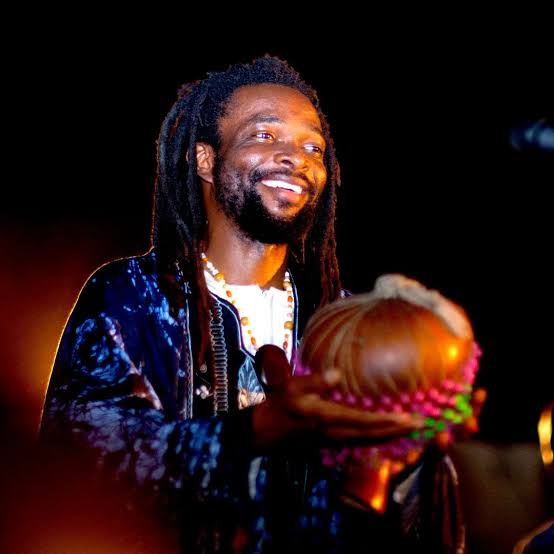
A recent online debate involving veteran Nigerian musician Beautiful Nubia illustrates why this distinction matters. Beautiful Nubia accused Yinka Ayefele and BBO of unauthorised melodic interpolation of his song “Seven Lifes” in Ayefele’s “Amin”, sparking a debate that shifted quickly from copyright technicalities to moral arguments about communal inspiration. Public reactions revealed how easily discussions about music shift into moral arguments instead of legal understanding. Rather than treating the situation as proof of wrongdoing or innocence, it serves better as a reminder that many artistes and listeners still lack clarity about how copyright functions in practice.
The debate may eventually fade, as online controversies often do, but the questions it raised should remain. Situations like this show that copyright conversations are no longer abstract industry concerns; they now unfold publicly, shaping how audiences interpret creativity, ownership, and fairness.
As Nigerian music continues its global expansion, that knowledge gap becomes increasingly risky. Afrobeats now operates within an international marketplace where catalogues carry measurable financial value and rights holders actively monitor usage across territories. Streaming platforms ensure that songs generate revenue over long periods, meaning ownership disputes do not simply disappear with time.
A creative decision made during production may later determine how revenue is shared, restricted, or even withdrawn. International distribution also exposes Nigerian artistes to jurisdictions where copyright enforcement is stricter and litigation more common.


Failure to clear samples or interpolations may lead to consequences that extend beyond legal disputes. Releases may be delayed, royalties redirected, or distribution interrupted. In some cases, platforms may remove songs entirely pending resolution of ownership claims, disrupting promotion cycles and commercial momentum.
More importantly, unresolved rights issues can damage professional relationships within an industry that depends heavily on collaboration and trust. Proper clearance, therefore, is not merely a legal formality; it is part of sustainable career management and long-term catalogue protection.
Understanding these structures does not diminish creativity. On the contrary, copyright exists to ensure that creative exchange happens fairly. Sampling and interpolation remain powerful artistic tools when handled responsibly, allowing artistes to honour musical lineage while building new cultural moments. Many globally successful records rely on licensed samples, demonstrating that legality and creativity are not opposing forces but complementary ones when managed correctly.
The ongoing evolution of Nigerian music makes these conversations necessary rather than optional. As older catalogues gain renewed relevance and newer artistes experiment with sonic references across generations, awareness of copyright obligations becomes a professional advantage. Knowledge allows artistes to collaborate confidently, negotiate effectively, and protect the long-term value of their work. Managers, producers, and even independent creatives increasingly need basic rights literacy to avoid preventable disputes.
Music will always draw from memory, influence, and shared cultural history. That has never been in question. The real challenge lies in recognising that creative inspiration and legal permission operate on different terms. In today’s music industry, inspiration may begin a song, but clearance is what allows it to exist, travel, and endure without uncertainty.
Deborah Oyedijo is a music business writer and entertainment lawyer-in-training with a focus on the African music industry. When she is not writing about music rights and culture, she is watching K-dramas, or absorbing yet another documentary. Connect with her on IG and X: ayooyedijo
Cover photo credit: GRAMMYs