


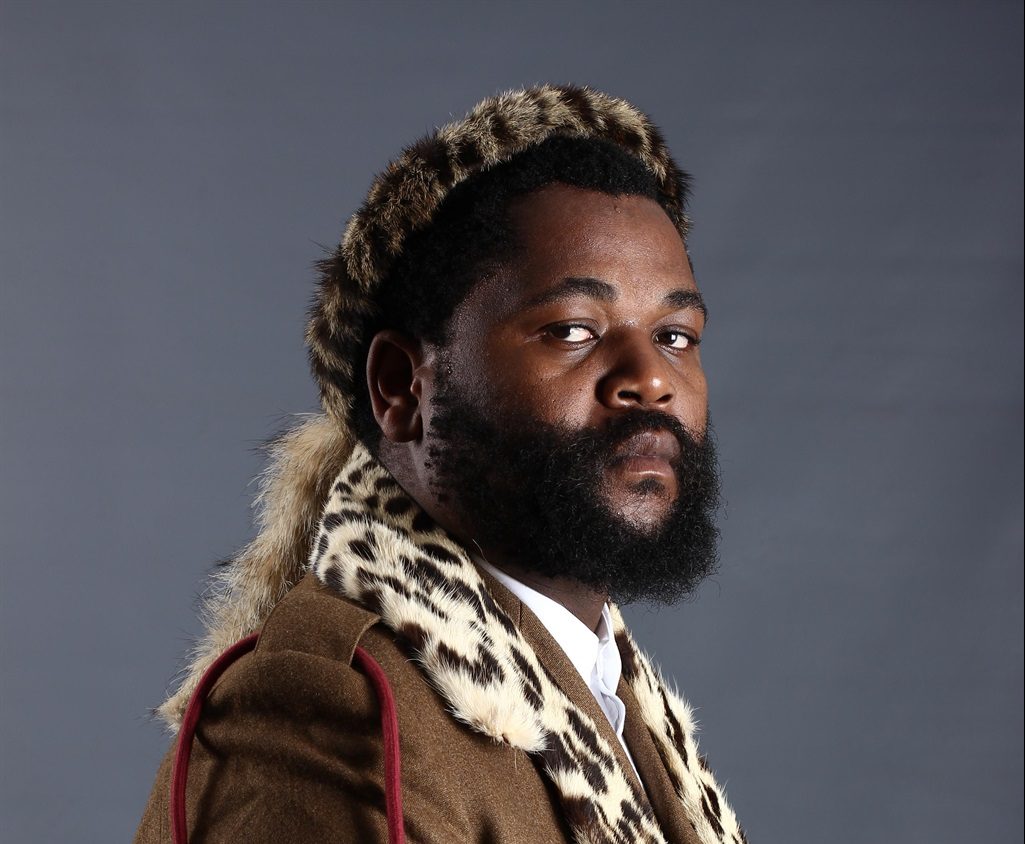
iNkanyezi NeZinkanyezi stands as the magnum opus of Sjava’s artistic journey so far, a body of work that invites listeners into his world, intertwines his emotions with theirs…
By Yinoluwa Olowofoyeku
Jabulani Hadebe, known globally as Sjava, is one of South Africa’s most inventive and emotionally resonant musical voices, a performer whose career has consistently woven together storytelling, cultural pride, and genre-defying sound to carve a distinct place in contemporary African music.
Born in Bergville, KwaZulu-Natal, he first drew attention not just as a singer but as a songwriter with a deep intuitive feel for composition, honed from his early days writing lyrics for his isicathamiya group in primary school before branching into acting and then music full-time.
His official recording career began in earnest with his solo debut, Isina Muva (2016), a Gold-certified album that fused African Pop, Hip-Hop and R&B, winning Best Produced Album at the South African Music Awards and signalling a storyteller with purpose and range.
He followed with Umqhele (2018), which garnered wide acclaim and helped elevate his profile internationally, earning him a BET Award for Best New International Act, and later Isibuko (2023), a platinum-certified chart-topping statement that expanded his blend of soul, hip-hop, maskandi and introspective lyricism while featuring a constellation of collaborators.
Between those major studio albums, Sjava has also explored live expression and connection with releases like Inkanyezi (Live) and Inkanyezi 2.0 (Live) in 2025, documenting his flourishing stage presence and deep audience engagement.
With iNkanyezi NeZinkanyezi arriving on 30 January 2026, he completes a thematic trilogy rooted in both his live evolution and studio craft, bringing together mastered versions of songs first introduced in performance and enriched with collaborations from across South Africa’s musical landscape. The project arrives as the culmination of a decade-long trajectory that has seen him grow from local breakout to one of the most respected and versatile voices in Afro-soul and hip-hop, framing this latest release as both refinement and continuation of a singular artistic journey.
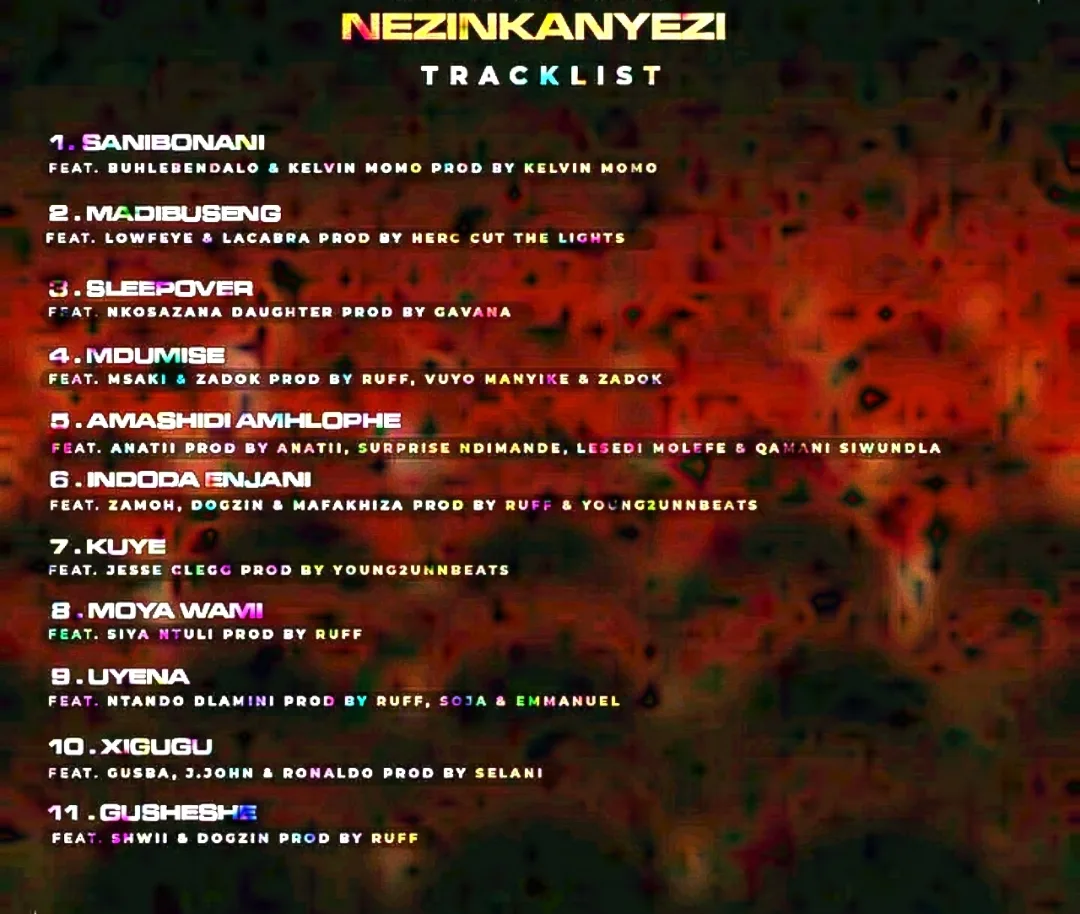
“Sanibonani” opens iNkanyezi NeZinkanyezi as a communal greeting, a song that had already taken on life in live settings before finding its studio form here. Rattling African percussions and bright plucked guitars arrive first, supported by a rich bass guitar that gives the rhythm body and warmth. Buhlebendalo’s whisper ushers the listener in gently before she takes the lead with piercing, spiritually charged vocals.
Kelvin Momo builds patiently, layering the instrumental sequentially as the song progresses, introducing smooth soulful electric piano chords, slapping drums, and recurring staccato mallet strikes that deepen the sonic richness.
The structure alternates between call-and-response greeting lines, embodying the public-facing act of saying hello to different communities, while celebrating cultural plurality through Tsonga, Pedi, Xhosa, and Zulu salutations. “Bathi ngiya eLimpopo / Kwelama Tsonga / Bathi Avuxeni” [roughly translates as: “They say I’m going to Limpopo / To the Tsonga people / They say ‘Avuxeni’ (Tsonga greeting).”] The vocals swell as both artistes deliver big, bright passages accompanied by spiritually moving humming, ululations, and layered backing vocals.
In its final minute, the instrumentation strips back to keys and guitar, the delivery turning solemn and reflective. It is a sweeping, emotional, spiritual, and communal opening, long in duration but fully immersive in its journey.

“Madibuseng” pivots sharply into a hard-hitting hip-hop cut. Herc Cut The Lights anchors the production with sizzling trap hi-hats and thumping 808 kick drums that form a snappy, quintessential trap drumline. Distorted, moody pianos and a subtle sub bass give the instrumental weight and tension. Through melodic rapping, layered vocals, sharp ad-libs, and earnest singing, Sjava is joined by LaCabra and Lowfeye. LaCabra, known for his gritty street presence, and Lowfeye, an emerging voice with melodic sensibilities, both complement the emotional core of the track.
Together, they explore emotional inconsistency, romantic push-pull dynamics, and the exhaustion of loving someone whose moods constantly shift. Traffic light metaphors frame the instability: “Sometimes uRed, Sometimes uGreen / Sometimes uOrange, Yini ngawe?” [“What’s with you?”]. Robots and chameleons become symbols of emotional unpredictability as Sjava and Lowfeye sing, “Uyangithanda, uyangizonda / Uyangibamba, uyang’yeka / Uyang’donsa, uyang’phusha” [“You love me, you hate me / You hold me, you let me go / You pull me, you push me.”] The heartfelt deliveries amplify the frustration embedded in the lyrics.
“Sleepover” softens the mood into an intimate and celebratory love song centred on emotional and physical closeness. Where “Madibuseng” wrestled with instability, this track embraces harmony. Tulia Gavan crafts a beautiful instrumental built on a simple sub bassline that underpins expressive pianos and bright synth pads, with sweeping, starry synths shimmering in the background.
The drum arrangement remains subdued, driven by a prominent clacking percussion texture, rounded kick drums, and a clacking stick snare. It provides a gentle backdrop for expressive romantic singing. The song dwells in comfort, vulnerability, devotion, and the joy of shared space, blending flirtation with sincerity and grounding romance in companionship rather than mere desire. Sjava and Nkosazana Daughter, whose rich and emotive vocal style has made her one of the most resonant voices in South African Dance and Soul spaces, form a beautiful duet.
Their voices intertwine through soft, earnest harmonies and perfectly balanced counter-melodies, mirroring the spiritual unity they describe. “Bathi ngiyazi ngiyagula mawungekho eduze kwami” [“They say they know I get sick when you’re not close to me.”] and “Talking about love when they talking about you / Simoya munye, Mina nawe” [“We are one spirit, You and I.”]
“Mdumise” shifts firmly into gospel territory. Ruff, alongside a host of producers, anchors the track in distinctly gospel piano chords, spacey synths, and soft, solemn guitars. Msaki enters with angelic vocal inflections, her crystal-clear tone carrying the lines, “I know God works in mysterious ways / I know God listens when we pray.”
Filtered sections of the instrumental introduce a thumping kick drum that beats like a heart beneath Sjava’s emotional refrains. The song stands as a testimony of gratitude, divine companionship, humility, and protection through hardship. Together, Sjava and Msaki frame life as a difficult journey navigated by faith, acknowledging darkness and uncertainty while affirming that God never abandoned him.
The communal praise swells around the declaration, “Ngeke akuyekele / Udliwe zilwane endle / Inkosi ik’size ikukhusele / Phansi kwamaphiko ikukhusele” [“He will never leave you / To be devoured by wild animals in the wilderness / The Lord will help you and protect you / Under His wings He will protect you.”] It anchors iNkanyezi NeZinkanyezi spiritually, reinforcing that survival and success are inseparable from divine grace.
“Amashidi Amhlophe” introduces uplifting, bright synth chords layered over a rich synth bass and light guitar accents. The drum pattern is sparse, built primarily around thumping 808 kicks and sporadic percussion hits, creating an open R&B-tinged Pop atmosphere filled with optimism.
The vocals are bright and airy, marked by upper register dexterity and energy as Sjava and ANATII, the experienced rapper and producer known for blending hip-hop and melodic pop sensibilities, paint a vivid picture of romantic intimacy that is pure, intentional, and stable despite outside doubt. “Abanye bathi uzongiwisa / Ubethe phansi, uzongishiya / Oh no baby, don’t leave now / Nabu bomi buyasibiza” [“Others say you will bring me down / You will knock me down and leave me / Oh no baby, don’t leave now / This life is calling us.”]
“Indoda Enjani” leans into Maskandi tradition with rhythmically strummed guitars, traditional percussion, syncopations, and light mallet instrumentation. Rich melodies and layered harmonies are supported by group vocals and traditional ululations, while strong female vocals narrate a satirical yet emotionally weighted critique of performative masculinity, jealousy, and relational imbalance.
The storytelling questions a man whose ego and cultural obsession overshadow emotional presence: “Indoda enjani lena mama, indoda enjani? / Ikhuluma ngoMaskandi kuze kuyoshona ilanga / Nasebusuku, akasangithinti” [“What kind of man is this, mother, what kind of man? / He talks about Maskandi until the sun sets / And at night he no longer touches me.”] Even through the language barrier, the push and pull of the story is palpable.
“Kuye” draws on Afrobeats sensibilities as Young2unnBeat layers clacking percussions in a signature 3-2 syncopation over rattling shakers, emotional acoustic guitars, and a prominent gospel-like bassline. Jesse Clegg, the South African singer-songwriter known for heartfelt pop-rock ballads and his lineage as the son of Johnny Clegg, joins Sjava in bright, emotionally charged singing.
Together, they explore heartbreak, coldness, and cyclical self-sabotage. “Inhliziyo ye-ex yam ihlala ku cooler box / Yinto engenamizwa” [“My ex’s heart stays in a cooler box / It is something without feelings.”] and “Nkulunkulu ngicel’ ungisize / Ungangibuyiseli kuye / Nhliziyo yami ngiyakucela / Asingabuyeli kuye” [“God, I ask You to help me / Do not take me back to her / My heart, I beg you / Let’s not go back to her.”]
“Moya Wami”, produced by Ruff, glides on distorted and effected guitars and pianos layered over old-school thumping drums. Sjava and Siya Ntuli, whose high and ethereal vocal styling has steadily gained attention in contemporary soul circles, reflect on resilience and growth. “Lapho esisuka khona nawe bekunzima / Lapho esiya khona ngabe kuyoba njani?” [“Where we come from, you and I, it was difficult / Where we are going, what will it be like?”] The subdued, introspective vocals carry a subtle croak of welled-up emotion, while wide, heavy group vocals create a sense of being surrounded by reassuring voices. The stereo depth enhances that immersive feeling.
“Uyena” returns to gospel, but where “Mdumise” expressed gratitude, this song projects bold confidence rooted in faith. Over uptempo thumping drums with Maskandi influences, detuned synth chords, and blaring whistles reminiscent of church services, Sjava sings, “I heard the Lord call my name / Wathi, ‘Ungangabazi ngethembe’ / ‘Bayeke bakhulume, kodwa Yimi owaziyo’” [“He said, ‘Do not doubt, trust Me’ / ‘Let them talk, but I am the One who knows.’] and “Unkulunkulu kuphela owaziyo ngeksasa lami / Omunye othi uyazi uqamba amanga” [“Only God knows my future / Anyone else who says they know is lying.”] Leading call-and-response passages with female ensemble vocals, shouts, and ululations, he assumes the posture of a worship leader, fully inhabiting the energy of a spirited church gathering.
“Xigugu”, produced by Salani, bursts forward with high-tempo energy influenced by Venda stylings and Maskandi textures. Pounding flat kick drums and rigorous snares drive the rhythm, joined by accelerated staccato piano stabs, a rippling synth bassline, and rifling mallets.
J John The Big Baby and Gusba Banana, both known for their playful and animated delivery styles, join Sjava. The trio engage in Soca-esque quickfire flows, call-and-response exchanges, and gruff male group vocals while celebrating their “Treasure” in a way that incites movement and foot-tapping.
“Gusheshe” pays tribute to the iconic BMW 325i, a symbol deeply embedded in township culture, speed, and status. Over a subdued Hip-Hop beat composed of hard-hitting claps and hi-hats layered across smooth pad chords and shimmering synth elements, Sjava and Shwi Mantombazane confront the deeper truths behind that culture.
Shwi Mantombazane, a respected Maskandi duo with deep roots in traditional storytelling, add textured harmonies that ground the narrative. The song celebrates pride and visibility while acknowledging envy, danger, and the devastating toll of gun violence. “Ngiyasesaba isibhamu / Mhlambe ngab’ usaphila / Ukuba asikho isibhamu” [“I am afraid of the gun / Maybe you would still be alive / If there were no gun.”] What begins as tribute becomes elegy. “Ufunani e drive through? / Ngoba uyazi ukuthi bafuna ukukubulala we nkabi” [“What do you want at the drive-through? / Because you know they want to kill you, my brother.”]
Sombre melodies, subdued singing, and filtered harmony lines give the record weight as it mourns lost youth and questions a world where aspiration collides with mortality. This symbolically closes the loop of iNkanyezi NeZinkanyezi, ending on sad goodbyes after beginning with warm hellos.
iNkanyezi NeZinkanyezi feels like the tying together of a full decade of Sjava’s live and studio evolution. The title, which roughly translates as A Star Amongst the Stars, opens itself to layered interpretation. At its most immediate, it suggests prominence, but the deeper thematic throughline that runs across iNkanyezi NeZinkanyezi makes it clear that no star stands alone.
Community is central here. That idea finds expression not only in the album’s lyrical and spiritual reflections, but in its very construction. Across the tracklist, Sjava leans on a wealth of experience, drawing in diverse talents and unique creative skills, working to the strengths of each collaborator. Native genres, stylistic traditions, generational voices, and distinct musical contexts converge, each contributor lending their shine to the other.

Even on a metaphysical level, the album’s title resonates within the songs themselves, acknowledging the interconnectedness of human beings through love, intimacy, cultural ties, shared and divergent experiences of heartbreak, loss, and growth, and ultimately through divine connection to God and His influence in daily life. It is this thematic consistency, paired with Sjava’s flexibility, that gives iNkanyezi NeZinkanyezi its sense of merit and stellarness.
Across the tracklist, Sjava and his collaborators traverse an expansive range of themes and genres. His stylistic fluency allows iNkanyezi NeZinkanyezi to spread its wings confidently, touching gospel, hip hop, Maskandi, Afro-soul, and Afrobeats without sounding misplaced.
The subject matter mirrors that breadth. Love and relationships sit alongside faith and devotion, lived experiences and moral observations, communal celebration and personal reflection. The variety never feels scattershot because it is anchored in a consistent voice and point of view, allowing the album to hold multiple emotional and stylistic registers at once.
The production plays a decisive role in executing that stylistic range. The care, intention, and dedication are evident throughout iNkanyezi NeZinkanyezi, with each genre approached authentically rather than superficially. The sound choices, rhythmic understanding, and compositional structures ensure that the songs do not merely gesture toward different traditions but inhabit them fully.
The Hip-Hop cuts breathe Hip-Hop in every sonic corner, from drum programming to tonal textures. Tracks like “Uyena” and “Xigugu” even feel like time capsules, transporting the listener to specific sonic and cultural spaces through the effectiveness of their production. Each producer leaves a stamp of authenticity that supports the album’s broad palette without compromising coherence.
While that production allows iNkanyezi NeZinkanyezi to venture far and wide stylistically, it is Sjava’s storytelling that provides depth alongside breadth. His songwriting remains deeply effective, rooted in honesty, introspection, emotion, and relatability. He consistently grounds his lyrics in autobiography and personal experience, yet frames them in ways that feel universally accessible.
Each song unfolds like a scene, pulling the listener into a scenario filled with feeling and understanding, allowing them to become active participants in the narrative. That ability to embody characters and perspectives may well be informed by his background as an actor, an instinct for inhabiting roles that translates seamlessly into his music.
Complementing the writing is his delivery, another of his most potent tools. Words on a page are one thing, but the way he expresses them elevates their impact. Across iNkanyezi NeZinkanyezi, Sjava and his collaborators deliver performances where emotion feels tangible.
Nothing sounds flat, rote, or stale. High notes cut through with intensity, softer passages arrive with a slight croak that tugs at heartstrings, and gospel confessions rise with uplifting earnestness that invites the listener to feel and participate in the musical moment being curated. The technical engineering binds these elements together, blending rich vocal layers with swaying, immersive soundscapes into a transportive sonic experience.
With iNkanyezi NeZinkanyezi, Sjava has curated something that transcends the typical experience of listening to an album. This project feels like a distillation of who he is, what he has experienced, what he has created, what he has learned, and what he has become. It stands as the magnum opus of his artistic journey so far, a body of work that invites listeners into his world, intertwines his emotions with theirs, and encourages them to become yet another star amongst the stars alongside him.
Lyricism – 1.7
Tracklisting – 1.6
Sound Engineering – 1.8
Vocalisation – 1.7
Listening Experience – 1.6
Rating – 8.4/10
Yinoluwa “Yinoluu” Olowofoyeku is a multi-disciplinary artist and creative who finds expression in various media. His music can be found across all platforms and he welcomes interaction on his social media @Yinoluu.