

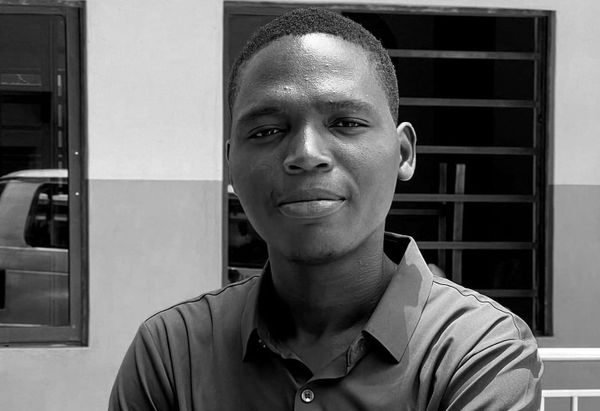

What Ernest Jesuyemi genuinely wants is a literary culture capacious enough to hold divergent, even troubling, subjectivities without reflexive excommunication.
By Chiemeziem Everest Udochukwu
In another of Ernest Jesuyemi’s (previously Ernest Ogunyemi) trenchant essays, “The Wrong Kind of Black Poet” arrives as an argument garbed in literary principle. Still, it carries, beneath the garb, a case for personal grievance laundered through the language of intellectual freedom. Melancholy in tone, scrupulous in its citations of George Orwell and W. B. Yeats, genuinely wounded in places, the result is compelling. It deserves a response precisely because so many of its observations about contemporary literary culture are correct. The problem is what is done with these observations, and what is occluded in doing so.
In 2023, Jesuyemi wrote publicly, “The Bible does not support homosexuality. I stand with the Bible”. He offers this as a statement of private religious conviction, the kind of faith a man carries quietly to his church and no further. But the tweet was not private. It was a public declaration made by a person who aspired to be a public critic, directed at no one in particular and therefore at everyone.
In Nigeria, where homosexuality remains criminalised under legislation that carries penalties of up to fourteen years in prison, the social weight of such a declaration transcends the theological. Jesuyemi hedges this by adding that he does not support the state’s role in legislating what he calls “matters reserved solely for God’s desk”. This is meant to read as liberalism. But it does not. It is the familiar position of those who believe that God’s condemnation of a person is preferable to the state’s, a distinction that will have seemed purely academic to any queer person reading it.
The National Book Critics Circle’s decision to handle his fellowship as it did may well have been clumsily executed. The terms offered (participate in secret, or leave) hint at institutional panic rather than principled policy. One can, however, criticise the NBCC’s specific conduct while rejecting Jesuyemi’s broader thesis.
What the board was grappling with, however imperfectly, was not the content of his criticism but the conditions of collegial work. A fellowship, while credential, is a community. The question before the board was whether a person who had publicly declared that queer identity is sinful could create a working environment in which queer colleagues felt free to speak, disagree and critique without fear of being the objects of that sinfulness.
His framing of the episode as religious persecution imports a category error that runs through the entire essay. He was not removed for his faith. He was removed, or more precisely, removed himself, because a public statement he chose to make created a foreseeable conflict with the community he was joining. A person who publicly declares that Black writers are intellectually inferior is not being persecuted for their beliefs if a majority-Black fellowship declines to include them. The content of Jesuyemi’s declaration concerned the moral status of his potential colleagues. That the declaration was theological in character does not immunise it from institutional consequence. Theology, as history amply demonstrates, is not the antonym of politics.
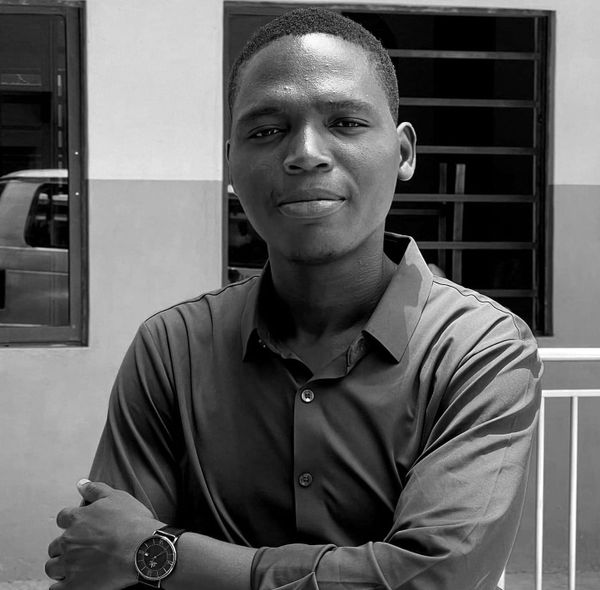
There is a further distinction Jesuyemi’s framing refuses to make: what was at issue was not his faith but his ideology. Christianity is not a monolith on the question of sexuality, and has not been for decades. Affirming Christians, Episcopal, Presbyterian USA, United Church of Christ, and a growing body of Catholic theologians, among them, read the same scriptures and arrive at profoundly different conclusions.
Had Jesuyemi’s fellow been a Christian who believed, with equal sincerity and equal theological grounding, that queer identity/existence in itself is not a sin, no conflict would have arisen. The NBCC’s concern was therefore not with the cross on the wall but with the position publicly staked beneath it.
One anticipates the objection that faith inevitably shapes ideology, that you cannot separate a man’s theological convictions from the moral positions they generate, and that to penalise the position is therefore to penalise the faith. But this argument, however serious, would be a stronger one if ideology were simply faith’s shadow. But ideology is faith filtered through interpretation, cultural formation, reading and, most importantly, choice.
The interpretive tradition on human sexuality within Christianity is not settled, has never been settled, and is currently being fought over in synods and seminaries around the world. Any implicit claim that orthodox sexual ethics are simply what Christianity is, rather than what one school of Christianity holds, is to do theology badly.
It also, incidentally, raises a problem Jesuyemi would do well to confront: if his position of exclusion is Christianity itself rather than one ideology among several Christian ideologies, then the affirming Christian is not a true Christian, a claim that is rhetorically toxic and almost historically illiterate, the mirror image of the kind of doctrinal gatekeeping he accuses the literary left of practising. What Jesuyemi holds is a position, arrived at through faith but not mandated by it. He is entirely free to hold it. But he is not free to hold it without consequence.
Much of what Jesuyemi says about contemporary literary culture is true, and true in ways that the literary left has been slow to acknowledge. The resignation of Don Share over Michael Dickman’s poem was a capitulation to social media hysteria and not a victory for justice. The letter demanding specific fund allocations to specific organisations after George Floyd’s murder represented a troubling conflation of literary authority and political pressure. The cancellation of the Adelaide Writers’ Festival, with its attendant ironies (Randa Abdel-Fattah, who had called for the removal of Thomas Friedman, now invoking the sanctity of free expression), is the kind of hypocrisy that discredits the activist position.


But his argument wobbles under its own ballast. He invokes Yeats’s “On Being Asked for a War Poem” to argue that poets should stay out of politics, then spends several thousand words making a nakedly political argument about institutional power, activist thuggery and the dying soul of literature. He constructs his entire grievance around the separation of his critical work from his personal theology, an argument that, if accepted, would immunise any critic from any consequence for any public statement, so long as their reviews remained technically literary. He condemns poets who “act like the Stasi”, then approvingly cites Geoffrey Hill, having already invoked ideology and the authority of scripture to police the moral boundaries of desire.
The title itself, “The Wrong Kind of Black Poet”, performs a sleight of hand. The implication is that his Blackness makes his exclusion more poignant, or that the literary left, so eager to champion Black voices, has here revealed its true colours by excluding a Black man for his faith. But the NBCC did not exclude him because he was Black. The racial framing comes off as a rhetorical inflation designed to position him as doubly wronged, to borrow the moral authority of the civil rights tradition for a case that does not belong to it.
What Jesuyemi genuinely wants is a literary culture capacious enough to hold divergent, even troubling, subjectivities without reflexive excommunication. He is right to want it, and that the narrowing of American literary culture, its transformation from an arena of difficult thinking into an enforcement mechanism for approved positions, is bad for literature and bad for democracy. He is right that a poem ruined by cant is only a bad poem. He is right that the eccentricity of a phrase, the ring of one word against another, should not be subject to political veto. He is right about all these.
But it would have been a far more convincing standpoint had he not enlisted these correct observations in the service of a personal narrative that asks us to see his public declaration as equivalent to private faith, and his theological condemnation of queer identity as equivalent to the literary eccentricities of T. S. Eliot and Ezra Pound.
History may insist that Eliot’s antisemitism was a poison in his bloodstream, shameful and irreducible, which his greatest poems both transcended and could not fully escape. It may also insist that Pound’s was louder and more ruinous. But neither man publicly declared, in a forum readable by all, that Jews were sinners against the divine order, while simultaneously and hypocritically positioning himself as a fair reader of Jewish writers. Or, if they had, we would rightly note the contradiction.
The essay closes with a moment of grace: a Yeats poem read aloud on a Zoom call and the shared love of a poet held in common by two men on opposite sides of a difficult conversation. Literature can do that, can find the clearing in the thicket where even adversaries stand briefly together. But grace, as Jesuyemi says, is fast becoming a strange word. He might need to consider that it becomes strange not only when politics is superimposed on the art, but also when one mistakes the consequences of cancerous words for the suppression of inner life, and unremittingly declares it a martyrdom.
Chiemeziem Everest Udochukwu’s work has appeared in EVENT Magazine, Flash Fiction Online, The Evergreen Review, Lolwe, Peatsmoke Journal, Efiko Magazine, Naira Stories, and elsewhere. He won the EC Michaels’ Short Story Prize and has been recognised in The Black Warrior Review Non-fiction Contest, the Quramo Writers Prize, The Sande Poetry Prize, The Unserious Collective, the Nigerian NewsDirect Poetry Prize, The Alexander Nderitu Prize for World Literature and others. He can be found on X at @everdoch and on Instagram @everdoch97.