

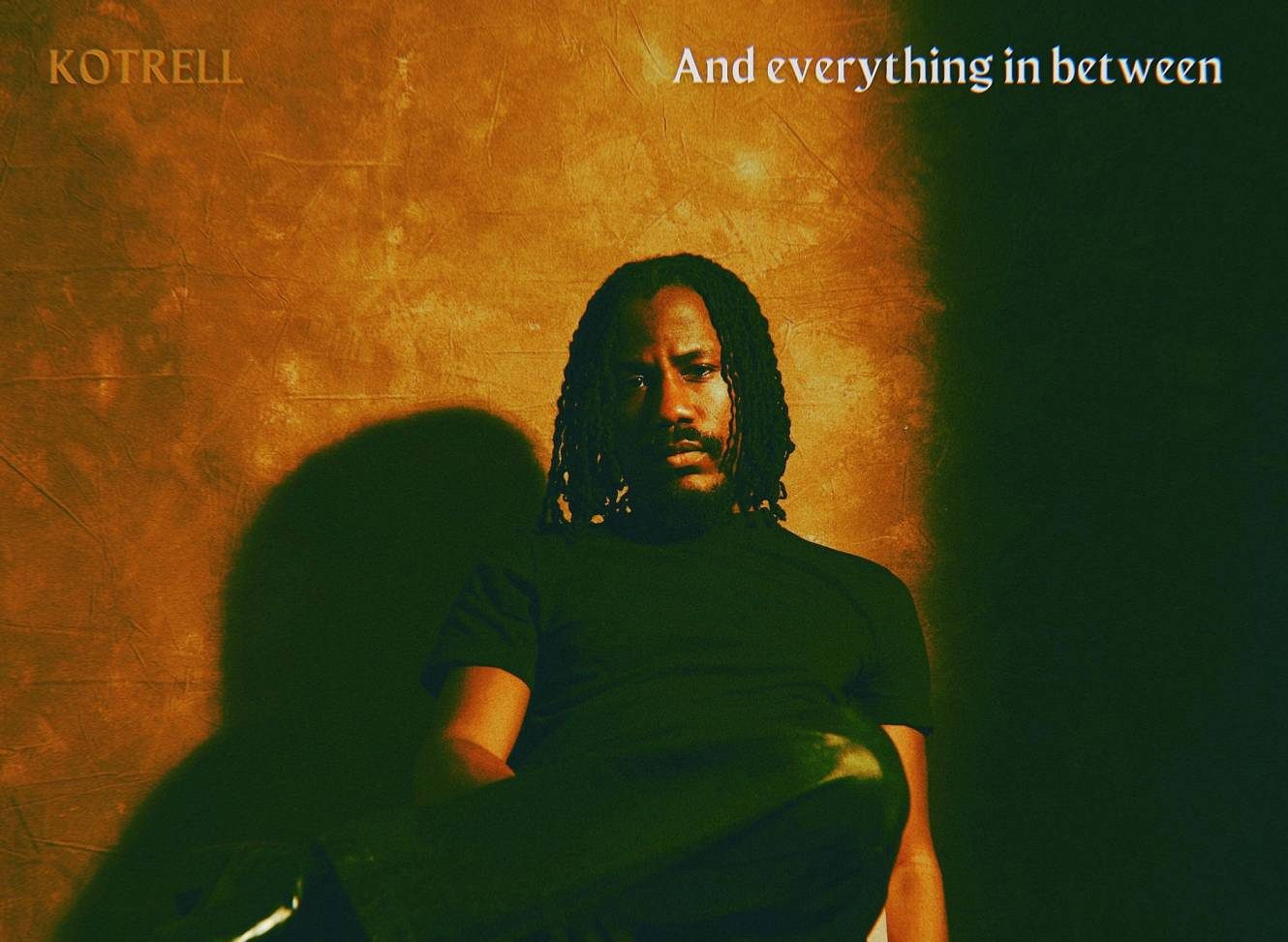

And Everything In Between stands as a strong statement from a growing artiste, one that reflects both ambition and a clear desire to expand on an already established foundation.
By Yinoluwa Olowofoyeku
For Nigerian singer, songwriter, and producer Kotrell (born Cotterell Atonopriya), the release of And Everything In Between marks a defining moment in a young but steadily unfolding career shaped by introspection, sonic curiosity, and a quiet refusal to be boxed into conventional Afropop frameworks. Emerging from Nigeria’s increasingly diverse alternative music scene, Kotrell first began to gather attention through a string of self-produced releases and online drops that showcased a deeply personal approach to songwriting, one that leaned into moody textures, understated delivery, and an emotional candour that set him apart from more mainstream contemporaries.
His debut album, 2024’s Forever, established him as an artiste interested not just in making songs but in building cohesive bodies of work, threading themes of love, detachment, identity, and vulnerability through minimalist yet evocative production. Operating often at the intersection of Alt-R&B, Lo-Fi Afro-Pop, and ambient-leaning sound design, Kotrell has cultivated a sound that feels intimate and self-contained, drawing listeners inward rather than reaching outward for immediate commercial impact.
With And Everything In Between, his sophomore effort, he arrives at a point where those early instincts are being tested, expanded, and refined. The album positions itself as both a continuation and an expansion of his artistic palette, suggesting a desire to explore not just emotional extremes but also the subtle, often-overlooked spaces between them. In that sense, And Everything In Between becomes a reflection of growth, not through dramatic reinvention, but through a deeper excavation of the sonic and emotional language he has been quietly developing since his emergence.
Across And Everything In Between, Kotrell is at his most compelling when he leans fully into his downtempo balladry, and it is within this space that both the album and the artiste find their strongest footing.
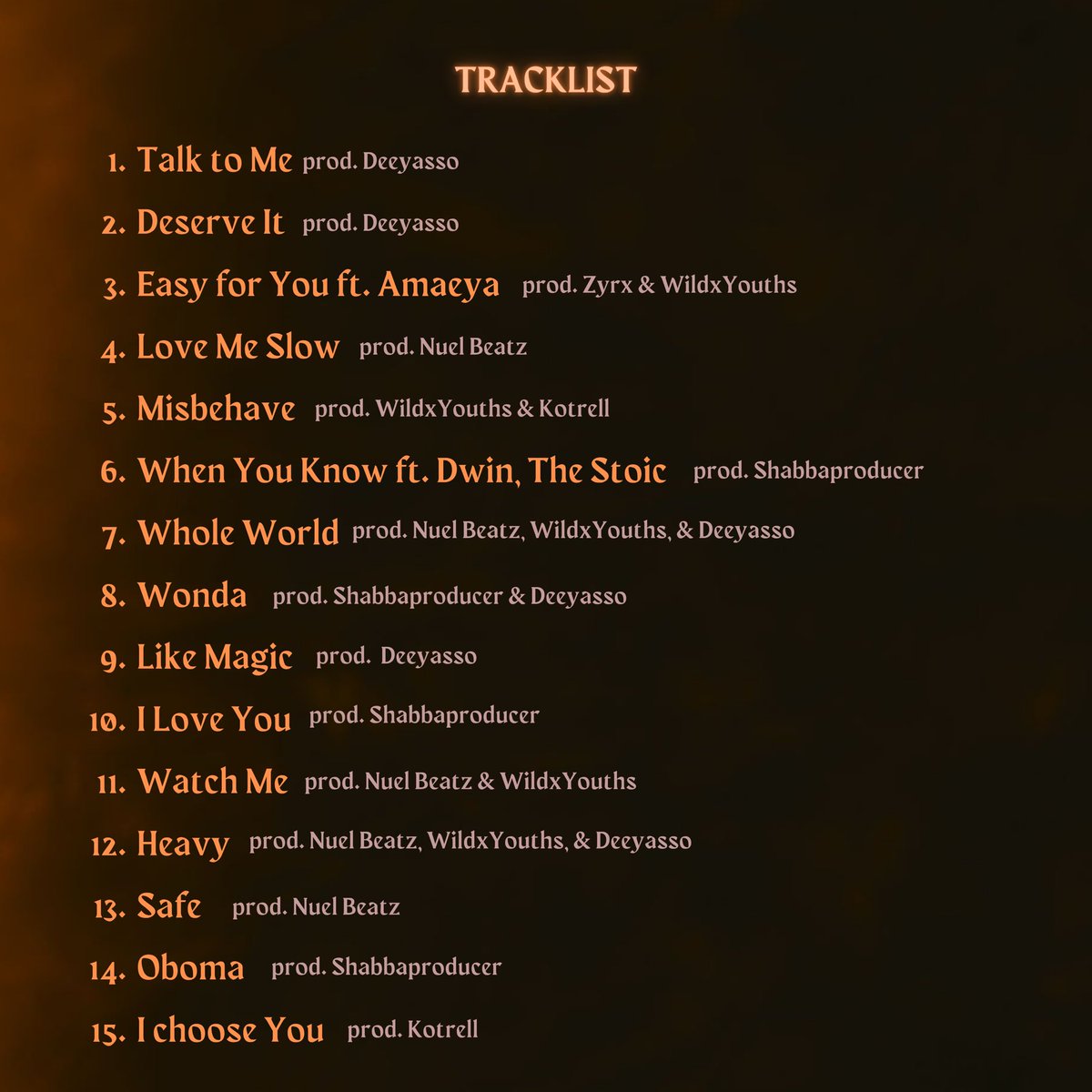
“Talk To Me” sets the tone immediately as a powerful opener, built on strummed guitars, grand piano chords, and sweeping string arrangements, creating a rich, emotive sonic bed. His delivery is soft, smooth, and gentle as he addresses a breakdown in communication within a relationship, the vulnerability carried clearly through the writing, “Words can heal, your silence is killing me / Don’t you see that all we’ve built is crumbling down? / Just talk to me / ‘Cause I can’t read your mind”.
As the song progresses, there is a deliberate injection of energy, with four-to-the-floor kicks driving the second half, his vocal delivery becoming more urgent and staccato to mirror that emotional escalation. The track expands into a stadium-like flourish with broad layered group vocals and energetic claps before resolving into a soft diminuendo that ushers the listener into And Everything In Between.

That emotional intensity carries into “Deserve It”, where marching percussion patterns punctuate grand piano chords and swelling string layers. Kotrell’s delivery remains subdued but resolute as he demands a standard of love that meets his worth, “I have to let you go / ‘Cause you don’t know what love is, and I deserve it / I deserve more than minimum / I know in my heart that it’s not too much”. His vocals stretch between falsetto pleas and rich, controlled belting, with harmonies stacking progressively as the strings swell around him.
The album continues to find its rhythm in this space with “Love Me Slow”, another standout moment where ballad sensibilities are fused with Afro-influenced elements. A slowed Afroswing drum arrangement underpins filtered piano chords, a gentle synth arpeggio, and a grounding bassline, allowing Kotrell’s bright, open vocals to glide across the instrumentation.
His performance is expressive without excess, leaning into warmth and clarity as he articulates vulnerability and cautious emotional re-entry, “I’m still healing, I’m still bleeding / It’s a miracle I’m still willing to try again / Please believe me, it’s not easy for me / I’m scared of heights, but I’m falling hard for you”. Harmonised passages, layered backing vocals, and ululations enrich the texture, reinforcing how And Everything In Between thrives when it creates space for his voice to fully inhabit the music.
Later in the tracklist, “Safe” expands this formula into something more grand and effusive, beginning with gentle piano accompaniment and wailing string layers before growing into a full-bodied stadium ballad. Kotrell’s vocals move dynamically, shifting from tender, low-register intimacy into full-bodied belting, alternating between sweeping melodic phrases and shorter, staccato lines.
As the arrangement builds, a choir joins in, culminating in a powerful moment where the instrumentation strips away, leaving only thumping drums and a resonant choral ensemble. The emotional core lands firmly through the writing, “I feel safe here in your arms / There’s no judgement for my scars / And my home is where you are / ‘Cause you choose me as I am … You make me willing to give all of myself again”. The album then closes with “I Choose You”, a deeply intimate outro that strips everything back to its bare essentials.
With ambient textures of evening cicadas and a soft breeze in the background, the song rests almost entirely on piano chords and Kotrell’s voice, framed by a brief chopped vocal sample at its edges. His delivery is pleading yet assured as he offers commitment with clarity, “I will choose you … There will be storms and time will fly / I give you my word, I will never change my mind / And I will choose you every time”. It is a short but emotionally potent closer that mirrors the opener in intent, bookending And Everything In Between with a clear articulation of Kotrell’s artistic core.
These moments form the thesis of the album, encapsulating Kotrell’s unique strengths as an artiste. His songwriting is deeply personal and grounded in his own perspective on love, romance, and relationships, while the contained instrumental palettes allow for both intimacy and dynamism. Within these spaces, his voice is given the room to fully express itself, moving between a tender lower register and powerful upper-range climaxes, while his understanding of harmony allows him to layer vocals effectively and create impactful choral moments. This is where And Everything In Between feels most assured, presenting the clearest expression of his artistic identity.
Beyond these ballads, the album branches into a second tier of songs that expand on this foundation by incorporating midtempo fusions of R&B and Afropop sensibilities. Tracks like “Easy For You” with Amaeya introduce a more rhythmic pulse while retaining his emotional core. The song opens with strummed guitars before a bassline and Afropop drum elements enter, bringing in rounded kicks, subtle hi-hats, and clacking snares.
Kotrell maintains his signature vocal approach, starting in a lower register before building into stronger, more expressive moments, supported by harmonies and backing layers. The writing continues to centre emotional disconnection, “After all of the things that we’ve been through / I carry you for head, and all of my shoulder / Me, everything I been give you / You say you go ride for me, Now I’m a loner … It seems so easy for you to move on”. Amaeya’s presence introduces a contrasting perspective, her softer, more R&B-leaning tone providing both narrative and sonic balance while also enhancing the harmonic interplay between both voices.
“When You Know” with Dwin, The Stoic leans further into vernacular influences, layering traditional percussions, talking drums, and shakers over Kotrell’s familiar guitar textures. The rhythmic structure pushes him into shorter, more agile melodic phrases, giving his delivery a different kind of fluidity while still maintaining vocal clarity.
He remains mostly in his upper register, relying less on dense harmonies and more on well-placed group vocals that expand the stereo field. Dwin’s baritone provides grounding contrast, his contribution concise but effective, “Give me one smile you make my day / Give me your heart you make my year / I can’t deny the way that I’m feeling / Who knew that love could be healing too”, while also supporting the track through additional vocal layers that reinforce the song’s sense of certainty and emotional stability.
Other songs within this tier continue to explore these hybrid spaces. “Whole World” carries a familiar warmth in its chord progression and melodic phrasing while remaining anchored in Kotrell’s romantic writing style. “Wonda” leans into Highlife influences, with clacking percussions, triplet syncopation, and lively rhythm guitars driving a more energetic arrangement, while Kotrell maintains his melodic fluidity and injects touches of Kalabari, grounding the song in his Rivers heritage.
That regional identity continues in “I Love You”, where the repeated “Iyeri e biobele eh / Iyeri iyeri iyeri eh” is carried by soft female backing vocals over a midtempo instrumental built on a rich bassline and bright mallet chords. On “Oboma”, he pivots away from romantic themes toward spiritual gratitude, delivering lines like “Surely your goodness and mercies have followed me / All of the days of my life … Oh let my heart testify / Obama e si si yewoboma” over an arrangement led by percussive textures and simple piano chords.
Meanwhile, “Heavy” introduces an Amapiano-adjacent framework, with rolling log drums, rattling shakers, and a rich synthetic bassline supporting a message centered on personal peace and release, “I dey find my peace of mind / To embrace the future, you must leave the past behind / It’s too heavy, it’s too heavy / It’s to heavy to carry … Not because of you, but for the sake of my soul”. Here, Kotrell exercises restraint vocally, allowing the instrumental and songwriting to carry more of the weight while still maintaining his presence through harmonies and ad-libs.
The final group of songs represents the furthest departure from Kotrell’s established strengths, with varying levels of success. “Watch Me” stands out within this set as a strong autobiographical entry, driven by a bass-heavy instrumental with shimmering guitar elements and a sharp Afroswing drum pattern.
Kotrell adopts a semi-rapped delivery, sitting largely in his lower register as he recounts his journey, “Twenty five from Port Harcourt, middle child and second son / First class graduate wey no dey hear word / Drop certificate make I sing my song / I know na turn by turn, so I moved out to Lagos / Cause they said they would sign us / For four weeks didn’t pick up my calls”. The focus here is firmly on narrative, offering insight into the person behind the music.
“Like Magic” moves into more conventional Afro-Pop territory, with lively saxophone runs, strummed guitars, and a thumping drumline forming the foundation. The song centres on adoration, but the writing leans toward familiar genre tropes, “My baby too correct / A billion dollars, No go fit afford am / You no fit collect am / Me I don surrender to her royal majesty / My eyes have never seen”.
His delivery is measured, and while it aligns with the stylistic expectations of the genre, it does not fully tap into the depth or vocal dynamism that defines his stronger work. A similar pattern emerges on “Misbehave”, which leans toward a bright, pop-leaning sound reminiscent of summer radio records.
Built on strummed guitars, a simple bassline, and straightforward drums, the song allows for moments of vocal expression but keeps him relatively contained melodically, “You’ve been on my mind all day / Wetin you dey find? Anything you like just take / I’ve been searching all of my life, all my life for you / I’ve been looking up and down, up and down for you”.
These songs represent clear attempts at stylistic expansion, and while the intent is evident, the execution reflects a space that Kotrell has not yet fully settled into, suggesting that continued exploration may further refine these directions as he moves forward.
And Everything In Between stands as a strong statement from a growing artiste, one that reflects both ambition and a clear desire to expand on an already established foundation. Nearly doubling the tracklist of his debut, Kotrell uses this sophomore outing to put that growth on display, building on the world he has created around themes of love, relationships, and romance, while also stretching into the spaces that exist beyond them. The title itself signals that intent, suggesting a deeper dive into the nuances and complexities that surround those central ideas, and across the tracklist, that exploration finds consistent expression.
This broader thematic reach leans directly into Kotrell’s greatest strengths. His songwriting remains one of the defining pillars of And Everything In Between, marked by a rare ability to make songs feel lived in and real. His lyrics unfold like conversations, inner monologues, and personal reflections, carrying a diaristic quality that captures moments and emotions with clarity and relatability.
There is a sense that these are not abstract ideas but experiences that have been felt and processed, presented with openness, vulnerability, and honesty. At the same time, he retains the craftsmanship of songwriting, embedding poetry, rhyme, rhythm, and flow into his writing without losing that conversational authenticity. Even stripped of melody, the words themselves hold weight, standing firmly on their own.
When paired with his vocal delivery, that writing becomes even more potent. Kotrell’s singing is technically impressive, marked by a high level of control, agility, and expressive power. He moves seamlessly between the softness of his lower register and the intensity of his upper range, reaching into falsetto with ease while maintaining clarity and emotional precision.


His range allows him to traverse octaves fluidly, and the melodies he constructs take full advantage of that flexibility. Many of the songs are structured to draw the listener in with intimate, low-register passages before building toward soaring climaxes where his belting carries the emotional peak.
Beyond the technical execution, there is a strong emotional intelligence in how he delivers each line, imbuing his voice with a clarity of feeling that consistently produces moments that resonate deeply. His understanding of harmony further enhances this, as he layers vocals thoughtfully, knowing when to build density and when to pull back, creating dynamic performances that keep the listener engaged throughout And Everything In Between.
The production plays a crucial supporting role in making all of this possible. The instrumentals across the album are carefully constructed to provide a canvas for Kotrell’s voice, shaping the emotional and sonic environment without overwhelming the performance. On the ballads, pianos and guitars take centre stage, supported by restrained drum patterns that provide structure without distraction.
On the more fusion-driven tracks, the melodic elements maintain a cohesive framework while the drums take on a more prominent role, signalling shifts in genre and injecting rhythm and movement into the songs. In both cases, the production maintains a clear understanding of its role, allowing the vocals to remain the focal point while still contributing meaningfully to the overall atmosphere of And Everything In Between.
This is all brought together by strong audio engineering that prioritises vocal clarity and presence. Even in moments where the arrangements become denser with layered harmonies and backing vocals, the mix avoids muddiness, ensuring that each element remains distinct. At the same time, the more intimate passages are handled with care, keeping the lead vocals front and centre and allowing their emotional weight to come through fully.
There are occasional moments where ad-libs drift into the background or basslines overlap with lower harmonies, but these are minor and do not detract from what is ultimately a cohesive and engaging listening experience. The result is a collection of songs that feel poised to extend beyond the album itself, finding life in personal moments, whether as expressions of feelings that are difficult to articulate or as soundtracks to significant emotional experiences.
As a complete body of work, And Everything In Between feels revealing. It presents an artiste who is growing not only in confidence and technical ability but also in self-awareness. There is a clear understanding of his strengths, particularly in the way the album opens and closes with its most compelling ballads, reinforcing where he is most effective and assured. In that space, he demonstrates a level of mastery and ease that sets a high bar for his artistry.
At the same time, the album reflects a willingness to push beyond those boundaries. The fusion tracks point to an awareness of broader musical possibilities, of commercial appeal, and of how his unique voice can intersect with more mainstream sounds.
Even the moments that do not fully land carry value as indicators of an artiste willing to take risks and step outside of his comfort zone. That willingness to explore, experiment, and evolve suggests a trajectory that is still unfolding, one that points upward and forward as Kotrell continues to define what And Everything In Between represents for his future.
Lyricism – 1.5
Tracklisting – 1.3
Sound Engineering – 1.5
Vocalisation – 1.6
Listening Experience – 1.5
Rating – 7.4/10
Yinoluwa “Yinoluu” Olowofoyeku is a multi-disciplinary artist and creative who finds expression in various media. His music can be found across all platforms and he welcomes interaction on his social media @Yinoluu.