

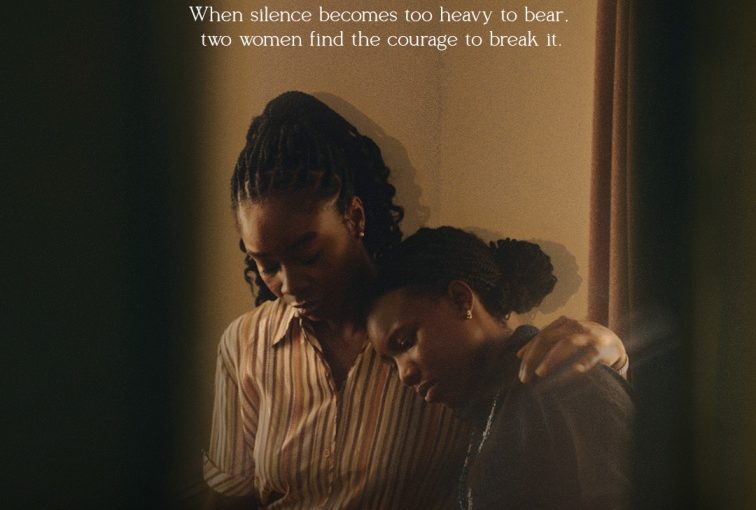

Silence is Loud is a film that knows what it is about and has the craft and the courage to be exactly that: nothing more performed, nothing less honest.
By Joseph Jonathan
There is a particular cruelty that secondary school can produce; not the dramatic, cinematic kind, but the slow, grinding kind that operates through whisper and exclusion, through the sudden withdrawal of belonging that teenagers weaponise with a precision that adults either forget or prefer not to remember.
I know this cruelty from the inside. As a secondary school student, I was on the receiving end of rumours and verbal abuse that had no basis in truth, and I know what it means to walk into a room and feel the temperature change, to understand, without anyone saying so directly, that a story about you has arrived before you have. What saved me, or at least steadied me, was a Literature-in-English teacher who saw me. She did not go above and beyond. She did not fight battles on my behalf or confront my tormentors. But she saw me, and in seeing me, she gave me something to reach toward.
I thought about her often while watching Silence is Loud, Abba T. Makama’s deeply felt film, because the film understands, with a specificity that only lived experience can produce, what it means to be seen at the precise moment when the world has decided to look away.
This personal disclosure is not incidental to the review. It is, in fact, the point. Silence is Loud is the kind of film that does not allow you the comfortable distance of pure analysis. It reaches into the audience and finds something real there, something that most viewers — particularly those who grew up in Nigerian schools, in Nigerian homes, in Nigerian communities where reputation is currency and shame is punishment — will recognise not as fiction but as memory. That it does this without manipulation, without the emotional blackmail that some other films deploy when dealing with difficult subject matter, is the measure of its achievement.
Co-written by Tapsy Gomwalk and Dika Ofoma and directed by Makama, one half of the S16 Collective, Silence is Loud follows Ayo (Sapphire Ekeng), a secondary school student whose world contracts rapidly when rumours begin to circulate that she has contracted HIV. The rumours are baseless. But in the economy of secondary school social life (and in the broader Nigerian cultural landscape where stigma around HIV remains so entrenched that diagnosis is still, in many communities, treated as a moral verdict rather than a medical fact), truth is largely beside the point. What matters is the story, and the story has taken hold. Ayo’s grades slip. Her friendships dissolve. Her isolation deepens. And in the most painful dimension of her ordeal, the people who should constitute her first line of protection (her family) fail her in ways that the film renders with unflinching honesty.
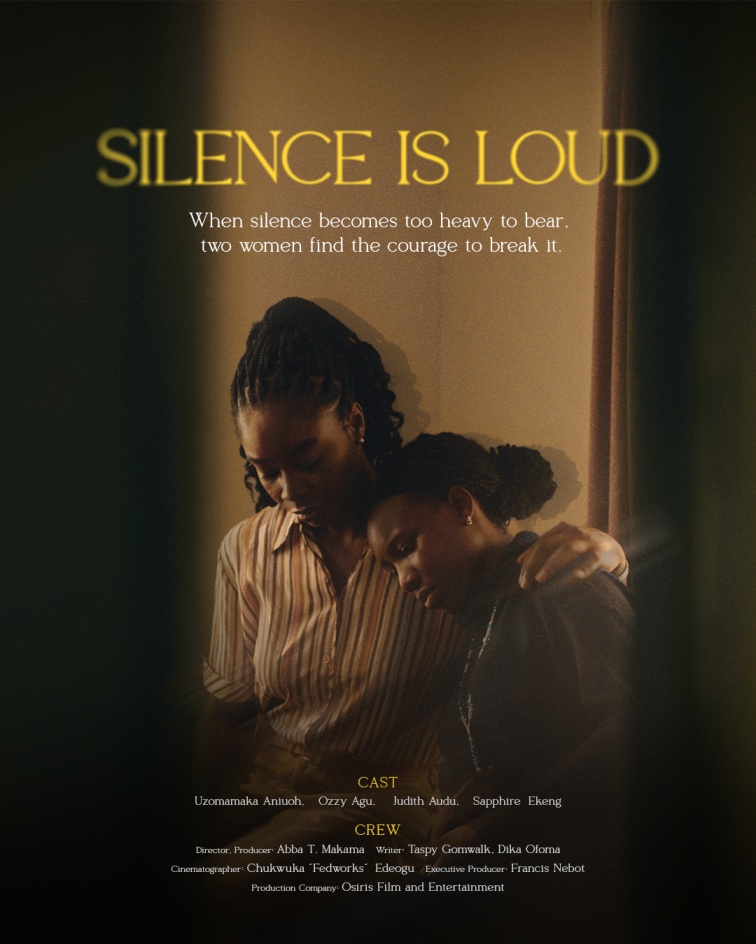
HIV stigma in Nigeria operates within a specific cultural logic that the film understands and interrogates. Since the virus’s emergence in the country in the 1980s, public health campaigns have struggled against a deep-seated tendency to frame infection as the consequence of moral failure: as evidence of promiscuity, recklessness, or some fundamental character defect that the infected person has brought upon themselves.
This moralisation of illness is not unique to Nigeria, but it takes on a particular intensity in a society where communal reputation is both social currency and survival mechanism, where a family’s standing in a community can be built or destroyed by what people believe about its members. The result is that the stigmatised person faces a double burden: the condition itself, and the community’s response to it, which frequently proves more damaging than the condition. Silence is Loud places Ayo inside this double burden and stays there, refusing to let the audience look away.
What makes the film’s handling of this material remarkable is its refusal to be preachy about it. There is a particular failure mode that socially conscious African films fall into: the tendency to subordinate character and story to message, to let the film become a vehicle for positions rather than a portrait of people. Silence is Loud sidesteps this consistently. Its themes of stigma, shame, victim-blaming, and institutional failure are present in every scene, but they emerge from character and situation rather than being imposed upon them. The film trusts its audience to draw conclusions. It does not draw them on our behalf.
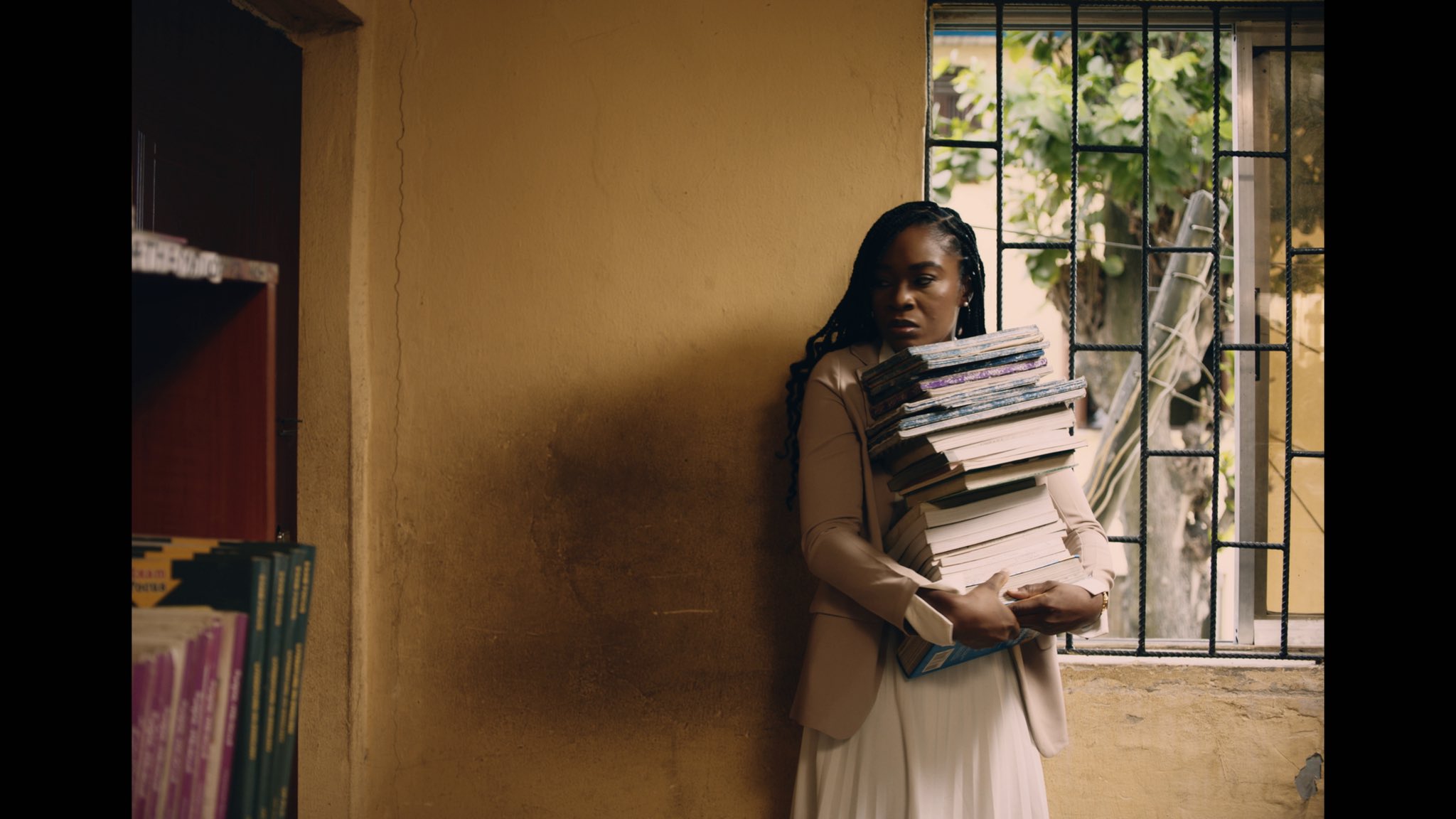
Into Ayo’s deteriorating world steps Ms. Henrietta (Uzoamaka Power), her Literature-in-English teacher, and it is in the relationship between these two characters that the film locates its emotional and thematic centre. What the screenplay does with Ms. Henrietta is more sophisticated than the standard mentor-student arc that the premise might suggest.
She is not a saviour arriving from outside the system with clean hands and uncomplicated motives. She is herself a victim of the same culture of silence and shame that is consuming Ayo; carrying her own wound from a workplace rumour years earlier, still navigating the stigma it produced, still fighting for legitimacy in an institution that has never quite let her forget what was said about her.
Her intervention in Ayo’s situation is therefore not simply an act of professional duty or moral virtue. It is personal. It is the decision of a woman who knows exactly what it costs to be the subject of a story you did not write about yourself, and who refuses, at real professional and personal risk, to let another person pay that cost alone.
This is where the film makes its most quietly radical argument: that the people who stand up for others are rarely the ones who have it all figured out. Ms. Henrietta is not whole. She is not unbroken. She stands up anyway, partly because she is built that way, and partly because she recognises in Ayo something of herself, and the recognition will not let her rest.
The film also poses, through Ms. Henrietta’s situation, a question it does not fully answer, deliberately: who stands up for the person who stands up for others? Who sees the one who sees everyone else? It is a question with specific resonance in Nigerian professional life, particularly for women, who are routinely expected to absorb institutional mistreatment in silence while simultaneously being the emotional and practical load-bearers for those around them.
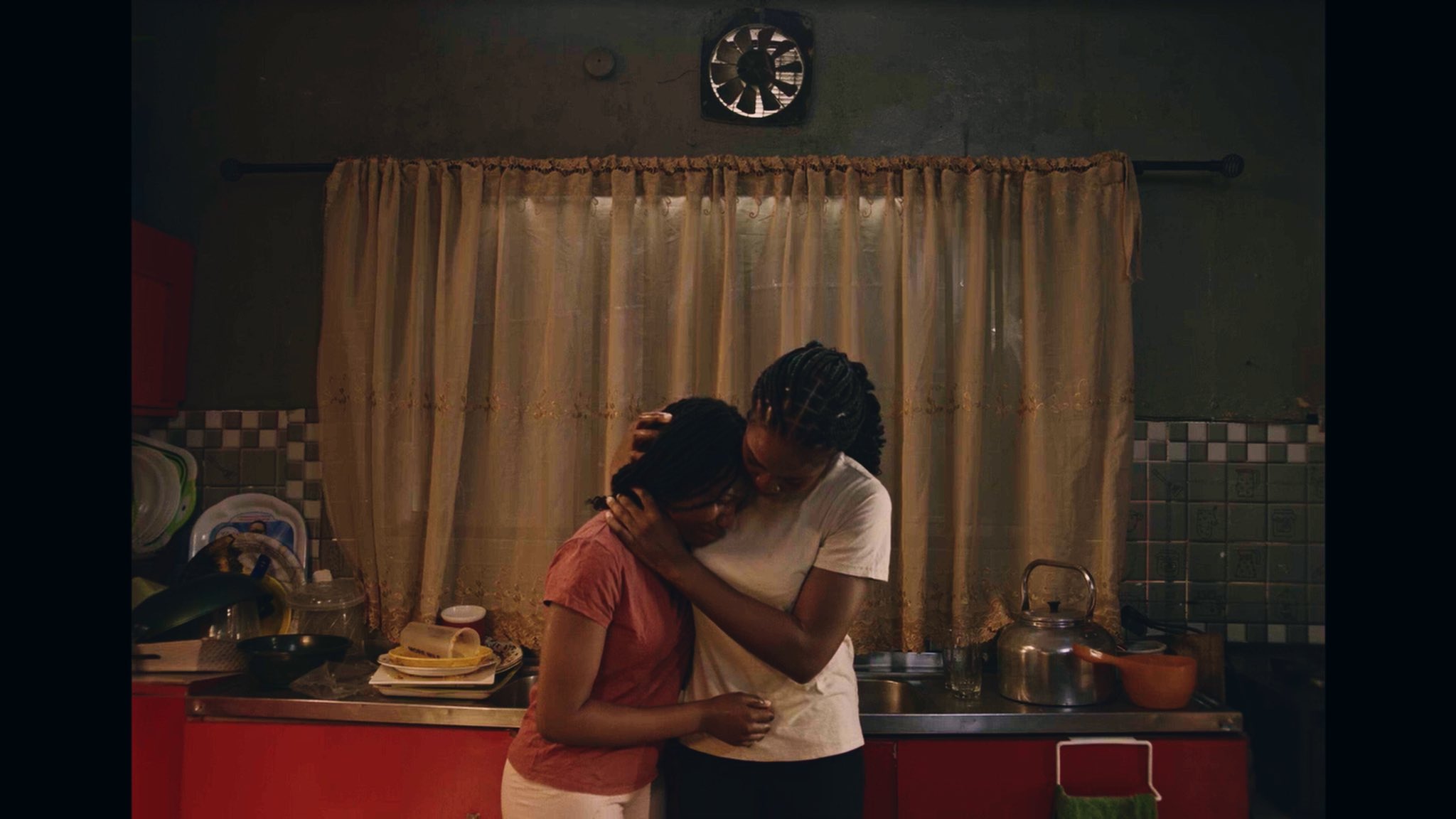
The film’s indictment of adult failure is most concentrated in its portrait of Ayo’s father, Mr. Adekunle, whose response to his daughter’s ordeal reflects something painfully familiar in Nigerian parenting culture. His primary concern, as the rumours close in around the family, is not Ayo’s wellbeing but the family’s reputation: what people will think, what the community will say, whether the shame can be contained.
This is not an unusual portrait of a Nigerian father; it is, in many respects, a representative one. The cultural pressure on Nigerian parents to produce children who reflect well on the family name is so intense, so foundational to how respectability is constructed in Nigerian society, that it can catastrophically distort parental instinct. The parent who should be the child’s unconditional refuge becomes, in this calculus, another instrument of judgment. Ayo is failed not by strangers but by the person whose love she has the most right to count on. The film does not demonise Mr. Adekunle. Instead, it explains him, and in explaining him implicates the culture that produced him.
Against this backdrop of adult failure and institutional inertia, the film’s attention to the textures of teenage life is equally profound. Sunday, the student who originates the rumours does so out of spite rather than malice in its fullest sense, and this distinction matters. The film understands that adolescent cruelty is often not calculated but impulsive, that a teenager can set a fire without understanding that fire spreads, and that the damage this causes is no less real for being born of thoughtlessness rather than deliberate evil. The confusion, the peer-driven groupthink, the way rumour travels through a school community with the speed and indifference of weather, is rendered with the accuracy of a filmmaker who has either lived inside it or listened with exceptional care to those who have.
Makama’s visual approach, in collaboration with cinematographer Chukwuka Edeogu, brings to Silence is Loud a compositional care that elevates the material without aestheticising it. Every frame is considered: movement and shot selection working in service of emotional state rather than decorative purpose. The camera knows when to stay close and when to pull back, when intimacy serves the scene and when distance is the more honest choice.
Makama has long used classical music as an atmospheric signature, and here it functions as emotional counterpoint; the formal, European register of the music brushes against the very specific, very Nigerian textures of the story in ways that deepen rather than complicate. It is by now identifiably his, such that a Makama film without classical music would be Fela without the saxophones.

The performances across the film are, largely, excellent. Uzoamaka Power continues to demonstrate why she is among the most compelling presences in contemporary Nigerian cinema. As Ms. Henrietta, she calibrates precisely between the character’s visible strength and her concealed vulnerability; fierce when the moment demands it, measured when restraint is the more powerful choice, and throughout it all, carrying the specific weight of a woman who has learned to pick her battles not because she lacks courage but because she understands what courage costs.
Sapphire Ekeng, as Ayo, is a genuine revelation. To carry a film of this emotional density as its youngest principal performer, to hold your own against more experienced actors in scenes of significant dramatic weight, requires an instinctive understanding of character that cannot be fully taught. Ekeng has it.
Ozzy Agu as Father Francis, the school principal, brings a measured poise to a limited number of scenes that makes his presence felt beyond its proportion to his proportionate screen time. His character’s delayed decisiveness (the reluctance to intervene, to take the stance that the situation clearly calls for) is frustrating in the way that institutional failure is always frustrating: you can see exactly what should be done, and you can see exactly why the person positioned to do it is finding reasons not to.
There is a scene in Silence is Loud in which Ayo prepares to leave home in the middle of the night. She is in distress. She is running. And yet, before she goes, she stops to arrange her younger siblings’ scattered slippers neatly beside the bed. It is the kind of detail that a less attentive screenplay would not include, and a less confident director would not trust. But it is doing significant work. It tells us, without a word of dialogue, who Ayo is beneath the crisis that has been visited upon her: the girl who has, in the absence of a mother, assumed a quiet maternal responsibility for her siblings, who carries that responsibility so deeply that even in her worst moment, even in the urgency of flight, it does not leave her. The neatly arranged slippers say more about Ayo’s character than any expository scene could. It is the film at its most sophisticated: turning the mundane into the meaningful, finding the person inside the situation.
If Silence is Loud has a technical liability, it lies in its audio production. The film’s dialogue is, at points, audibly inconsistent — the kind of unevenness that suggests Automated Dialogue Replacement work of varying quality across the cast. In certain scenes, the sonic texture of one performer’s dialogue sits noticeably apart from the others in the same scene, as though the voices were recorded in different acoustic environments and the join has not been fully smoothed in the mix.
It is not a constant problem, but it is a noticeable one, and in a film whose power rests so heavily on intimacy, inconsistent audio is a more disruptive flaw than it might be in a louder, more kinetic production. It does not undo what the film achieves, but it is a distraction that more careful post-production could have eliminated.
These are, however, the complaints of a viewer who wanted the film to be as technically complete as it is emotionally and intellectually rich. Silence is Loud is a film that knows what it is about and has the craft and the courage to be exactly that: nothing more performed, nothing less honest. It understands that silence, in the Nigerian and African contexts it depicts, is not simply the absence of speech.
It is a social structure, enforced by shame and sustained by the collective agreement not to name what everyone already knows. The film’s title is its argument: silence, far from being neutral, makes noise. It damages. It isolates. It kills, sometimes slowly and sometimes not. And the people who break it (the Ms. Henriettas of the world, imperfect and wounded and standing up anyway) are not heroes in the cinematic sense. They are simply people who decided that the cost of speaking was lower than the cost of staying quiet.
Rating: 4/5
Joseph Jonathan is a historian who seeks to understand how film shapes our cultural identity as a people. He believes that history is more about the future than the past. When he’s not writing about film, you can catch him listening to music or discussing politics. He tweets @Chukwu2big