

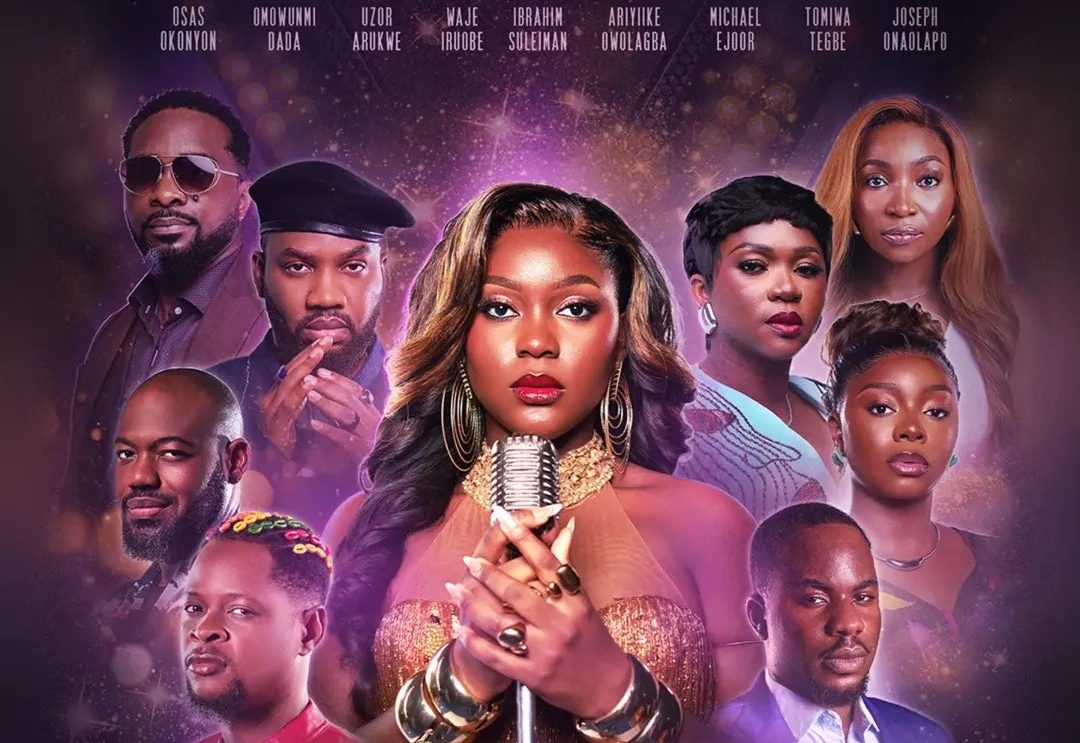

Evi feels like a do-over, as much for its director as for its eponymous protagonist. And that sentiment towards second chances might be Evi’s greatest virtue.
By Vivian Nneka Nwajiaku
When I picked up a ticket for the Nollywood musical drama, Evi (2026), I wasn’t sure what exactly to expect. Perhaps, a cross between Inkblot’s Nancy Isime-led Superstar (2021) and Inkblot’s Mike Afolarin-led A Lagos Love Story (2025)? That might have something to do with Evi’s marketing as a take on the brutal world of Afrobeats (cue Afolarin’s beaten-down King Kator) and its plot revolving around the fall and rise of an entertainment star (reminiscent of Isime’s talented but long-suffering Queen Ejiro), not to mention that one of the lead tracks on the official soundtrack is literally titled “Evi the Superstar”.
Or it might be that I was subconsciously making certain connections. As it turns out, Evi director Uyoyou Adia co-wrote Superstar with Inkblot co-founder Chinaza Onuzo (who was also a co-writer on A Lagos Love Story) and Superstar director Akay Mason. In Evi, Adia takes total control as sole writer and director. And in retrospect, the more focused Evi feels like a do-over, as much for its director as for its eponymous protagonist. And that sentiment towards second chances, much to my pleasant surprise, might be Evi’s greatest virtue.
The film follows Evi (Osas Okonyon), an arrogant, quasi-famous singer who loses everything when her label cuts her off with neither remorse nor ceremony—no valuable catalogue, no endorsement, no money. Evi is forced to re-learn the brutality of a music industry that is particularly cruel to women, while embarking on the difficult process of self-evaluation and rediscovery. With fake friends eagerly dispersing, she quickly finds that her only support system is the reliable Onome (Omowunmi Dada), her best friend who works as a waitress. But to rebuild her music career, Evi needs to make new friends in an industry that thrives on exploitation.

Enter the two men who will ultimately make or mar Evi’s dream. On one hand is Kola (Uzor Arukwe), a gambling addict and former starmaker who hopes that becoming Evi’s manager will restore his glory and, more importantly, provide the funds to settle the debt he owes a dangerous loanshark (Tomiwa Tegbe). On the other hand is Dayo (Ibrahim Suleiman), a celebrated musician struggling with his album and keen on making Evi his muse. It is with the dynamic between Evi and one of these men that the film makes its pitch for second chances. And with the other, it explores a rather unique angle to exploitation that coats the film with an added layer of importance.
Often, stories told around emotional exploitation unfold with the audience kept in the dark, motives revealed piecemeal until they culminate in a climax that is either explosive or deliberately ambiguous. Adia takes a fascinatingly different approach, adopting a peculiar brand of exploitation—rarely discussed, though not uncommon in the creative space—while placing her cards on the table from the outset.
As we watch Evi jump at what appears to be a wise gamble, fully aware that she’s really being fattened for slaughter, and as we watch the characters onscreen be oblivious to the telltale signs, we are starkly reminded—sometimes heavy-handedly—of how emotional abuse often works: entrapment masked as affection, devotion, and mutual benefit.
Evi marks Okonyon’s debut lead role in a feature, and she puts in a decent shift navigating Evi’s journey with equal parts weariness and conviction, never really falling behind the more experienced actors. She also happens to have an interesting voice that comes in handy in carrying the film’s music, some of which turn out to be quite good, even better at selling the story than the film’s dialogue.
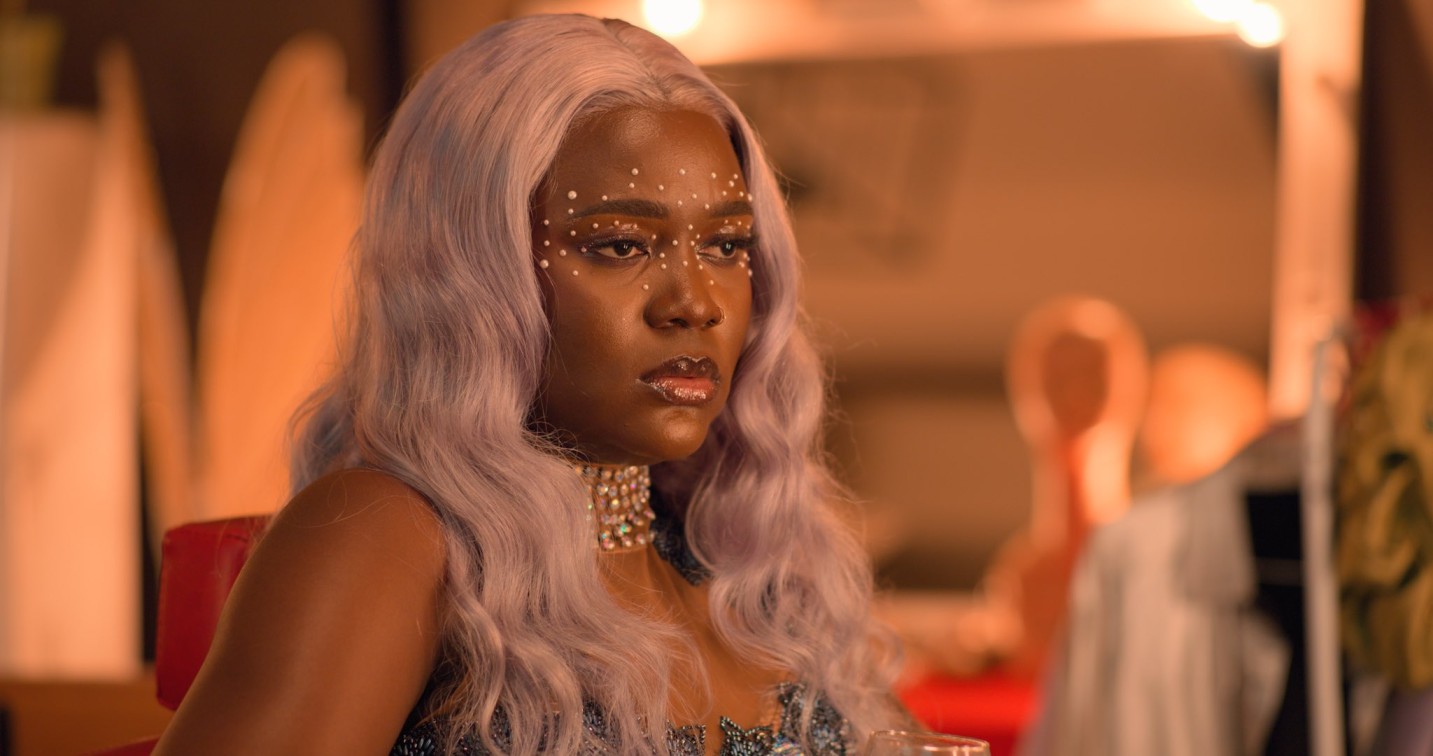
In fact, there is a particularly effective mid-film musical sequence, after Evi takes a job as a waitress-cum-singer at a small lounge, that’s both emotional and catchy, and encapsulates the entirety of Evi’s circumstances, hopes and fears. But many times, there’s a feeling that Evi is reaching for emotional depth that Okonyon and the film are a tad too restrained to reach, both in and out of the music.
Plus, the music does not always play to her strengths, and as if the noticeable sync issues are not distracting enough, there is too much external modification that undermines the essence of the music or the credibility of the performances. It’s most obvious when Evi duets with Dayo and enhancements have to be made, partly to compensate for Suleiman’s musical limitations. But even the sanctity of Evi’s most personal moments are not always protected. When studio-recorded music—of questionable production quality—replaces Evi’s raw voice while she supposedly cries her heart out in the privacy of her bedroom, how can such a moment possibly remain potent?
Even more so, the film loses so much emotional efficacy between its clunky subplot setups and the exposition-heavy dialogue that sways from stilted to bland. But especially due to the pacing. Evi, the film as much as the character, sits with conflicts, but it sits with them for so long that their resolutions ultimately land as inadequate. The first act alone is unjustifiably lengthy and plagued by inconsistent pacing, and it is at least an hour before Evi starts to find its feet.
At over two hours, a chunk of the film should have been left on the cutting floor, especially considering that the film’s main characters are, for a good part of the film, neither sympathetic nor particularly engaging. Who wants to spend half of a film watching characters with bad attitudes and no redeeming qualities, solely based on the expectation that their eventual transformation may justify the wait?



Yet, there is merit to be found in the film’s exploration of its themes. Evi makes a warm, even if clunky, case for second chances. There is something compelling about how it depicts emotional abuse and mirrors the destructive repetitiveness of addiction. And there’s a poignancy to its portrayal of the shared realities of the female experience.
Musician Aituaje “Waje” Iruobe features as a music executive, and former music executive Ariyike “Ariyiike Dimples” Owolagba as a singer who has survived the journey that Evi is now on. Through them, but also through Evi’s journey, Adia captures the exhausting balancing act society demands of women in male-dominated spaces: to balance toughness with approachability and distance with accessibility.
It’s a credit to Adia that Evi marks an improvement from its cinematic predecessors-in-spirit, even musically. It could do with a lot of tightening, less emotional inhibition, and much better audio production quality for a music-themed film. But it matters that I’ve revisited some of its original songs like “No Yawa”, “Brighter Day”, and “Where Do I Go” at least a couple of times since watching Evi. It certainly counts that this is one of the very few Nollywood movies this year that did not leave me worse off than they met me.
Rating: 3.2/5
*Evi opened in Nigerian cinemas on 27th March 2026.
Vivian Nneka Nwajiaku is a writer and film critic writing from Lagos. She has a master’s degree in law but spends most of her time consuming, studying and discussing film and TV. She’s particularly concerned about what art has to say about society’s relationship with women. Connect with her on X @Nneka_Viv