

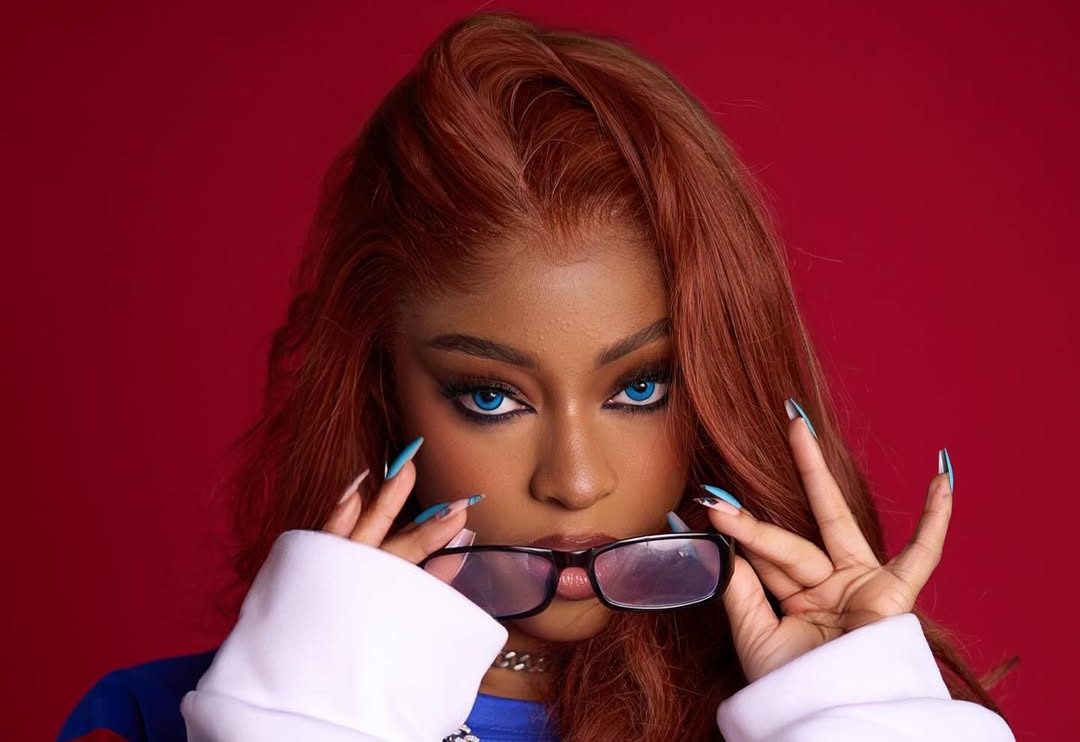

Barely Legal consistently returns to the same central pillar: vocal performance. Vocal power, emotional expression, melodic agility, stylistic identity, and performance energy form the connective tissue holding the entire record together.
By Yinoluwa Olowofoyeku
Few young artistes have risen through the ranks of Nigerian music as quickly and convincingly as Qing Madi. Born Chimamanda Pearl Chukwuma in Benin City, the singer-songwriter first captured widespread attention with the viral success of “See Finish” in 2022, a breakout record whose emotional directness and melodic appeal immediately distinguished her from many of her contemporaries.
Rather than becoming a one-song success story, however, Qing Madi steadily built upon that momentum through a string of well-received releases, including “Ole” with BNXN, “American Love”, and her self-titled EP, each further showcasing her ability to blend contemporary Afropop with R&B, soul, and emotionally driven songwriting.
Still in her teens, she quickly developed a reputation as one of the most promising voices of her generation, earning widespread acclaim for her vocal maturity, melodic instincts, and ability to communicate vulnerability with remarkable confidence. By the time she released her debut album, I am the Blueprint, in 2025, Qing Madi had already established herself as one of the leading figures among Afropop’s emerging class, building a rapidly expanding audience both within Nigeria and internationally.
That trajectory provides important context for Barely Legal, a project arriving during a period of significant growth and visibility for the young artist. Released in the year of her twentieth birthday, the project naturally carries associations with transition, adulthood, and self-definition, themes that mirror Qing Madi’s own evolution from teenage breakout star to one of the genre’s most closely watched young talents. The release also marks an important moment beyond the music itself, arriving alongside the continued expansion of KFMD, the platform and creative venture closely associated with her growing ambitions as an artiste.
Following the success of I Am the Blueprint and amid increasing international recognition, Barely Legal finds Qing Madi entering a new phase of her career with greater confidence, broader reach, and the weight of rising expectations. For an artiste whose ascent has thus far been defined by steady progression rather than fleeting virality, the project represents another significant milestone in a journey that continues to gather momentum.
“Lady” opens Barely Legal with exactly the kind of bright, uncomplicated romantic energy that its title suggests. Upbeat Afrobeats percussion drives the record from the outset, with rattling shakers, bongos, crisp rimshots, steady kicks, and a bright chord progression providing a simple but effective foundation. The instrumental remains intentionally uncluttered, leaning on basic bass movement and light synth string arpeggios while allowing the vocals to occupy centre stage.
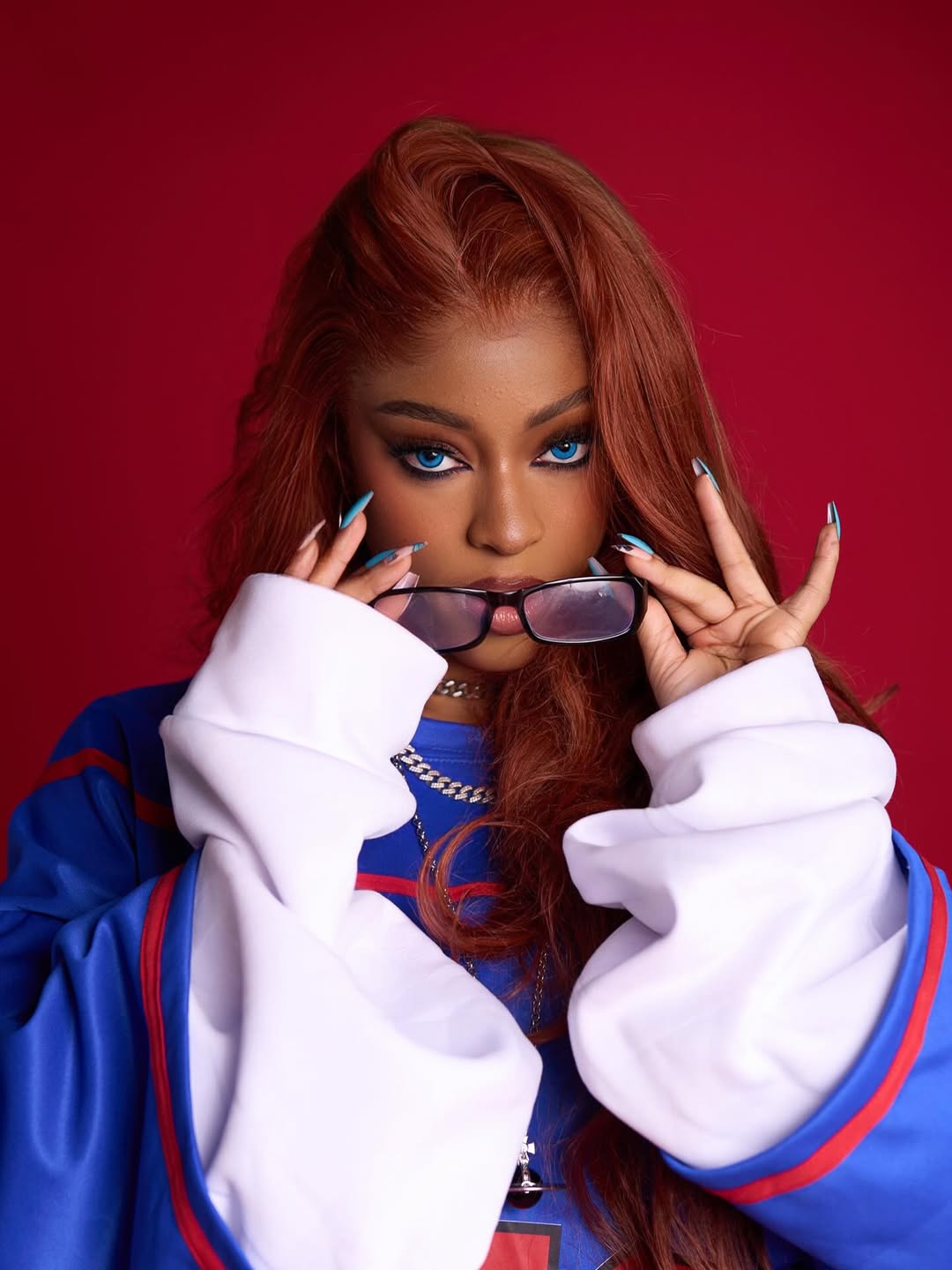
Qing Madi begins in a lower register, delivering straightforward melodies elevated by rich harmony stacks, countermelodies, and layered vocal textures that create movement without complicating the song’s easygoing nature. The lyricism follows suit, built around uncomplicated affection and admiration as she sings, “Baby do you notice that I’m right here/ I’m trynna be your lady oh/ I’m trynna be your lady do you/ Baby do you notice that I’m right here, oh/ Is another blessing when I wake up next to you”.
Veteran superstar, Tiwa Savage, arrives with the agility, vocal dexterity, and effortless charisma that have defined her career for well over a decade, adding dynamic melodies and harmonies that intertwine naturally with Qing’s softer vocal tone. Flavour closes proceedings in his familiar lover-boy mode, bringing his signature Igbo romanticism and easy charm. The writing remains simple throughout, but the chemistry between all three performers, coupled with the increasingly layered harmonies that bring the song to its conclusion, makes for a warm and effective introduction to the project.
The groove deepens on “10 Over 10”, which leans into a smooth Afro-Swing pocket built around detailed percussion, textured shakers, thumping kicks, filtered synth chords, and a sleek chord progression. Wande Coal’s unmistakable voice introduces the track before the instrumental drops fully into place, immediately establishing the polished atmosphere that follows. Qing glides effortlessly across the production, her delivery smooth and melodic, while Wande’s piercing vocals, bright harmony lines, and signature ad-libs add additional colour to the arrangement.
Their chemistry thrives on the contrast between Qing’s softer approach and Wande’s more commanding vocal presence. For the most part, the song’s R&B-leaning vocal style works beautifully, although Wande’s brief rapid-fire delivery moment slightly interrupts some of the smoothness the track otherwise cultivates. It is a minor distraction in a song that largely succeeds because both performers remain locked into the same romantic wavelength, celebrating a partner’s appeal with admiration. Even when the vocal approaches differ, both artists remain committed to the song’s melodic core.
“Come Slide” shifts Barely Legal into more overtly sensual territory. Latin-tinged acoustic guitar strums, bright piano chords, rich bass, spacious percussion, and steady kicks establish a relaxed but seductive atmosphere. The song centres on attraction, intimacy, and spending time together, with Qing fully embracing an R&B-inflected delivery style that allows her vocals to stretch and breathe across the instrumental.
BNXN arrives with the sharp, bright vocal tone that has made him one of Afro-Pop’s most reliable collaborators, injecting additional sensuality and flirtation into the record. His presence is complemented by layers of backing vocals that enrich the song’s texture. Victony follows with a brief but effective appearance, bringing his distinctive high-register tone and melodic approach to the mix.
The combination of Qing, BNXN, and Victony creates an intriguing blend of vocal textures that gradually build into increasingly dense harmony stacks as the song progresses. Lyrically, the mood is straightforward and flirtatious, with sentiments such as “Mmm baby you know/ You fit kill someone/ You got me waiting for you all night long/ I want to spend/ Every second with you” reinforcing the song’s focus on romantic anticipation and physical chemistry.
“Pepper Me” begins with soft humming over acoustic guitar before pivoting into energetic Afrobeats drums driven by steady four-on-the-floor kicks. Zinoleesky enters first, his signature Afro-Adura style immediately recognisable through nasal inflections, rhythmic phrasing, and melodies built as much around cadence as traditional vocal runs. Bass synths establish the melodic foundation while Zinoleesky’s quick-fire delivery gives the song its initial momentum.
The chorus expands considerably once Qing joins the record, introducing a softer, smoother vocal quality that contrasts effectively with Zinoleesky’s grittier approach. Her layered harmonies and melodic phrasing add warmth and lift to the simple chord progression underneath. The song’s success largely stems from this interplay between both artistes rather than any particularly complex arrangement.
The romantic lyricism remains uncomplicated, with lines such as “Pepper me o pepper me o/ Say my body just dey pepper me o/ Baby girl you fine dem no dey tell person o/ You getty vibe wey be legendary o” serving as catchy vehicles for the pair’s vocal chemistry. The song also arrives carrying some interesting history, having previously become entangled in a label dispute that saw it released, removed, and eventually restored through its appearance on Barely Legal.
“1 Or 2” pushes further into Amapiano and Afro-Adura territory through heavy percussion, growling bass synths, persistent snares, bright rhythm guitars, string accents, and thunderous log drums. Qing once again demonstrates her strength as a vocalist, stacking harmonies and backing vocals throughout the record while delivering a playful, catchy lead performance that balances rhythm and melody with ease.
Her melodies remain deceptively simple, but the surrounding vocal layers create constant movement and energy. South African vocalist Eemoh brings an unmistakable Amapiano sensibility to the track, his vocal delivery, language blending, and melodic instincts fitting naturally into the production. Zlatan enters from the opposite end of the spectrum, delivering the gritty, hard-hitting street energy that has long defined his contributions to Nigerian popular music.
The contrast works surprisingly well, with Qing and Eemoh frequently softening the edges after Zlatan’s more forceful appearance. As an international collaboration, the song successfully captures multiple strands of contemporary African popular music within a single framework.
The project’s sole solo outing arrives with “Jowo”, a song almost entirely powered by Qing’s performance. Bright guitars establish the harmonic foundation alongside synth melodies, rich basslines, electric piano stabs, and tightly syncopated Afrobeats percussion built around steady kicks and sharp clacking snares.
Without guest appearances to share the spotlight, Qing carries the song through sheer vocal presence. The writing centres on admiration and devotion, while her performance continuously shifts between registers to maintain momentum and emotional variation. Lower-register passages glide comfortably through the verses before opening into brighter, more powerful melodies during the chorus.
The strength of the song lies not in any elaborate instrumental flourish but in Qing’s ability to generate texture through harmonies, ad-libs, and layered vocal arrangements. Lines such as “See any boy pass you/ Any boy wey fine pass you na wash/ I no wan lie to yuh/ In this battle/ Borderline case if I cross you na war” reinforce the direct romantic focus while allowing her vocal charisma to remain the primary attraction.
“Adding Up” closes Barely Legal on one of its strongest vocal showcases. A bassline and synth arpeggio establish the chord progression before hi-hats and a thumping kick usher in a retro R&B-inspired Afro-fusion groove. Qing immediately sets the melodic tone through sweet, romantic phrasing that leans heavily into her R&B influences.
As additional drum elements arrive, including subtle log drums and 808 bass reinforcement, the song develops into a rich duet built around vocal interplay. Rotimi proves an excellent match, bringing his own R&B pedigree to the record through agile melodies, emotive phrasing, soft mid-register singing, and occasional upper-register flourishes. His performance mirrors Qing’s energy while providing enough contrast to keep the exchange engaging.
Together, they create several memorable moments through harmonies and overlapping vocal runs, turning relatively simple romantic sentiments into compelling musical exchanges. The tension within the relationship emerges through lines such as “The truth I can’t ignore / I did the most you did the minimal / And you came knocking at the door for me / Why you keep running after me?” but the focus remains firmly on the strength of the performances themselves.
As a duet, it succeeds because both vocalists understand precisely when to lead, when to support, and when to allow their voices to blend into something larger than either performance individually.
What makes Barely Legal particularly interesting is the position from which it arrives. Qing Madi is still remarkably young, yet finds herself navigating circumstances that many artists far deeper into their careers would struggle to manage, including a highly public legal dispute with her label.
Against that backdrop, the project feels like a statement of resilience and character, a refusal to be defined by turbulence off the record. It is also a fascinating vehicle for an artist at this stage of her journey because it places her shoulder to shoulder with some of the biggest names across multiple generations of African music.
Veterans such as Tiwa Savage, Flavour, and Wande Coal share space with contemporary heavyweights like BNXN, Victony, Zinoleesky, Zlatan, and Rotimi. Yet the most impressive thing about Barely Legal is that Qing never feels overshadowed. At no point do these features feel as though they are carrying her through the project.
Instead, she consistently matches the energy, charisma, melodic instincts, and vocal quality of every guest she encounters. The project ultimately lands as a declaration of belonging. These stars sound comfortable beside her because she sounds equally comfortable beside them. If she can stand on equal footing with artists of this calibre, then the conclusion feels obvious: she belongs in those conversations too.
The foundation of that confidence is her vocal performance. Qing Madi appears to have unlocked an understanding of her voice unusually early in her career, blending Afropop and R&B sensibilities into a style that feels immediately recognisable without ever needing to announce itself through vocal gymnastics. She is not interested in presenting herself as an overpowering technical vocalist, yet her control, clarity, and consistency reveal a deep understanding of her strengths.
Rather than constantly pushing for range or spectacle, she operates comfortably within her most effective registers, extracting maximum impact through melodic choices, phrasing, and delivery. Her greatest weapon may be her command of vocal layering.

Throughout Barely Legal, simple melodies are elevated through carefully stacked harmonies, backing vocals, countermelodies, and textural layers that create movement and richness within otherwise straightforward compositions. The songwriting often thrives on catchy melodic construction, but those melodies gain additional life through the sheer density and quality of the vocal arrangements. Dynamic singing, expressive performances, and thoughtful layering repeatedly transform simple ideas into compelling musical moments.
It is fitting, then, that nearly every featured artiste on the project is also known primarily as a vocalist and performer. Whether it is Tiwa Savage’s dexterity, Wande Coal’s melodic brilliance, BNXN’s sharp vocal character, Victony’s distinctive tone, Zinoleesky’s rhythmic instincts, or Rotimi’s smooth R&B sensibilities, Barely Legal consistently returns to the same central pillar: vocal performance. More than production, lyricism, or experimentation, this is a project driven by voices. Vocal power, emotional expression, melodic agility, stylistic identity, and performance energy form the connective tissue holding the entire record together.
Because the performances are so strong, many of these songs would likely remain engaging even in stripped-back acappella form. Thankfully, they are supported by a collection of catchy, energetic productions assembled by a varied group of producers who understand precisely what role the instrumentals need to play.
The beats rarely compete with the singers for attention. Instead, they create space for the vocals to flourish, providing rhythmic momentum through Afropop drums, bass support through warm low-end foundations, and harmonic frameworks upon which the vocal layers can expand. Many songs are structured around gradual growth toward increasingly dense harmonic sections, allowing the instrumentals and vocal arrangements to interact in ways that feel collaborative rather than competitive.
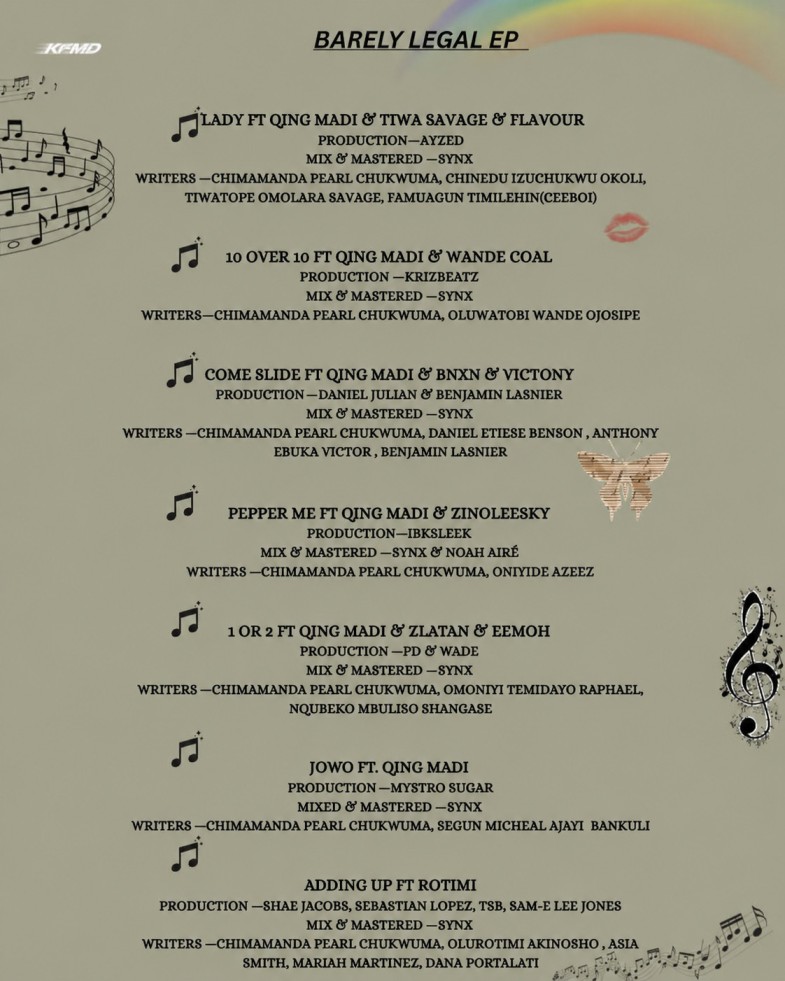
The production swells and retreats alongside the singers, supporting and directing the performances without overwhelming them. Naturally, a project this reliant on stacked vocals demands strong engineering. For the most part, the mixes succeed in balancing impressive amounts of vocal information, although there are occasional moments where some backing vocal layers feel slightly loose within the mix. Even then, the sheer quality of the performances makes those moments easy to forgive.
Lyrically, Barely Legal does not venture particularly far beyond established Afro-Pop territory. The songwriting generally prioritises directness, accessibility, and melodic functionality over deeper lyrical exploration. Much of the project’s writing serves primarily as a vessel for cadence, melody, and vocal performance rather than detailed storytelling or intricate wordplay.
Given the project’s firm grounding in mainstream Afro-Pop, this approach is hardly surprising, but it does leave some songs feeling less lyrically considered than their vocal and production counterparts. There are moments where the energy of the delivery becomes the primary attraction, such as portions of Wande Coal’s contribution to “10 Over 10”, whose freewheeling, almost freestyle-like energy recalls the appeal of records driven more by performance than lyrical substance. The songs remain enjoyable because the performers sell them convincingly, but the writing is rarely the project’s defining strength.
Even so, the vocal prowess displayed across Barely Legal remains undeniable. This is an Afro-Pop showcase built by Afro-Pop specialists, exploring multiple corners of the genre while remaining firmly anchored by performance. Across romantic grooves, Street-Pop influences, Afro-Swing textures, Amapiano inflections, and R&B fusions, Qing Madi demonstrates both versatility and assurance, delivering a project that is consistently enjoyable, danceable, melodic, and engaging.
More importantly, she uses it to make a compelling statement about her place within the genre. At an age when many artistes are still searching for their identity, she already sounds like a major player.
Barely Legal feels less like an introduction and more like a flag planted firmly in the ground, announcing Qing Madi as a genuine Afro-Pop force whose ascent appears only to be gathering momentum.
Lyricism – 1.5
Tracklisting – 1.4
Sound Engineering – 1.6
Vocalisation – 1.7
Listening Experience – 1.5
Rating – 7.7/10
Yinoluwa “Yinoluu” Olowofoyeku is a multi-disciplinary artist and creative who finds expression in various media. His music can be found across all platforms and he welcomes interaction on his social media @Yinoluu.