

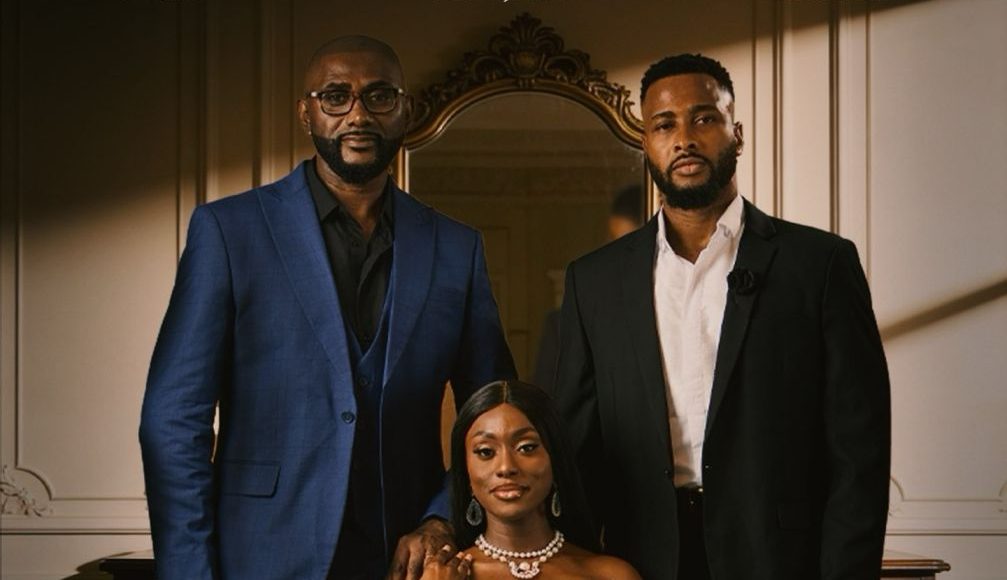

The Anniversary is, despite its limitations, a film worth engaging with, partly because it attempts something that Nigerian intimate drama rarely attempts with this degree of formal restraint, and partly because its most interesting ideas are genuinely interesting, even when the screenplay does not press into them as deeply as they deserve.
By Joseph Jonathan
There is a particular kind of marital anxiety that has very little to do with the person you married and almost everything to do with the person you were before you met them. It is the anxiety of the man who, having somehow arrived at a life better than his self-image prepared him for, spends the entirety of that life waiting for the correction; for the moment when the universe notices its mistake and takes back what it gave.
This anxiety is not romantic. It is not flattering to the person who inspires it. It is, in fact, one of the more quietly destructive forces a marriage can contain, because it transforms love into surveillance and commitment into a kind of prolonged, low-grade terror. It is also, whether or not the screenplay fully intends it, the most psychologically interesting thing about The Anniversary, the eleventh film in the First Features Project, directed by Prosper Edesiri and written by Gabriel Odigiri and Paul Rowlston, now available on Prime Video.
The setup is economical in the way that chamber dramas must be. Dr. Risani Dankat (Anthony Monjaro) and his wife Olije (Linda Osifo) are marking their tenth wedding anniversary when an old friend, Terfa Orbunde (Obehi Aburime), arrives unannounced or rather, announced by the weight of his decade-long absence. Terfa was meant to be best man at their wedding. He absconded instead, and the film is not immediately forthcoming about why.
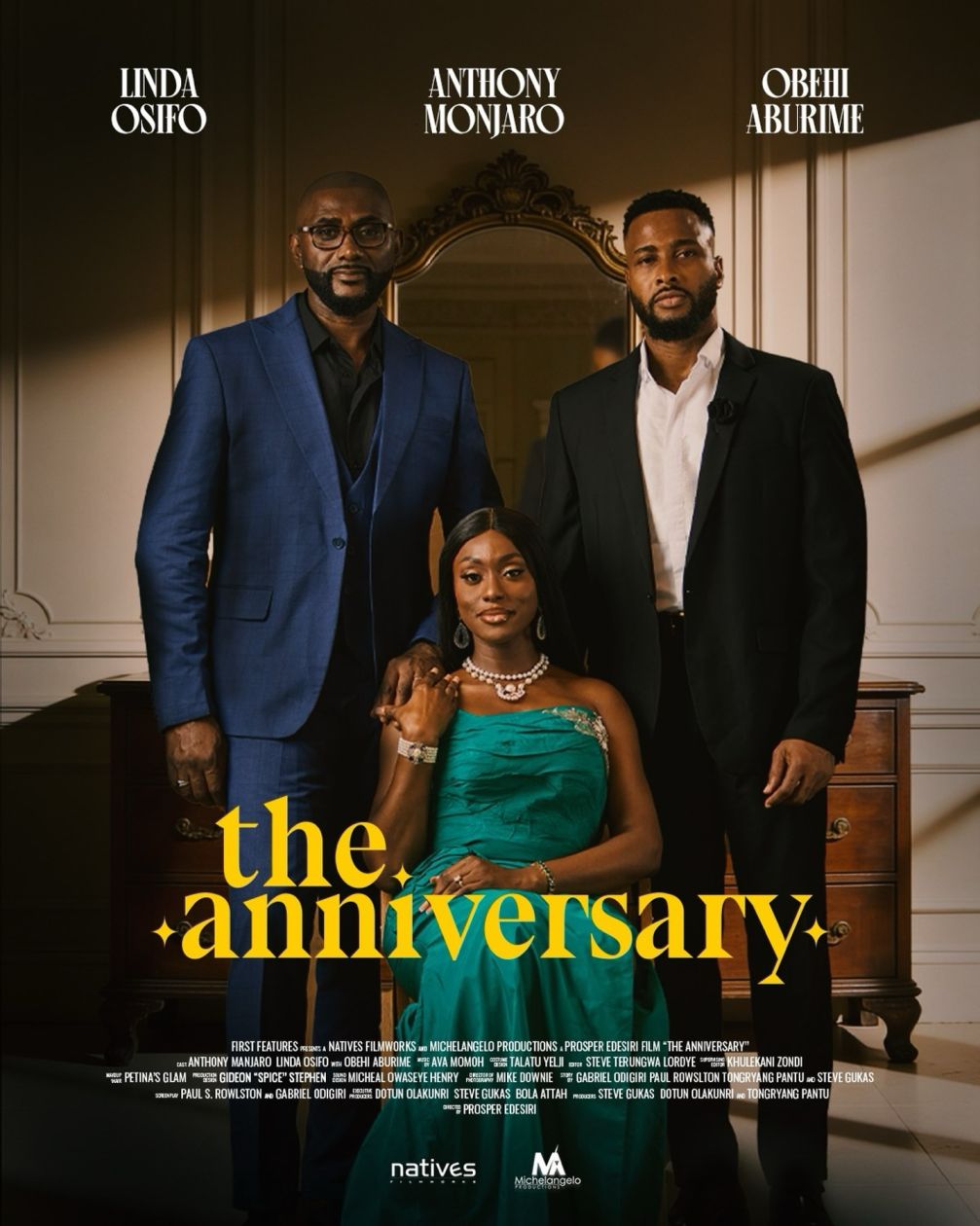
Over the course of one night, through brunch conversation, wine-loosened confession, and the specific electricity that old unresolved feeling generates in a room, the marriage is tested in ways that expose fractures the couple has been navigating around rather than through. By morning, something has shifted. The film then jumps a year forward to show us the aftermath. Whether that jump earns its optimism is one of the questions the film leaves genuinely open.
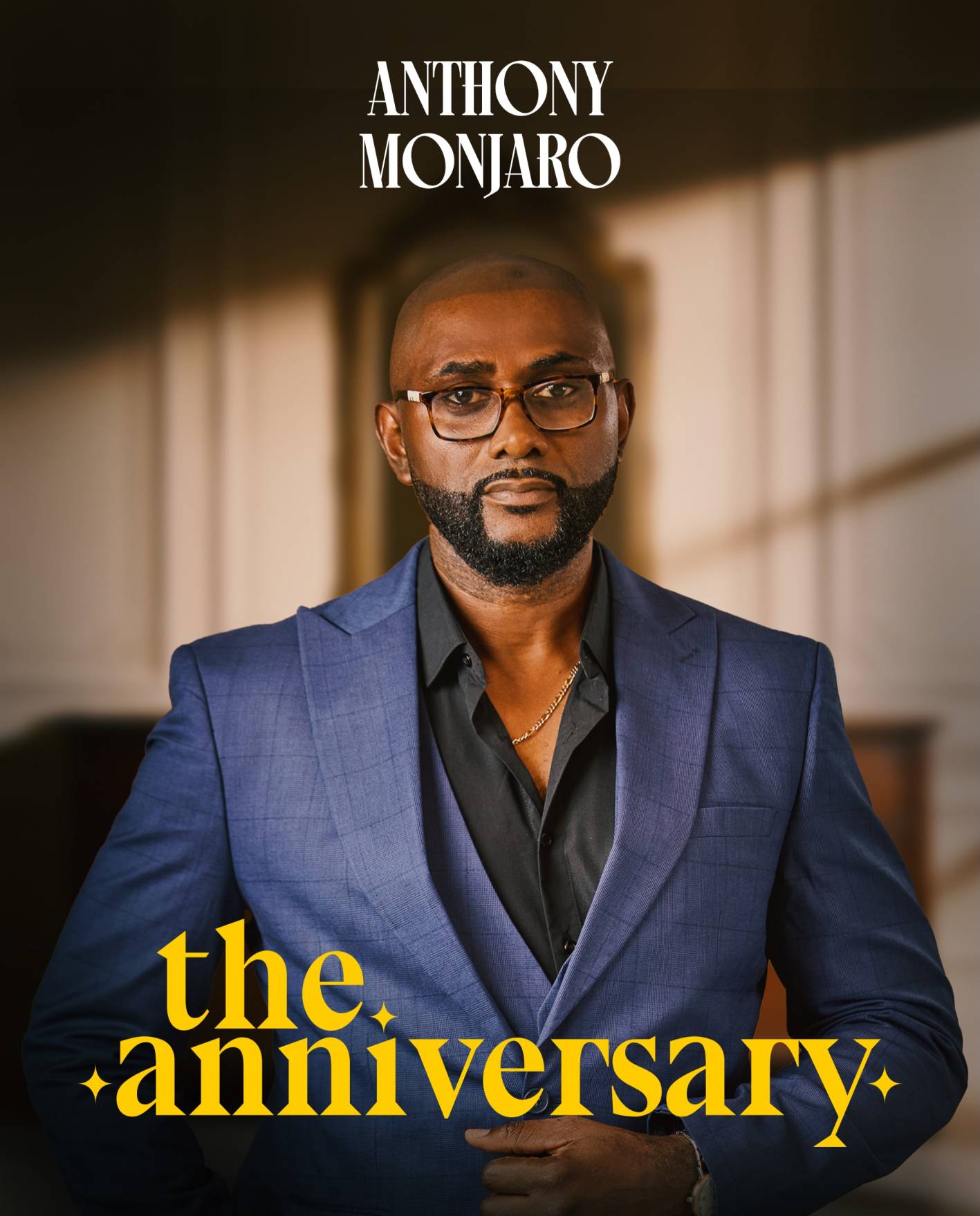
What makes The Anniversary more interesting than its premise initially suggests is the psychological portrait it assembles of Risani, largely through the details other characters reveal about him rather than through his own self-presentation. The most telling scene does not involve infidelity or confrontation. It is the proposal story that Terfa shares at brunch; a memory of the moment Olije accepted Risani’s proposal, after which Risani, in private, told his best friend that he felt like the luckiest man alive and prayed she wouldn’t come to her senses and leave him at the altar. The line is delivered as a charming anecdote of romantic disbelief. It functions as something more diagnostic.
A man who, at the moment of his greatest romantic success, is already anticipating its reversal (who frames his own happiness as a mistake waiting to be corrected) is a man whose relationship to love is organised around inadequacy rather than deserving. Everything that follows in the film, every decision Risani makes that damages his marriage, flows from this foundational insecurity with a psychological logic the screenplay may not have fully mapped but which is legible in the accumulated details.
Olije herself adds to this portrait, almost incidentally, when she mentions that she practically had to throw herself at Risani before he noticed her romantic interest. Terfa reinforces it when he tells Risani, with the specific cruelty of a man who loves the same woman, that Olije could have had anyone in the world and chose him.
These details combine to construct a marriage in which one partner has never entirely believed in his own presence within it and in which that disbelief has become, over a decade, a self-fulfilling architecture of suspicion. When Risani leaves work in a panic, convinced without evidence that his wife has slept with Terfa, and the film briefly shows us that infidelity as imagined reality before revealing it as paranoia, we are watching a man whose greatest fear is not being betrayed but being confirmed. He does not think Olije would cheat because Terfa is irresistible. He thinks she would cheat because he has always believed, at some foundational level, that she should.
The film’s most culturally loaded moment arrives when Olije narrates the history of Risani’s infidelity to Terfa. The infidelity itself is not disputed: in the aftermath of Olije’s diagnosis (a condition that made pregnancy impossible, devastating a woman who had always wanted children), she fell into a depression that withdrew her from her husband emotionally and physically. Risani, during this period, slept with their domestic help.
When Olije tells this story, she frames it in the language of her own culpability. She gave him a reason. She pushed him toward it. Terfa pushes back, tells her plainly that it was not her fault, and Olije’s response is the scene’s most quietly devastating line: she knows it wasn’t her fault, but she cannot forgive herself for giving him a reason. That distinction matters enormously. This is not a woman who genuinely believes she caused her husband’s betrayal. It is a woman who knows she didn’t, and cannot release herself from the guilt regardless.
The screenplay deserves credit for registering this difference, for letting Terfa name the distortion and letting Olije acknowledge it without being liberated by the acknowledgement. That is psychologically honest in a way that many Nigerian intimate dramas are not: the recognition that knowing you are not to blame and feeling you are not to blame are two entirely different emotional experiences, and that the gap between them is where a great deal of marital pain quietly lives.
There is another thread the film raises and does not fully resolve: the suggestion, accumulating through small details and other characters’ observations, that Olije may have settled. That Risani, for all his devotion, may not be enough, not morally, not emotionally, not in the register of desire that Terfa activates simply by being in the room. Olije’s own admission, when explaining the night’s events to Risani, that she had wanted Terfa but chose not to act on it because of her vows, is the film’s most honest and most unsettling line. She did not stay faithful because she did not feel the pull. She stayed faithful despite feeling it, which is a meaningfully different thing, and the film deserves credit for not collapsing that difference into the more comfortable narrative of a wife who was simply never tempted. But having raised this distinction, the screenplay retreats from its implications rather than following them into the territory they open.
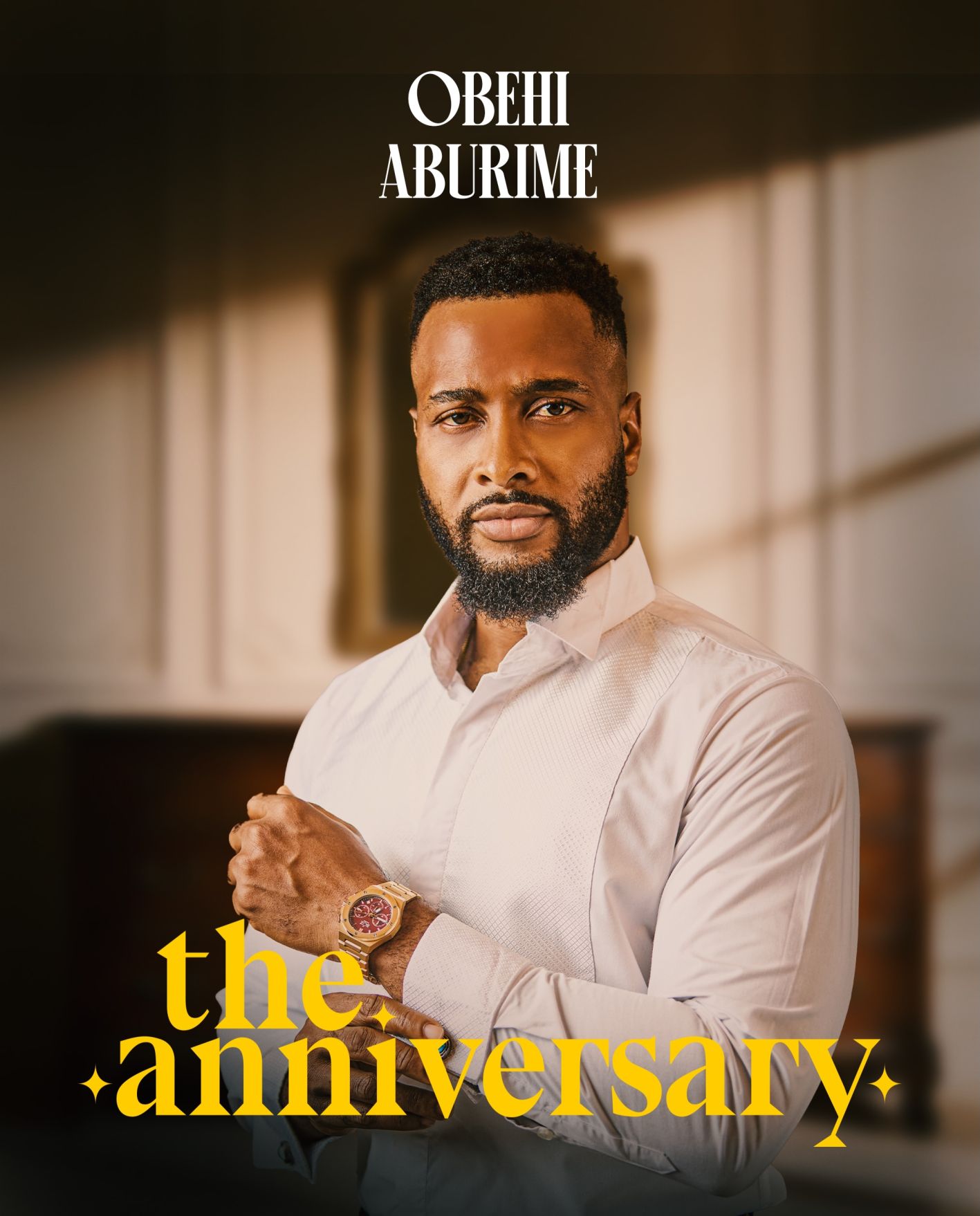
The performances across the film are uneven in ways that both serve and limit the material. Obehi Aburime is the revelation. As Terfa, he operates with a physical and vocal precision that makes the character’s desire for Olije feel present in every scene without ever being announced; the deliberate word choice, the sustained eye contact, the quality of attention he directs at her that is perceptibly different from how he engages with Risani. You understand from his first scene that this man has carried a specific feeling for a very long time, and that his arrival on this particular anniversary is not coincidental. It is the performance of a man who has rehearsed this visit in his imagination and is now navigating the distance between the rehearsal and the reality.


Linda Osifo complements him with a naturalism that grounds the film’s more heightened moments, and the chemistry between them is the most electrically convincing dynamic in the film — which creates its own dramatic irony, since she is meant to be most convincingly connected to her husband. Whether this is a deliberate choice to show the tension at the marriage’s core or simply the result of two performers finding each other’s frequency more readily, the effect is the same: the film’s emotional logic is most legible in the scenes Risani does not share.
Anthony Monjaro, as Risani, is the film’s least consistent presence. The character is the most psychologically complex of the three — a man whose insecurities have shaped his marriage in ways he cannot fully see — but Monjaro’s performance does not always find the interior register that complexity requires, occasionally tipping into a melodramatic externality that flattens rather than deepens. The paranoia scenes, in particular, demand a performance of contained psychological unravelling, and what they receive is something closer to performed distress. This is not an insurmountable problem: the character’s emotional logic is sufficiently embedded in the screenplay to survive an uneven performance, but it limits the film’s ability to generate the specific sympathy Risani needs if the reconciliation ending is to feel fully earned.
That ending — a flash-forward to a restaurant scene one year later, the couple making up with an ease that the preceding events seem to have made difficult to justify — is the film’s most debatable structural choice. Chamber dramas earn their endings through the weight of what has been excavated, and The Anniversary has excavated enough (infidelity, self-blame, paranoia, the desire that almost was) that a neat reconciliation requires more than a time jump to feel honest. The film wants to arrive at hope. It has not quite done the work to make hope feel like the only available destination rather than the preferred one.
The Anniversary is, despite these limitations, a film worth engaging with, partly because it attempts something that Nigerian intimate drama rarely attempts with this degree of formal restraint, and partly because its most interesting ideas are genuinely interesting, even when the screenplay does not press into them as deeply as they deserve. Edesiri directs with a control that keeps the film’s single-location claustrophobia from becoming mere staginess, and the chamber format, so rare in Nigerian streaming cinema, creates an intimacy that the material occasionally rises to meet.
The First Features Project continues to produce work that expands the formal vocabulary of what Nollywood on streaming can look like, and The Anniversary, for all its unresolved tensions, is a meaningful contribution to that project. It is a film that knows more than it says. The gap between those two things is where the criticism lives and also, honestly, where the interest does.
Rating: 2.7/5
Joseph Jonathan is a historian who seeks to understand how film shapes our cultural identity as a people. He believes that history is more about the future than the past. When he’s not writing about film, you can catch him listening to music or discussing politics. He tweets @Chukwu2big