

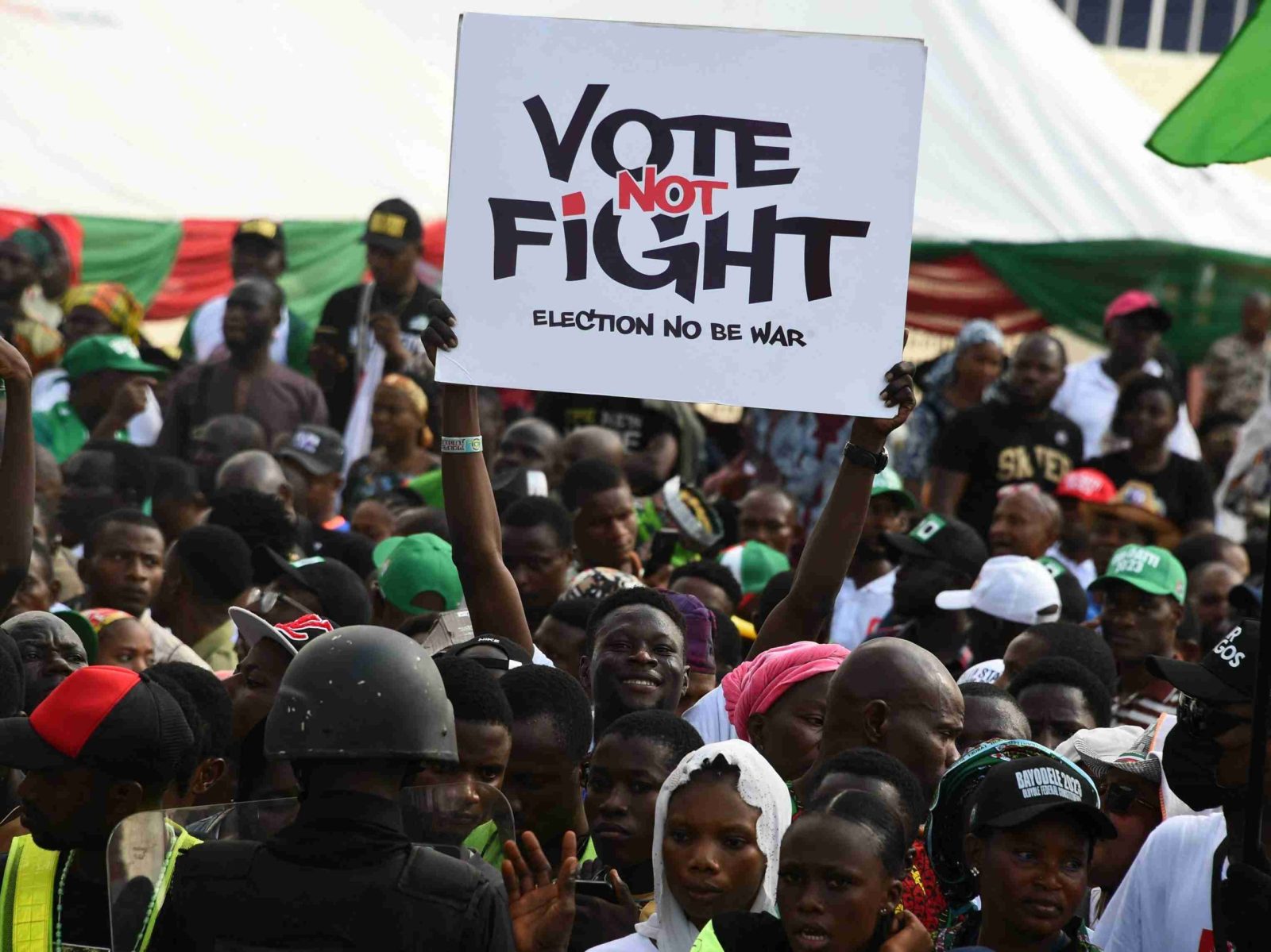

The voters who sell their votes are selling them in a market the political class built, at a price the political class set, for a commodity the political class has spent decades ensuring would remain cheap.
By Joseph Jonathan
At Civic Hive’s 2018 “Stomach Infrastructure Ideation” Event, Yomi Fawehinmi, a Nigerian Lecturer and Human Resource consultant, noted that “you can’t promise a hungry man tomorrow when there is no guarantee of today”. This statement is worth sitting with before moving any further, not because it settles the argument this essay wants to make, but because it names the fault line running through every serious discussion of Nigerian democracy that is honest enough to go where the conversation gets uncomfortable. It is a sentence about rationality. About what it means to ask someone to think long-term when survival is short-term. About the particular cruelty of a political system that asks its most desperate citizens to make its most consequential decisions.
In September 2014, Ekiti State held a governorship election. The incumbent, Dr. Kayode Fayemi, lost by a margin that surprised many observers who considered him among the more credible governors of his generation; educated, reform-minded, with a record of institutional investment that should, in theory, have been legible to voters. His opponent, Ayodele Fayose, won. Fayemi’s explanation for his defeat introduced a phrase into Nigerian political vocabulary that has not left it since. He accused Fayose of campaigning on “stomach infrastructure” — the distribution of food, cash, and immediate material benefits to voters in exchange for their support, a practice as old as Nigerian electoral politics but never before so precisely named. The phrase spread because it captured something Nigerians already knew but rarely said this plainly: that for a significant portion of the electorate, the ballot is not primarily an instrument of political expression. It is a transaction.
A decade later, the transaction is more documented than ever. The National Bureau of Statistics, in its 2024 report on corruption patterns and trends, disclosed that 22% of Nigerian citizens reported being personally offered money in exchange for their vote before or during the 2023 general elections. That figure represents a 5-percentage-point increase from the 17% recorded in 2019. Additionally, 9% reported being offered another form of favour. These are not rumours or impressions. They are survey data describing a democracy in which more than one in five voters was directly approached with a bribe during the country’s most recent presidential election.
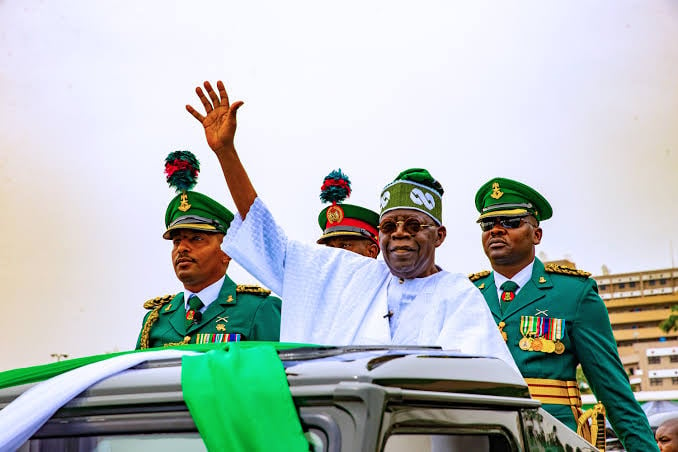
The question this essay wants to sit with is simple: in a country where millions of citizens vote for their next meal rather than their next government, where political information is scarce, and poverty is not, where the ballot has been systematically reduced to its lowest possible value, how meaningful is democracy? Not as an ideal, but as a practice. Not as a principle worth defending, but as a mechanism actually capable of delivering what it promises. The standard answer is that democracy’s failures are the fault of bad leaders, captured institutions, or a political class without conscience. But what if the voter himself (the figure at the centre of it all) is less a free agent exercising a democratic right than a product of the very system he is being asked to fix? And if that is true, what does it mean for the democracy built around his vote?
This is the ground on which the argument must be built. Not abstract philosophy, but this: a country in which the gap between democratic theory and democratic practice is measurable in percentage points, and growing.
The Oldest Objection
The discomfort that surrounds these numbers is not new. It is, in fact, among the oldest objections to democracy itself.
Plato, in the Republic, made the case against universal suffrage with characteristic bluntness. Democracy, he argued, was government by the uninformed: a system in which the opinion of the shoemaker counted as much as the opinion of the philosopher, in which appetite and passion displaced reason and wisdom, and in which demagogues would always find it easier to flatter the crowd than to govern it well. His image of the democratic city is one of permanent noise and disorder, a place where freedom is so absolute that it eventually consumes itself. The philosopher-kings, in Plato’s ideal state, govern not because they are powerful but because they know. Everyone else does not.
Centuries later, John Stuart Mill arrived at a version of the same concern through a different route. Mill was no enemy of democracy; he considered it, broadly, the most defensible form of government available. But he worried about what he called the “tyranny of the majority”: the possibility that in a universal suffrage system, the large, poor, and less educated mass of voters would consistently outvote the smaller, more educated minority whose judgment he considered more reliable. His proposed solution was plural voting; a system in which educated citizens would receive additional votes, calibrated to their level of education and social contribution, so that the franchise was universal but not equal. Mill never implemented this. He knew it was indefensible as a principle. But his worry remained.
Both arguments share an assumption: that the quality of democratic outcomes depends, at least in part, on the quality of the reasoning that produces them. And both have been used, in various forms, to justify restrictions on suffrage — property qualifications, literacy tests, educational requirements — that have historically functioned less as genuine filters for political competence and more as mechanisms for keeping particular groups of people away from power.
This is the trap the argument must avoid. And it is a real trap, not a theoretical one, because the history of “informed voter” requirements is almost entirely a history of exclusion dressed up as epistemology. The literacy tests of the Jim Crow American South were not designed to produce better democracy. They were designed to produce a democracy that looked like white supremacy. The property qualifications of nineteenth-century Britain were not designed to ensure thoughtful governance. They were designed to ensure that governance remained in the hands of people who owned property.
Any serious engagement with the question of voter information and democratic quality has to pass through this history before it can say anything useful. The Platonic objection is real. The Mill worry is genuine. And both have been weaponised, consistently, against the very people this essay is most concerned with.
So the question is not whether the uninformed voter poses a problem for democratic theory. The question is: who made him uninformed, and why?
The Voter Nigeria Made
The hungry voter, the illiterate voter, the voter who sells his ballot for a bag of rice is a figure that appears in Nigerian political commentary almost always as a problem to be solved, a deficit to be corrected, an embarrassing symptom of a democracy not yet mature enough for its own ambitions. He is rarely examined as a product.
But he is a product. He is the logical output of specific historical choices, specific policy failures, and specific political incentives. Understanding this does not require excusing vote-selling or pretending that it has no consequences. It requires recognising that the voter making a transaction at the ballot box is, like the politician who built the system around him, behaving rationally within the constraints he has been given.
Consider what democracy has actually returned to the average Nigerian voter across twenty-seven years of civilian governance. The infrastructure has not materially improved in many rural communities. The public school his children attend is more likely than not underfunded, understaffed, and without reliable electricity. The public hospital available to him operates under conditions that would be considered a humanitarian emergency in most comparable countries. The road connecting his village to the nearest market may not have been graded since the last election. The water he drinks may not be clean. His income, in real terms, has declined across multiple administrations, under multiple parties, with multiple promises.
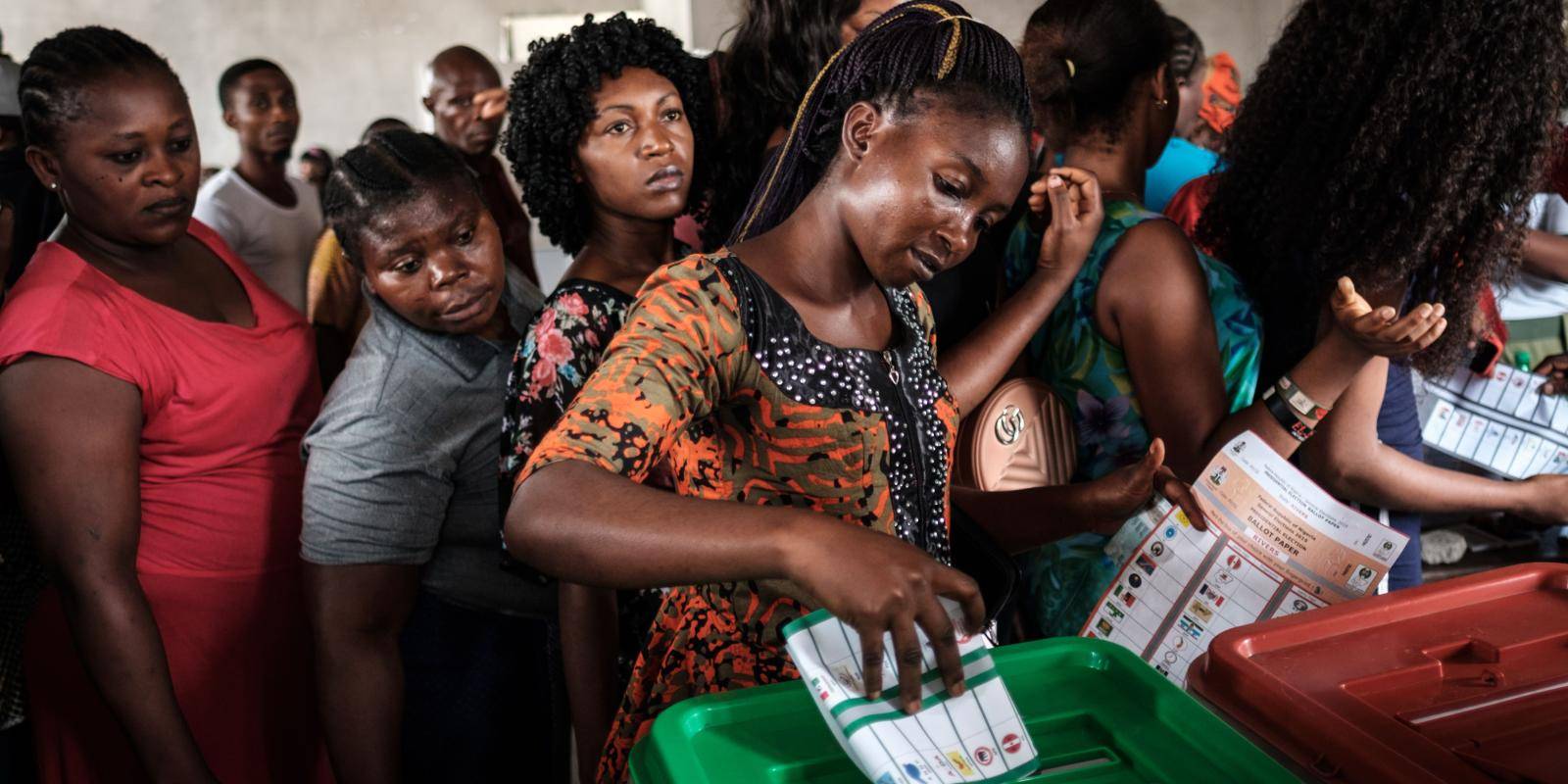
Against this record, a politician arrives before the election and offers him three thousand naira, or a 10kg bag of rice, or a wrapper of fabric, or a gallon of palm oil. The offer is immediate. It is tangible. It is guaranteed that the money is in hand before the vote is cast. The alternative — voting for the more “credible” candidate, the reform-minded aspirant with the policy document and the international CV — offers something different: the promise of future improvement, delivered through institutions that have demonstrated, repeatedly, that they are not reliably on his side.
The rational choice, under these conditions, is not difficult to identify. The voter who takes the three thousand naira is not irrational. He is making a perfectly coherent calculation about risk and return, about the difference between a certain small gain today and an uncertain large gain at some unspecified future point. He is, in the language of economics, discounting the future heavily, and he is discounting it heavily because his lived experience has given him every reason to.
This is precisely what Fawehinmi’s sentence means. The problem is not hunger. The problem is the absence of tomorrow, the accumulated evidence, across decades, that tomorrow never arrives, that elections come and go and the village stays the same, that the only reliable material benefit democracy has ever produced for this voter is the cash he receives for his vote.
The Manufactured Voter
Here is where the political economy argument must enter, because what looks like a natural condition (poverty producing susceptibility to vote-buying) is, at least in significant part, a manufactured one. The Nigerian political class has not simply inherited an uninformed, economically desperate electorate. In many respects, it has actively worked to preserve one.
Consider civic education. A voter who understands how federal allocations work, who knows what a constituency project budget should look like, who can read the financial reports a local government is required to publish, is a voter who can hold a representative accountable on specific, verifiable grounds. Such a voter is considerably more difficult to manage than one whose political knowledge extends only to names, faces, and party colours. The consistent underfunding of public education in Nigeria is not merely a governance failure. It is, from the perspective of a political class whose survival depends on a low-information electorate, entirely functional.
Consider the structure of party politics. In a system with genuinely ideological parties (parties organised around policy platforms that persist across elections and administrations), a voter can make a choice based on something other than the personality or immediate generosity of a candidate. He can vote for a party whose position on healthcare, or land reform, or public education, aligns with his interests, and hold that party accountable when it fails to deliver. Nigerian parties are not organised this way. They are, as noted in a previous essay, organised around access rather than ideology; vehicles for the distribution of patronage whose policy positions shift with the interests of their current leadership. A voter in this system has no policy platform to vote for. He has only individuals, and the most legible thing an individual candidate can offer before an election is cash.
Consider, too, the deliberate suppression of civil society. The #EndSARS movement of 2020 demonstrated, briefly, what a politically activated, information-rich Nigerian citizenry was capable of producing: a sustained, leaderless, nationally coordinated protest movement that forced a government response. The state’s response to that demonstration was instructive: gunfire at the Lekki toll gate, followed by years of harassment, prosecution, and surveillance of activists, journalists, and organisers who had participated. The message was not subtle. Political mobilisation outside the formal electoral structure, of the kind that produces informed and organised voters, would be met with force.
The uninformed voter, in this light, is not simply a product of poverty or low education in the abstract. He is a product of a political system that has found him, in this condition, considerably easier to govern than he would be otherwise.
The Circle That Won’t Close
And yet, and this is where the essay must be honest about what the political economy argument cannot fully resolve, the problem does not disappear when you have finished making it.
Because the mechanism for breaking the cycle described above is, in theory, democracy itself. An activated, informed, economically secure electorate would vote differently, produce different politicians, generate different incentives, and gradually transform the conditions that produced the original problem. This is the standard democratic optimist’s answer, and it is not wrong in principle. It is simply circular in practice.
The electorate cannot become informed and activated without better public education, stronger civil society, and a political class willing to invest in civic infrastructure rather than its own perpetuation. But the political class willing to make those investments would have to be elected by the electorate that doesn’t yet exist. The democracy that could fix the conditions of Nigerian democracy requires, as a precondition, the very conditions it is supposed to produce. This is not a puzzle with an obvious solution. It is a genuine recursive problem, the political equivalent of needing a job to get experience and experience to get a job.


Plato saw this coming. His objection to democracy was not primarily that the voters were ignorant; it was that democracy had no reliable internal mechanism for making them less so. The system that empowers the uninformed voter does not, by itself, create the conditions for his information. It simply counts his vote equally, alongside the votes of people operating with completely different levels of political knowledge and completely different relationships to economic precarity.
Mill’s plural voting was a bad solution to a real problem. The real problem is that equal suffrage in radically unequal conditions does not produce equal political power. The wealthy, educated, connected citizen and the hungry, illiterate, isolated one both have one vote. But their ability to exercise that vote meaningfully (to gather and evaluate information, to resist coercion, to hold representatives accountable between elections, to participate in civil society) is not equal, and cannot be made equal simply by making the ballot formally available to both.
This is the tension that Nigerian democracy lives in, and has lived in since 1999, and that no amount of election monitoring, anti-vote-buying legislation, or civic education programming has yet resolved. It is not a tension between good people and bad people, or between informed citizens and ignorant ones. It is a tension between what democracy requires to function as designed and the conditions under which Nigerian democracy has been required to function.
What the Numbers Are Really Saying
Return, one final time, to the NBS data. 22% of Nigerian voters were directly offered money for their votes in 2023. The number is up from 17% in 2019. It is almost certainly an undercount because surveys of illegal behaviour consistently capture less than the full extent of the behaviour. After all, respondents have incentives to underreport. The real figure is likely higher.
But here is what the number does not tell you, and what the commentary on it rarely asks: of the 22% who were offered money, how many took it? And of those who took it, how many voted as instructed? And of those who voted as instructed, how many would have voted differently if the offer had not been made or if they had not needed it?

These questions matter because vote-buying is not a uniform phenomenon. It operates differently in different economic contexts, across different levels of political information, and in the presence or absence of competitive elections where the voter’s choice actually affects the outcome. In a constituency where the result is predetermined by incumbent power and party machinery, a voter who accepts money for a vote he was going to cast anyway, or for a vote whose outcome he knows will not change regardless of what he does, is not making the same calculation as a voter in a genuinely competitive race where his vote is actually consequential.
The NBS figure tells us that vote-buying is widespread and growing. It does not tell us that Nigerian voters are simply venal or irrational. It tells us that Nigerian voters are operating in a system that has reduced the ballot, for many of them, to its minimum value and then offered them cash in exchange for that minimum. The offer is accepted not because democracy means nothing to the voters who accept it, but because the system has ensured that the vote means very little, and the cash means something immediate and real. This is the political class’s greatest achievement: not that it has bought votes, but that it has made votes cheap enough to buy.
The Unresolved Question
This essay began with a sentence about hunger and tomorrow. It ends in approximately the same place because the honest conclusion of this argument is not a solution. It is a sharper understanding of the problem.
The voter who sells his vote is not the cause of Nigerian democracy’s dysfunction. He is among its most visible symptoms, and also among its most convenient scapegoats: a figure the political class can point to when the failure of democratic governance requires an explanation that does not implicate the political class itself. “The voters keep electing the same people” is a sentence that functions, in Nigerian political commentary, as an ending. It should function as a beginning.
Because the voters keep electing the same people in a system specifically designed to make electing different people structurally difficult, economically costly, and politically risky. Because the voters who sell their votes are selling them in a market the political class built, at a price the political class set, for a commodity the political class has spent decades ensuring would remain cheap. Because the hungry voter Fawehinmi described cannot be wished into a different condition by the observation that he is making poor long-term choices. He knows his choices are poor. He is making them anyway because the system has left him, at the moment the ballot is placed in his hand, with nothing more durable to hold on to.
The question of how meaningful universal suffrage can be in conditions of mass poverty, low information, and deliberate political manipulation is not a question with a clean answer. It is a question that Nigerian democracy has been failing to answer for twenty-seven years, under different presidents, different parties, and different slogans, while the percentage of voters offered cash for their ballots climbs steadily upward.
What is clear is this: the problem is not just the voter. The problem is the system that made him, and the political class that finds him, precisely as he is, remarkably easy to manage.
Whether democracy can fix what democracy has been used to build, that is the question the next election, and the one after that, will keep being asked to answer.
Joseph Jonathan is a historian who seeks to understand how film shapes our cultural identity as a people. He believes that history is more about the future than the past. When he’s not writing about film, you can catch him listening to music or discussing politics. He tweets @Chukwu2big