


O Profeta understands this economy of desperation, and it understands that the person selling the miracle can be just as desperate as the people buying it.
By Joseph Jonathan
Nigerians do not need a film to tell them that faith has become a marketplace. We pass the evidence on every street: the church in the converted warehouse, the banner promising breakthrough by Friday, the prophet whose anointing oil comes in three sizes. Pentecostal and evangelical churches have spread across southern Africa at a similar pace, and the Mozambican town of Manjacaze, where director Ique Langa spent much of his childhood and where O Profeta was shot, has seen its own boom of pastors and churches.
The cause is not hard to find. Where hospitals are far, jobs are scarce, and the state is distant, a man with a microphone and a confident promise becomes a kind of public utility. O Profeta understands this economy of desperation, and it understands that the person selling the miracle can be just as desperate as the people buying it.
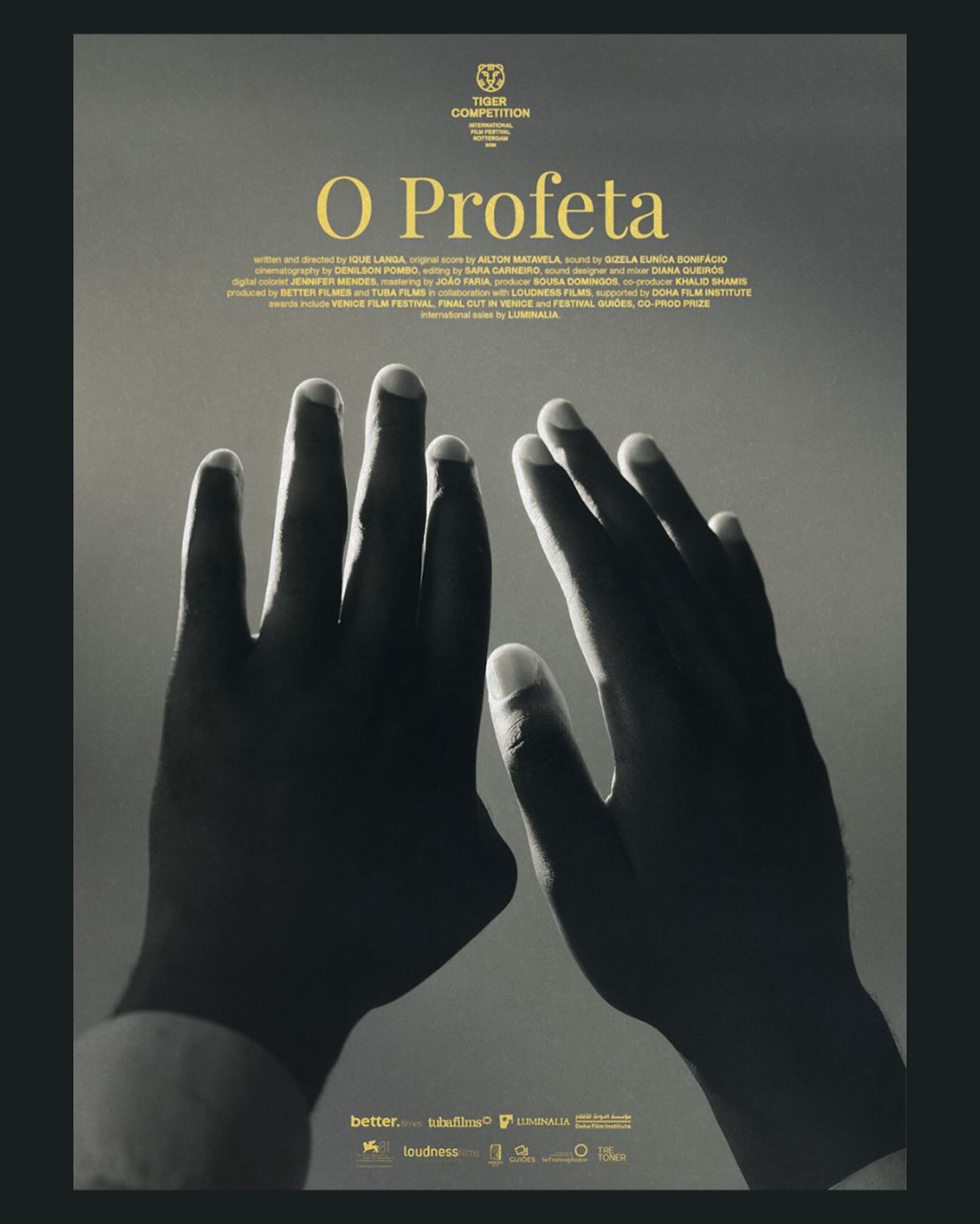
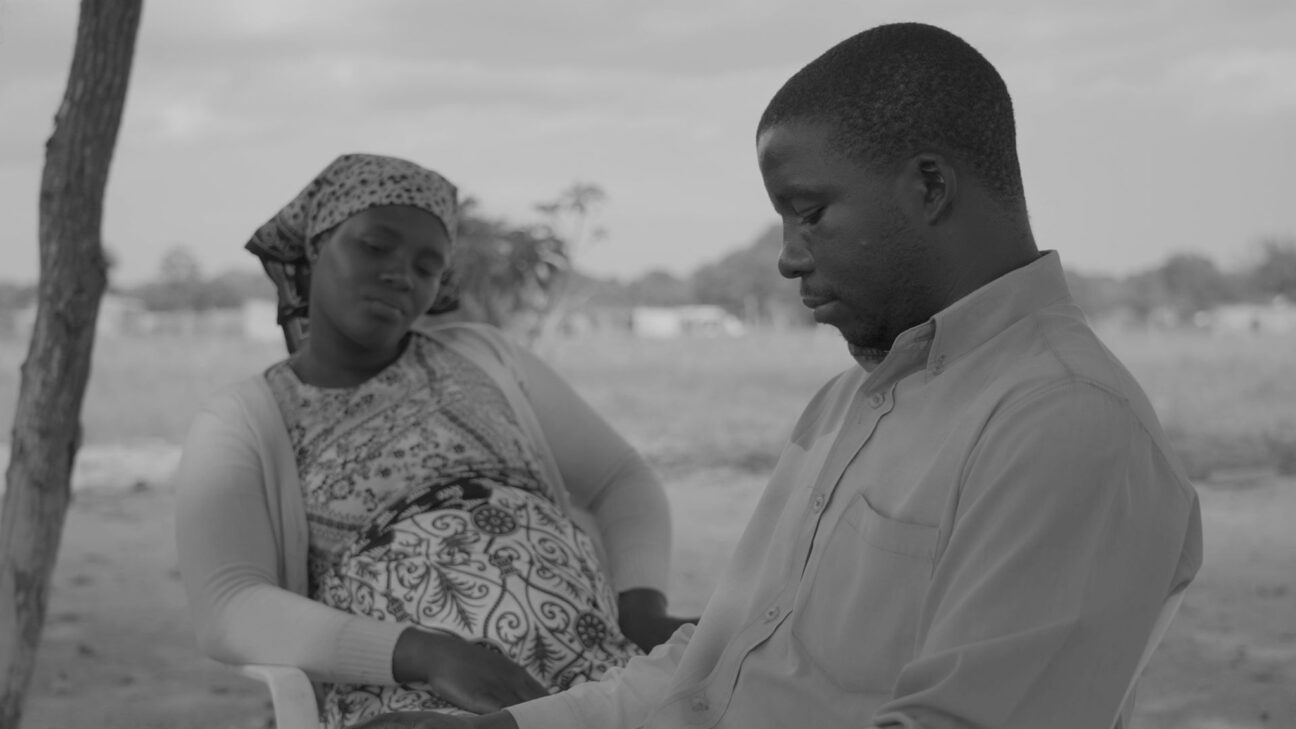
Langa’s debut feature, nine years in the making and screened at Film Africa 2026, follows Pastor Hélder (Admiro De Laura Munguambe), whose crisis of faith has emptied his sermons of force. He stammers. He cannot summon the conviction to pray for his pregnant wife (Nora Matavel). When he turns to a witch for help, the results are immediate: his preaching catches fire, the sick are healed, and his congregation swells. The old powers, of course, have not given this gift freely.
What the film refuses to do is the most impressive thing about it. It would have been easy to make O Profeta a satire of charlatan pastors, or alternatively a celebration of traditional spirituality against imported Christianity. It is neither. The witch is not a cure, and Hélder’s church is not a fraud. His congregation’s songs and testimonies are rousing and sincere, and the film respects them. Mozambique makes this evenhandedness especially pointed.
After independence from Portugal in 1975, the Frelimo government treated both churches and traditional healers as obscurantism to be suppressed, so the country’s relationship with both belief systems has been shaped by state hostility as well as by colonial inheritance. Langa inherits that history and declines to take a side. His interest is in the transaction, in what a man gives up when he pursues spiritual power as a shortcut, and in who ends up covering the cost.
Nigerian audiences will recognise this transaction. It is the moral structure of Living in Bondage (1992), the film that arguably launched the Nollywood home-video boom: a man in crisis makes a pact for power, prospers, and is then presented with a bill he cannot pay. But Kenneth Nnebue’s film wants spectacle and a lesson, while Langa’s wants something quieter and more disturbing.
Where Nollywood’s occult dramas often treat the supernatural as a plot mechanism, O Profeta treats it as an extension of Hélder’s psychology. The film’s real horror is not the spirits but the ordinary exhaustion of a man who needs to be believed.
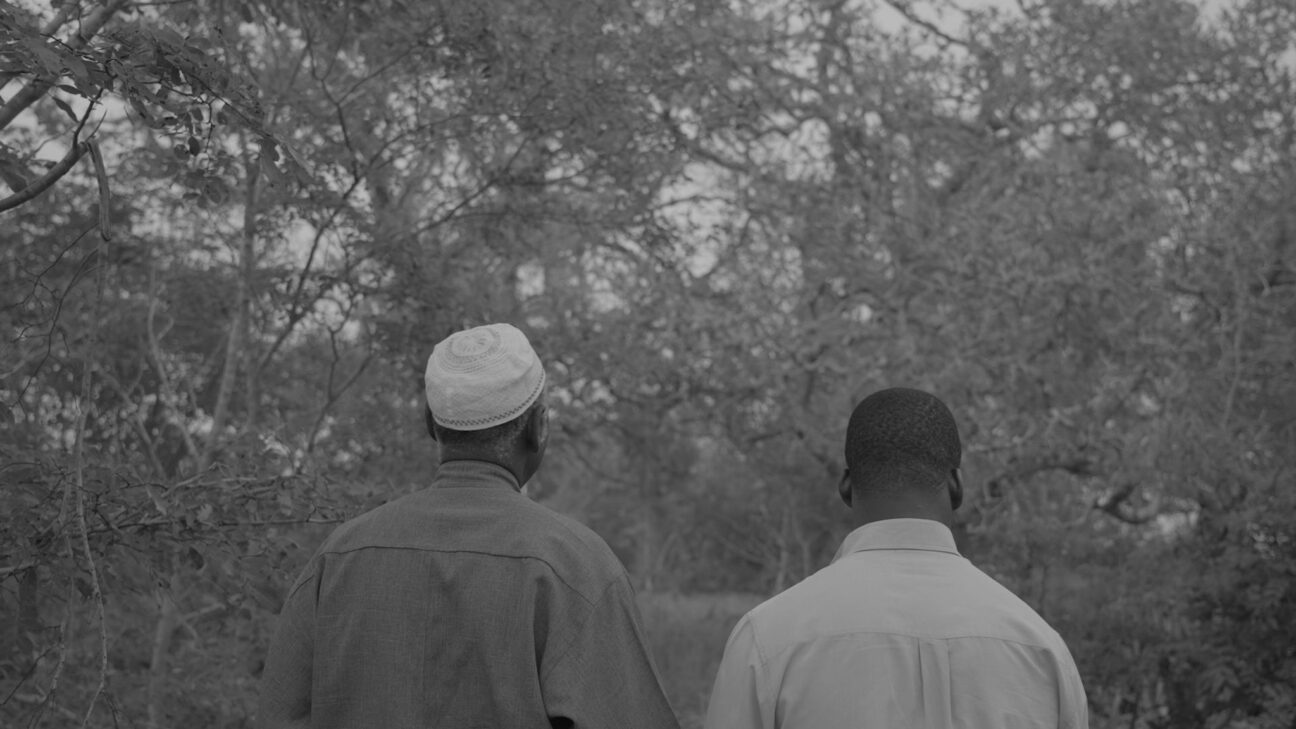
Formally, Langa is working in the tradition of the austere transcendental style of Robert Bresson, Yasujirō Ozu and Carl Theodor Dreyer, and the closest cousin here is probably Bresson’s Diary of a Country Priest (1951), another film about a clergyman whose body and doubt betray him. The black-and-white photography is stark, and the staging is spare.
The aspect ratio narrows as the film progresses, and the effect is quietly suffocating. Walls close in on Hélder, the frame itself becomes his confinement, and extended takes of tasks as mundane as stacking chairs after a poor service turn routine into a portrait of spiritual fatigue. At moments, the film goes baroque: surreal visions, extreme close-ups, a hut at the end of a path that feels like a threshold between worlds. These flourishes work because they rise from the character’s dread rather than from the director’s wish to impress.
The film’s reservations are real, though. At ninety-four minutes, O Profeta takes a long time to arrive at its central event. A slow burn is not a flaw in itself, and the early scenes establish Hélder’s condition with patience and precision. But the pace will test viewers who are not already attuned to this mode of cinema, and the film asks for considerable goodwill before it gives much back.
The deeper problem is what comes before Hélder’s decision. The film convinces us that he is unhappy, but it does not fully show us the pressure that pushes a pastor towards the occult. When he meets the witch and says he wants power to bless the people, we have to ask whether that is really all there is. Is he motivated by love of his flock, fear of losing his standing, competition from other churches, or simple vanity? The film leaves that question open, and its openness is intentional.
Yet a story about the doors a man chooses to open needs us to feel the weight of the hand reaching for the handle, and here the motivation remains thinner than the consequences it produces. Hélder’s inner torment is rendered beautifully once the bargain is struck. The turmoil that leads him there is sketched rather than lived.


The performances share some of this unevenness. Langa’s cast is largely non-professional, and the film clearly benefits from their lived familiarity with the world being depicted: the congregation feels like a real congregation, not a casting call. Munguambe carries the film with a rumpled, vulnerable presence, and Matavel brings calm strength as his wife.
There are moments, however, when the delivery feels stiff or effortful, and in a film this reliant on silence and facial expression, those moments are exposed. This is less a fault than a limit of the method. You cannot ask non-actors to do what trained actors do, and the film’s emotional register is high enough that you sometimes wish you could.
Still, what O Profeta achieves, it achieves with conviction. In an era when evangelical celebrity and miracle marketing have become part of African public life, a film that asks what it costs the person selling salvation, and what happens to the community that buys it, is making an argument worth attention. Langa does not offer easy answers. He offers a man in a narrowing frame, a doorway already open, and a debt that will be collected. It is a demanding film that sometimes asks for more patience than it repays, but it marks Langa as a filmmaker with something important to say about where belief goes when it is hungry.
Rating: 3.4/5
*O Profeta premiered in the Tiger Competition at the International Film Festival Rotterdam in January 2026, before screening at Film Africa.
Joseph Jonathan is a historian who seeks to understand how film shapes our cultural identity as a people. He believes that history is more about the future than the past. When he’s not writing about film, you can catch him listening to music or discussing politics. He tweets @Chukwu2big.