
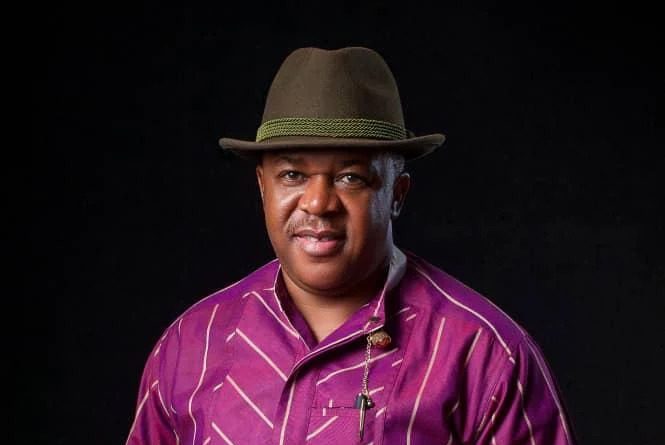

Francis Duru deserves to be remembered as a Nigerian actor who gave his working life to the craft, helped shape the industry’s professional community, and left behind performances that continue to connect Nollywood’s past with its present.
By Joseph Jonathan
Some actors leave behind a filmography. Others leave behind a character that becomes part of the culture. Francis Duru gave Nigerian cinema both, but his name will forever be tied to a boy called Ahanna.
In Amaka Igwe’s Rattlesnake (1995), Duru played a young man whose life takes a devastating turn after the death of his father and the betrayal that follows. It is a story of family, injustice, survival and the choices that can emerge from a childhood robbed of security. Ahanna grows into a notorious criminal, but before the notoriety, before the violence and the double life, he was a boy trying to make sense of a world that had failed him. Duru gave that boy a face.
Nearly three decades later, Ahanna remains one of the most recognisable characters associated with Nigerian cinema’s home-video era. For many viewers, the name Francis Duru still summons memories of Rattlesnake, a film that helped establish his place in Nollywood and gave the industry one of its enduring screen figures. It is a remarkable association for an actor whose career began years before the film and continued long after it.
Duru died on October 22, 2026, at the age of 57, following a brief illness, his family announced. His passing is a loss to an industry he served for more than three decades, but it is also an occasion to celebrate the work that made him memorable, the career he built beyond his most famous role, and the part he played in the history of Nigerian screen acting. To celebrate Francis Duru is to return to Ahanna. But it is also to recognise the actor who made the character live, the filmmaker who brought the story to the screen, and the body of work that deserves to be remembered beyond a single name.
The Boy Who Became Ahanna
There is a reason Rattlesnake has endured in the memory of Nigerian audiences. Its central character is not introduced as the criminal he will eventually become. The film takes the audience back to the circumstances that shape him, beginning with a family tragedy and the betrayal that follows. Ahanna’s journey from an unsettled childhood into a life of crime gives the story its dramatic force, but the character’s beginnings are essential to understanding its destination.
This is where Duru’s performance matters. Playing a younger version of a character who will later be portrayed by another actor requires more than physical resemblance. The younger performer must establish enough of the character’s emotional life for the audience to recognise the person who emerges in adulthood. There must be a connection between the child we meet and the man we eventually encounter, even as experience changes him.
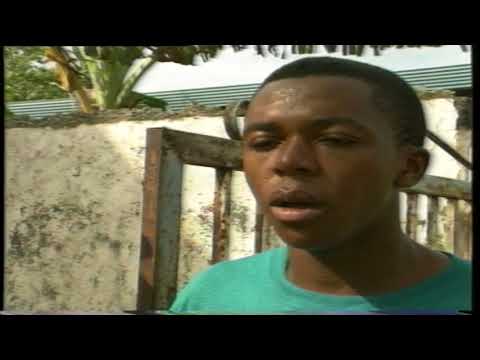
Duru’s Ahanna is the starting point of that transformation. He is a boy confronted by grief and betrayal, left to navigate circumstances that should never have been his responsibility. The tragedy of his story lies partly in the distance between what happens to him and what he eventually becomes. We see the injustice that helps set his life on its course, even as the consequences of his later choices belong to him.
The role asks the audience to hold two ideas together: that Ahanna is a victim of circumstances he did not choose, and that his later actions have consequences for which those circumstances cannot entirely absolve him. His vulnerability must feel real enough to make his subsequent transformation meaningful. Duru’s contribution gives the story its human beginning, ensuring that Ahanna is more than a criminal identity or a vehicle for the film’s action.
Much of this rests on the story Amaka Igwe chose to tell. Rather than introducing Ahanna as a fully formed criminal whose exploits alone would sustain the narrative, Igwe traces the circumstances that help shape him. Her decision to give the character’s childhood such importance creates the space Duru needs to establish the boy before the adult character takes over. The film’s three-part structure allows that transformation to unfold across different stages of Ahanna’s life, making his beginnings integral to the story rather than incidental backstory.
It is a testament to Igwe’s instincts as a filmmaker that the young Ahanna matters as much as he does. Her work across Nigerian film and television, including Rattlesnake and Checkmate (1991), demonstrated an understanding of popular storytelling that could sustain dramatic tension while remaining attentive to the people at its centre. Here, she gives Duru a character whose emotional foundations are essential to the film’s eventual impact.
For Duru, the role became a turning point. Rattlesnake brought him wider recognition, attaching his name to a character that would outlive the film’s original release and remain familiar to successive generations of Nigerian film audiences. That association can be a complicated gift. When an actor becomes closely identified with one role, the performance risks eclipsing everything else they do. Yet there is something extraordinary about creating a character that people continue to remember decades later. The role becomes a permanent meeting point between the actor and the audience, a piece of work that survives changes in taste, technology and the industry itself. For Duru, Ahanna was that meeting point. And for the audiences who encountered Rattlesnake in the 1990s, the film became part of the experience of growing up with Nigerian cinema.
What Ahanna Gave Nollywood
When Rattlesnake arrived in 1995, Nigerian home-video cinema was expanding the reach of local films. The VHS format allowed productions to circulate beyond conventional cinema spaces, reaching households and audiences across the country and beyond. Films became part of domestic life, watched, revisited and discussed. Performances could acquire a familiarity that extended well beyond the period of their release.
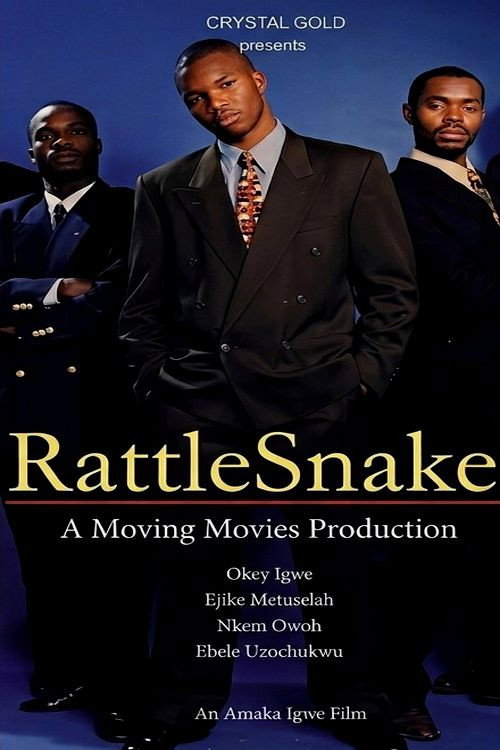
The films of that era were not all alike, nor did they all share the same ambitions. But they helped establish a popular Nigerian screen culture in which local stories and recognisable performers could command substantial audiences. Rattlesnake became one of the titles through which that period is remembered. Its endurance owes something to the story Igwe told and something to the characters who gave that story its shape. Ahanna is compelling because his life contains a contradiction: the boy whose circumstances invite sympathy becomes a man whose actions have consequences for others. The film follows that transformation without allowing the audience to forget where it began.
Duru’s place in that story has acquired another dimension with the passage of time. In 2020, Ramsey Nouah directed Rattlesnake: The Ahanna Story (2020), a new interpretation featuring Stan Nze in the title role. The remake brought Ahanna back to the screen for a generation of viewers encountering the character through a contemporary Nollywood production. The return is significant. The Nigerian film industry of 2020 was operating in a very different environment from the industry of 1995. Production methods, distribution, audience habits and the possibilities offered by streaming had changed. Yet filmmakers still saw value in returning to a story first told during the home-video era. The remake does not diminish the original. Rather, it draws attention to the work that made a return possible. A character has to mean something before a new generation can reimagine him. The original Rattlesnake remains part of the foundation on which that renewed interest rests, and Duru remains part of the history of Ahanna on screen.
This is one of the ways an actor becomes part of an industry’s legacy. The work is no longer confined to its original release or to the audience that first encountered it. It becomes a reference point for later filmmakers and performers, a story that can be revisited because it has not entirely left the cultural conversation. Duru could not have known, when he played young Ahanna, how long the character would remain in the public imagination. But his performance became part of a film that would travel across generations, connecting the Nollywood of the 1990s to the Nollywood of the present. That is no small contribution.
More Than the Role That Made Him Famous
There is a danger in remembering an actor through a single performance: the career that follows can become an afterthought. In Duru’s case, that would mean overlooking more than three decades of work. He began acting in 1989, appearing in Missing Mark, directed by Ndubuisi Oko. Born in Cameroon to Nigerian parents from Imo State, he later returned to Nigeria for his university education and studied Theatre Arts at the University of Port Harcourt, graduating in 1996. By the time Rattlesnake brought him wider recognition, he had already begun building a life in the profession.
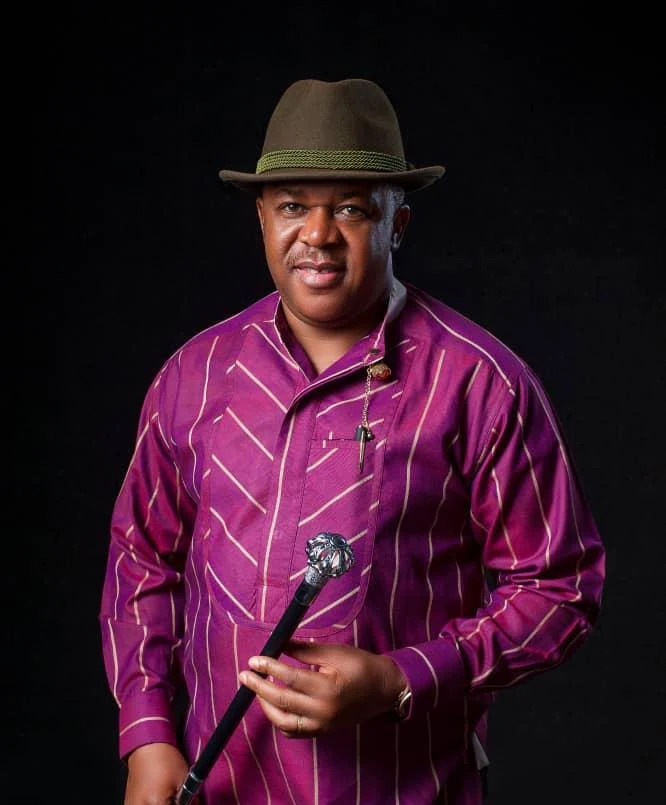
His subsequent credits included Blood Money (1997), Nnenda (2009), Home in Exile (2010), Stigma (2013), Who Killed Chief? (2017), Merry Men: The Real Yoruba Demons (2018), The Good Husband (2020), and Blood Vessel (2023), among other productions. The titles span different periods of Nollywood’s development, from the home-video era to a more diversified industry with cinema releases and streaming platforms. The breadth of that career is worth celebrating. Duru continued working as the industry around him changed, appearing in productions that reached different audiences and belonged to different moments in Nigerian filmmaking. He was not simply a familiar face preserved in the memory of a 1990s classic. He remained an active participant in the profession.


In 2020, he won Best Actor in a Leading Role in an Igbo-language film at the Best of Nollywood Awards for Mboputa (2020). The recognition was a reminder that his career had continued to develop long after Rattlesnake established his public identity. Ahanna may have been the role that brought Duru to wider attention, but it was not the sum of his work.
His contribution also extended beyond the screen. In 2010, he served as interim president of the Actors Guild of Nigeria, taking on leadership responsibility within the professional community to which he belonged. He was nominated for Best Actor in a Supporting Role at the Africa Movie Academy Awards (AMAA) that year and received a United Nations Ambassador of Peace award in 2007 in recognition of his influence on young people.
These milestones add to the picture of a career that encompassed acting, professional service and public engagement. They remind us that Duru’s place in Nollywood was not defined solely by the roles he played, but also by his participation in the community of practitioners who helped sustain the industry. There is something particularly worth celebrating about a career that continues beyond its breakthrough. The first major success can establish an actor’s reputation, but sustaining a working life in an industry as changeable as Nigerian film requires a longer commitment. Duru’s career was built across different productions and changing circumstances. What matters is that he kept contributing to the screen culture that had given Ahanna his enduring place.
The Actor We Remember
The most familiar image of Francis Duru may be that of young Ahanna, but we should not mistake familiarity for completeness. There was the actor who began his career with Missing Mark. There was the performer Amaka Igwe entrusted with a character whose childhood would become central to one of Nigerian cinema’s memorable crime dramas. There was the working actor who continued to appear in films as Nollywood changed, earning recognition for Mboputa decades after his breakthrough. And there was the professional who took on responsibilities within the Actors Guild of Nigeria and received recognition for his influence on young people. Together, these are the contours of a life in Nigerian cinema. None diminishes the importance of Ahanna. They make it possible to understand why the role was a beginning rather than an ending.
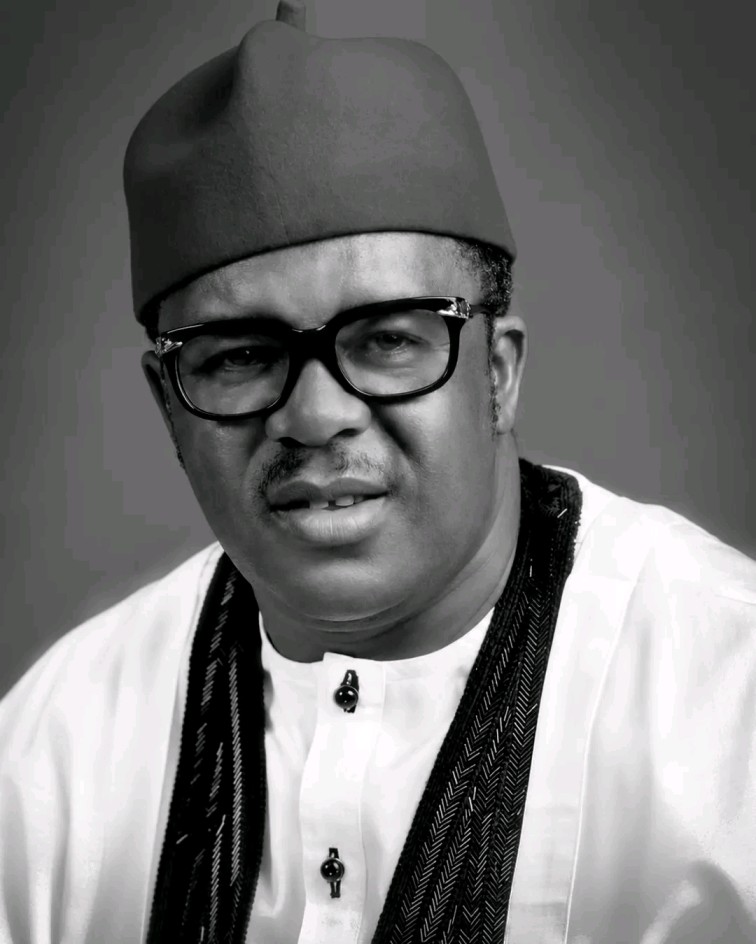
An actor’s legacy is measured not only by the number of films they appeared in or the awards they received. Sometimes it is measured by the way a performance remains available to people who were not even born when it was first seen. It is measured by a character that still means something, a film that continues to be discussed, or a younger performer whose work becomes the foundation for a story revisited years later.
Duru’s legacy contains all these possibilities. Ahanna remains part of Nigerian cinema’s shared memory, and Duru remains part of the reason the character has endured. His career, meanwhile, reminds us that there was a working actor behind the familiar name, one who continued to contribute long after the role that made him famous.
In remembering him, we should celebrate the performance without allowing it to obscure the person who gave it life. We should celebrate Amaka Igwe for the film she made and the opportunity she created for Duru to leave such a lasting impression. And we should celebrate the decades of work that followed, because a legacy is made not only in the moment an actor becomes famous, but also in everything they do with the years that fame gives them.
Francis Duru was 57. His death leaves a gap in the community of Nigerian actors, but his work remains with the audiences who watched him, the colleagues who worked alongside him, and the filmmakers who continue to revisit the stories that helped shape Nollywood. Ahanna will remain. So will the memory of the actor who played him. But Francis Duru deserves to be remembered for more than the boy who became a criminal on screen. He deserves to be remembered as a Nigerian actor who gave his working life to the craft, helped shape the industry’s professional community, and left behind performances that continue to connect Nollywood’s past with its present. That is a legacy worth celebrating.
Joseph Jonathan is a historian who seeks to understand how film shapes our cultural identity as a people. He believes that history is more about the future than the past. When he’s not writing about film, you can catch him listening to music or discussing politics. He tweets @Chukwu2big.