
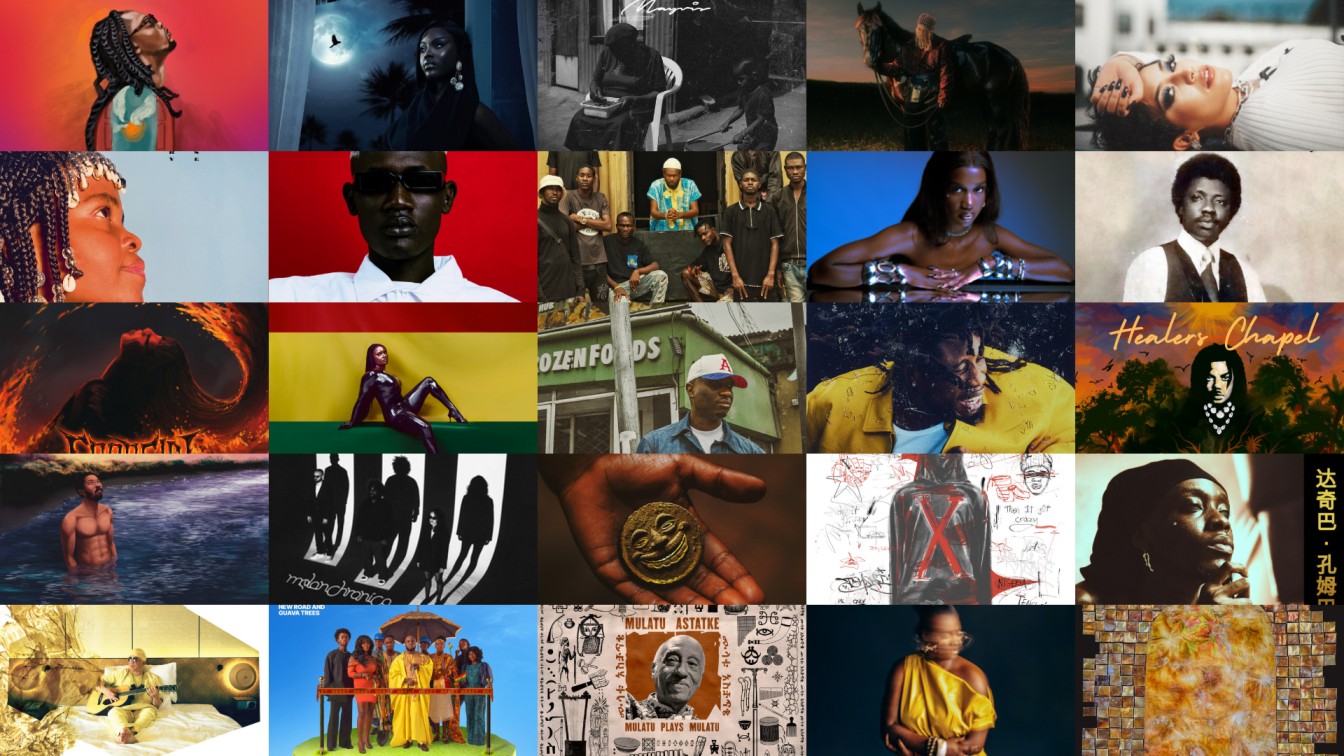

This list documents the breadth and depth of African music in 2025, and it stands as evidence of a continent whose musical influence continues to expand with each passing year.
By Afrocritik’s Music Board
African music in 2025 is marked by periods of creative stillness followed by eruptions of brilliance that remind the world why this continent remains an inexhaustible source of sonic innovation. The first half of the year, especially across West Africa, moved at a slower pace, with fewer project releases than usual.
That lull began to lift in the second quarter, as the scene roared back to life. Many artistes across West Africa and beyond began releasing projects that were ambitious in scope, meticulous in execution, and unapologetic in their artistic vision.
This year also witnessed the meteoric rise of 3-step on the global stage, the latest iteration of South Africa’s dance music evolution taking its place as one of the most contagious new club and rave sounds to emerge from the continent. At the forefront of this movement were Thukuthela and Jazzworx, whose third-quarter album release, The Most Wanted, became an undeniable cultural force. Filled with monster hits like “uValo” and “uMA weNGANE”, that catapulted them into superstardom and cemented 3-step’s position as a genre with irresistible appeal.
Yet, beyond the dance floors and streaming charts, 2025 was a year of remarkable depth and lyrical sophistication, particularly within African Hip-Hop. The genre experienced a creative renaissance, with artistes across the continent delivering projects that showcased technical mastery and storytelling prowess. Côte d’Ivoire’s Himra charged up the Ivorian Drill scene with Dachiba Koumgba Tchaiba, a project that bristled with raw intensity. Meanwhile, Nigeria’s A-Q reminded listeners why he remains one of the continent’s finest Hip-Hop lyricists with God’s Engineering 3 (The Beginning).
Parallel to Hip-Hop’s resurgence was the return of R&B to prominence across the continent. Artistes embraced the genre with renewed passion, crafting soul-stirring records that recalled R&B’s golden era.
Still, the year’s creative landscape was not without its shadows. Across East and Central Africa, political turbulence—wars, revolutions, and the tightening grip of authoritarian regimes—shaped the conditions under which artistes worked. However, it did not ultimately diminish the quality or ambition of the music released.
In response to the sheer volume and exceptional quality of music produced across the continent in 2025, Afrocritik has maintained our expanded format of 50 projects. This list includes studio albums, EPs, soundtrack albums, and instrumental projects, each evaluated through a rigorous framework that prioritises sonic brilliance, creativity, sonic and thematic statement, musical composition, ingenuity, and songwriting excellence.
Our commitment is to quality above all else. We champion projects that represent the highest levels of artistry, ensuring that independent artistes who may lack industry machinery but possess genuine innovation stand on equal footing with the continent’s most established names. This list documents the breadth and depth of African music in 2025, and it stands as evidence of a continent whose musical influence continues to expand with each passing year.
50. NAFIDA – Small X & Saib (Morocco)
The seven-track EP by Small X and Saib, released in May 2025, might have been as much of a study in restraint as it was an intentional stripping back of hip-hop’s performative bravado in favour of texture, vulnerability, and atmospheric sound. Recorded in a chalet in Asilah, the project’s environment seeped into its sound: Lo-Fi Jazz chords, softened Hip-Hop rhythms, and subtle Electronic flourishes created a hushed, almost meditative sonic palette.

Saib’s production prioritised warmth, allowing tracks to breathe rather than peak, while Small X adjusted his cadence accordingly, delivering verses that favoured reflection over dominance. For an artiste long associated with Shayfeen and the sharper edges of Moroccan rap, this pivot felt significant, representing a reinvention and recalibration of emotional range. Thematically, NAFIDA interrogated ageing, legacy, and creative fatigue, positioning itself in introspection. The accompanying documentary, Above the Noise, reinforced the EP, which came at a moment when Small X’s signing to Mass Appeal signals Moroccan rap’s expanding global footprint. — Frank Njugi
49. Room Number 3 – Mbosso (Tanzania)
Less an EP, more of a carefully staged transition, Room Number 3, the seven-track project marked Mbosso’s first major release as an independent artist under his own imprint, Khan Music, following his departure from Diamond Platinumz’s WCB Wasafi. Mbosso blended traditional Tanzanian rhythmic Bongoflava frameworks with contemporary Afro-Pop polish, favouring clarity of melody and emotional directness over maximalism. The EP’s economy was its strength; each track served a defined role, with no filler or excess ornamentation.

Lead single, “Pawa”, which trended at number one in Kenya and earned Mbosso the 2025 Bongoflava Artiste of the Year award, functioned as his victory lap and a mission statement on the prowess in the project. — Frank Njugi
48. Dachiba Koumgba Tchaiba – Himra (Côte D’Ivoire)
With Dachiba Koumgba Tchaiba, Himra extended his run as the face of the Ivorian Drill scene and formalised it. Released in phases across 2025, first as a standard edition and later expanded into the sprawling Dalshim version, the project read like a victory lap calibrated with intent. Structurally ambitious at 27 tracks in its deluxe form, the album sustained a hardcore Drill core while folding in West African rhythmic sensibilities, sharpening Côte d’Ivoire’s local inflections into a sound legible far beyond Abidjan. Himra’s delivery remained taut, but what distinguished this project is its command of scale: the sequencing balances relentless street narratives with moments engineered for cross-border impact.

Collaborations with Gazo (“Taper Créer”) and Sheff G (“225Brooklyn”) situated Himra within a global Drill continuum, while features from Aya Nakamura, Suspect 95, Jojo Le Barbu, and Stonebwoy expand the album’s stylistic reach without diluting its identity.
Lyrically, the record fixates on ascension in life, yet it never sheds its street orientation, framing success as conquest rather than escape. The chart performance, including topping Apple Music across Francophone Africa and reaching number one on France’s Rap chart, confirmed what the music already suggested: Dachiba Koumgba Tchaiba was an album consolidating Himra’s “Majin” movement into a commercially dominant and culturally defining force. — Frank Njugi
47. Healers Chapel – Wizard Chan (Nigeria)
Wizard Chan’s music has always been rooted in two foundational principles: lived experience and spiritual inquiry. Born Maxwell James Fuayefika, he has maintained this clarity of purpose since “Earth Song” introduced him to a broader audience in late 2022. His Reggae influences remain the distinguishing thread woven through whatever sonic territory he explores, providing a framework for his observations on human behaviour and life’s inevitable complications.
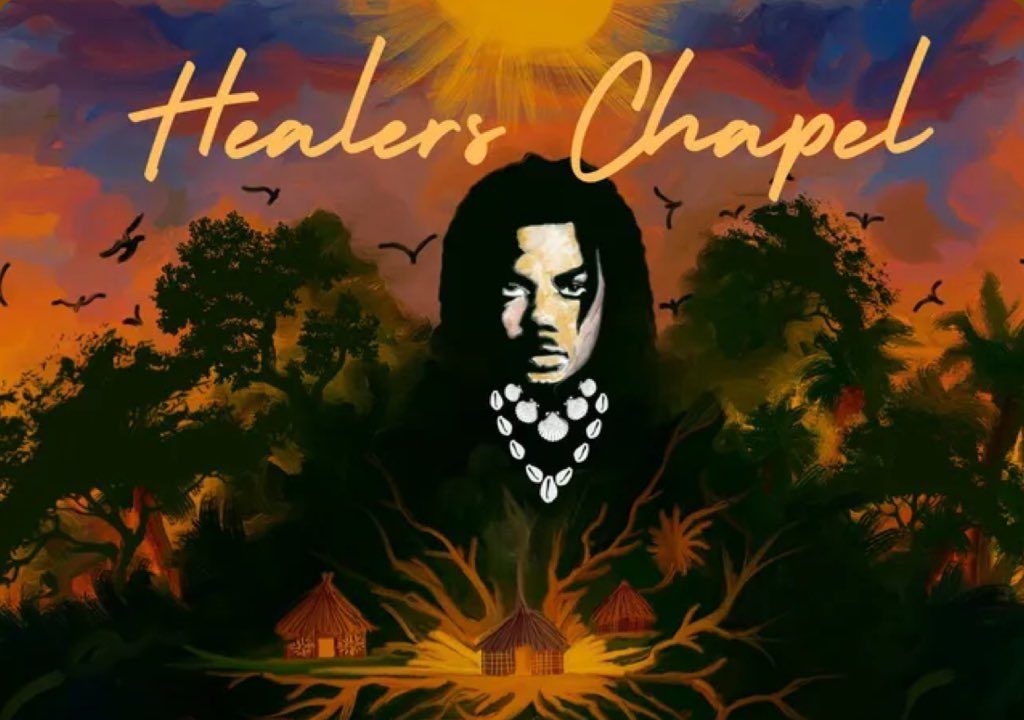
His album, Healers Chapel, never loses sight of his primary ambition: to create music as a balm for the troubled soul, channelling his own inner battles and hard-won lessons as a compass toward redemption. The project is richly layered, tapping into a sense of mystique and higher consciousness that feels earned rather than affected. Tracks like “By The River” and the title cut featuring Boma Nime shimmer with an almost devotional quality, their arrangements spacious enough to let spirituality breathe.
What makes Healers Chapel culturally remarkable is Wizard’s deployment of his native Ijaw language, which he wields to convey emotion with profound intimacy and nuance. With Healers Chapel, Wizard Chan invites you to experience redemption as an ongoing practice and to find solace even amid turbulence and uncertainty. — Abioye Damilare Samson
46. MATADOR – Marwan Moussa (Egypt)
Egyptian Hip-Hop maestro, Marwan Moussa, widely reputed for genre-blending, fusions and energetic, hard-hitting beats, released Matador a few months after his The Man Who Lost His Heart drop.

While the lyrics on Matador are not the most introspective, this project plays lightly on social commentary and reinforces the artiste’s insistence on making diverse art. Marwan excels with his cultural fusions and high-octane production, setting the tone for instruments like the sagar and darbukar.
Moussa’s collaborations on this project are intentional as Mousv, Donia Wael, Beso, Walti, and Karim Osama bring undeniable sonic range to this immersive experience. Matador succeeds in reaffirming Marwan Moussa’s imprint as a cultural colossus in the Arabic and Egyptian Hip-Hop scene.
45. Muse – Yarden (Nigeria)
Years after spinning the viral TikTok sensation “Wetin” and releasing his first EP, The One Who Descends, Yarden returns with an emotion-laden, affecting offering in his latest EP, Muse.

Leading with “Julie”, where sultry vocals blend with infectious melodies, and followed by “Joana”, which draws subtle inspiration from Afro B’s “Drogba (Joanna)”, the Felix Liberty–interpolated 1989 chart-topper; “Ifeoma”, assisted by young R&B singer, Taves, is delivered over upbeat instrumentals. “Soul” follows swiftly with a similar tempo, maintaining the EP’s melodious rhythm and lustre. “Busy Body”, however, strips the project’s tempo back with more soulful, heart-tugging affectations, before the Melissa-assisted closer, “Me & U” ensues, which showcases her mesmerising vocals gliding effortlessly against Yarden’s.
Muse takes listeners across a sea of emotions—desperation, lovelornness, heartbreak and reprieve—in this delightful offering, further validating the singer’s unique and irreproachable flair, emblematic of the Abia-born star. – MH.
44. Healing – Okello Max (Kenya)
Since last year, it seems there has been a cultural reset in Kenyan music, one where local languages surge past the long-dominant Sheng bubble through Arbantone, Genge revivals, with deeply authentic sonic identities based on local mother–tongue languages. Healing stood as one of the year’s most resolved artistic statements that falls on this reset as Okello Max’s album operated at the intersection of Luo musical sensibilities and contemporary R&B architecture, privileged groove, harmonic density, and patient pacing.

Released in mid 2025, the songs in the project moved largely in slow-to-mid tempo terrain, allowing emotion to accumulate rather than explode. Lyrically, Healing was grounded in introspection— personal growth, emotional accountability, and social realities such as gender-based violence — without tipping into didacticism. “Taya”, the album’s breakout, distilled this balance perfectly: rhythm-forward yet tender, culturally rooted yet structurally modern. — Frank Njugi
43. Barrystar Vol 1 – Barry Jhay (Nigeria)
As the son of the late Fuji legend, Sikiru Ayinde Barrister, Barry Jhay steps deliberately into lineage with Barrystar Vol. 1. The title is an homage, underscored by the striking use of his father’s image on the album cover. After seven years in the shadows of anticipation, this debut album is a carefully assembled body of work that feels deeply personal.
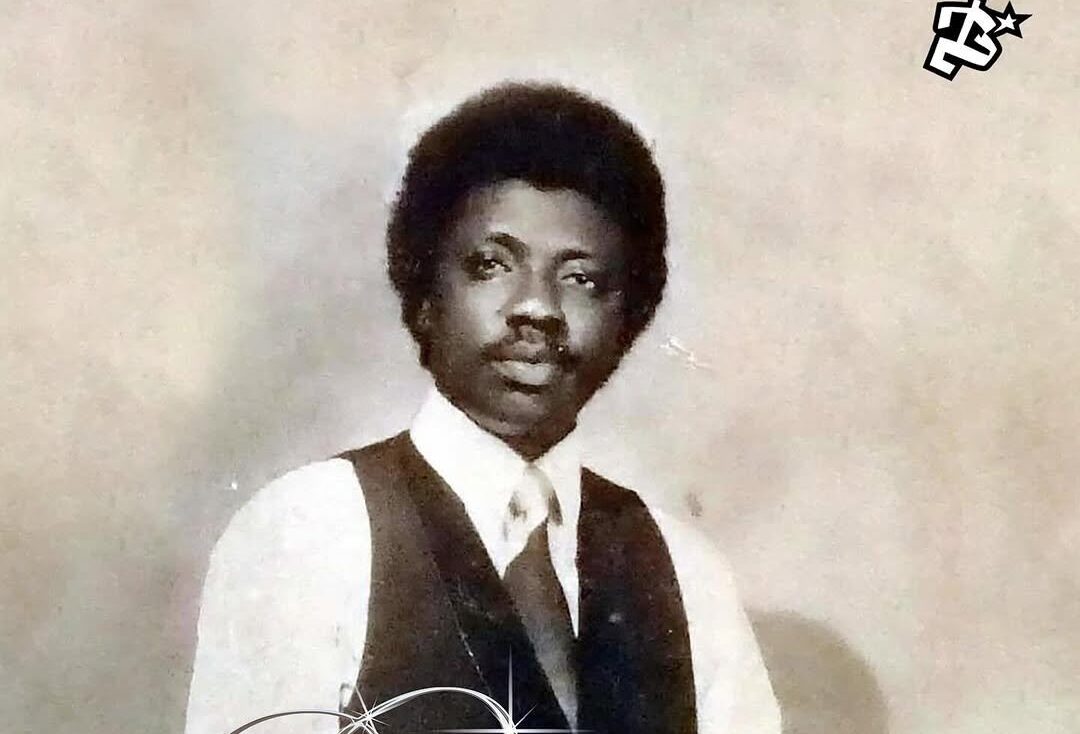
From the prayer-laden opening, “The Lord’s Prayer”, to the contemplative closer, “Eleduwa”, Barrystar Vol. 1 moves with clarity. The sequencing is purposeful. There are no excesses here, just songs that sit comfortably within Barry Jhay’s melodic world.
His writing retains the tenderness and emotional pull that endeared him to listeners from the start, while the album’s restraint is striking. With only one guest feature across 11 tracks, Barrystar Vol. 1 sustains its momentum through cohesion. — Abioye Damilare Samson
42. Moments After – Rowlene (South Africa)
Rowlene’s Moments After captures the South African singer-songwriter’s gift for combining soul-leaning vocals with poignant songwriting. Across the album, Rowlene uses personal narratives and expressive melodies to explore themes of love, introspection, and the emotional textures that define human connection.

Anchored by emotive delivery and a blend of contemporary R&B and Pop influences, Moments After is a portrait of personal and emotional growth; one where vulnerability and strength coexist in equal measure. The project reinforces Rowlene’s presence as one of South Africa’s compelling voices in modern Soul and Pop music and is a testament to her artistic maturity and ability to turn introspection into universal resonance. — Yinoluwa “Yinoluu” Olowofoyeku
41. Detox – Ṣẹwà (Nigeria)
Since her 2021 arrival with Toxic, Ṣẹwà has never deterred from baring heart-laden emotions laced with deeply reflective, soulful underlays in her art. Reminiscent of Asa’s imprint on Nigeria’s pop landscape, the Toronto-based singer and multi-instrumentalist opens with “Broda Kewve” after the project’s intro, rebuffing romantic offerings through striking Yoruba lyrics and celebratory instrumentals that emphasise themes of bodily autonomy.

She then proceeds to vulnerably bare the agony of heartbreak on “Femi”, a sentiment typically characteristic of the soulful crooner. Ṣẹwà next treats her listeners to a romantic invitation on “Why”, refraining, “you complete me”, “do you hear me?”, “do you see me?”
“Àsìkò” sees the singer reflect emotions of self-doubt and confusion occasioned by rejection, while “Y2K” follows through similar themes, albeit with heightened desperation, as she warns a love interest against leaving. On “Lése”, Ṣẹwà is forlorn once again, unable to come to terms with heartbreak, this time over sombre, saxophone-assisted instrumentation. “Mr Cinnamon” and lead single “Lagos Lovin’” are more defiant, displaying stronger resolve in the wake of hitherto painful memories, while the album closes with “Dead Inside”, “Who Have I Become”, and the bonus rendition “Baba”, reflective of self-rediscovery and nostalgia.
Ṣẹwà’s unhindered fusion of Pop, Jazz, R&B and Afro-Soul is resplendent throughout Detox, as contemporary African music has scarcely seen stronger post-break-up–themed projects in recent times. A definitive stamp on her identity, trajectory and evolution, Detox stands as Ṣẹwà’s most transcendent offering yet, sealed with a level of virtuosity that is increasingly rare. – MH
40. This One Is Personal – Tiwa Savage (Nigeria)
Nigerian superstar, Tiwa Savage, has long been the blueprint for what it means to thrive as a female artiste in Nigeria’s male-dominated music scene. Beyond her commercial success, she has consistently asserted herself through style, presence, and a catalogue that often places her shoulder to shoulder with her male counterparts. Where much of her previous work leaned into competition and dominance, This One Is Personal does exactly what its title suggests: it turns inward.

Here, Tiwa sidesteps the glare of the spotlight and redirects it inward, embarking on a soul-searching exploration of love, sensuality, fear, and emotional reckoning. On “Angel Dust” and “Twisted”, she comes to terms with a romance that feels both messy and hollow, exposing the quiet disappointment that follows desire. That vulnerability gives way to self-preservation on “Scared of Love”, where caution replaces longing, while “Holding It Down” finds her standing firm, resolute in her self-worth and emotional boundaries.
Still, the project is not devoid of accessibility. “You4Me” offers a lighter, more immediately gratifying moment, reminding listeners of Tiwa’s effortless ability to craft emotive R&B records. Yet, the emotional centrepiece of the album arrives with “Will I Run Again”, a poignant meditation on whether she is ready to risk her heart once more. In its honesty and restraint, This One Is Personal presents Tiwa Savage at her most human: reflective, vulnerable, and quietly powerful. – Emmanuel “Waziri” Okoro
39. then 1t gOt crazier – Zaylevelten (Nigeria)
Zaylevelten is one of the new-generation artistes who have made the leap from underground obscurity into the spotlight with a fiercely loyal cult following, largely young listeners drawn to the unruly, boundary-pushing energy he channels into his music. then 1t gOt Crazy arrives as a bold continuation of his 2024 EP Before 1t g0t Crazy. It feels like a premonition fulfilled: a project that leans fully into the chaos it once hinted at.

Sonically, the album is steeped in trap, but it rarely stays put. Zaylevelten bends the genre through an alté lens, stitching together distorted basslines, warped synths, abrasive percussion, and woozy melodies into a restless, psychedelic soundscape.
The production is dense and immersive, engineered to feel disorienting yet intoxicating. Tracks like “Guide Pass” and “Gbona” showcase his freewheeling instincts, while the deluxe cuts, featuring rising star, Mavo, and Nigerian rapper, Odumodublvck, underline his strength as a fusionist unafraid to collide rap, melody, and mood into something thrilling. — Abioye Damilare Samson
38. Blue Disco – Young Jonn (Nigeria)
Nigerian producer-turned-artiste, Young Jonn, shook the music scene with his 21-track album, Blue Disco. Released in November 2025, the project showcases his growth and increasing intentionality. A wide range of stories and emotions are laid bare on the album, with carefully chosen features further fanning the ember.

“I no de competition with another man…” he declares, setting the tone as he opens with “Padre Nuestro”. Among the standout tracks that got listeners moving in 2025 is “2Factor”, featuring Asake and South African artiste, Focalistic. Wizkid also appears on “Cash Flow”, adding to Young Jonn’s reach and influence, and reinforcing the sense that he has truly “level[led] up”, as he puts it on another song from the project.
On Blue Disco, Young Jonn explores themes of evolution, elevation, celebration, and, of course, reflection. In releasing this album, he not only delivered a body of work but also fully committed himself to the game—and the project reflects that. — Emmanuel Daraloye
37. The Torcher – Stonebwoy (Ghana)
The Torcher by Stonebwoy is a finely crafted masterpiece, burnished with charged lyrics and an inspiring sonic palette. It opens with poetry that conditions the listener to become a fire that cannot be quenched or toyed with.

Released in September 2025, The Torcher engages themes of defiance, resilience, perseverance, enjoyment, and self-praise. Stonebwoy’s lyrical outpourings draw heavily from African cultural consciousness, clearly mapping roots, dreams, and the demands of becoming.
The nine-track project blends diverse sounds and features contributions from other artistes, enhancing its dynamism. On the closing track, “Deeper”, Stonebwoy reveals the force behind his burning furnace: God. He presents Him as his source of confidence, admitting that though he may seem like nothing now, he will become. He also leaves listeners with a simple but powerful charge: “never give up”. A thoughtfully curated and deeply resonant album. — Emmanuel Daraloye
36. Novo Messi 3 – Paulelson (Angola)
Novo Messi 3 closes the chapter on Paulelson’s long-running Novo Messi series, positioning the Angolan rapper at a moment of creative consolidation and forward motion. Coming nearly five years after Novo Messi 2, the album was also a recalibration. Across tracks, Paulelson blended Trap and Drill frameworks with melodic phrasing, using introspection as a structural throughline rather than a departure from his street-oriented roots.

Collaborations with Lusophone heavyweights such as T-Rex, Landrick, CEF Tanzy, Altifridi, Bakabaki, and Treezy Flacko situated the album firmly within Angola’s contemporary rap ecosystem, while standout singles like “Rico”, “Mimo”, “Mô Amigo”, and “Ninfomaníaca” reinforced Paulelson’s instinct for hooks that translated across formats.
The decision to release the album not only digitally but also on physical USB drives spoke to his adaptability and awareness of local listening cultures. Framing the album as a “metamorphosis” and a “crossing”, Paulelson treated Novo Messi 3 as a closing ritual, one that sealed the mythology he began building in 2019, while clearing space for whatever identity comes next. — Frank Njugi
35. Protect Sarz At All Costs – Sarz (Nigeria)
Protect Sarz At All Costs sees one of Nigeria’s most influential producers stepping into the spotlight with a full-length project that assembles his distinctive sonic fingerprint alongside a slew of guest voices. The album encompasses a range of Afro-Pop, Dance, and Electronic sounds, with standout features that highlight both Sarz’s versatility and curatorial prowess.

Tracks like “Up” (feat. Victony) and “Billions” (feat. Lojay) showcase how Sarz’s production can anchor radio-ready melodies while maintaining depth and nuance. Across the record, his ability to navigate diverse tempos and moods speaks to his production mastery and sustained relevance in Nigerian pop music. Protect Sarz At All Costs is both a celebration of Sarz’s legacy and a bold reaffirmation of his creative vision in the contemporary era of Nigerian Pop music. — Yinoluwa “Yinoluu” Olowofoyeku
34. The Feast – Falz (Nigeria)
Falz’s The Feast arrives as the full realisation of ideas first sketched on 2024’s Before The Feast EP, expanding that project’s blueprint into a sprawling, ambitious statement. The beauty of The Feast lies in its range. It’s a generous spread that unfolds the many facets of Falz’s artistry. Here is the conscious observer, the unrepentant playboy, and the cultural critic who still wants to enjoy life to the fullest, all coexisting within the same artistic frame.

Falz moves effortlessly across soundscapes: Fuji’s percussive urgency, Afro-Pop’s infectious melodies, Afrobeat’s rhythmic complexity, Hip-Hop’s lyrical precision, and R&B’s smooth sensuality. This sonic diversity never feels scattershot, held together by the tight, often textured production work from skilful hands like Duktor Sett, IBK Sleek, Semzi, Magicsticks, and others who help Falz and his collaborators navigate their deliveries without ever losing the thread. The Feast is, at its most honest, not just a sonic buffet for listeners, but a carefully curated archive of Falz’s many selves. — Abioye Damilare Samson
33. The Sweetest Time – Maya Amolo (Kenya)
The Sweetest Time found Maya Amolo expanding the emotional and sonic vocabulary that first marked her as one of East Africa’s most compelling alternative R&B voices. Where her earlier work leaned heavily on inward reflection, this album widened the frame, tracing a more complex emotional arc that moved through infatuation, betrayal, and a defiant sense of renewal.

Sonically, Amolo stretched beyond her Lo-fi R&B foundations, folding in rhythms and subtle dance inflections that gave the project a lighter, more kinetic feel without sacrificing the intimacy.
The production was noticeably more polished and spacious, creating room for her honeyed vocal tone to linger and bloom. The title track, released in March as the album’s first single, set the template: a duet with Ywaya Tajiri that balanced vulnerability with melodic ease. “Guidance”, which followed, reinforces that warmth, built around gentle progressions and restrained arrangement choices that foreground emotional clarity. Amolo’s penmanship is a defining strength, as her writing remains precise and emotionally transparent, but here it was matched by a newfound sense of optimism. — Frank Njugi
32. Plenty Love – The Ben (Rwanda)
Plenty Love, released in early 2025, captured The Ben at a moment of consolidation. Launched in the afterglow of his “New Year Groove” concert at Kigali’s BK Arena, a landmark event that drew thousands of fans and marked his 15th year in music, the album carried the confidence of an artiste deeply embedded in his cultural ecosystem.

Across its 12 tracks, The Ben leans into his established fusion of R&B and Afrobeats, pairing smooth vocal delivery with rhythmic structures drawn from both contemporary pop and traditional African forms.
Its production appeared to prioritise accessibility, clean arrangements, melodic hooks, and steady mid-tempo grooves, while leaving room for lyrical reflection. Themes of love, endurance, and gratitude recurred throughout, reinforcing its title as both emotional thesis and career summary. Plenty Love’s reception in Rwanda was emphatically positive, even as it narrowly missed Album of the Year honours. More than this, becoming a competitive statement, the album became an affirmation of The Ben’s longevity, his audience’s trust, and being an artiste who has learned how to balance diasporic reach with local resonance. — Frank Njugi
31. Olamidé – Olamide (Nigeria)
Olamide, popularly known by his stage name Baddoo, released his self-titled album, Olamidé, earlier this year. His 11th studio album, it reinforces his stature in the industry and underscores his mastery of the craft. At the same time, Olamide presents a more spiritual and appreciative side of himself, embracing vulnerability and introspection.

Across the project, the rapper explores confidence and pride, romance and its aches, as well as the weight of financial influence. The album also reunites YBNL veteran with Wizkid on two tracks: “Kai” and “Billionaires Club” featuring Darkoo.
The album’s most popular song is “99”, featuring Seyi Vibez, Asake, and Young John. Anchored in a celebratory, party-ready mood, the track blends themes of material wealth with bold self-affirmation. So far, Olamidé has enjoyed considerable success. – Emmanuel Daraloye
30. The Odyssey – Arathejay (Ghana)
Rising Ghanaian act, Arathejay, reinforces his commitment to breaking into mainstream consciousness with The Odyssey, a befitting project that reanimates his soundscape in striking, distinctive ways. He achieves this on two fronts. First, the production across the seventeen tracks remains remarkably cohesive, regardless of the producers he teams up with.

Secondly, the Sekondi-born act surrounds himself with an impressive roster of collaborators, including Bella Shmurda, Black Sherif, Kweku Smoke, and O’Kenneth, who each add texture and range without overshadowing his vision. The Odyssey positions Arathejay as one of the most promising voices in Ghana’s new generation, one clearly intent on turning potential into permanence. – Emmanuel “Waziri” Okoro
29. Mulatu Plays Mulatu – Mulatu Astatke (Ethiopia)
Marking Mulatu Astatke’s first major studio album in over a decade, this project revisited compositions from his expansive catalogue, re-recorded and reimagined with the patience and authority of an artiste refining, rather than revisiting, his legacy. Mulatu Plays Mulatu, was a good-sounding documentation of Ethio-jazz, as the album balanced extended jazz improvisation with Ethiopian tonal systems, allowing space for the rhythm section to converse with traditional instruments.

Tracks like “Yèkèrmo Sèw”, expanded to nearly twice its original length, reveal how elastic Astatke’s compositions remain, capable of absorbing new players, new contexts, and new temporalities without losing their identity. At 81, and amid reports of his impending retirement from live performance, Mulatu Plays Mulatu read as a culmination, rather than a greatest-hits exercise, a reaffirmation of Ethio-jazz. — Frank Njugi
28. Le Réveil du Roi – Prototype (Congo-Brazzaville)
Le Réveil du Roi announced itself with the weight and posture of a debut that understands what is at stake. Sonically anchored in Hip-Hop and Trap but consistently softened by melodic phrasing, the album operated within mélo—the Franco-Congolese hybrid that privileges emotional cadence as much as lyrical clarity.

Across the project, Prototype leaned into what he describes as a “human and musical awareness”, situating his Congolese heritage as the structural influence. His flows stretched and bended, often riding sustained melodic lines rather than percussive attack, allowing the album to feel reflective without losing urgency. High-profile collaborations with figures like La Fouine, Uzi, and Fabregas Le Métis Noir, further reinforced the album’s seriousness of intent. — Frank Njugi
27. Thato Ya Modimo – Kelvin Momo (South Africa)
Kelvin Momo’s Thato Ya Modimo is a sprawling 29-track opus that has not only broken streaming records but also solidified the producer’s standing as one of amapiano’s global luminaries. The album debuted in the top ranks of global charts, marked by impressive first-day streams and strong listener demand across major platforms.

The project is both ambitious and personal, navigating a spectrum of emotions and styles while maintaining Momo’s signature rhythmic finesse. Contributors range from amapiano stalwarts to gospel voices, creating a rich tapestry that reflects growth, identity, and sonic mastery. From its expansive tracklist to its record-breaking debut, Thato Ya Modimo stands as a defining statement in 2025’s Amapiano landscape. — Yinoluwa “Yinoluu” Olowofoyeku
26. A.O.E.I.U (An Ordinary Exercise in Unity) – Florence Adooni (Ghana)
Kumasi-born singer Florence Adooni, who hails from Frafra, Ghana, explores the intersection of tradition and innovation on A.O.E.I.U, serving as a bridge between the past and the future. Fusing the energies of Northern Ghana, Ashanti Highlife, Soul and Disco, Florence condenses her sonic identity—renowned for polyrhythmic fusions—into a body of work marked by unmistakable vocal dexterity, with assistance from co-songwriter and Heliocentrics founder Max Weissenfeldt.

At the core of this seven-track international debut effort is the titular track, “A.O.E.I.U”, which explores concepts of time, nature and sound. The ten-minute piece oscillates between slow-paced, soulful strings and frenetic, Afrobeat-leaning sprawls. The allure of this stellar track lies in its unpredictable rhythmic nimbleness, epitomising what the project offers on a grand scale. “Mam Pe’eler Su’ure”, the album’s opener, translates to “my heart is pure” and is delivered in Florence’s native Frafra language amidst Highlife underlays. “Vocalize My Luv” blends Electronic Dance elements with Disco and Ghanaian Highlife, making for a potpourri of seamless fusions symptomatic of the entire body of work.
A.O.E.I.U succeeds in bridging cultural and generational gaps through deft sonic melding and intentional mastery, leading the charge for a global, multicultural coalescence that feels prescient in times such as these. – MH
25. Agbalagbi – OluwaMillar (Nigeria)
OluwaMillar’s Agbalabi is a commanding display in lyrical storytelling, with Millar delivering razor-sharp bars over a range of eclectic beats. An early contender for rap album of the year, the project proves he is no flash in the pan, instead offering an exhilarating showcase of technical prowess deeply rooted in Yoruba culture that resonates far beyond its immediate context.

The EP bristles with hardcore rap energy. “Olorunsogo” is story-driven and visceral, recounting Millar’s survival of a harrowing bike accident with vivid detail that makes you feel the impact. “Opelope Anointing” opens with a direct sample from Evangelist Dunni Olorenwaju’s sermon of the same name, transforming a spiritual invocation into a rap declaration with a startling effect.
“Reverse Back” featuring Mojo AF and Bayoo, a track that earned a spot on our Top 100 African Songs of 2025, captures Millar at his most confident, his wordplay and delivery locked into an infectious groove.
What distinguishes Agbalabi is how seamlessly Millar balances cultural specificity with universal appeal. He raps primarily in Yoruba, yet his ear for compelling production, and his gift for narrative ensure the music transcends language barriers. Agbalabi announces Millar as one of the most exciting voices in African rap. — Abioye Damilare Samson
24. Mayvis – Dlala Thukzin (South Africa)
Mayvis by South African producer and Amapiano innovator, Dlala Thukzin, showcases the artiste’s mastery over the genre’s signature log-driven rhythms and infectious grooves. A collection that balances club energy with melodic sophistication, Mayvis features a range of collaborators who contribute distinct voices and textures across the album’s runtime.

Throughout the project, Thukzin leans into deep bass lines, rolling percussion, and atmospheric synths that have become hallmarks of his production style, crafting a body of work that feels both rooted in traditional Amapiano aesthetics and experimental in its harmonic layering. With Mayvis, Dlala Thukzin continues to elevate his craft, reinforcing his role as a leading curator of South African dance music. — Yinoluwa “Yinoluu” Olowofoyeku
23. New Road and Guava Trees – M.anifest (Ghana)
Ghanaian rap maestro, M.anifest, has always delivered in creating conceptual rap albums that expand his discography and celebrated artistry, and on New Road and Guava Trees, he doesn’t falter in that regard. In an Afrocritik interview, he explains: “My new album is like a new advancement of art. If Madina to the Universe can be said to envision my artistry from a macro perspective, New Road and Guava Trees is a micro outlook”.

True to its intention, NRAGT takes a piercing look at various themes, grounded in lived experience and reflective insight. From the socio-economic urgency of “Eye Red”, which interrogates everyday Ghanaian realities, to the measured confidence of “Bad Man”, the pop-engineered warmth of “Wine and Blues”, and the laidback indulgence embedded in “Gye Nyame and Vibes”, the album unfolds with remarkable versatility. M.anifest also leans fully into his strengths on records like “Safe Place” and “FTYD”, where his lyrical dexterity and storytelling acumen come sharply into focus.
New Road and Guava Trees ultimately reinforce M.anifest’s standing as one of Africa’s most thoughtful rappers, an artiste capable of balancing accessibility with depth, and personal reflection with broader social commentary. – Emmanuel “Waziri” Okoro
22. Touch is A Move – Samthing Soweto (South Africa)
Samthing Soweto’s Touch Is a Move (Good Morning) marks his triumphant return after a multi-year hiatus, arriving as his first full-length project since 2019. Across its 17 tracks, the album unfolds like a day in the life, weaving together narratives of love, family, duty, and personal growth through a rich palette of Afro-Pop, Jazz, Amapiano, R&B, and spoken-word interludes.

The album’s title conceptualises life as a series of deliberate actions — every touch a move — and this philosophy translates into a deeply reflective journey. Songs like “Don’t Wanna Let Go” and “Amagents” showcase Soweto’s ability to balance emotional intimacy with broader cultural commentary, while interludes rooted in township life add a theatrical, almost cinematic progression.
Touch Is a Move (Good Morning) details a seasoned artiste’s introspection and evolution, crossing the line as a project that underscores Samthing Soweto’s continued mastery of sonic storytelling and emotional resonance. — Yinoluwa “Yinoluu” Olowofoyeku
21. Iron Boy – Black Sherif (Ghana)
Mohamed Ismail Sherif, professionally known as Black Sherif, released his sophomore album, Iron Boy, in April 2025, with lofty expectations born out of the success of his debut project, The Villain I Never Was. Iron Boy leads with vulnerability, resilience and heartfelt, soulful renditions, employing Drill, Afro-Pop, Gospel and Highlife influences.

The album’s lead single, “So It Goes”, features Nigeria’s Fireboy DML and is laden with themes and motifs of survival, hustle and resilience, which generally underpin this offering. “Victory”, the album opener, sets the tone for these themes in actuality. Gospel influences litter “Sacrifice”, “Sin City”, which features Nigerian star, Seyi Vibez, and “January 9th”.
In many ways, Iron Boy is an “extension of the world Black Sherif built on The Villain I Never Was, meaning that its primary themes, and Blacko’s delivery of them, feel familiar”. This fact notwithstanding, Blacko shines through on this sophomore offering with more than enough heart-tugging moments that announce his brilliance once again. – MH
20. No Excuses – Blaqbonez (Nigeria)
Blaqbonez (real name Emeka Akumefule) has rarely sounded like he had more to prove than he does this year. Refusing to bow to external pressure, he delivers one of the most balanced Nigerian Hip-Hop projects in recent memory, reaffirming his status as the genre’s torchbearer in the country. It is almost impossible to engage with No Excuses without talking about “ACL”, the razor-sharp diss aimed at fellow rapper, Odumodublvck; a record that, in hindsight, appears to have brought their rivalry to a close (at least within the confines of the booth).

Beyond its headline moment, No Excuses is packed with songs that see Blaqbonez oscillating between braggadocio and introspection with ease. On “Just Hustlin $$$”, he offers a precise commentary on the socio-economic realities facing Nigerians, resisting the urge to posture or moralise. Elsewhere, he indulges different shades of his artistry: the carefree hedonism of “Good Time”, the Amapiano-driven party energy of “Nati”, and the pop-leaning polish of “Go Crazy”, “W For Wetego”, and “Despacito”, which function as the album’s melodic centrepieces.
In balancing lyrical bite with commercial sensibility, No Excuses captures Blaqbonez at his most assured; confident in his craft and fully aware of the space he occupies within Nigerian Hip-Hop. – Emmanuel “Waziri” Okoro
19. Melanchronica – Bas & The Hics (Sudan)
French-born Sudanese-American rapper, Bas, teams up with British duo, The Hics, on this reflective, emotional and vulnerable piece of art, Melanchronica. This melancholic offering showcases adept chemistry with The Hics’ smooth, soulful hooks, buttered by sultry production and engineering that blend Hip-Hop with Soul/R&B and Electronica.

Bas explores themes such as the complexity of interpersonal relationships, romance and spirituality—whether on tracks like “Everyday Ppl”, where he is unreserved with expletives while describing explicit, intimate moments with a love interest, or mental health struggles on “San Junipero”. “Erewhon” sees Bas and The Hics draw parallels between everyday grocery shopping and broader human struggles with self-doubt.
The album’s cosiness makes for an easy listen, yet it does not draw back in quality, leaving the listener almost in awe of its seamlessness in both thematic delivery and production, and portraying artistic intentionality and unbridled excellence. – MH
18. Afrika Magic – Show Dem Camp (Nigeria)
With Afrika Magic, legendary Nigerian rap duo, Show Dem Camp, reaffirm their status as architects of conceptual, genre-fluid music. The 17-track album is both a cultural homage and a sonic evolution, drawing from cinematic references to classic Nollywood while incorporating Hip-Hop, Soul, R&B, Highlife, Afro-Pop, and Afro-Fusion elements across its breadth.

Ghost and Tec’s lyrical craftsmanship shines throughout, whether on straightforward rap-leaning fare or collaborative pop-adjacent moments with vocalists like Tems and Boj. The project’s thematic core centres on creative alchemy, which is the idea that African storytelling and artistry possess a kind of intrinsic magic that transcends genre boundaries.
As such, Afrika Magik stands as a multifaceted statement on identity, memory, and cultural lineage, effectively bridging the duo’s storied past with a forward-looking sonic ambition. — Yinoluwa “Yinoluu” Olowofoyeku
17. Very Stubborn – Victony (Nigeria)
Nigerian Afrobeats sensation, Victony, returns with Very Stubborn, an eight-track EP that extends the emotional narrative first articulated on his critically acclaimed 2024 album, Stubborn. Building on themes of resilience and personal resolve, this project sees Victony channelling his trademark blend of introspective lyricism and Afrobeats energy into a compact yet potent musical statement.

With contributions from heavyweights like Don Jazzy and genre crossover moments with Terry G and Olamide on tracks such as “Tanko” and “Skido”, the EP blends street-savvy bravado with heartfelt reflection. The project traverses mood and texture, from the soulful opener, “Way Home”, to spiritually charged moments like “Amen”, showcasing Victony’s creative adaptability even within a lean tracklist.
Very Stubborn consolidates Victony’s artistic identity, stamping his brand as an artiste who remains defiantly himself, pushing forward without sacrificing depth or sincerity. It’s a bold continuation of a narrative defined by self-belief and artistic momentum. — Yinoluwa “Yinoluu” Olowofoyeku
16. The Summer That Saved Me – Odeal (Nigeria)
Arriving at a pivotal moment in Odeal’s ascent, The Summer That Saved Me captures him learning how to sit comfortably inside his own light. Following the viral breakthrough of “Soh Soh”, a moment that ushered in MOBO wins and a BET Best New International Artiste nomination, the EP represents the sound of an artiste discovering who he wants to be now that the world is watching. Across seven tracks, Odeal blends Afro-Pop, alt-R&B, and UK Soul into a warm, sun-soaked palette.

The production is supple and tactile: gently swinging drums, elastic basslines, and melodic flourishes that shimmer without overwhelming the songs’ emotional core. “London Summers”, the project’s most immediate high, glides on breezy Amapiano rhythms and honeyed hooks, radiating a sense of ease.
Throughout, Odeal’s voice, smooth, restrained, and deeply expressive, acts as the project’s anchor, carrying reflections on healing, joy, and self-definition. With contributions from producers like P2J, Shae Jacobs, Harry Westlake, Ezra Skys, and Finn Wigan, The Summer That Saved Me stands as one of the year’s most assured R&B statements. — Abioye Damilare Samson
15. Paradise Now – Obongjayar (Nigeria)


From the moment Obongjayar released his EP Which Way is Forward? in 2020, it was evident he possessed something rare: a voice that could pierce through genre conventions and an artistic vision unafraid of emotional complexity. His latest album, Paradise Now, represents the full flowering of that early promise that confirms him as one of contemporary music’s most compelling talents.

Obongjayar operates across a vast instrumental palette, his distinct, sharp, melancholic vocals serving as the throughline connecting an album that resists easy categorisation. He guides listeners through an array of visceral emotions inseparable from the full spectrum of human experience.
The production is equally restless and ambitious. Slinky guitars weave through rock-inflected arrangements, while electro-pop flourishes and sinister melodies create an atmosphere that feels simultaneously inviting. Paradise Now is as an intimate portrait of an artiste unafraid to expose the inner workings of his psyche. — Abioye Damilare Samson
14. TAIGWA GOMA – 4Mr Frank White (Kenya)
In a year when Kenya’s political mood felt erratic and its cultural signals equally unsettled, there was something almost defiant about 4Mr Frank White’s ability to cut through the noise by simply showing up, again and again. Consistency was his thing as Taigwa Goma, his third studio album, arrived in early 2025 as the most expansive articulation of a mindset: a project that leans into storytelling and community, pulling in a wide cross-section of Kenyan collaborators without surrendering its centre, which is 4Mr Frank White as lead artiste.

The risk, of course, is abundance. An emerging artiste with this many songs and voices can easily lose control of the frame as too many peaks blur into each other, and moments may slip past unnoticed. Taigwa Goma flirted with that danger, openly. But what steadied the album was its curatorial instinct: a sense of pacing that revealed each track as part of a larger weave rather than a bid for individual dominance.
The record’s cumulative effect mattered more than its standouts. By the time it closed, what lingered was the cohesion of an album that absorbed the chaos around it and answered with structure, momentum, and a clear belief in the power of showing up prepared. — Frank Njugi
13. After Midnight – Gyakie (Ghana)
One of Ghana’s finest vocalists, Gyakie, released After Midnight on 29 August 2025. It is a project that places listeners in a room—quite literally—with introspection, at a particular hour that awakens the soul to wonder.

The project weaves together introspection, love, loss, culture, and, of course, celebration, with tracks such as “Party” ft. Young John and “Harmattan” ft. Shatta Wale, among others. Drawing on her vocal prowess, Gyakie extends her reach, wielding a musical sceptre and wand that give After Midnight the momentum it needs within the music industry. — Emmanuel Daraloye
12. Less Trouble – Shekhinah (South Africa)
Less Trouble marks a reflective chapter in Shekhinah’s evolution, arriving four years after her 2021 record Trouble in Paradise. Across its 11 songs, the Durban-born singer re-engages with themes of heartbreak, emotional growth, and healing, framing them with an R&B and pop-inflected sound that remains firmly rooted in vulnerability and melodic warmth.

The album opens with “Break Up Season”, a declaration of emotional resilience, and carries that tone through tracks like “Hard to Leave” and “Bare Minimum,” where Shekhinah navigates the lingering ties of past relationships with candid lyricism. Collaborations with the likes of Young Stunna, Moliy, Mars Baby, and lordkez add stylistic diversity without diluting the emotional core — balancing introspection with accessibility.
Overall, Less Trouble sums up as a mature exploration of love and self-actualisation. Rather than retreating from the pain of heartbreak, Shekhinah embraces it as a point of departure, offering listeners a soundscape that is equal parts soulful and uplifting. — Yinoluwa “Yinoluu” Olowofoyeku
11. Juvie – Joshua Baraka (Uganda)
If 2025 had a most-inescapable presence in East African pop, Joshua Baraka would win it without contest. From the symbolism of performing at AFCON recently, to the regional saturation of songs like “Wrong Places,” which settled, embedding itself into the airwaves across Kenya, Rwanda, Uganda, and beyond. Few East African artistes, and even fewer on the continent, can claim a year this dominant. Baraka has developed a habit of releasing projects right at the year’s edge, a timing quirk that may complicate eligibility. Juvie, recently released, may suffer the same fate, but artistically it feels too assured to be diminished by calendar politics.

As his debut studio album, the project was a coming-of-age record in the classical sense: attentive to youth, ego, vulnerability, and the courage of becoming. Executive-produced by JAE5, the album folded Afro-Pop and R&B into dancehall cadences and gospel-informed harmonic choices as well, allowing Baraka’s voice to operate with both intimacy and reach.
The title captures its central tension, which is feeling invincible while slowly realising the world is less forgiving than you imagined. Tracks like “Morocco”, already validated by a French Montana remix on the way, showed Baraka’s growing global permeability, but Juvie worked best as a narrative arc: a young man learning when to flex, when to soften, and when to simply tell the truth. —Frank Njugi
10. No Sign of Weakness – Burna Boy (Nigeria)
Burna Boy has always operated with a chip on his shoulder; his most compelling work arrives when he feels compelled to remind the world of his stature. It is this relentless drive to prove a point that animates No Sign of Weakness, an album whose title serves as both a declaration and a defiance: a decade into a career marked by sold-out arenas and historic Grammy victories, the Nigerian superstar shows no sign of retreat or fatigue. If anything, he sounds hungrier than ever.

The album starts with chest-thumping bravado. The opening track, “No Panic”, establishes the tone immediately, defiant, self-assured, and bristling with kinetic energy. The titular track doubles down, sampling Ghostface Killah’s 2000 cut, “Mighty Healthy”, to create something that feels simultaneously rooted in Hip-Hop tradition. Burna delivers these moments with the confidence of an artiste who has earned every bit of it.
Yet for all its muscular posturing, No Sign of Weakness never abandons the emotional depth and genre fluidity that have become Burna Boy’s signature. The Reggae-inflected “Sweet Love” glides with unhurried ease. At the same time, “Change Your Mind”, featuring a surprisingly natural turn from Rolling Stones frontman, Mick Jagger, reaches for something more vulnerable. By the time closer “Born Winner” arrives, reflective and triumphant in equal measure, Burna has made his case as an artiste moving seamlessly between grandiose confidence and introspection in the same breath.
What distinguishes the album is its restless sonic exploration. Burna moves fluidly between Afrobeats, Baile Funk, Reggae, R&B, and Hip-Hop, with hints of Rock, employing samples and interpolations that breathe new life into the album’s genre-spanning framework. — Abioye Damilare Samson
9. According to Brother Nwachukwu – Prinx Emmanuel (Nigeria)
Contemporary Nigerian Gospel music, often ascribed as Afro-Gospel, has been seizing the zeitgeist in recent times, due to the contributions of fine acts like Prinx Emmanuel. On his project, According to Brother Nwachukwu, stylised as a biblical gospel which he singlehandedly produces, he skillfully explores devotion to the divine, commitment to his muse, and reanimates the goodness of God through modern lenses.

First, he achieves this with a stellar production that plays to his vocal strength and paints pictures with his lyrics to make it as digestible as possible. Lines like “Explain to me who can be in Asokoro the same time in Rumuokoro/ I’m speaking with Him right now, but he’s already in tomorrow” on “Your Way” make the divine feel immediate and omnipresent, collapsing distance, time, and doubt into a single moment of awe. It is this ability to translate abstract faith into vivid, everyday imagery that gives According to Brother Nwachukwu its emotional weight.
Across the project, Prinx Emmanuel balances reverence with accessibility, grounding spiritual devotion in contemporary soundscapes without diluting its message. According to Brother Nwachukwu stands out one of the best Gospel albums of the year; an inspired body of work that captures the evolving language of Afro-Gospel while reaffirming the timelessness of faith itself. – Emmanuel “Waziri” Okoro
8. Wonderful – Tay Iwar (Nigeria)
Tay Iwar has always made music for the soul, baring his heart out. Albeit on Wonderful, he untangles his heart in public, letting desire and doubt coexist without apology. Across the EP’s five tracks, love or its expression is never simple or clean; it is sometimes anxious and intoxicating, but nonetheless felt. On the Zule Zoo sampled opener, “Wonderful”, he marvels at his lover’s presence while questioning his own worthiness. The emotional honesty segues into “Do Your Thing”, which pivots from romance to reassurance.

“Mercy Please” leans into danger and desire, capturing the thrill of attraction that feels slightly out of control, while “Next2U” sees him stripping it back again, centring longing and closeness over grand gestures. Wonderful is a quiet but confident statement; an EP that finds beauty in vulnerability and strength in emotional clarity. – Emmanuel “Waziri” Okoro
7. So Kono – Salif Keita (Mali)
Africa’s golden voice, Salif Keita, in his 76th year of birth, delivers one of the most daunting projects from across the continent in So Kono (Mandinka for ‘In the Room’ or ‘In the House’). Born to the Keita ruling family in Mali, The African Caruso, as he has often been called, since the days of Soro, his breakthrough 1987 release, is perhaps most renowned for stirring vocals and a dedication to promoting core African traditional music and ideals, employing West African music instruments such as balafons, djembes and the kora.

In So Kono, the legendary composer and chanteur delivers this majestic piece of work solely on acoustic strings, recorded in Japan. The 9-track project commences with “Aboubakrin”, a riveting ballad, leading on to “Awa”, “Tassi” and “Kanté Manfila”, a tribute to the Guinean guitarist and Griot. “Chérie”, “Soundiata”, “Laban” all follow the bare stripped tone of this offering, even as “Tu vas me manquer” is delivered partly in French, and “Proud”, the album’s closer sees Salif defiant in messaging as he refrains “I am what I am and proud/ I am African and proud/ I am albino and proud/ I am different and proud”, tackling the subject of identity through personal and collective lenses.
So Kono is a rare moment in Salif Keita’s artistry where he dares to experiment sonically with tempo and technique, even at 76 years of age, without losing any of his profundity in delivery, as his irrepressible message is as poignant and refreshing as ever. – MH
6. Captain – BNXN (Nigeria)
Since his debut EP, Sorry, I’m Late, BNXN has been a leading voice in a new generation of singer-songwriters poised to splice new life into Afro-Pop’s DNA. The momentum only grew stronger with his 2022 follow-up EP, Bad Since ’97, where he joined forces with Afro-Pop heavyweights like Wizkid, Wande Coal, and Olamide, which further cemented his place in Nigeria’s music upper echelons.

Ultimately, BNXN’s sophomore album, Captain, leans into what he already does so well. His songwriting remains razor-sharp, and the emotional transparency that has defined his rise still runs through the best parts of the album. Tracks like “Laye Mi”, “Fi Kan We Kan”, and “Phenomena” highlight his knack for lacing relatable lines and references into groove-heavy records that reward replay. The album’s features FOLA, Seyi Vibez, Rema, Victony, and Soweto Gospel Choir are strong and well-aligned, offering new textures without overshadowing the leading voice.
Tracks like “Ashimolowo” where BNXN plays with popular X (formerly Twitter) tropes, “5hrs till Nairobi”, “Yes Sir”, “Jies”, and “Totori” underscore BNXN’s dexterity and range.
This sophomore showing ultimately proves that BNXN continues to blur the lines between R&B and Afro-Pop by folding soul-leaning melodies into productions that range from log-drum bounces to warm Afrobeats sensibilities, proving that BNXN’s ascent has been thoroughly well earned through deft skill and mastery.
5. Chapter 1: Where Does Happiness Come From? – Mádé Kuti (Nigeria)
Mádé Kuti, grandson of Fela Kuti (Afrobeat’s progenitor and renowned activist), brings inventiveness to the fore on Chapter 1: Where Does Happiness Come From?. This sophomore offering, released after the joint debutante project, Legacy +, which features his father, Femi Kuti, sees Mádé with his 15-man band (The Movement) on a project for the first time. The progeny who wrote, composed and co-produced all 13 songs on this album, meshes social commentary and polyrhythmic patterns, belabouring topics such as human dignity, societal pressure, anti-authoritarianism, the Nigerian struggle and yearning for joy.

Stretched out with frenetic arrangements, this cluster of songs introduces a new twist to the Afrobeat genre, adding verve and rejuvenation to the much-revered classification. On “Pray” and “You Can’t Hide”, Mádé criticises organised religion, accusing its leaders of “draining” their flock; “Wait and See” invites us to a heartwarming tribute to Mádé’s father, Femi, and challenges listeners to own their identity and take responsibility for their happiness. “Oya” is a stark critique of leadership incompetence, while he features his father on “Story”, a stripped-down Afrobeat ensemble reminiscent of Fela Kuti’s 1970s classics, where the duo challenge listeners to self-critique and determine if they inherently possess stronger moral virtues than their leaders.
The opening and closing tunes of this incredible piece of work are some of its greatest musical moments, as “Take It All In Before The Lights Go Off” is the perfect blend of classic and novel Afrobeat instrumentation, carving a quintessential bridge between both worlds. Here, perhaps Mádé hints, through resplendent musicality, at a coming of age and a plausible baton passing from his father and uncle, Seun Kuti. “After the Tears Flow” offers similar underpinnings as Mádé leaves listeners with a final note: that the future of Afrobeat is bold, refined and ready for a take-off. Essentially, Chapter 1: Where Does Happiness Come From? is Mádé’s claim to strutting his turf, with the confidence of a seasoned progeny. – MH
4. Goodgirl – Goodgirl LA (Nigeria)
If Janelle Monae’s Dirty Computer were reimaagined for today’s fast-paced, playlist-driven world, the closest iteration might be Goodgirl LA’s self-titled EP, which condenses the chaos and contradictions of the modern moment and distils it into a contemporary format. Returning from a hiatus after the mainstream success of the Vector-assisted “Early Momo”, Goodgirl LA does not ease her way back into the conversation, but boldly declares herself.

The EP’s title is a deliberate misdirection; this is the work of an artiste who has learned the rules only to violate them. From the eponymous opener, where she rejects externally imposed standards and reclaims authorship over her identity, the project establishes a throughline of autonomy and defiance. On “Buss It”, she embraces provocation and desire without attempting to soften the edges, and channels her unapologetic swagger on the kinetic “Gbesoun”. Helmed by seasoned hitmaker, Andre Vibez, Goodgirl explores confidence, sensuality, sexuality, and bravado with an unfiltered ease that keeps it from tipping into shock for shock’s sake. – Emmanuel “Waziri” Okoro
3. The Most Wanted – Jazzwrld & Thukuthela (South Africa)
South African duo, Jazzwrld and Thukuthela’s album The Most Wanted stands as one of 2025’s breakout projects, dominating local charts and redefining the sound of contemporary Afro-electronic music. Released on 19 September, the 13-track body of work has shattered streaming records on Spotify South Africa and held the No. 1 spot for weeks, underscoring its widespread impact and resonance.

Sonically, the album explores a rich blend of Afro-house, Amapiano, Afro-Tech, and 3-step rhythms that cohere into a distinct South African soundscape. Tracks like “uValo” (feat. Dlala Thukzin), “Uzizwa Kanjan”, and “uMa weNgane” reinforce the duo’s genre-defying ambitions, while recurring contributions from collaborators such as GL_Ceejay, Major League DJz, and Sykes broaden the project’s palette.
Beyond the numbers, The Most Wanted functions as a cultural statement — one that interweaves themes of love, spirituality, triumph, and connection across its runtime. With Jazzwrld’s meticulous production and Thukuthela’s emotive vocal presence, the album captures both the kinetic energy of the dancefloor and the introspective textures that mark South African electronic music’s evolving edge. — Yinoluwa “Yinoluu” Olowofoyeku
2. God’s Engineering 3 (The Beginning) – A-Q (Nigeria)
The West African Hip-Hop scene, for all its endless conversations about the state of the genre, has quietly delivered some of its strongest projects in recent years. In a year already stacked with standout releases, A-Q’s God’s Engineering 3 (The Beginning), the trilogy-completing centrepiece, finds the veteran lyricist operating at the height of his powers. Returning after the cerebral Purple Doesn’t Exist, A-Q once again reasserts himself as a mainstay in the West African, and, by extension, African Hip-Hop landscape.

There is a clear intentionality in the way GE3 is conceived; as A-Q explained in an Afrocritik interview, the project is structured to encapsulate and complete the ideas introduced across its two predecessors. This is reflected not only in the music, but in the imagery: the suit-and-tie aesthetic of earlier covers is abandoned for streetwear, with the rapper standing in front of the Lagos suburb he grew up in. Even the three-word titles that frame every track reinforce the project’s sense of cohesion and design.
Across the album, A-Q delivers some of his sharpest writing to date. On “Ramlat Timson Str.”, he traces his bleak upbringing and early love for rap; on “Who’s Really Rapping”, he fires a measured but biting response to detractors; and on “Class Vs Clout”, he flexes his lyrical superiority with ease. One of the project’s deepest cuts, “Class of ‘66”, draws a direct line from Nigeria’s era of military rule to the corruption-ridden leadership of the present day.
Much more than that, A-Q enlists a carefully curated cast: Blaqbonez, Dwin The Stoic, Kabex, Terry Apala, and Bkay EastGaad to flesh out a project that is as expansive in scope as it is disciplined in execution.
God’s Engineering 3 (The Beginning) stands as the strongest rap album on the continent this year, firmly cementing A-Q’s place among Africa’s most vital Hip-Hop voices. It is a body of work that rewards close listening and reaffirms the enduring power of rap grounded in truth, craft, and conviction. – Emmanuel “Waziri” Okoro
1. Black Star – Amaarae (Ghana)
Pluck-synths, grunge-style vocals, Techno beats, 808 kicks, occasional disco drums, and sprawling themes of sexuality, hedonism and individuality all synthesise in an assemblage as Amaarae delivers Africa’s most audacious pop moment for the year in review.

Following the success of 2023’s Fountain Baby, and marquee appearances at the Coachella Festival, the avant-garde toting Ghanaian pop star struts assuredly on her third album rodeo, delivering what is described as “wall to wall dance music”, with interpolations from Gucci Mane’s “I Might Be”, and Cher’s “Believe” in “She is My Drug”. “Kiss Me Thru the Phone pt 2” featuring Pink Pantheress pays homage to Soulja Boy, as she enlists Naomi Campbell in “ms60”, Charlie Wilson in “Dream Scenario” and Bree Runway & the Starkillers in “Starkilla”. Lead singles, “S.M.O”, “Fineshyt” and “Girlie-Pop” serve as vibrant, animated signature identifiers for this album.
Black Star culminates in a celebratory statement of Amaarae’s heritage and sexuality, replete with energetic dance bops, multi-genre fusions and distinctive vocals, signalling the pop star’s sturdy convictions of her dynamic artistry, reimagining Africa’s pop and sonic landscape yet again.
Africa’s most dynamic album of 2025, Black Star is proof that the continent’s sonic and artistic future lies in its audaciousness and a resolve to push artistic envelopes fearlessly. – MH
Honourable Mentions
- Éclairer Le Monde – Youssou N’Dour (Sénégal)
- Fuji – Adekunle Gold (Nigeria)
- Se Fosses Eu Entenderias – Okenio M & LipeSky (Angola)
- BlownBoy RU – Ruger (Nigeria)
- Catharsis – FOLA (Nigeria)
- Tears of Injustice – Mdou Moctar (Republic of Niger)
- 4ever – Seba Kaapstad (South Africa)
- 25 Shades – Bwiza (Rwanda)
- Magnün – Lella Fadda (Egypt)
- The Men, The Boys and Your Guy – Spyro (Nigeria)
- XOXO – Lojay (Nigeria)
Emmanuel ‘Waziri’ Okoro is a content writer and journo with an insatiable knack for music and pop culture, with bylines on Afrocritik, PM News Nigeria, Tribune, ThisDay Live, Vanguard, and The Guardian. When he’s not writing, you will find him arguing why Arsenal FC is the best football club in the multiverse. Connect with him on Twitter, Instagram, and Threads: @BughiLorde.
Abioye Damilare Samson is a music journalist and culture writer focused on the African entertainment industry. His works have appeared in Afrocritik, Republic NG, NATIVE Mag, Newlines Magazine, The Nollywood Reporter, Culture Custodian, 49th Street, and more. Connect with him on Twitter and IG: @Dreyschronicle
Yinoluwa “Yinoluu” Olowofoyeku is a multi-disciplinary artist and creative who finds expression in various media. His music can be found across all platforms and he welcomes interaction on his social media @Yinoluu.
Emmanuel Daraloye is Africa’s most prolific music critic. He has more than 600 album reviews in his archive. Email: emmanuel.daraloye@afrocritik.com
Frank Njũgĩ, an award-winning Kenyan writer, culture journalist, and critic, has written on the East African and African culture scene for platforms such as Debunk Media, Republic Journal, Sinema Focus, Culture Africa, Drummr Africa, The Elephant, Wakilisha Africa, The Moveee, Africa in Dialogue, Afrocritik, and others.