

A public broadcaster for Nigeria first needs to exist. Then, it can be made better. If it does exist, is it offering audiences any services meeting any of their ever expanding needs? Do they inform, update, offer perspective, hold power to account? Are there any services or programmes worthy of sustained, decades long fandom?
By Olivia Ndubuisi
Malaika Bowei was going to be a Doctor. When she scored 167 in her first JAMB, her first reaction was shock. She had never failed anything in school before. Determined, the straight-A student wrote a second JAMB and scored 168. This medicine dream was not happening. She began to negotiate.
How about Microbiology? She didn’t get in.
Biochemistry? No luck.
Nursing, surely? Nothing.
One day, Malaika was sitting on the steps outside the apartment in New Haven, Enugu, where her family lived in Flat Three, when the person who lived in Flat Six, a radio presenter called Finnesse, stopped and asked her if she was interested in a receptionist position in a newish radio station just off Otigba roundabout, Lower Chime.
She said yes.
On the day of her interview, she first met Wanita, host of the morning show, Hakuna Matata. Wanita was casually slouching on the desk and she, Malaika, was sitting on a chair while they chatted about all sorts.
“Okay, take care,” Wanita said at the end.
“Yes, thanks,” Malaika replied.
Now, if they could just get to the interview?
But that was the interview. And because Wanita’s assessment was positive, Malaika could go on to meet the man who was head of station, a man called Jika Attoh, a stocky bespectacled Onitsha man who spoke very good English and smiled easily and who everyone called Bossman.
More chitchatting, and two weeks later, she resumed her role as the receptionist at Cosmo 105.5 FM.
So, instead of a career in clinical medicine, an unexpected one began, one which changed the trajectory of her entire life. The year was 2005, and Chimaroke Nnamani was the Governor.
At the time, she had no idea what she was a part of making or what impact was possible. But as she rose through the ranks, becoming a producer in two years, taking Bossman’s suggestion to get a Mass Communications degree within the city at the Institute of Management Technology (IMT), Cosmo FM’s reach and adoption exploded. It was the first private radio station in the region, the first one to have 24hr programming. Suddenly, the state broadcaster, ESBS and the federal corporation’s local Radio Nigeria branch, which closed with the national anthem at 9 pm daily, modified their programming to stay on till midnight.
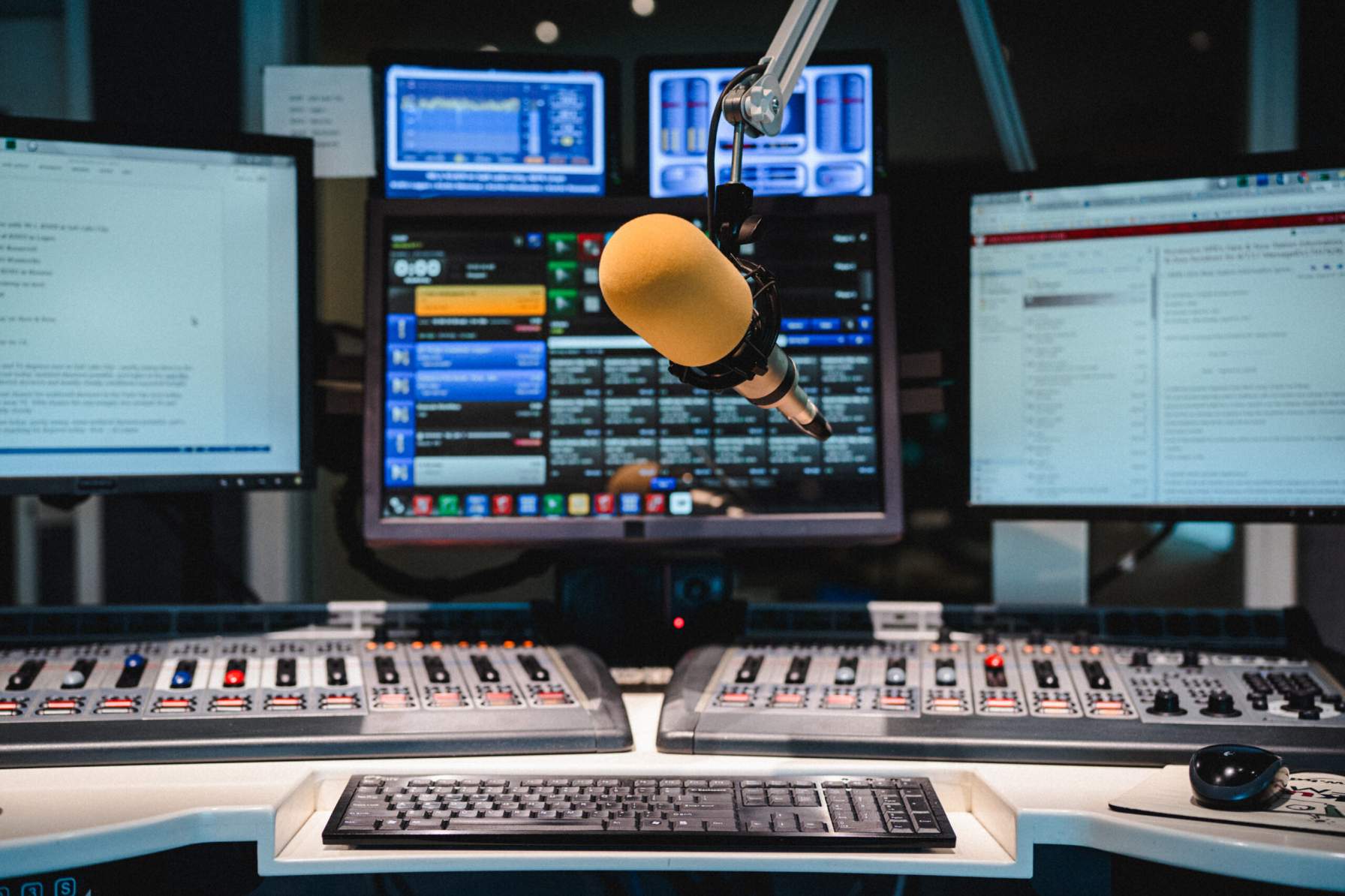
Bossman allowed Malaika to take the midnight production shift. This was the only way she could afford to pay for school. Decades before automated systems or streaming, her job each night was to download songs, edit them, burn them into CDs, and update the music library.
Until she resumed work one midnight and saw Bossman packing up.
“What’s going on?” She asked.
The EFCC was at the station earlier. They said Bossman had to leave because they were confiscating property belonging to the former governor and had taken over the station.
That night, a few of the presenters went on a walk together. Bossman, Wanita, Malaika and Falcon.
They all agreed that if Bossman was leaving, they were as well.
The year was 2007, and Sullivan Chime was the Governor.
***
There are nearly 700 comments under the latest social media post asking a variation of the question, “What do you remember about Cosmo FM?” It happens periodically. Someone mentions something they remember and a flood of others join in. Soon, people are typing word for word any of the station’s promos and identifiers.
This happens too regularly for a station that has been off air for nearly 20 years.
Lean On Me was my favorite programme… I can never forget… I wish they’ll come back… I got all my news from there… My heart was broken when they vanished… I bought a small radio then, I used to take it to school because of that radio station…
So how do you build an unforgettable radio station? You begin with a vision, first. For a product to meet the most basic media needs of an audience, you get a team of powerhouse presenters manning round-the-clock programming that addresses every need, no matter how niche. Then, you find a brilliant Bossman to be present and hands-on enough to ensure the idea and team progressed. Malaika says Cosmo had it all.
Which is why when it went off air, an entire region and its environs lost their access to both high-quality journalism and a media product very much ahead of its time.
***
Successful media products, like Cosmo FM, can achieve a lot for Nigeria’s over 230 million people today. It can fill the desperate need for a unifying cultural destination for its enormously diverse population; provide a place for the ideas, achievements and possibilities of the Nigerian to be represented and celebrated and exported; promote increasingly necessary messaging; but perhaps most importantly, be an affordable destination for quality, trusted journalism.
Nigerians often say they don’t have many grandiose needs. Don’t put a man in space, for example. Don’t do anything too ambitious; just provide the basics: education, electricity, and if you’re being ambitious, free and fair elections. The same is true of the country’s means of distributing information.
A public broadcaster for Nigeria first needs to exist. Then, it can be made better. If it does exist, is it offering audiences any services meeting any of their ever-expanding needs? Do they inform, update, offer perspective, hold power to account? Are there any services or programmes worthy of sustained, decades-long fandom? And in today’s digital-first era, are there any offerings or programmes there that audiences would spend their hard-earned data on?
Widespread internet use in big cities like Lagos and Abuja, where many can consume media and journalism digital-first, hides realities that are, in fact, stark. Like multidimensional poverty.
The World Bank’s definition of multidimensional poverty captures a more complete picture of poverty beyond just the monetary kind. It takes into account how much of the population are also deprived of basic infrastructure like education and electricity.
This matters for media in Nigeria, particularly because more than half of its population live in multidimensional poverty. 133 million people in all; 86 million in the North.
That’s the population of the country deprived of the means to be digital-first consumers of media because they can neither afford it nor have access to other infrastructure, like education, etc., to make sense of it.
Put another way, the number of Nigerians living in multidimensional poverty is greater than the populations of Ghana, Côte d’Ivoire, Niger, Burkina Faso, and Togo combined, with people left over. Should a national broadcaster exist which makes media and journalism for them? Absolutely.
***
Falcon started at Cosmo as the Enugu State University of Technology (ESUT) correspondent for the Saturday morning program, Off Campus. She said it felt like walking into a battalion where everybody knew exactly what they were doing. It was there she learnt what it meant to actually do radio work and build programmes from scratch that appealed to primary, secondary and tertiary audiences. She has worked in production since, including as producer for the critically acclaimed C.J. Obasi film, Mami Wata (2023).
In one of her favourite memories of being at Cosmo, a listener visited the station who listened from Jos, 577 kilometres away from Enugu. The man said he came to visit Enugu but decided he must find the station and see for himself the human beings who had redefined what he thought was possible of a radio station.
But no one who worked in programming in Cosmo came fully made. They joined the team, contracting the ambition from the top, then were trained and retrained until they shone.
The station was in Enugu, a university town which attracted young people from across the country. It couldn’t survive without relatability and programming targeting the upwardly mobile. Relatability was also one half of what informed Bossman’s insistence on presenters using just one, ethnically unidentifiable name on air.
Getting ahead of the audience and removing from them any potential to spoil a good work with bigotry or tribalism, which can be prevalent in Nigeria, was the other. No one was considered worthier than the other because of where they came from.
Falcon came to the city and station as Adaugo.
“Bossman asked me, what would be your name for work?”
“Adaugo, so shortform it to Ugo, an eagle?” Adaugo thought it was too masculine.
“What about Falcon? Does Falcon work?” Adaugo agreed.
“I’ve been Falcon ever since. In all my work, professional credits, Falcon, and it was him, Bossman who named me.”
***
To build for itself an unforgettable public broadcaster, a country must first consider the needs of the audience as deserving of being filled. Or at the very least, reckon with the danger of leaving millions of local people underserved.
When such a gap exists, sometimes others step in. But there are risks. Viral comic videos about international media depiction of Nigeria or the wider African continent often mean that, sometimes, audiences don’t see themselves in the treatment of stories, or that those with the power to tell it are lacking context that local people recognise. This isn’t ideal but is the safer consequence.
What is truly dangerous are the ways the vacuum can be and is being filled. By weaponised disinformation spreading unchallenged, sometimes interfering with democratic systems, leading to audiences who live in the same country but in parallel realities. Urban and rural audiences believe opposite things, delivering a continued incentive for those in power to benefit from a fractured and divided population base unsure of what is true and what isn’t.
A Reuters Institute for the Study of Journalism at Oxford Report summarises this vacuum, or what it calls “news deserts”, that, “across many regions, traditional national outlets, headquartered in capital cities, have become either unwilling or unable to serve remote and underserved communities.”
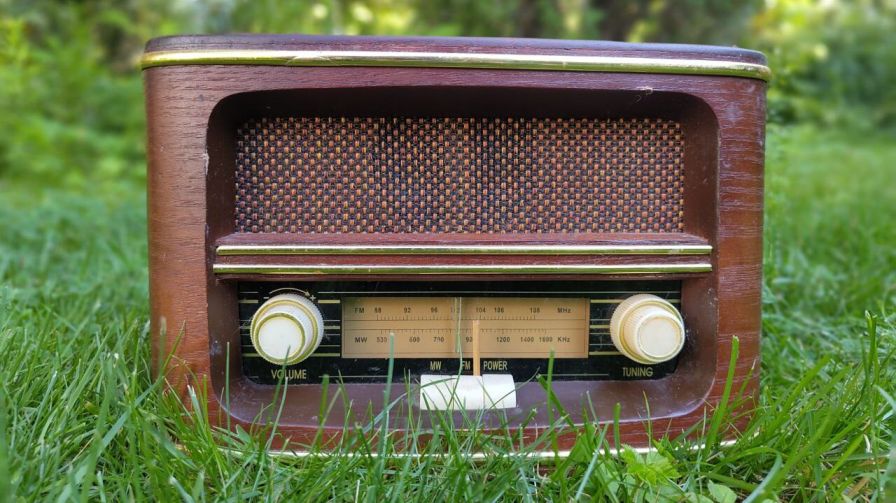
Radio, in its 93rd year in Nigeria, remains the cheapest way to reach rural audiences, and an innovative national broadcaster is the cheapest vehicle to achieve this aim.
***
In 2013, Sullivan Chime decided he had had enough of the state public radio and TV. ETV Channel 50 and Sunrise 96.1 FM weren’t working. He was governor and could do something about it. So, he called Bossman, who had, since Cosmo FM, gone to set up and run Blaze FM for Anambra billionaire businessman, Sir Emeka Offor. The Governor asked him to do for the public broadcaster what he did at Cosmo FM.


And for the third time, Bossman assembled the team, and Malaika, Falcon and Wanita returned.
Wanita was in Lagos, working at Smooth FM when she got the call. She packed up, left Lagos and moved back to Enugu. Wanita said Bossman only had to ask. “ All he needed to say to me was. Come, there’s work to be done. Because first and foremost, I knew I would learn. I knew I would be better for it, I knew I would enjoy my work, and I knew it was going to be a challenge again.”
To pull what was a civil service station into a modern competitive one, they first turned off the transmitters and overhauled programming. When it was turned back on, it was a whole new station. All new sweepers, station identity, presenters, and programming. After about a year, the two backwater channels could no longer recognise themselves.
Transforming media products had become a skill this team had. Done in different versions, three times. It’s why Wanita is impatient with today’s options or the lack thereof.
When I said to her, “We had Radio Nigeria…”
“Would you listen to it?” She fired back.
I couldn’t, even if I wanted to. You couldn’t stream Radio Nigeria from within or outside Nigeria. It was serving no need for anyone. And then, she told me another Cosmo FM story.
The first night she presented the late-night programme, Lean On Me. A girl called in who was going to take her own life. They got into a chat on air, and Wanita managed to talk her down. Then, she grabbed a colleague and went to find her. The girl became a friend of the programme, and they checked in with her periodically. Once she got the opportunity to talk to anyone else feeling the same way she was that first night.
“I got off the show that night and cried and cried because there was so much pain in the world. Imagine people out there who just wanted someone to just listen, and then, Cosmo came and gave them an entire belt. So, it was literally a case of our programming helping people reprogram.”
So what does Nigeria lose in the absence of an innovative public broadcaster? It is missing out on the chance to build community, to engage with generation after generation and to show a media’s capacity to be more than just a regular means of communication.
***
Conversations about the place of radio in today’s digital-first news environment are not new. All kinds of things were going to take the place of, and retire radio as a form. The Walkman, the iPod, streaming, digital media, AI.
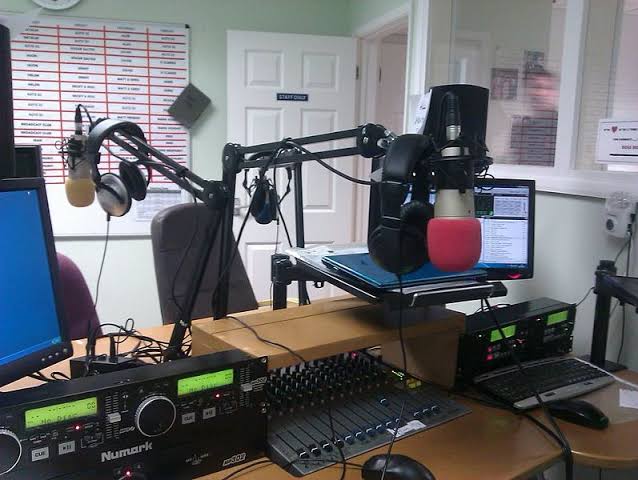
Innovations like these have affected, sometimes modified, the way radio is consumed. None has retired it yet. Not in more developed media markets, and certainly not in developing ones like Nigeria.
In 2027, BBC Hausa, the BBC’s longest-running African language service, will be 70. Its over 20 million weekly listeners are able to access its media services online but continuously through daily radio broadcasts.
When bad actors turn off the internet, the BBC makes shortwave radio fit for those areas so that both local and international audiences have continued access to trusted journalism. In this way, a public broadcaster being able to do its work fully in its home country, and still possessing the capacity to play such a vital role for others abroad, shows the behaviour of an experienced, innovative public broadcaster. The gains are clear for the receiving country and enormous for the country providing it. Nigeria is a receiving country at the moment, but it can acquire the soft power of being the one that provides this service for itself and others.
Like Cosmo and the BBC, it can be run independently by visionary professionals but funded creatively so that, unlike even the BBC, it is not perpetually negotiating and defending the existence of its world service before successive governments; and unlike the much beloved Cosmo FM, it does not, one day, just disappear into thin air.
***
I sat at the back during the meeting and watched the place fill up. We were in the basement, which doubled as the TV recording studio for the state broadcaster. A huge space; recording equipment hung from the ceiling, and decommissioned ones were packed off at a corner. Some lights were turned on for the meeting. I was a line producer for the TV, and a breakfast show producer for the radio.
It was 2015 in Enugu, and Ifeanyi Ugwuanyi was the governor.
There had been rumours about incoming changes. So, most people were here. At the meeting, we heard it was true.
We were told the governor wanted both the radio and TV returned to the government. No more private management, no more modern programming. He said he needed the public broadcaster to become a “government service station.” The man who would lead this was a career civil servant who had retired and was now unretired. One of his first moves, naturally, was a rejigging of programming, refocusing it to be pro-government.
Some of the cancelled programmes were resurrected. DCA was returned. Duty Continuity Announcing, an ancient practice of live back-announcing and pre-selling incoming programmes. He said he was gunning for the “sound of the old state broadcaster.”
He achieved it.
The presenters who did not leave before left after the meeting.
At the end, what was the foundation set by one governor with the vision for competitive broadcasting with Cosmo FM, a display of what was possible, solidified by a second governor who enabled the complete revamping of the state broadcaster, was ultimately undone by a third governor who displayed no understanding of what innovative media can do for a society.
Again, Wanita, Falcon left the station and moved back to Lagos.
*This essay, among other cultural essays, is published in The Afrocritik Report 2025. Download the report here.
Olivia Ndubuisi is the 2025 Joan Konner Journalism of Ideas Fellow. An Arthur J. Harris Memorial Prize Winner, she has an MA in Science, Narrative Medicine and Politics Journalism from Columbia University. She was a Senior Broadcast Journalist at BBC News World Service with the Planning and Commissioning team. Her work while there led to the commissioning of Audible’s podcast of the year and Best Family podcast, Dear Daughter. Her career started in a local Newspaper in Asaba, but it was in Enugu with the team Jika Attoh put together that it took shape.