


Agbara Nla: The Return unfolds with theatrical sentimentality, its actions and characters melodramatic and larger-than-life, partly honouring and immortalising the original.
By Adedamola Jones Adedayo
In 1993, the original Agbara Nla (1993) was released under the aegis of Mount Zion Faith Ministries, becoming a hallmark of Christian faith-based filmmaking. The classic, written, produced and directed by Mike Bamiloye, also had the filmmaker portraying the lead character, Isawuru, a herbalist from the village of Muwonleru who wields unimaginable diabolical powers. He liaises with witches and other dark forces to keep the people in bondage while outwardly portraying himself as a solution provider to their spiritual problems. Amidst other subplots that arise within the three-part narrative, Isawuru’s authority is threatened when he encounters a superior supernatural force that moves against everything he stands for.
As with many Christian films that became popular in the 1990s and 2000s, the Mount Zion classic centralised the conflict between good and evil forces. The supreme authority for the good, noble and righteous forces was the Christian God. Evil meant alternative spiritual allegiances and manifestations, often characterised by misleading thoughts and actions that were not God’s. While both forces cohabited the same cinematic world, they were tied to different circumstances, with the former eventually triumphing over the latter. With such faith-themed productions, also, there was the ultimate purpose of propagating the gospel of Christ and making Christianity an attractive religion for nonbelievers to follow. The perks were obvious. Not only did the Christian faith, through the films, offer insurance against immediate, random acts of malevolence orchestrated by foes, but it also promised an everlasting reward for its adherents beyond the physical world.
Thirty-three years after the first version, Agbara Nla returns to the screens with a more modern, sophisticated and refurbished outlook. The current cinema production is a remake that builds on the legacy of the 1993 home video film, exploring similar themes of Christian spirituality, power dynamics, and the clash between good and evil forces.
Parts of the storyline and characters from the older version are retained in the newer one, but actors, aesthetics and style have changed. The cast includes non-mainstream actors, such as Gloria Bamiloye, Philip Olubakin, Mosiko Remilekun Adesina, Yemi Adepoju, David Kola Okeowo, Omolara Ayoola, and Aanu Kolade Abiodun.
The film is produced by Chris Odeh (who produced earlier remakes such as Rattlesnake: The Ahanna Story (2020) and Nneka the Pretty Serpent (2020)), Mohammed Sedik and Damilola Mike-Bamiloye. The directors are Damilola and Joshua Mike-Bamiloye, both children of the filmmaker behind the classic, who then ensure that the same principal actor, their father, re-animates and reimagines Isawuru.
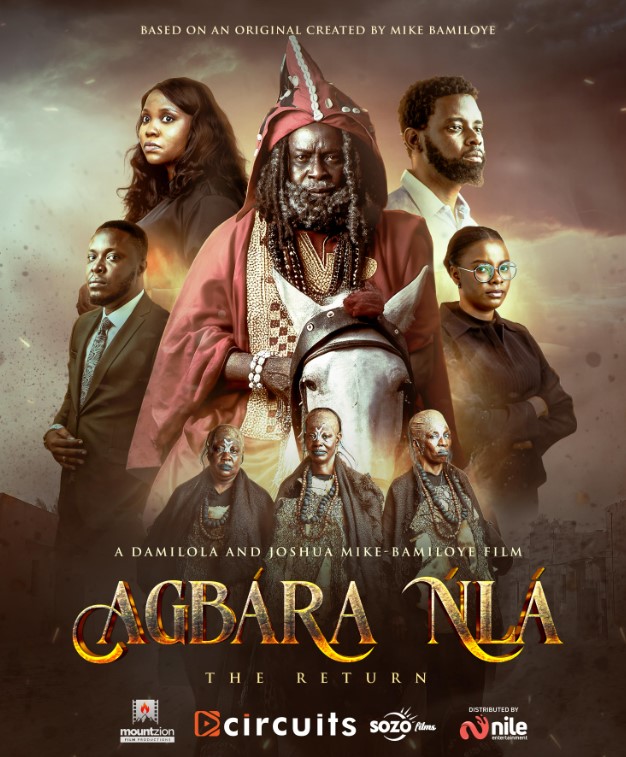
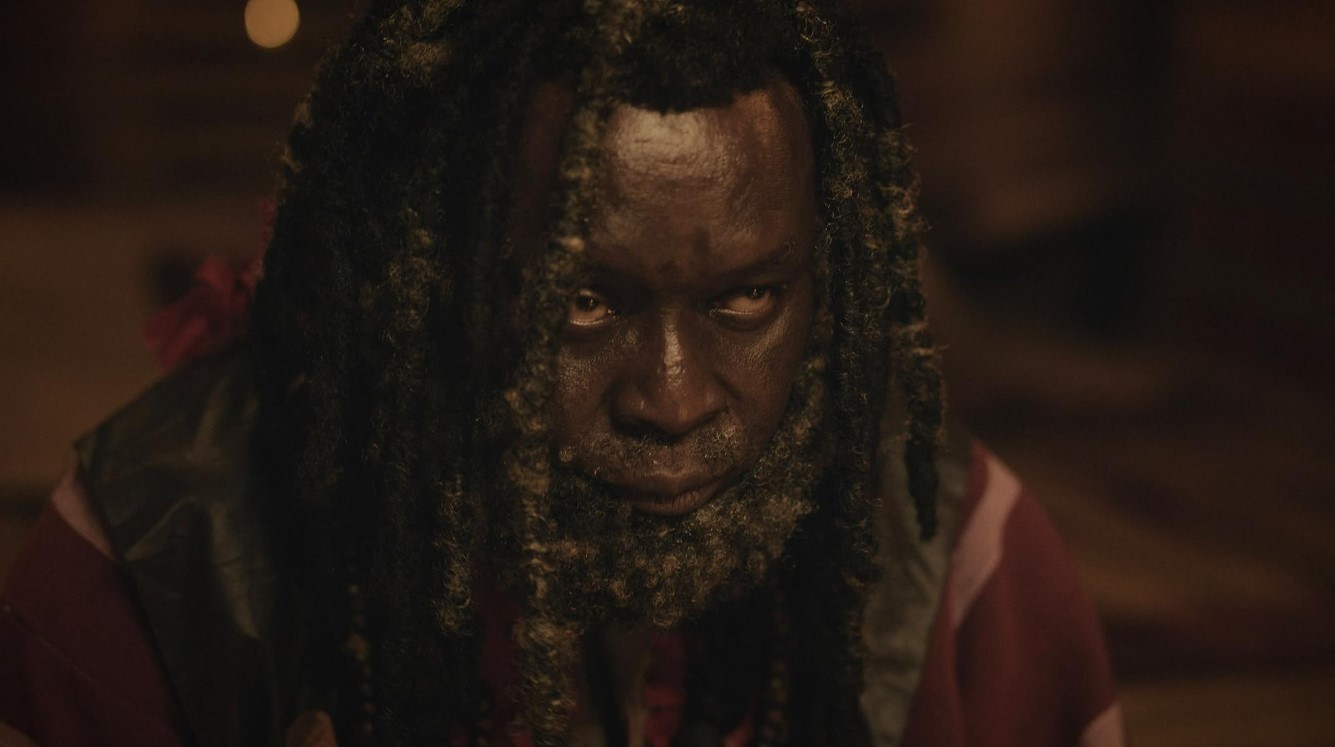
Isawuru, in Agbara Nla: The Return, is portrayed as a power-drunk and self-obsessed fellow, whose influence cuts across both the spiritual and political spheres of his town. As reflected in the opening scenes of the film, he is quick to dispatch kings that do not submit to his authority, imposing himself as an unofficial, roguish kingmaker. But he also remains the same herbalist pandering to the whims and dictates of dark forces. Mike Bamiloye infuses the character with the awe it deserves for much of the film, his experience and ageing frame helpful in his conceptualisation as an authoritative figure.
Agbara Nla: The Return opens like an epic drama, introducing Oba Adetunji (David Kola Okeowo), who is under spiritual attack from Isawuru. Isawuru then physically confronts the king in his palace and demands to be constantly paid homage. His excesses and malevolent disposition are already established here.
While the king is in distress, Isawuru connives with dark forces to unseat him, wiping out the entire royal household in gruesome fashion. This direct confrontation with royal authority, which is unfamiliar territory for the original narrative, soon becomes overshadowed by familiar characters and actions reminiscent of the 1993 classic. At this point, the narrative has morphed into the supernatural gospel drama it is known for.
Kola (Damilola Mike-Bamiloye), a distant relative of the outwitted king of Muwonleru, and his wife, Bose (Aanu Kolade Abiodun), are the first couple we meet in the city. Kola informs his wife that he has received instructions from his maker, the Christian God, for them to relocate to Muwonleru, where they will carry out missionary activities aimed at the town’s spiritual emancipation.
As in the original film, Bose objects to the decision, creating a conflict of commitments between the couple. When a job promotion beckons, they are further distracted by the promise of a better life in the city, which seems preferable to the uncertainty, discomfort and potential perils of relocating to a remote town.
There’s Olaboye (Philip Olubakin) and his wife, Olatomi (Remilekun Mosiko Adesina), another couple and family presented as the ideal godly, upright and spiritually compatible pair. They submit themselves to the will of God, relocating to Muwonleru, where they face spiritual persecution from Isawuru in their attempt to free the town from his clutches.
The evil supernatural forces in Agbara Nla: The Return remain faithful to the original film, but their effectiveness depends on how the remake translates them into a contemporary cinematic language. With the aid of modern costume, production design and sound, the film amplifies the menace of figures such as Aro Meta, the ẹmẹ̀rẹ̀ and Ologosho Dudu, all instruments of diabolical affliction within the protagonist’s reach, and Paulina/Ayamatanga (Omolara Ayoola).
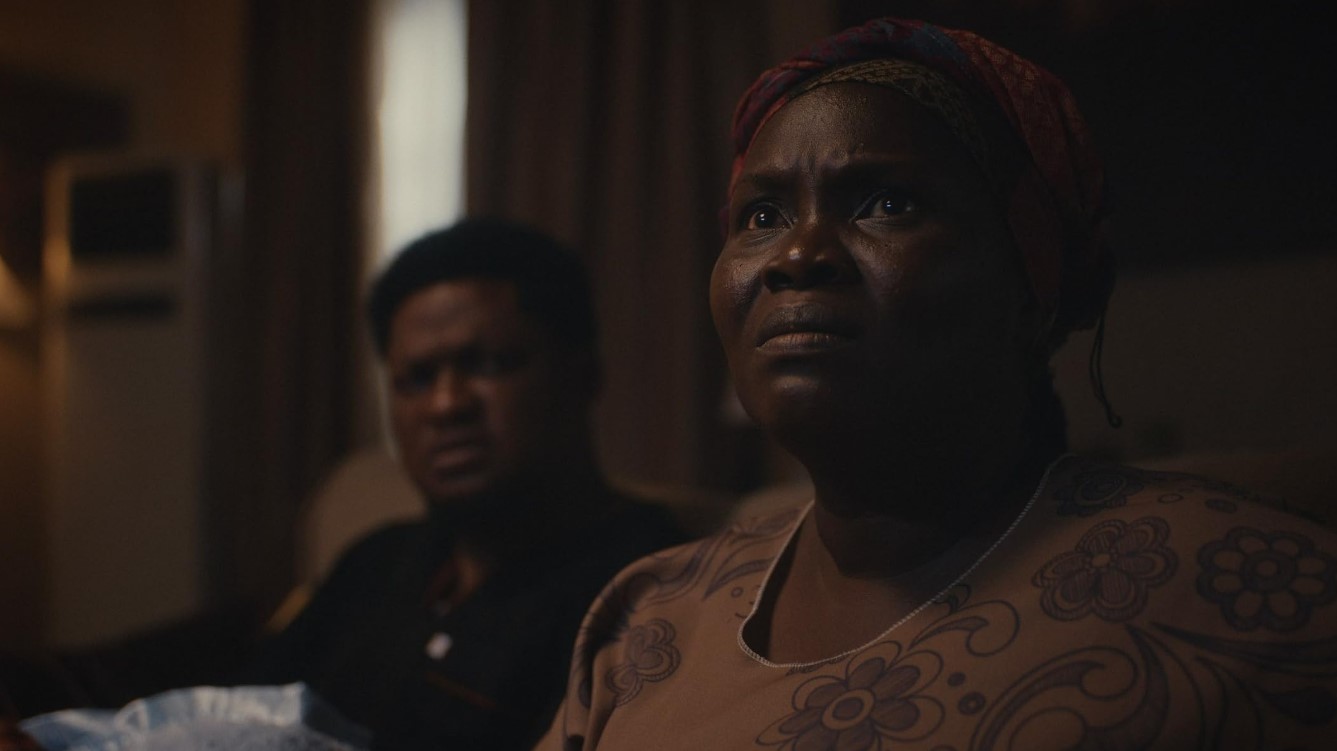
Paulina, in particular, benefits from a more convincing visualisation of her wealth and ostentatious lifestyle, whereas her transformation into Ayamatanga relies on exaggerated performance and possession as an expression of evil. The result is consistent with the narrative’s overall melodramatic, evangelical sensibility, one which favours conspicuous displays of spiritual conflicts.
Unlike the original film, Agbara Nla: The Return adopts a somewhat distinct narrative approach, condensing the predecessor’s over six-hour runtime across three parts into a single feature-length film of approximately two hours and thirty minutes.
To achieve this, the remake uses title cards to break the story into nine chapters, each with a focus that helps the narrative and characters remain compact. From a creative perspective, this division works because, unlike the original film, the story maintains a chronological order of events, barring occasional use of flashbacks, while avoiding extraneous dialogue and scenes. It allows the audience to follow the subplots without losing touch with important character arcs.
Agbara Nla: The Return unfolds with theatrical sentimentality, its actions and characters melodramatic and larger-than-life in a way that partly honours and immortalises the original version. Several faith-based productions from the same era—such as Helen Ukpabio’s End of the Wicked (1999), Highway to the Grave (2000) and Married to a Witch (2001)—relied on heightened, often gory depictions of negative spiritual forces to emphasise the power and importance of their positive counterparts. In those films, the spectacle of evil served to reinforce the triumph of spiritual light and benevolence. They often took painstaking care in dramatising the manifestations of evil, using fear as a psychological tool to discourage audiences from what they regarded as reprobate practices and steer them towards a supposedly more righteous faith.


Here, the filmmakers incorporate elements of horror, drama, suspense and thriller, painting a perceptible image of spiritual warfare when viewed through the lens of the Christian religion. At times, this fusion works, owing to the peculiarity of the film’s multi-genre approach and the filmmaking era from which it draws inspiration. It makes the film enjoyable as a typical Old Nollywood-styled production, despite the presence of modern filmmaking techniques and aesthetics. At other times, however, the depiction of magic, witchcraft and otherworldly influences feels forced and overdramatised, depleting the film’s sense of realism.
An inherent quality of faith-based storytelling, which this remake articulates, is the fixation on morality and redemption. The narrative strongly emphasises the idea that characters’ actions have moral and spiritual consequences, with good deeds rewarded and evil deeds punished accordingly. But there is also the “second chance” phenomenon that comes into play, which validates the Christian doctrine favouring forgiveness and spiritual rebirth over condemnation. Drawing an uncompromising line between good and evil, the film makes its resolution predictable long before the ending, diminishing suspense as audiences anticipate a conclusion that adheres to Christian filmmaking philosophy.
There is, however, some concern about how repentance, redemption and the absence or inequivalence of consequences might translate into questionable moral interpretations. While Christian filmmaking philosophy, as reflected in Agbara Nla: The Return, sees repentance as a mechanism for positive transformation, it comes with the risk of suggesting to the audience that repentance alone is enough to absolve wrongdoing. With the film’s ultimate priority placed on spiritual rebirth, it speaks less to the possibility of accompanying redemption with restitution and reckoning with past actions, which some might argue are also ideals of the Christian faith.
Story-wise, where Agbara Nla: The Return often falters is in the area of character development and world-building. After initially introducing a king with his council of elders in the opening scenes, the film makes no further reference to the existence of any such organised leadership in the town of Muwonleru. Instead, the film proceeds treacherously, without being consistent with its earlier trace of traditional authority and denying the protagonist the depth of characterisation necessary to establish him as a menace to the royal institution. This weakens the film’s internal logic and makes the depiction of Muwonleru less convincing given the communal setting in which the narrative unfolds.
Similarly underdeveloped is Ifagbemi, a belligerent young man and son of Isawuru who often bellows while showering eulogies on his father. The film presents a masculine figure whose responsibility is that of a right-hand man. But despite being ostensibly the only son, he receives too little attention for the audience to understand his personality or his relationship with his father. Instead, he becomes a convenient plot device through which Isawuru’s decisions are influenced, while the father-son dynamic largely remains unexplored.
Shortcomings notwithstanding, one thing the remake of the Christian film classic proves, which is perhaps its most interesting takeaway, is the existence of an underserved audience and the presence of a gap in the Nigerian cinema market that filmmakers and distributors have yet to fully explore. So far, the film has had an encouraging run in domestic cinemas, grossing 170.6 million naira in its first weekend to set a new record for the biggest non-December opening for a Nollywood film. As reported by Film Intelligence, its box office performance trails only Everybody Loves Jenifa (2024) and Behind the Scenes (2025), placing it among the biggest commercial successes in Nollywood’s history. It is also the biggest opening for a faith-based Nigerian film.
Beyond validating the legacy of the film, these records suggest that the Nigerian audience cannot be reduced to a monolithic group with uniform cinematic tastes and preferences. The quick lesson here is that religious audiences are not necessarily removed from the commercial possibilities for mainstream cinema, nor should their tastes be subjected to the assumption that faith-based films appeal only to a narrow, predictable demographic.
Rating: 3/5
Adedamola Jones Adedayo is a film journalist and critic with special interest in African cinema. Through writing and audiovisual mediums, he creates conversations around cinema in Africa and the Diaspora. You can find him on Instagram @jonesthegoodboy and X on AdedamolaAdeda4.