
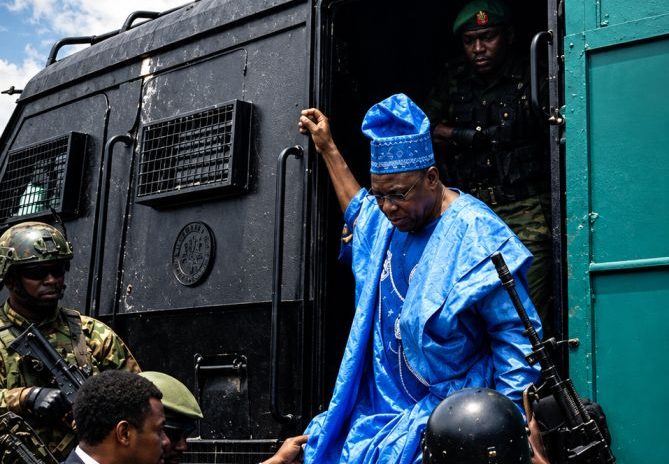

MKO presents an overwhelmingly positive image of Abiola, treating him not just as a political actor but also as a central figure in the evolution of Nigeria’s democracy.
By Adedamola Jones Adedayo
It is impossible to reflect on Nigeria’s past without citing the botched June 12, 1993 elections as one of the most significant political incidents in the history of the country. This happened at a time when the country was experiencing a succession of coups and military dictatorships. When the elections took place, Nigeria was under the military leadership of General Ibrahim Badamasi Babangida, who had been in charge since August 1985.
The presidential elections came to be known as one of the freest and fairest in the country’s history. Chief Moshood Kashimawo Olawale (MKO) Abiola, a business tycoon and philanthropist, won the elections under the umbrella of the Social Democratic Party (SDP) against Bashir Tofa, who represented the National Republican Convention (NRC). But the results were annulled, with the military government branding the exercise as “corrupt”, triggering political turmoil.
Abiola was subsequently arrested and jailed in 1994 after he publicly declared himself the rightful president of the country under the administration of General Sani Abacha, successor to Babangida. Four years later, he died shortly after taking tea with American diplomats who had come to Abuja, where he was detained to negotiate his release.
However, the circumstances surrounding his demise, which came not long after Abacha passed on, remain controversial. This has since provoked questions geared towards unravelling the mystery of his death: Was he assassinated? If so, who orchestrated it? And to serve what purpose?
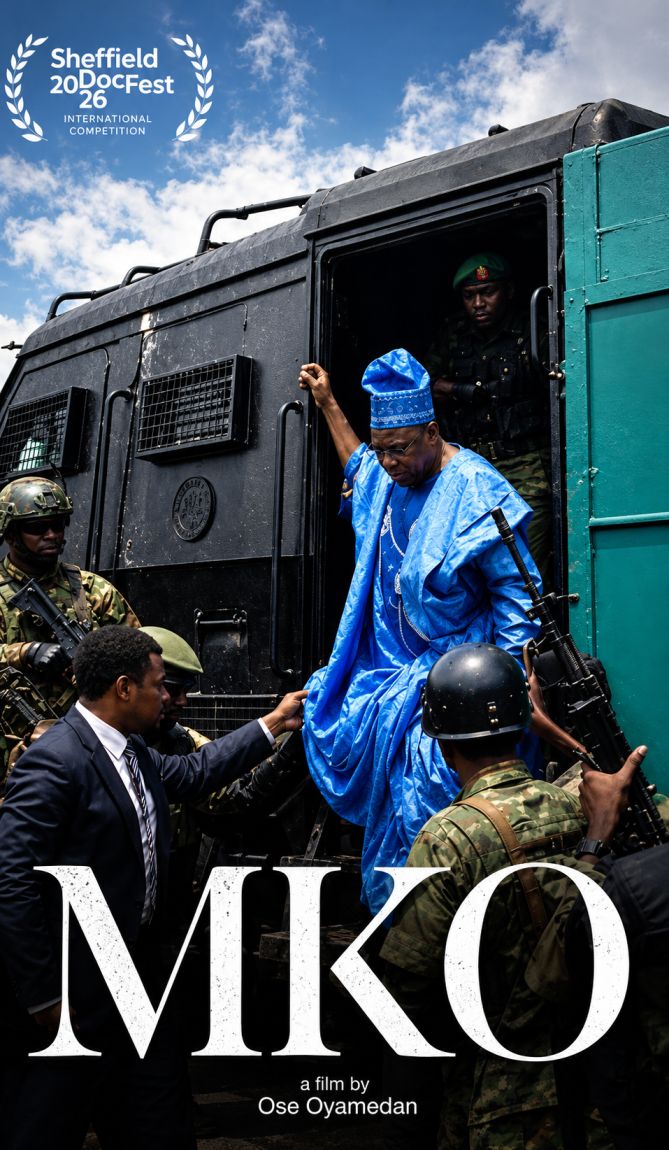
These questions, and other concerns around the legacy of the famous political figure, are what Nigerian-American journalist-turned-filmmaker Ose Oyamendan reflects on in the feature-length documentary, MKO (2026). The documentary attempts to assess Abiola’s topsy-turvy and tragic political career.
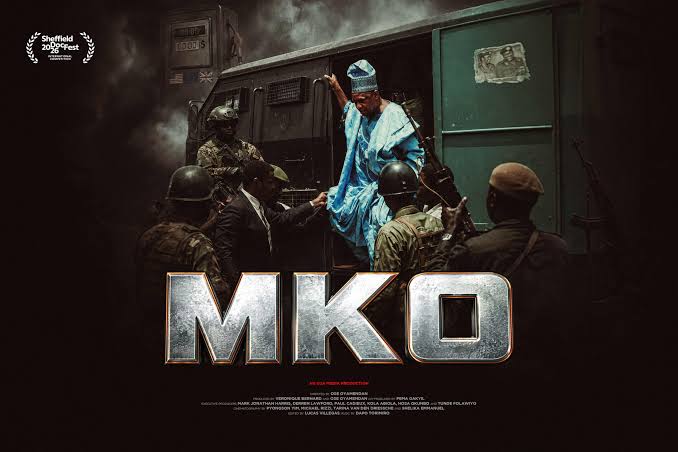
Here, the writer-director investigates the peak and decline of the subject’s political ambitions amidst frequent military interventions in Nigerian politics, presenting the narrative from an incisive perspective that honours facts, footage, voice recordings, and witnesses’ accounts while acknowledging reasonable deductions.
Oyamendan once worked for Weekly Concord, a major Nigerian newspaper in the 90s, but he relocated to America, where he joined Amnesty International, following the military’s clampdown on the newspaper. Afterwards, in 2021, he launched his documentary filmmaking career with the release of Aswat Acherim (Other Voices).
With his latest documentary, MKO, the filmmaker steers the course of storytelling as narrator, seemingly emboldened by his journalistic instincts and inquisitiveness as he demonstrates an understanding of Nigeria’s fragile sociopolitical texture in the final decade of the twentieth century.
MKO, co-produced by Oyamendan, Véronique Bernard, and Pema Dhondup, premiered internationally on 12th June, 2026 at Sheffield DocFest in the United Kingdom. It comes across as perhaps the first major, comprehensive contemporary cinematic documentation of the famed political and social figure, with Joanna Lippa’s The Supreme Price (2014) being the only notable previous cinematic reflection on the Abiola family during the era of military dictatorship.
The documentary’s depth of coverage is evident in its engagement with a large number of participants, either actively on screen or behind the scenes. Researchers Toni Bell, Toyin Amusan, Dan Ikpoyi, Toyin Fajuyigbe, Festus Owese, Sam Tukur, Biodun Alabi, Garba Umar and Godwin Dunia contributed to the development of the project in its pre-production phase, an exercise that explains the degree of commitment to ensuring the presentation of factual information.
More than fifty people associated with Abiola are also interviewed in the documentary, giving room for a robust representation of his life and personality. The list includes family members such as Kola Abiola, Doyin Abiola, Lola Abiola-Edewor, Wura Abiola and Hafsat Abiola; colleagues and associates such as Babangida, Baba Gana Kingibe, Iyorchia Ayu, General Jeremiah Useni, Bola Ahmed Tinubu and Adams Oshiomole; other noteworthy figures such as Nobel laureate and political activist Wole Soyinka, students union leader Omoyele Sowore, pro-democracy activist Kayode Fayemi; and international observers such as The New York Times’ journalist Howard French, and Washington Post reporter Jim Rupert. Regardless of this long list, the narration is edited and arranged in chronological order.
Describing the story as “one of Africa’s darkest hours” and the electoral sabotage as the killing of “our biggest hope for democracy”, the narrator begins with a brief acknowledgement of his position as a young journalist who witnessed the unfolding of such an event that defined Nigeria’s political trajectory in the days. The documentary further reveals the background and formative years of Abiola, followed by a backstory of how Nigeria, as a sociopolitical entity and country, came into existence.
MKO presents an overwhelmingly positive image of Abiola, treating him not just as a political actor but also as a central figure in the evolution of Nigeria’s democracy. It does so while allowing the audience to revisit history, serving as archival and instructional material for knowledge seekers.


Watching the documentary, however, one often perceives a slight tonal drift towards idealisation and glamorisation, with the documentary projecting Abiola solely as a perfect victim and unfortunate pawn in Nigeria’s crude politics. There is a bias towards information that illuminates Abiola’s world so as to invoke sympathy and concern for his political misadventures. It feels as though the filmmaker’s approach and choice of interviewees are strictly aimed at emphasising his achievements and his symbolic significance while obscuring controversies that defined his political involvement.
For instance, Abiola was believed to have maintained close ties with the military, with some records even claiming that he financed military officers, particularly those involved in the changes that brought General Muhammadu Buhari to power. But Oyamendan does not reflect on this. In the documentary, there is mention of Abiola’s friendship with Babangida; however, the intricacies of their friendship, which could be rooted in strong political undertones, are left unexplored.
What, instead, the documentary does is absolve Abiola of political guilt, portraying an image of sainthood. When the featured interviewees do discuss where he went wrong in recounting his actions, they do so tacitly without blatantly framing his missteps as such.
This documentary is a rendition of what is already known about Abiola, a president-elect who never got the chance to rule. It does not reveal anything about him that is a shocking revelation or contrary to the existing records. But the presentation style is where the sense of novelty lies. Oyamendan builds the narrative of the democratic hero around a network of notable figures whose personal and professional relationships with Abiola yield different perspectives on his life. Their recollections give the documentary a sense of urgency, allowing individuals to encounter historical events through the memories of those who witnessed or participated in them.
Released in Nigerian cinemas since 2nd October, a day after the country’s annual Independence Day celebrations, MKO may be perceived as a reminder of the hard-fought battle that precipitated the current dispensation of democracy that the country currently operates. It is perhaps best to approach the documentary from this perspective while overlooking the passive subjectivities that underpin the filmmaker’s treatment of Abiola’s political legacy.
Rating – 3/5
Adedamola Jones Adedayo is a film journalist and critic with special interest in African cinema. Through writing and audiovisual mediums, he creates conversations around cinema in Africa and the Diaspora. You can find him on Instagram @jonesthegoodboy and X on AdedamolaAdeda4.