


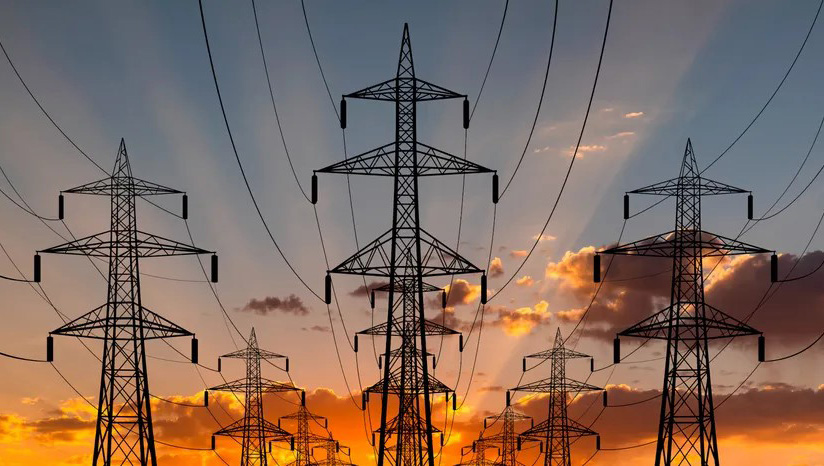
Infrastructure in Nigeria does not merely fail; it asserts itself as a constant condition, a baseline against which life is measured. Electricity, water, transport, and access to safe streets are all provisional, temporary, and negotiable only in the most practical terms.
By Taiwo Egunjobi
Cinema serves many masters.
It can persuade, entertain, provoke, indict, memorialise, and mobilise.
In the Nigerian context, where I live and work, the demand to entertain is often treated as the primary, most legitimate function. My own early education in film mirrored this tension; while studying a diverse canon, I gravitated towards works that married persuasion with pleasure, and often found myself impatient with European or African art films that seemed to disdain entertainment. Yet, many of those films held something vital: an unflinching gaze at the environments shaped by systemic neglect. The danger, I learned, was in turning that gaze into dogma, in presenting restraint or deprivation as the only “correct” cinematic mode. It has become a thematic preoccupation of festival programmers and critics of African cinema to reinforce this dogma, and there are no signs of this abating anytime soon.
For me, the real goal is not a predetermined style, but an honesty of relation between form and condition. This honesty becomes imperative when the subject is infrastructural failure that is permanent rather than exceptional, bureaucratic rather than violent, and normalised rather than shocking.
In such a context, spectacle often lies. Not morally, but structurally. It distorts the lived experience of neglect by presenting it as an event or a dramatic interruption, rather than the very air a society breathes. The question for a filmmaker, then, is not “Should cinema avoid spectacle?” but “What kind of form does this reality demand if I am not to distort it?”
Sometimes the honest form is quiet. Sometimes it isn’t. The trap is in making poverty porn for the international festival circuit, a commodity of despair that is legible to outsiders but alien to those who live within the reality it claims to depict. Some truths about neglect collapse when aestheticised. In response, restraint becomes less an aesthetic choice than an ethical refusal to misrepresent.

My filmmaking practice has been shaped by this refusal. In Nigeria, infrastructure does not fail episodically; it fails continuously. This continuity alters not only how films are made, but what kind of films can be made. Electricity is the cardinal example. On set, power failure is not a crisis, but the chief premise. The generator’s constant hum is our baseline, reshaping soundscapes, dictating schedules, and rewriting dialogue. This is not dramatic. It is routine. And because it is routine, it quietly determines form: it dictates where scenes can be staged, how long they can run, and what kind of auditory silence is achievable.
This pressure extends into writing. I stopped imagining stories that could only be realised through production heroics. Instead, I began writing for contexts I knew intimately: university campuses, zoological gardens, junkyards in familiar neighbourhoods, spaces whose rhythms and constraints I could predict. This was not so much a creative limitation as it was an adaptive logic: if neglect structures the world, then narrative must be designed to survive inside it. Constraint became a tool to be acknowledged, not romanticised.
Infrastructure in Nigeria does not merely fail; it asserts itself as a constant condition, a baseline against which life is measured. Electricity, water, transport, and access to safe streets are all provisional, temporary, and negotiable only in the most practical terms.
Power cannot be relied on permanently, and this uncertainty seeps into every aspect of production, every choice of location, every moment of planning. Filming exteriors in many urban centres is a hazardous negotiation: crews are confronted with extortion, thugs demanding payment, and the ever-present threat of violence. On one prominent set, several crew members were stabbed after refusing to settle a new gang of thugs. Injuries, fear, and improvisation become part of the production. Fuel crises compound the instability: kegs of petrol have been seized by authorities and never returned, forcing productions to continue with smaller generators and improvised energy sources. These are not exceptional crises; they are ordinary pressures, shaping both how stories are told and what stories can survive the day.
The slow violence of neglect extends beyond electricity and roads into the very rhythm of urban life. Public roads, estate streets, and city infrastructure become both stage and character, subtly dictating where and how action can unfold. The filmmaker must budget for power, assume the impossibility of social infrastructure, and anticipate the interruptions imposed by spatial decay.
Waiting becomes a civic condition: students endure terminal university strikes, markets operate on the whims of fuel availability, commuters navigate streets that offer no guarantee of safety. Lives are navigated in suspended time, negotiating around absence, scarcity, and delayed provision. Such rhythms are not incidental—they shape aspiration, social connection, and hope itself. Filmmaking that attempts to ignore these rhythms risks distortion; the camera must learn to breathe with them, to acknowledge absence without fetishising it.
Audience recognition introduces a further tension. Local audiences, accustomed to the realities of infrastructural failure, often recognise the truth quietly embedded in a film: the generator hum in the background, the awkward improvisation of a scene, the improvised detours through broken streets. Yet, there is also a persistent desire for entertainment above all else, a demand that stories provide pleasure or distraction.
International festival circuits add another layer: films that aestheticise neglect and failure often receive attention precisely because they conform to a dogma of African cinema, a spectacle of deprivation legible to outsiders. Filmmakers are left in a delicate bind: how to tell the real story without transforming endurance into performance, or suffering into spectacle? The tension between domestic recognition and festival reward becomes a structural pressure, shaping choices in framing, narrative pacing, and even casting.

Cinema, then, is ultimately an archival act. Beyond immediate aesthetic or narrative concerns, films bear witness to the texture of the era: the music that pulses in streets and markets, the clothing that marks generational change, the language and dialects that punctuate daily life. They become living photographs of a time and place, recording not just absence or failure, but presence, the strategies of survival, the improvisations of ordinary people, the small assertions of dignity that persist in conditions of structural neglect.
This documentation matters because it allows the future to understand who we were and where we were. By capturing the rhythms of daily life, films create a historical ledger that statistics and policy papers cannot; they register the lived experience of citizens navigating an infrastructural landscape of instability. In doing so, cinema becomes a form of memory, offering a reference point for reflection, critique, and perhaps, eventual improvement.
Visually, this translates to a preference for compositional stillness. While often interpreted as a stylistic signature, for which I often reference Yasujuro Ozu, its roots are practical and ethical. The environments I film are often visually chaotic or compromised. A restless camera would risk turning that backdrop into a spectacle, forcing the audience to see deprivation as a series of striking images. A still frame, by contrast, allows attention to settle on the characters. It becomes a form of refusal: the refusal to insist that every broken thing be seen, the refusal to make deprivation perform. My characters exist within materially constrained worlds, but the camera does not linger on peeling paint or empty cupboards as if collecting evidence. Deprivation is the given, not the subject. The goal is not to show that things are “bad,” but to show how lives, gestures, and hopes are rearranged around that “badness.” It is not about the bridge that collapsed, but about the path people take to walk around it.
This approach demands a specific discipline: the discipline of patience. It means making fewer films. It involves long periods of development, writing with specific collaborators and locations in mind, building productions that can absorb sudden, predictable collapses. On almost all my projects, from In Ibadan (2020) to All Na Vibes (2021), A Green Fever (2024), and The Fire and the Moth (2025), locations have fallen through repeatedly due to sudden situations. Scenes have been reworked overnight, interiors converted to exteriors, and narrative emphases shifted not for creative flair but for survival. This filmmaking trains a particular kind of patience, not as a virtue, but as a necessary, embodied response to a world where nothing is promised, and continuity cannot be assumed.

Ultimately, this practice advocates for cinema as a historical witness, a record of neglect that operates on the level of form. It is a cinema that allows broken systems to shape its aesthetics quietly and its ethics firmly. It refuses to turn neglect into either pity or poetry.
By accepting the slow, repetitive, and incomplete rhythms imposed by infrastructural failure, such filmmaking creates a durable record of ordinary life within abandonment. It captures not the spectacle of crisis, but the texture of endurance, offering a testament to how authority, legitimacy, and daily existence are contested and shaped within the quiet, continuous crisis of the everyday: how a poor Ibadan farmer deals with heartbreak, how terminal University strikes can damage waiting students, how a smuggler and a struggling student try to make off with a great artefact. This is the record we make from within the frame of neglect, not a cinema of complaint, but a cinema of witness.
*This essay, among other cultural essays, is published in The Afrocritik Report 2025. Download the report here.
Taiwo Egunjobi is a Nigerian film director, screenwriter, and cultural commentator based in Lagos. A graduate of Psychology from the University of Ibadan, he began making short films as a student, driven by a deep interest in how stories shape human experience and identity. His films have screened at international festivals, including the NOW Festival Paris, the African Film Festival in Argentina, and AFRIFF. His works are available globally, with All Na Vibes on Netflix, and A Green Fever and The Fire and The Moth on Amazon Prime Video. Beyond filmmaking, Taiwo serves as the Editor-in-Chief of Filmkaku, where he contributes to critical discourse on African cinema, and regularly shares insights on other platforms. He has taught sessions on storytelling and leadership at YP Lagos, and has served as a juror for the Africa Magic Viewers’ Choice Awards (AMVCA), the Fountain International Film Festival, and the Ibadan Indie Film Awards.
Cover photo credit: The Guardian News Nigeria