


Publishers need to invest in education and literacy initiatives. The idea is that such an investment creates tomorrow’s readers—the customers who will buy books when the contemporary readers are no longer there.
By Chimezie Chika
One of the long-running omissions of Nigeria’s publishing industry is the absence of regular weekly bestseller lists. We know on occasion—usually by hearsay—what books are moving numbers, but no official list in this country collates bestselling books weekly and ranks them by sales.
One drawback of this absence is that, in an industry as large as ours, no one has concrete information on the numbers around our bestsellers. When all is considered—the industry’s infrastructural deficits notwithstanding—one must conclude that we seem to be operating in an industry that thrives on withholding information. Perhaps thrive is the wrong word here, for withholding information as far as sales go has never helped anybody in publishing.
But bestseller lists have changed the industry considerably in terms of circulating valuable business information on sales data and creating further demand. Putting aside the sales engineering that this is hinting at, bestseller lists are immensely beneficial for publishers and authors alike. For the former, they are marketing tools and provide signals about where the market is leaning; for the latter, they create visibility, credibility, and the ability to command higher future advances.
One example is what the phrase “The New York Times Bestseller” pasted on the front cover does for a book published in the United States or what The Sunday Times version of that phrase does for a book published in the UK. Can we not create something that would make it possible to put a similar phrase on books published in Nigeria? Something along the lines of “No. 1 on The Vanguard’s Bestseller List” or “No 2 on Open Country Mag Bestseller List” or “No. 3 on Afrocritik’s Bestseller List”.
The idea of becoming a bestseller gives a social—and even psychological—weight to a book. This is purely on the basis of publishing and marketing rather than the quality of the writing. While it is hard to determine what kind of books readers will like and buy, collecting data on reader preference goes a long way in providing leverage for stakeholders within the publishing industry.
Some people may begin to point to Open Country Mag/RovingHeights Bestseller List as an example of one such initiative in this country. Need I remind them that the Open Country list is an annual one (though a remarkable one in the desired direction).
The kind of list I am pitching for here is weekly or monthly lists which, over time, are collated to give a more comprehensive picture of sales figures within the industry, usually at the end of the year. By these indices, almost anybody can reasonably estimate how many copies a book sold by simply going through bestseller lists—week by week or month by month—during the given year.
Transparency and Bestseller Lists
For all intents and purposes, Nigeria is not a transparent state, has proven not to be so, particularly in much of its public affairs. This is why a bestseller list in Nigeria will return paradoxical results, if not managed well. On one hand, bestseller lists are an exercise in transparency in that all stakeholders in the industry—publishers, bookstores, authors, the National Archives—are willing to give sales information to make this possible.
Imagine what would happen if each of these stakeholders willingly gave data on sales? I wager we would have relatively comprehensive and credible bestseller lists. Conversely, when any or all of these stakeholders withhold such information, the bestseller list becomes a partial representation of actual sales in the country or, worse, completely nonexistent.
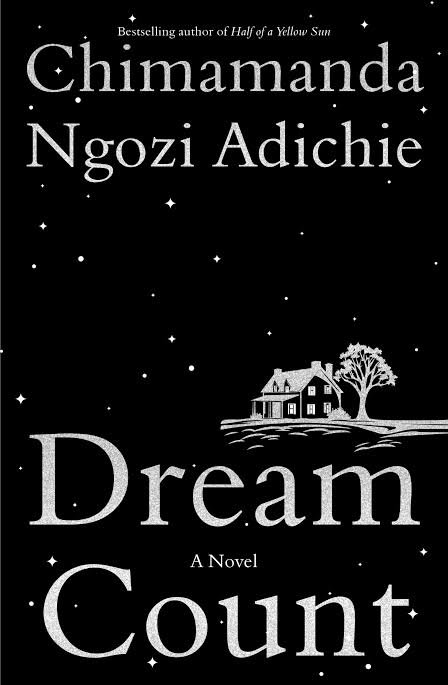
I have already given an example of a part-representation bestseller list: The Open Country Mag/RovingHeights List. This list is strictly restricted to sales data from Nigeria’s largest bookstore, RovingHeights, yet the data shows that in the year 2025, the bestselling book in Nigeria from the bookstore, billionaire Femi Otedola’s memoir Making it Big: Lessons from a Life in Business, sold over 8,000 copies (the biggest for a single book since the list was launched), followed in second place by Chimamanda Ngozi Adichie’s novel Dream Count, which sold more than 4,000 copies.
Musing on these data, Open Country Mag would go on to note: “The only bigger winner is the publisher of those two books: Narrative Landscape Press, the first press to claim the Top 2 spots.” They also noted the limitations of using only one bookstore’s data as a yardstick. According to them, Nigerian publishers tend to sell more copies of their books than bookstores.
They referenced Narrative Landscape again, “which also released and primarily sold another bestseller in Chude Jideonwo’s How Depression Saved My Life.” This makes sense for a book like Adichie’s Dream Count, her first in 12 years, which would have—judging from speculations—been the number 1 on a comprehensive bestseller list. Speculations online earlier this year were that the book would probably have sold over 15 thousand copies, with some putting the figures at over 25 thousand.
Speculations like this are only possible because the country—and more specifically, the entire publishing ecosystem—is not transparent enough with sales data. In the same vein, Fatima Bala appears to dominate fiction sales this year. We will see what the 2026 Open Country Mag/RovingHeights list would reveal.
On the other hand, transparency can be doctored, gamed, or twisted to serve the interests of those concerned. One of the most controversial subjects of bestseller lists has been how easily they can be tailored to suit a publisher’s agenda. Some sales data can be skewed to favour certain books or genres. It is well known that Amazon bestseller lists can be easily doctored simply by choosing less-popular categories (meaning fewer sales push the book into bestseller spots), or by engineering the preorders. This is perhaps why authors hustle so desperately for preorders these days.
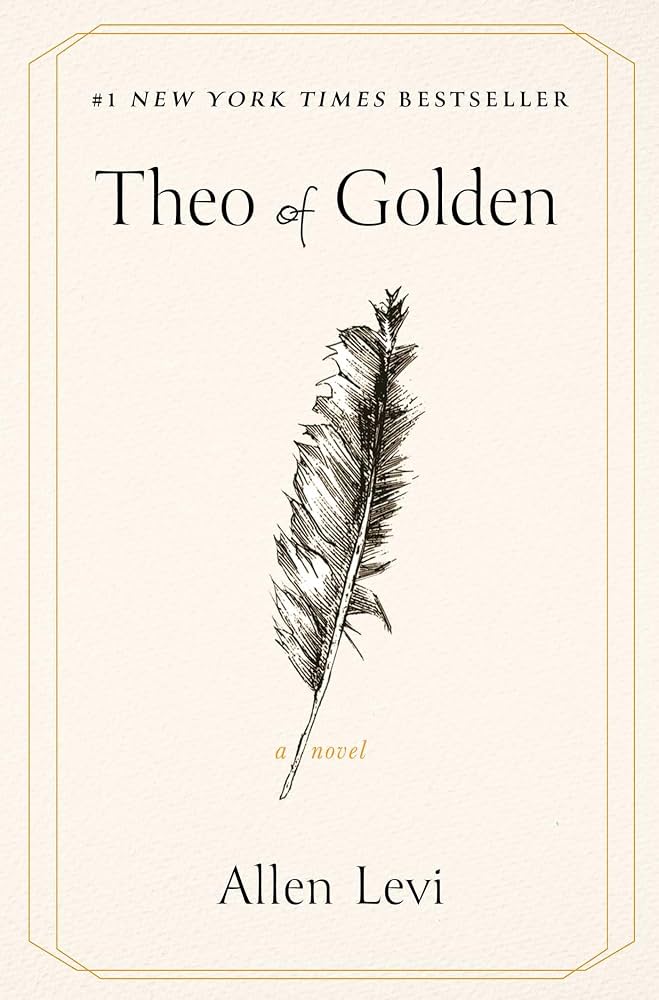
Historically, this was not how bestsellers happened. This happened organically. A book is released (touted, marketed), and its sales pick up as demand rises with ads, reviews, and word-of-mouth, building up to a buzz (to be fair, these still play a part in the making of bestsellers). In fact, one of the major bestsellers of this year in the US is an initially self-published book by an American retiree, whose sales were first boosted by word-of-mouth. The book in question, Theo of Golden, has now sold more than 3.5 million copies.


Official bestseller lists, as an editorial product, were first created by The Bookman, an American literary magazine, in 1895. Afterwards, Publishers Weekly began its list in 1912, while the famous The New York Times list was first published in 1931. All collated their lists by tracking sales across bookstores nationally. A major question to ask in the bestseller discourse is what exact numbers make a book a bestseller?
It will immediately become clear that this is dependent on the country or the book demand within a location. There are countries where selling 10 thousand copies doesn’t make you a bestseller, but there are countries where a mere 5000 copies makes you an absolute chart topper. It has always amused me that books that sold a thousand or two thousand copies in Nigeria are considered bestsellers (though, again, this makes sense as data from one bookstore). But is it not a mark on our publishing, literacy, or education infrastructure?
Poor Infrastructure or a Lack of Will
I have always argued that the publishing industry should synergise and grow its own market. This is the innovation publishers must commit to in a country like Nigeria, where government is failing to invest in literacy and fight piracy. While we must continue to hold government accountable, publishers must be willing to go the extra mile.
Publishers need to invest in education and literacy initiatives. The idea is that such an investment creates tomorrow’s readers—the customers who will buy books when the contemporary readers are no longer there.
Lateral collaboration between publishers, and between publishers and serious-minded publications, and between publishers and educational institutions should be unquestionable. Publishers should be willing to provide relevant sales data wherever they are needed.
We know that this country is severely limited by governmental dysfunctions, poor infrastructure, and dire economic conditions. This is why all stakeholders must be willing to be innovative with ideas. At the moment, a bestseller list and a continuous investment in literacy will do no small work.
Chimezie Chika is a staff writer at Afrocritik. His short stories and essays have appeared in or forthcoming from, amongst other places, The Iowa Review, Dappled Things, Channel Magazine, Terrain.org, Lolwe, Isele Magazine, Efiko Magazine. He is the fiction editor of Ngiga Review. His interests range from culture, history, to art, literature, and the environment. You can find him on X @chimeziechika1.
Cover photo credit: Pulse NG