

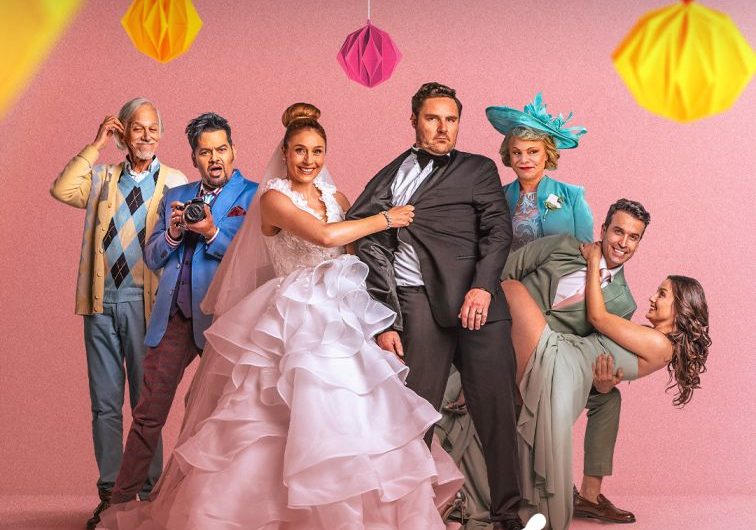

Bride of the Year knows what it is, is comfortable being what it is, and executes what it is with sufficient skill that the experience is genuinely enjoyable.
By Joseph Jonathan
There is a particular type of public humiliation that the modern world has perfected beyond anything previous generations could have imagined: the cancelled wedding. Not merely a broken engagement, processed privately between two people and their immediate families, but the full ceremonial collapse (the venue booked, the dress bought, the guests assembled, the photographer positioned) and then, in the space of a discovery, the entire elaborate structure of a planned future folding in on itself. The humiliation is not only personal. It is institutional. It is the failure of a performance that society has spent months helping you rehearse, and the audience is still in their seats when the show is cancelled.
This is where Bride of the Year finds Lienkie (Carine Rous), and what the film does with that starting point — how it understands the specific texture of romantic public humiliation and the sometimes spectacular decisions it produces — is the source of both its considerable charm and its occasional frustration.
Written by Gillian Breslin, Carine Rous, and Luke Rous, and directed by Joshua Rous, the film was released on Netflix on May 15th and arrives as one of the more quietly assured South African romantic comedies in recent memory; not because it transcends its genre but because it understands it, which in romantic comedy is rarer than it should be.
South African cinema’s relationship with romantic comedy is worth a moment’s pause. Originally titled Bruid van die Jaar and made entirely in Afrikaans, with Netflix offering English audio and subtitles for wider accessibility, the film belongs to a specific and culturally rooted entertainment tradition. The Afrikaans-language romantic comedy has long occupied a particular space in the local market, built around community, family, cultural specificity, and the kind of warm self-deprecating humour that comes from a culture comfortable enough with its own identity to laugh at its excesses.
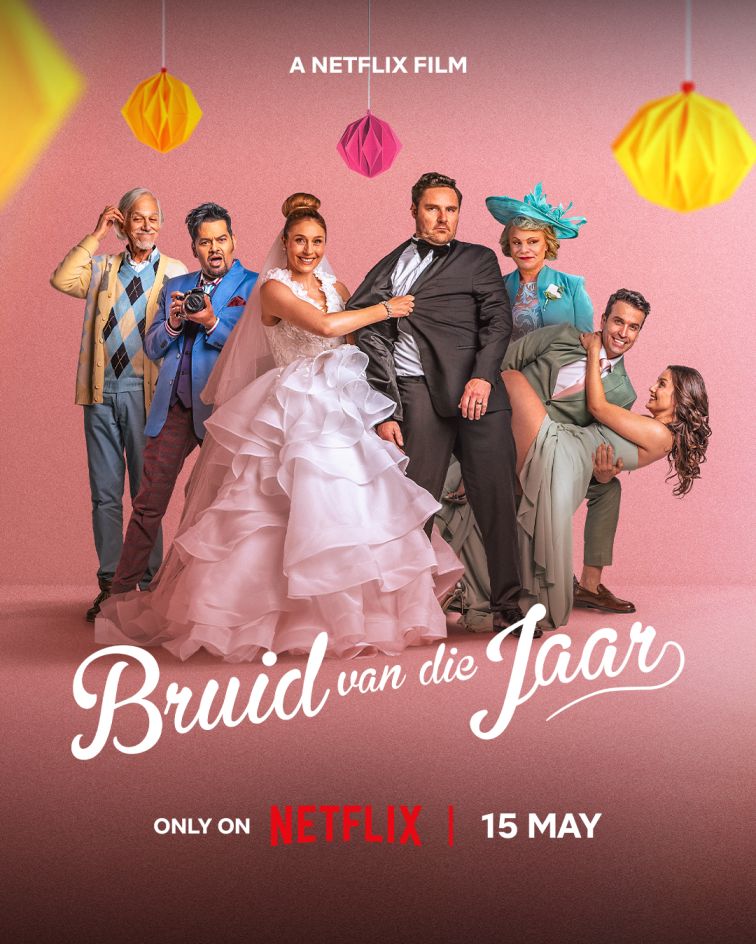
It is worth noting that viewers watching via the English dub encounter the film at a slight remove from its original texture because the rhythms of Afrikaans performance carry their own specific warmth, and something of that intimacy inevitably shifts in translation. The best of these films (and Bride of the Year belongs in that conversation) understand that the romantic comedy is not a lesser form requiring apology but a precise one requiring craft.
Its pleasures are specific: the slow build of romantic tension through misunderstanding and proximity, the ensemble of supporting characters whose chaos clarifies what the protagonist actually wants, the climactic gesture that arrives just late enough to feel earned. When these elements are assembled with intelligence and performed with genuine warmth, the result is not trivial. It is genuinely pleasurable cinema.
Bride of the Year assembles them with more intelligence than its premise initially suggests. The setup is familiar in outline: Lienkie, jilted on her wedding day when she discovers her fiancé’s infidelity with his assistant, channels her heartbreak and fury into an audacious plan to enter and win South Africa’s prestigious “Bride of the Year” competition.
To do this, she enlists Frank (Bouwer Bosch), an unpractised bachelor she will coach into the appearance of the perfect partner. The competition will give her visibility. The visibility will give her revenge. The revenge will give her, what exactly? The film is smart enough to hold that question open for longer than the genre usually allows.
What makes Lienkie work as a protagonist is that Carine Rous never reduces her to the familiar archetype of the romantically wounded woman whose primary characteristic is her woundedness. Lienkie is proud, occasionally impulsive, and specifically furious in the way that people are furious when they realise they have been made to feel stupid in front of everyone. Her decision to enter the competition is not simply revenge, it is a reclamation of the public narrative. She was humiliated publicly. She will recover publicly. There is a very human logic to this that the film understands and honours, even as it gently acknowledges the slight ridiculousness of the vehicle she has chosen for her reclamation. Rous plays this with comedic precision and emotional sincerity simultaneously, which is the technical requirement of good romantic comedy performance and harder to achieve than it looks.
Bouwer Bosch as Frank brings a quality that is undervalued in romantic comedy leading men: the ability to be genuinely funny without chasing laughs, and genuinely warm without announcing it. Frank is a man who has clearly developed a sophisticated system for navigating other people’s emotional disasters while keeping a careful distance from his own, and Bosch plays this with an ease that makes the character’s gradual emotional opening feel earned rather than scheduled. His chemistry with Rous is the film’s most reliable pleasure, not the explosive chemistry of opposites colliding but the quieter, more durable chemistry of two people discovering they are more comfortable with each other than they expected to be.
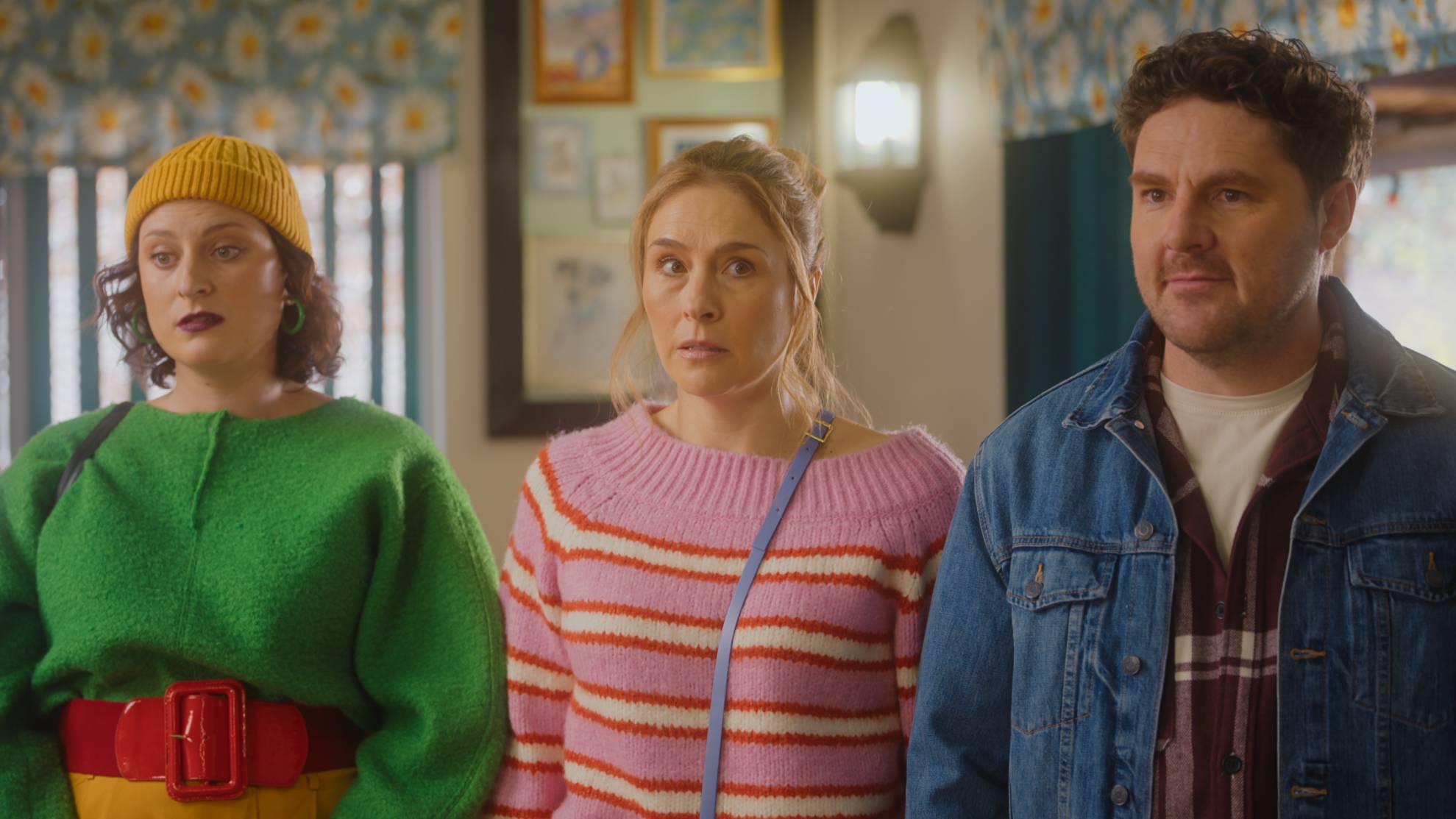
Armand Aucamp as Zander, the ex-fiancé, deserves specific credit for resisting the easiest version of his role. The jilting ex in a romantic comedy is almost always a cartoon; a conveniently contemptible figure whose awfulness makes the protagonist’s eventual romantic happiness feel deserved by contrast. Aucamp’s Zander is more complicated than this. He is (sometimes) charming, socially fluent, and just unpredictable enough that the audience cannot settle into a fixed reading of him. Whether this complexity is the result of the writing, the performance, or a productive combination of both, the effect is that his scenes carry genuine tension, which in a genre where the romantic outcome is rarely in serious doubt, is a meaningful achievement.
The supporting ensemble is where the film finds much of its comedic energy and some of its structural limitations. Laura-Lee Mostert, Lisa Tredoux, and Hanli Rolfes as Estelle (Lienkie’s friend), Johannika (Zander’s assistant and later wife), and Norma (Zander’s mother) respectively, generate the specific kind of chaos that feels true to the experience of navigating a personal crisis inside a community of people who love you (and cannot help being involved) and the ones who are responsible for the crisis.
These performances are warm and frequently funny. The limitation is that the supporting characters exist primarily as functions of the plot and the protagonist’s emotional journey, with lives that do not seem to continue when they exit the frame. This is a structural choice the genre often makes, but it is a choice, and in a film as otherwise attentive as this one, the thinness of the peripheral world is occasionally noticeable.
The screenplay’s relationship with its own themes is where the film’s most interesting contradiction lives. Bride of the Year raises questions it does not always fully engage with: about the performance of romantic success as social currency, about what it means to build a life around someone else’s idea of what your future should look like, about the specific exhaustion of being a woman whose worth is constantly being measured against romantic achievement. These are substantial themes, and there are moments where the film seems on the verge of pressing into them seriously.


But it consistently pulls back. The film doesn’t take itself seriously, and this might be part of its charm. This is not a failure of nerve but a tonal decision, a choice to prioritise pleasure over profundity, to be a film that gives its audience a good time rather than a film that makes its audience work. There is some legitimate value in this choice.
The romantic comedy at its best is aspirational comfort food, and comfort food that pretends to be something more nutritious than it is, tends to satisfy nobody. Bride of the Year knows what it is, is comfortable being what it is, and executes what it is with sufficient skill that the experience is genuinely enjoyable.
The cost of this choice is that the film’s final thematic gesture — the suggestion that the competition never really mattered, that external validation is not the point, that the real victory was internal — arrives in mild tension with the emotional contract the film has spent its entire runtime establishing.
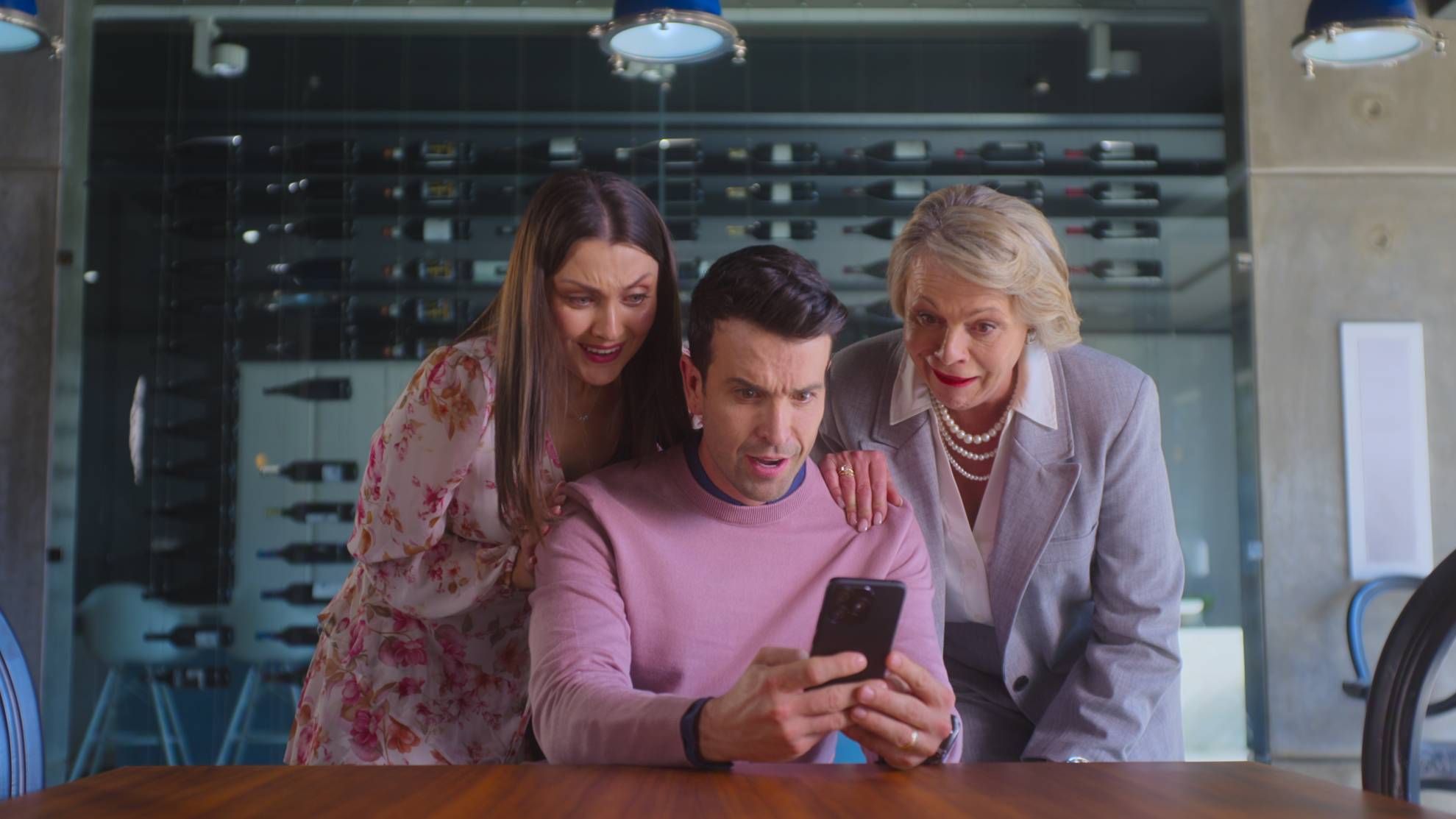
We have been invested in Lienkie’s competition because the film made us invested. To then be told, in the closing movements, that the competition was beside the point requires a slight retroactive adjustment that the screenplay does not quite earn.
Nevertheless, Bride of the Year is funny, warm, beautifully performed by its leads, visually accomplished, and culturally specific in ways that give it a texture and authenticity that generic streaming romantic comedies rarely achieve. It understands its genre, respects its audience, and delivers the pleasures it promises with enough freshness and charm to make the familiar feel worthwhile.
What it does not do, and what a slightly braver screenplay might have attempted, is dive into the cultural logic of its own central device. A “Bride of the Year” competition, as a narrative construct, is a fascinating thing: a formalised public arena in which women’s romantic worthiness is evaluated, ranked, and rewarded by an external institution. That the film uses this device as a vehicle for a story about refusing external validation without examining the device itself is a missed opportunity, not a fatal one, but a missed one. The film is standing on an interesting floor and choosing to look at the ceiling. But the ceiling is pretty. And sometimes, in a romantic comedy, that is exactly what you came for.
Rating: 2.8/5
Joseph Jonathan is a historian who seeks to understand how film shapes our cultural identity as a people. He believes that history is more about the future than the past. When he’s not writing about film, you can catch him listening to music or discussing politics. He tweets @Chukwu2big