

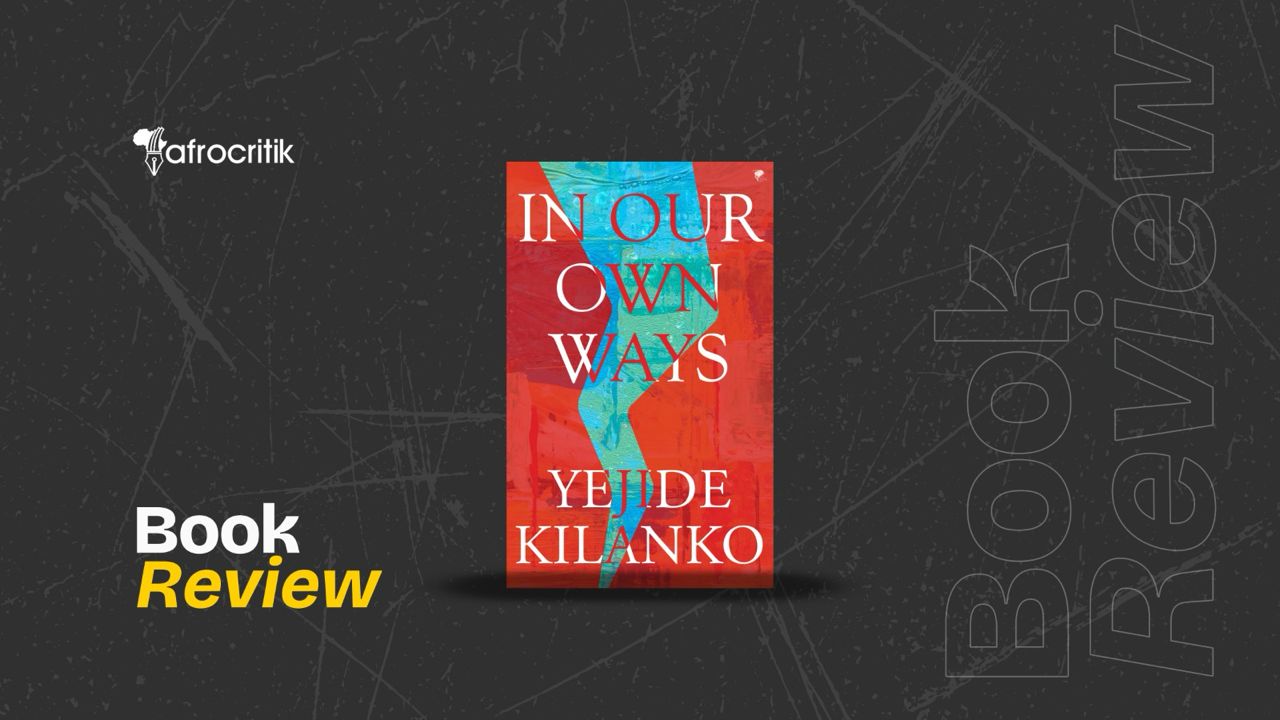

Although In Our Own Ways is ostensibly about class and a fractured marriage, the enduring power of sisterhood lies at the centre of the story.
By Azubuike Obi
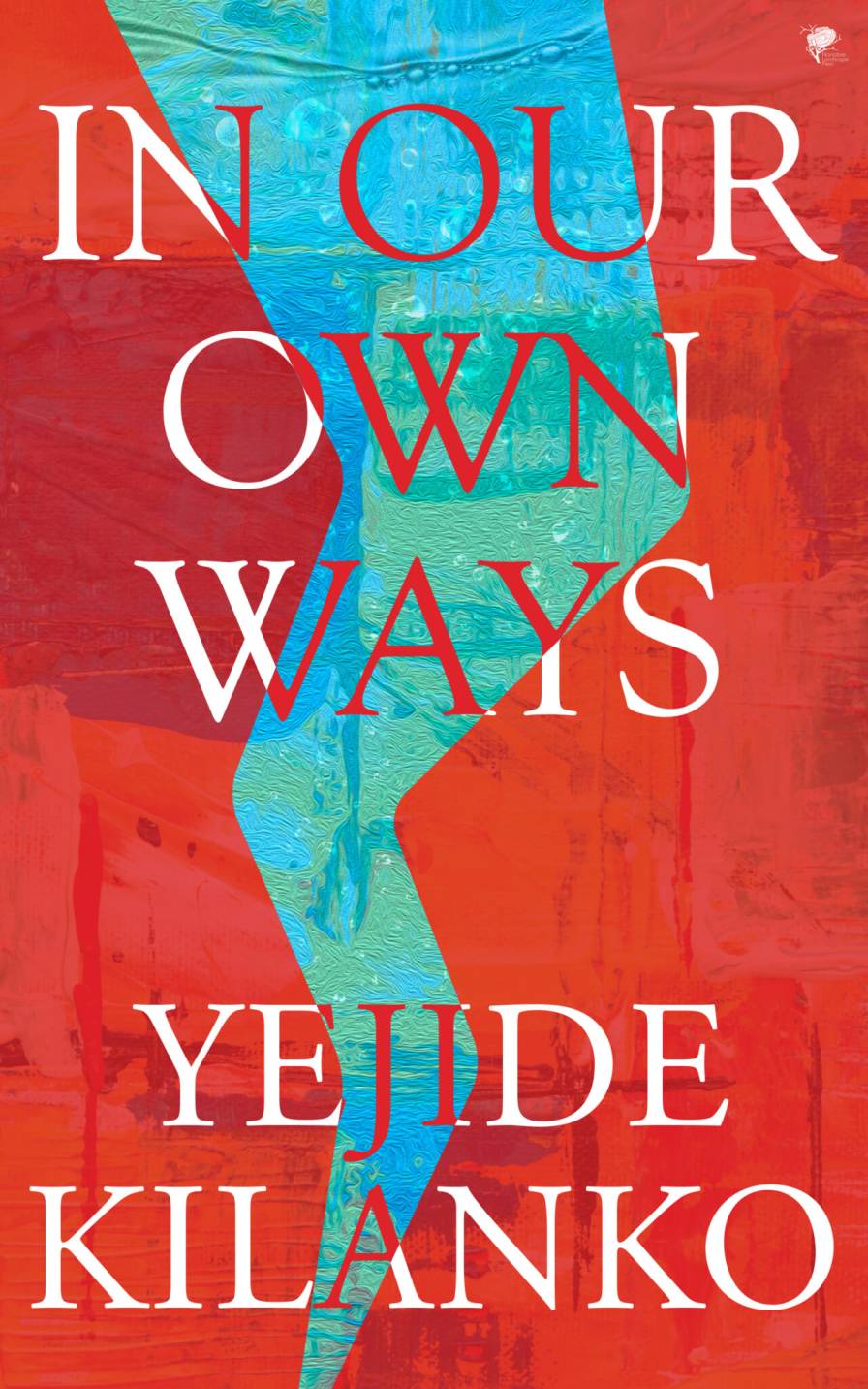
Some novels are quiet and contemplative, allowing language to carry and convey their message; others are loud, sometimes melodramatic in disposition; and some combine both elements in their storytelling. Yejide Kilanko’s latest novel, In Our Own Ways, published by Narrative Landscape Press in 2025, is one of such.
Set primarily in Lagos and told through the shifting perspectives of a husband and wife, the novel follows Senami Mausi and Fadaka Silva-Mausi, now in a seven-year-old childless marriage, as they navigate life in contemporary Nigeria. After Senami is diagnosed with severe necrozoospermia, he takes a selfish decision that puts Fadaka at risk, and ends up rupturing their marriage.
The novel then traces the aftermath of this rupture, moving from Lagos to Kaduna as the couple individually wade through the tumultuous upshot of their divorce. In Our Own Ways attempts to demonstrate how lies break trust, how fragile egos get in the way of truth, and the work one woman must do to set her life right again.
Kilanko has mastered the art of writing domestic fiction. From the harrowing story of her coming-of-age debut, Daughters Who Walk This Path (2012), to the sharply contemporary sophomore, A Good Name (2021), and now, In Our Own Ways. Some of her best written scenes, from action to dialogue, are those that take place under the auspices of a home, often exchanges between a husband and wife. She understands the nuances and subtext that underpin these moments, and many of these strengths are replicated here. We encounter characters torn about the choices they must make, the concessions that a smooth life demands of them, and the negotiations required to avoid losing too much of themselves in the process.
In Our Own Ways sees Kilanko working in what is a much longer tradition. Most notably, Buchi Emecheta’s Joys of Motherhood (1979), Ifeoma Okoye’s Behind the Clouds (1982), and Ayọ̀bámi Adébáyọ̀’s modern classic, Stay With Me (2017), which is perhaps the novel’s closest kin. In fact, scenes of Fadaka’s arduous pursuit of motherhood echo those of Stay With Me’s heroine, Yejide. In these aforementioned novels, though, class is never really a major preoccupation. Kilanko’s in-depth exploration of class allows her to distinguish herself within an already rich canon.
This examination manifests in the character of Senami, who escapes his fishing island of Yovoyan, acquires a formal education, and marries a woman from a prominent family. Through his wealth and marriage, Senami gains access to the upper class, a status he perennially longs to belong to. Yet he remains plagued by a deep dissatisfaction, often triggered by his ubiquitous otherness.
Kilanko’s background as a psychologist undergirds her ability to pry into the remarkably complicated beings that inhabit the pages of the novel. Unlike many Nigerian novels that share the fascination with class, she does not merely seek to chronicle the reality of class and its disparities; she strives to understand the psychology behind the puzzling actions her characters undertake, the crude act of active social climbing, and its consequences. The result is a riveting, spectacularly well-told story about a marriage on the brink of collapse, about a marriage between two wildly different individuals divided on several bridges.
Although In Our Own Ways is ostensibly about class and a fractured marriage, the enduring power of sisterhood lies at the centre of the story. This is unsurprisingly a thread that runs through all of Kilanko’s novels. In Daughters Who Walk This Path (2012), the friendship between Morayo and Aunty Morenike is the oil that moves the engine of the plot. In A Good Name (2021), Nomzamo’s spirited relationship with Zina is the crutch Zina uses to survive her marriage as she comes into womanhood oceans away from her home.

In In Our Own Ways, we meet Fadaka, whose best friend, Eyimofe, soldiers through life with her, and when Fadaka sets off on a journey to take her fate into her hands, she meets Alfonsine, a housekeeper whose burgeoning friendship with Fadaka prompts the narrator to reflect: “If it were back in Lagos, she and the maid would have never started a friendship. And she would have missed out on a beautiful thing.”
If there is any criticism to be made of this novel, it is that it occasionally becomes a victim of its own stakes. First, Fadaka is introduced as a woman likened to “an empty shell”, someone who, for long, feels “betrayed by her body”, is “tossed around by a cyclone of despair”. Yet when she learns of what is arguably an even greater betrayal, which has so far burdened her with nightmares, the implication of the fact is glossed over, barely if at all reckoned with. It is almost as though she forgets the fact of her own violation. The same goes for Eyimofe, who is established within the first hundred pages as Fadaka’s closest friend, only to be curiously absent when tragedy befalls her, before being conveniently reintroduced when the plot requires it. It does not feel real. It is as though in her ambition, Kilanko herself forgets her plot points. This does not account for the fact that the trope of the two-dimensional bubbly best friend is tired.
Ultimately, from its refreshing interrogation of class disparity and social mobility to its engagement with that distinctly individualistic strain of new-age Pentecostalism, to the reality of skin bleaching, the necessity even, for women who reside in a colourist-rife Nigeria, In Our Own Ways is a novel with something to say.
Azubuike Obi is an Igbo storyteller who believes in the transformative power of language. His fiction and nonfiction have appeared online and in print in The Republic, Efiko Magazine, Afapinen, Afrocritik, Naira Stories, and elsewhere. He was nominated for Chika Unigwe’s Awele Creative Trust Award and H.G Wells Short Story Competition in 2024, and is currently pursuing a Bachelor’s degree in English Language and Literature.