

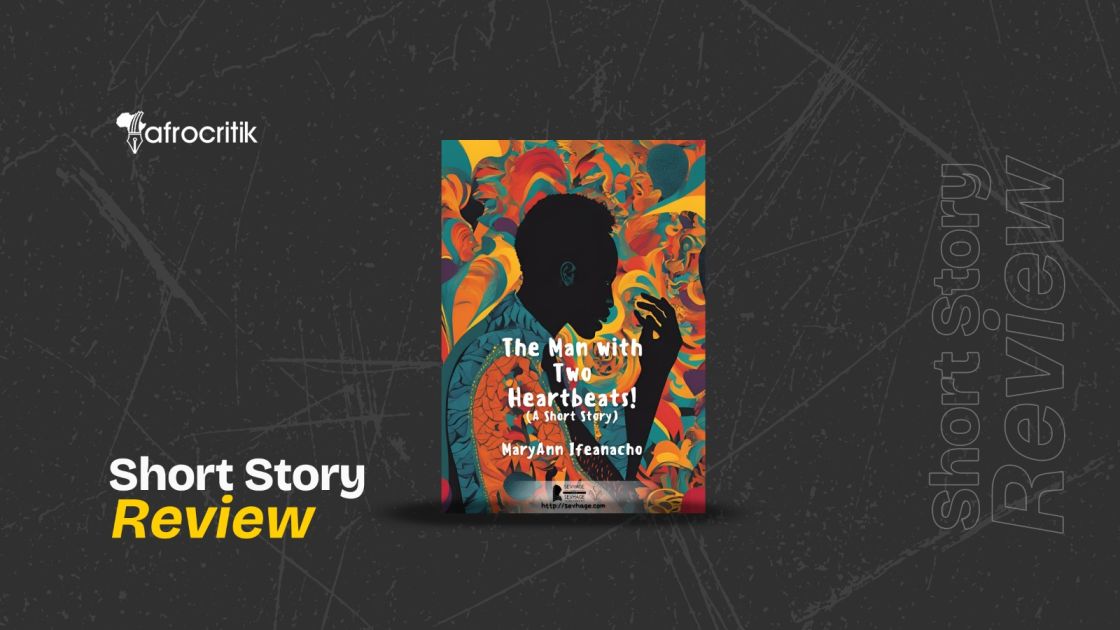


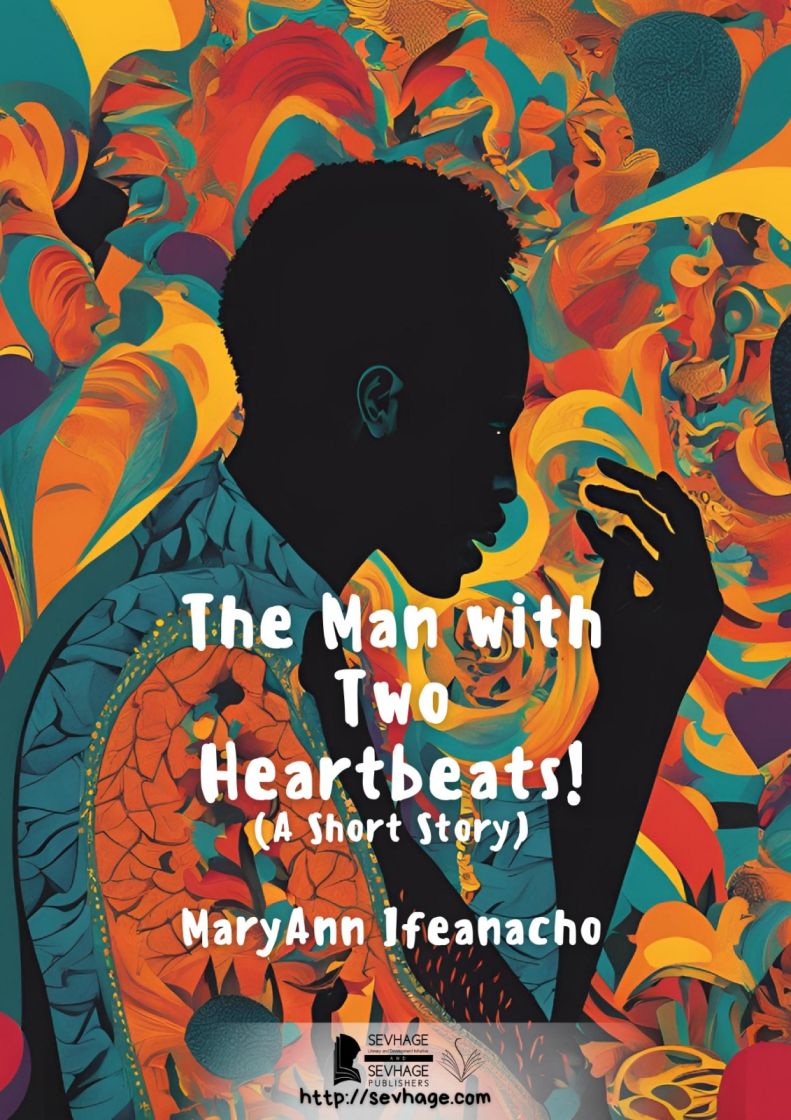
“The Man With Two Heartbeats” is a short story that seeks to dissect the plurality of human affection.
By Kehinde Folorunsho
Contemporary narratives have brilliantly outlined, among many profound concerns, the specifics of women’s conundrum in matters of romance. One of those is the plurality of their love choices. Writers, male and female alike, have pointed their audience to the inadvertent victimisation of women by laying bare gender politics.
It is often expected that men are the obvious villains in these stories. But “The Man With Two Heartbeats” resists that. MaryAnn Ifeanacho’s short story places responsibility on all three of its major characters, positioning the reader as an ambivalent judge.
The story centres on Estella’s (also Stella) love adventure with two men, Chibuzo and Chukwudi (Chuks for short). The former is an option within her league, whom she initially refuses because they are classmates. The latter, a lecturer, has the luxury of experience and material privilege to stake and consequently has the better of the bargain, at first.
The story alternates between her experiences with both men. Chibuzo proves a compatible company; Chuks is no less compatible, but his marriage threatens Estella’s comfort, as she merely serves as his escape from the demands and obligations of being a husband. The regret that occasions Estella’s eventual settlement among the two men is what renders female experiences a seemingly unending subject.
Particularly, Stella’s characterisation evinces the ingenuity of women to make or mar their chances of survival. This idea emerges from the story’s climactic tension between harsh masculine knavery and feminine inscrutability. Literary fiction has given emphasis to this factor as a veritable point of conflict. Ifeanacho’s depiction of Stella corroborates the inconsistency of women’s desire and their choice.
As more narratives flood this landscape, the credibility increases, and the clash of interest exonerates men as only thoroughly committed to the project of a devastating existence for the female counterpart. Additionally, Stella’s characterisation sits at the intersection of a fascination with, and the enticement of, both traditional and contemporary modes of female fantasy.
Furthermore, Chuks and Chibuzo portray another realistic pattern of the immediate world of romance. As far as young women are concerned, men often become determinants of emotional vitality. In that regard, the reader encounters the competitive tendency by which men are inconsequentially zoned into reasons for eligibility.
At this level, it is a flourish of éclat that these two characters, albeit minimally drawn, project the conflict between tradition and modernity. There is also a sense of artistry in the way Chibuzo emerges as the more relevant figure. This shift from the traditional dominance of choice to a more modern basis creates a new space for exploring the world of young men and women. Obviously, the author moves away from the dictates of moribund culture and dives into the possibilities of a changing world, circumstances, and polemic grounds.
Consequently, the temporal and spatial setting of the story, as a defining element, is deeply metaphorical. It suggests that under certain conditions of systemic civilisation, paradigms can shift, allowing us to see beyond the limits of our prejudices. It is a given that men’s disposition to marriage is inconsistent with women’s inclination, creating a divide shaped by these differences. In other words, revolving the story around the university campus carries an undertone of intellect that informs the unorthodoxy of contemporary society.
Similarly, the roles of the three major characters are defined by their opportunism within the leverage of gendered caprices, so that the resolution itself provides an analysis of the hubris common to the three characters in the love triangle.
By far, “The Man With Two Heartbeats” is distinguished by the exclusivity of literary language. It is a penetrating voice in today’s world of the romance tradition. But beyond this immediate aesthetics, the diction, description, and atmosphere are suited to an experience of the story hook and sinker. It provides an organic unity akin to the dramatic event, in style and texture.


Generally, the use of language in this short story teleports the reader into the psychological world of the aggrieved as well as offers them the intricacies with which the economics of human affection is associated, at least by reason of the differential privileges of the two men. It altogether projects a rhetoric we may have been predisposed to condemn as a tragedy of our age.
Evidence of this claim is the irony that propels the story from beginning to end: that the three characters in the love triangle experience a plurality of affection, and that both Stella and Chuks have their hearts beating in two places. This irony that unfolds is not only deployed as a literary device but also comes across as a tool for realism, carrying an undeniable sense of verisimilitude.
This is what orchestrates the themes, prominent among which are lust and desire, friendship, tradition versus modernity, choice, love and marriage, infidelity, campus life, and lecturers’ affairs. Complementary to these is the vividness of the story. It employs a rich visual and atmospheric style that makes reading it an immersive experience.
Finally, “The Man With Two Heartbeats” is a short story that seems to dissect the plurality of human affection. It is a distinct contemporary narrative on the subject, exploring a domain of romantic conflict heavily influenced by individualism rather than by socially constructed expectations.
More so is the interplay of two fatalist views, where one may be taken to posit love and marriage as matters of destiny and the other as the outcome of evading it. Therein lies the paradox which Ifeanacho’s short story foregrounds in the event of sampling Stella’s predicament as a prevalent index of gender caprices.
Kehinde Folorunsho is a literary critic and a scholar of literature. His interest in literature spans poetry, visual arts and translation studies. He made it to the shortlist of the Atẹlẹwọ Prize for his Yoruba translation of Chimamanda Ngozi Adichie’s “We Should All Be Feminists”; shortlisted for the Gbemisola Adeoti Poetry Prize, 2025. As a book reviewer, he has been published in local newspapers. He is the recipient of the 2025 Ken Saro-Wiwa Prize for book review.