

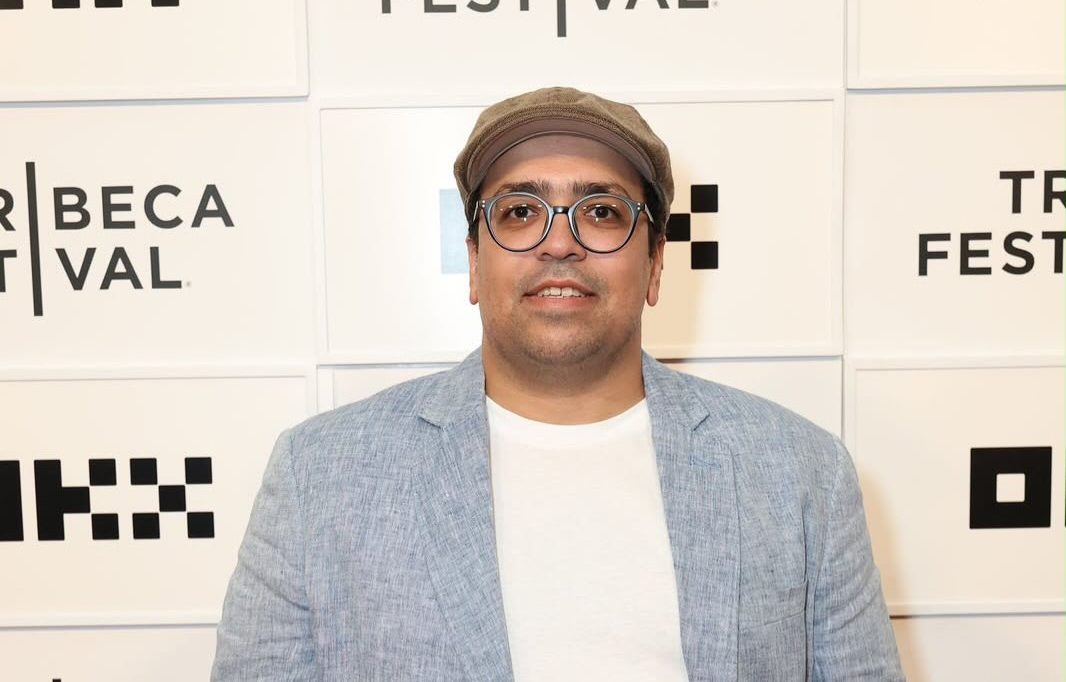

“There’s this kind of awkwardness behind the very sensitive topics that we can’t share with our close family members, the kind of unspoken conversations that we don’t have”— Mohamed Taher.
By Adedamola Jones Adedayo
Across cultural representations, fatherhood is a symbol of strength and resilience even in the face of daunting challenges and high expectations. But these expectations hide moments of vulnerability, doubts, and indecision that rarely make it to the screen. Egyptian director Mohamed Taher undertakes this task in 32B, a short film reflecting the emotional complexities of single fatherhood through the specific experience of buying a girl’s first bra and the restraints in father-daughter communication about sensitive matters.
32B premiered at the 2026 Tribeca Festival, which ran from 3rd to 14th June, where it achieved an unprecedented feat as the first-ever Egyptian short film selected for the festival’s Narrative Shorts Competition, an award it eventually won. “It’s an honour to be in the prestigious film festival, which is one of the best in the world,” Taher says during a Zoom call, appreciative of the milestone. “The story resonated with the audience. It’s how relatable it is to everyone, despite the culture.”
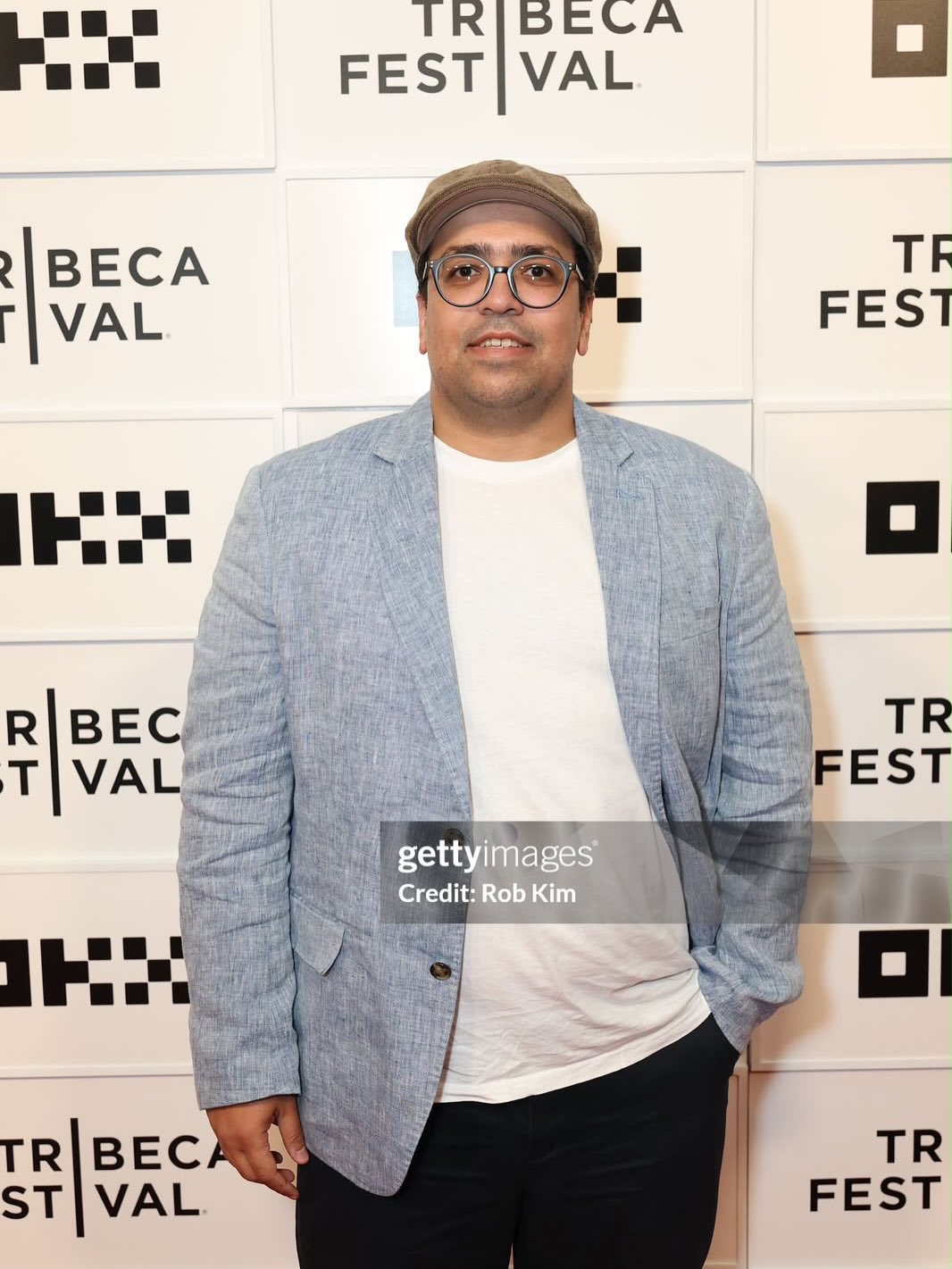
32B is produced by Red Star Films, with Mostafa Fahmy serving as Director of Photography and Baher Rasheed as editor. The cinematography, accompanied by controlled but seemingly impressive lighting, favours a restrained, observational style, which Fahmy achieves by allowing his lenses to linger between characters, with close-up shots occasionally framing the protagonist’s social awkwardness and indecision. Rasheed complements this style by using quick transitions to cut through time and ascribe a sense of urgency without jeopardising realism. These technical contributions are reinforced by a screenplay from Haitham Dabbour, a close friend of Taher’s, which provides the thematic foundation for the film.
Taher describes working with Dabbour as a particularly exciting experience, one proceeding from their shared perspectives about society. On reading the script, he immediately fell in love with its characters, which further inspired his resolve to bring the story to the screen. “It’s the kind of journey where you meet people like you and they believe in the film journey like yourself”.
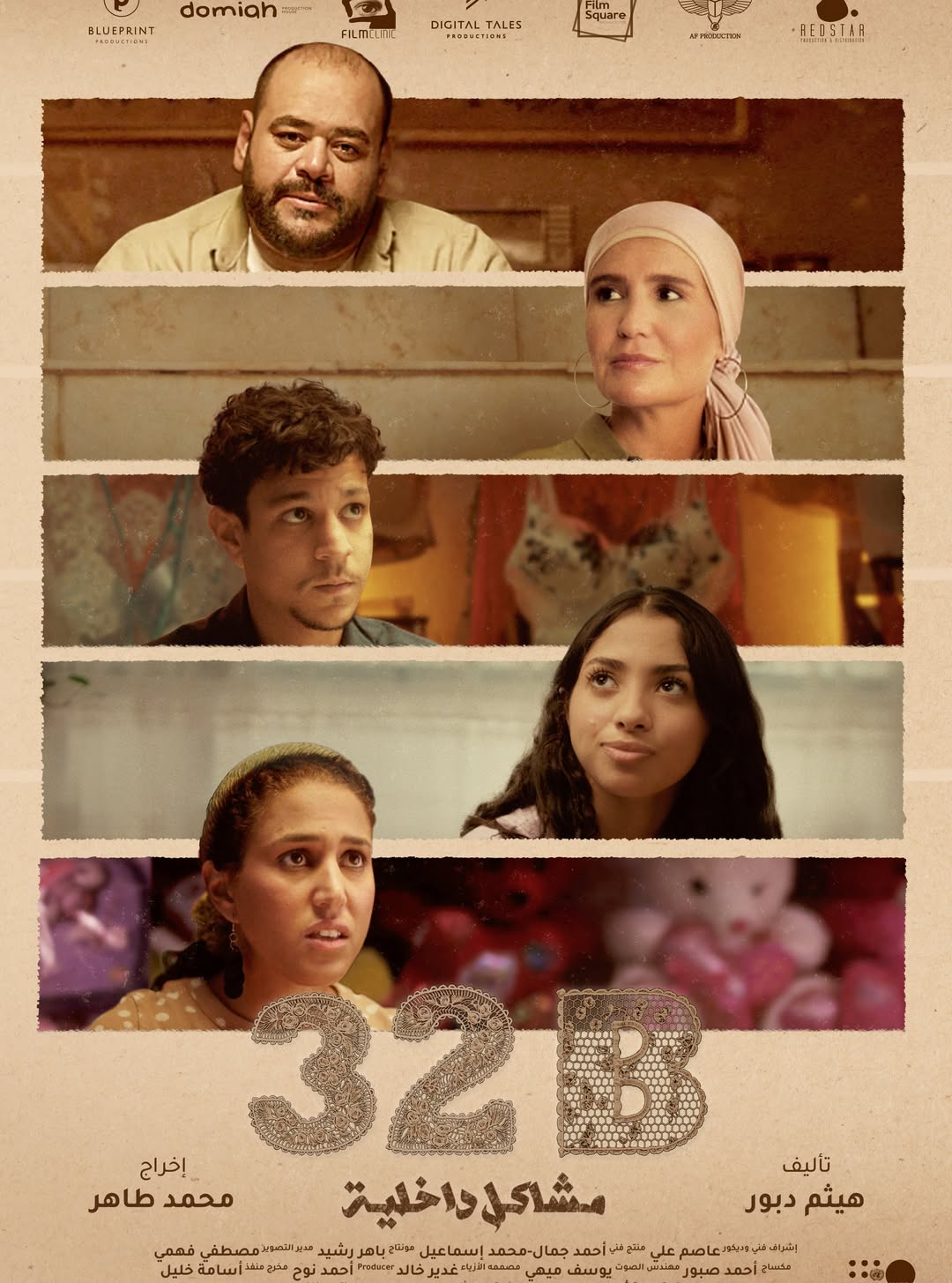
32B follows Mr Hazem (Mohamed Mamdouh), a widowed father shouldering the responsibilities of his only daughter Malak (Jessica Hossam El Din). In the opening scene, he watches Malak in training from the stands when a mother joins him with her own son. The brief conversation involves a slice of in-between awkwardness, with the woman pointing out that Malak has reached the age where she needs to wear a bra. The exchange hints at female puberty in a manner that also reveals the conservative social environment in which the narrative is set. It is here that director Taher first deploys dark humour, using the brief exchange to expose the discomfort surrounding the discussion of female biology and needs with men.
When asked about how consequential humour is to this particular story, Taher responds: “I guess that the humour comes from the seriousness of the situation. It’s not based on the dialogue or how funny they [the characters] are. It comes from a very dark way and a situation that is so serious.”
In the scenes that follow, Mr Hazem becomes concerned and embarks on an awkward bra-shopping experience during which he finds it difficult to admit that he is making the purchase for his daughter. In turn, his daughter also cannot speak freely with him about the changes and challenges of adolescence. As a result, important concerns are left unaddressed between father and daughter, creating an emotional distance in what initially appears to be an open and comfortable relationship between them. This representation offers a revealing glimpse into a facet of Egyptian society: a space where culture dictates perception, where traditionally established gender roles and norms are uneasy to bypass or truncate. “There’s this kind of awkwardness behind the very sensitive topics that we can’t share with our close family members, the kind of unspoken conversations that we don’t have”.
Casting for 32B required securing the right talents to capture the miscommunication and embarrassment with on-screen honesty. Taher turned to professionals with seemingly incontestable footprints, people he had worked with for a decade: Mohamed Mamdouh, Hana Shiha, Ahmed Dash, Jessica Hossam El Din, and Gehad Hassan Eldin. “I was lucky to have them,” Taher says, his gratitude almost palpable in the way he repeats the sentiment.


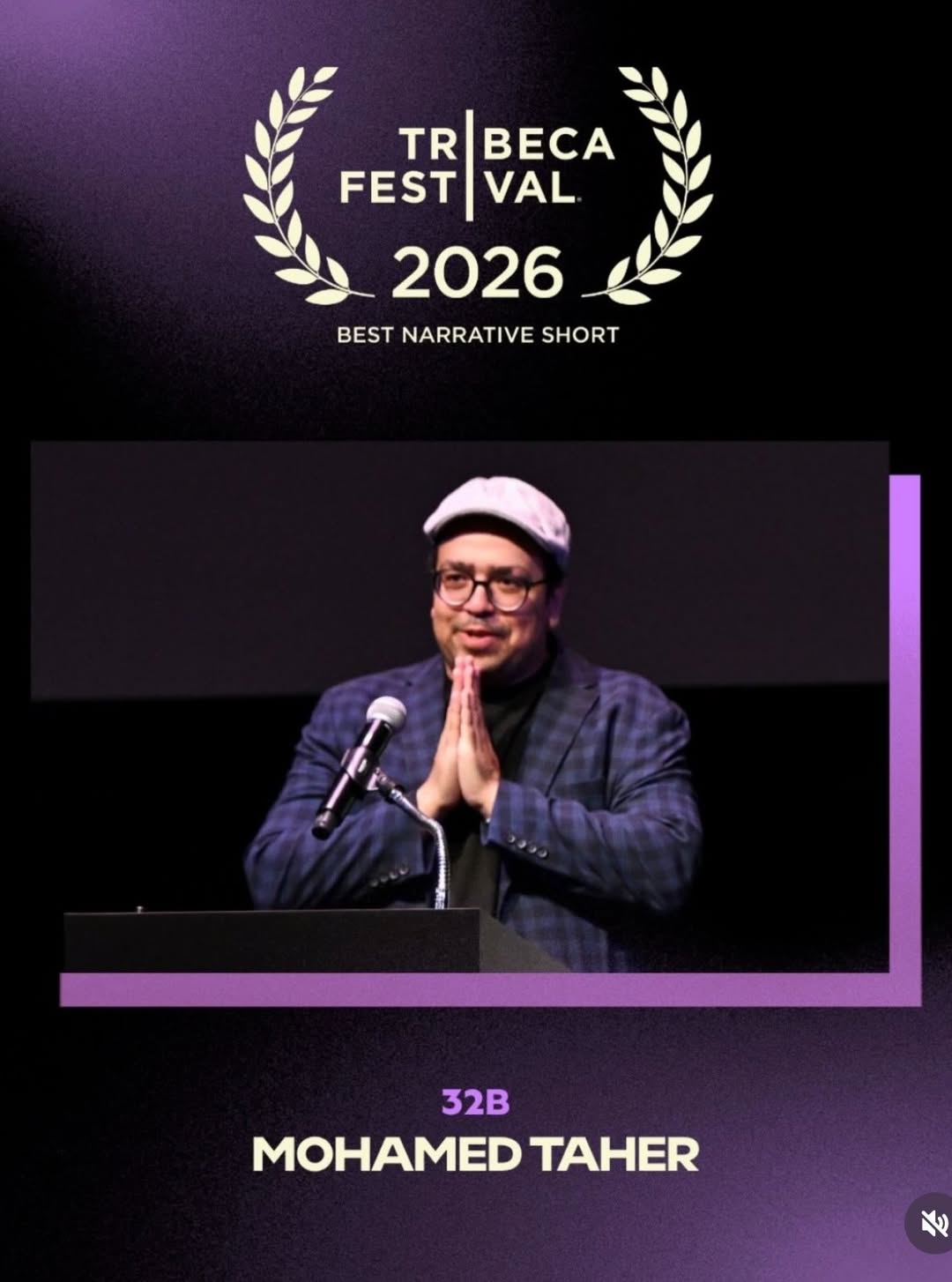
With at least thirteen years of experience, Taher has served as an assistant director and producer across various project formats in the Egyptian film and television industry. He is credited on shorts like Cairo Syndrome (2017) and Drowning Fish (2023); features such as Clash (2016) and Induced Labour (2018); and the TV series Paranormal (2020) and Take Care of Zizi (2021). 32B, for him, is a step in a unique direction, as he takes full directorial responsibility for the first time. Judging by the recognition the film received at Tribeca, he has successfully risen to that challenge. Taher describes the transition to full-scale directing as “a very important step” which he is pleased to be taking at the moment. Underlying his confidence in this ambitious new role is a clear determination to leverage the extensive network of industry relationships he has garnered so far.
While this year’s Tribeca was underway, Taher was optimistic about the prospects of 32B. Though the festival has now ended, the film’s competitive run has, in hindsight, only bolstered the filmmaker’s sense of achievement. Rather than offering simple answers, he wants audiences to leave with fresh perspectives on how families communicate during difficult moments. “I hope it opens up discussions that rarely happen in our society, in the African and Arab societies,” Taher says with a note of finality.
Adedamola Jones Adedayo is a film journalist and critic with special interest in African cinema. Through writing and audiovisual mediums, he creates conversations around cinema in Africa and the Diaspora. You can find him on Instagram @jonesthegoodboy and X on AdedamolaAdeda4.