


Independent cinema tells us about the conditions under which a film was made. Arthouse cinema tells us about the artistic project the film pursues.
By Joseph Jonathan
I. One Confusion, Two Different Questions
Few terms in contemporary film culture are used interchangeably and as imprecisely as “arthouse” and “indie”. In everyday conversation, particularly within Nigerian film discourse, the two often function as though they describe the same thing. A film premieres at an international film festival, carries an understated marketing campaign and departs from familiar commercial formulas, and before long it is being called both an arthouse film and an indie film, sometimes in the very same sentence.
The overlap is understandable. Many films that audiences recognise as arthouse are also independently produced. Many independently financed films, in turn, circulate through the same festivals, attract similar forms of critical attention and sit outside the commercial mainstream. Seen from a distance, the two categories often appear to move together.
Yet this is precisely where the confusion begins. The mistake is not that the same film can be described by both terms. It often can. The mistake is assuming that the two terms are therefore describing the same thing. They are not. Arthouse and indie classify films along entirely different axes. One tells us something about how a film is made. The other tells us something about what kind of artistic project it is.
To call a film indie is to make a claim about its production: who financed it, who controlled its development and how independent it was from the structures of mainstream studio filmmaking. To call a film arthouse is to make a different kind of claim. It says something about the film’s artistic orientation; its formal ambitions, narrative strategies, relationship to genre and the kind of viewing experience it asks of its audience. These are separate questions, even when they produce the same answer.
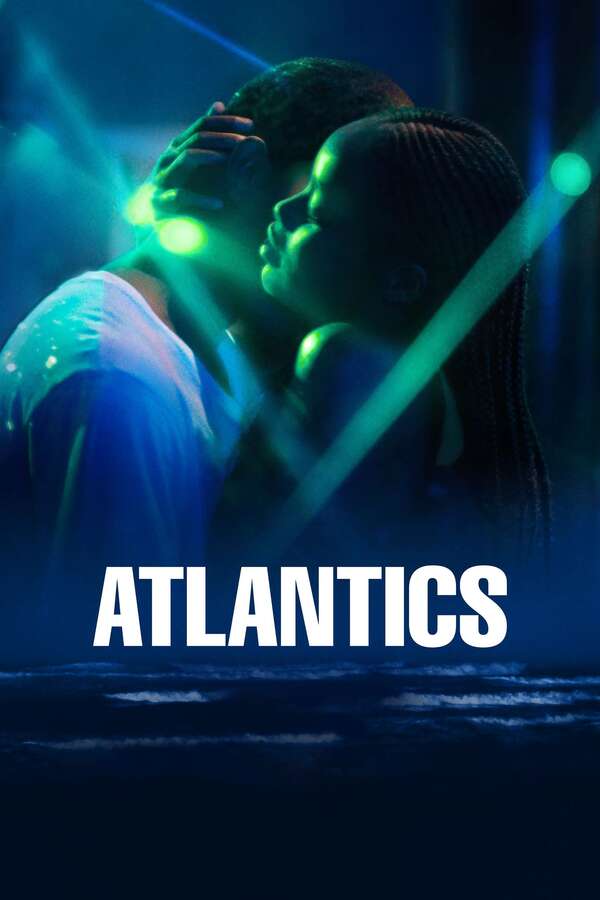
A film can be independently financed while pursuing broad commercial appeal. Another can be backed by a major studio while displaying unmistakably arthouse ambitions. Many films happen to be both. None of these possibilities is contradictory once the distinction between production and aesthetics becomes clear.
Understanding that distinction matters because the two terms have accumulated different histories. Independent cinema emerged primarily as an industrial category, describing films made outside dominant production systems. Arthouse, by contrast, developed as a critical category, shaped by debates about artistic expression, cinematic form and the evolving relationship between filmmakers and audiences. They have often travelled together, but they have never meant the same thing.
The persistent tendency to collapse them into a single label is therefore less a problem of vocabulary than of classification. Once we ask each term to answer the question it was actually created to answer, the relationship between them becomes far easier to understand.
II. Indie Is About Independence, Not Style
The word “indie” is short for “independent”, and its original meaning was remarkably literal. It emerged within the context of the American film industry, where a handful of major Hollywood studios historically dominated the financing, production and distribution of cinema. To make an independent film was, quite simply, to make a film outside that studio system. Independence described a film’s industrial position rather than its artistic character. It answered a practical question: who paid for this film, and who exercised creative control over it?
Over time, the term travelled far beyond Hollywood. Today, independent cinema is used more broadly to describe films produced outside dominant studio structures or made with a significant degree of financial and creative autonomy. The specifics vary from one country to another, since every national cinema has its own industrial organisation. But the underlying principle remains remarkably consistent. An independent film is defined not by how it looks or feels, but by the conditions under which it was made.
This distinction is easy to overlook because many independent films share certain practical characteristics. They are often made with smaller budgets. They may rely on emerging actors instead of established stars. Their production schedules are frequently shorter, and their marketing campaigns more modest. Yet none of these traits is what makes them independent. They are common consequences of working outside major studio systems, not defining features of the category itself. The clearest way to understand this is to look at the extraordinary range of films that fall under the independent banner.
Independent cinema has produced intimate family dramas, raunchy comedies, psychological thrillers, romantic films, science fiction, documentaries and some of the most influential horror films ever made. The Blair Witch Project (1999), for example, became a cultural phenomenon despite its tiny budget and independent production. Little Miss Sunshine (2006) paired independent financing with broad audience appeal and considerable commercial success. More recently, Everything Everywhere All at Once (2022) demonstrated that an independently produced film could combine science fiction, martial arts, absurdist comedy and emotional melodrama while becoming a global box-office hit and winning the Academy Award for Best Picture.
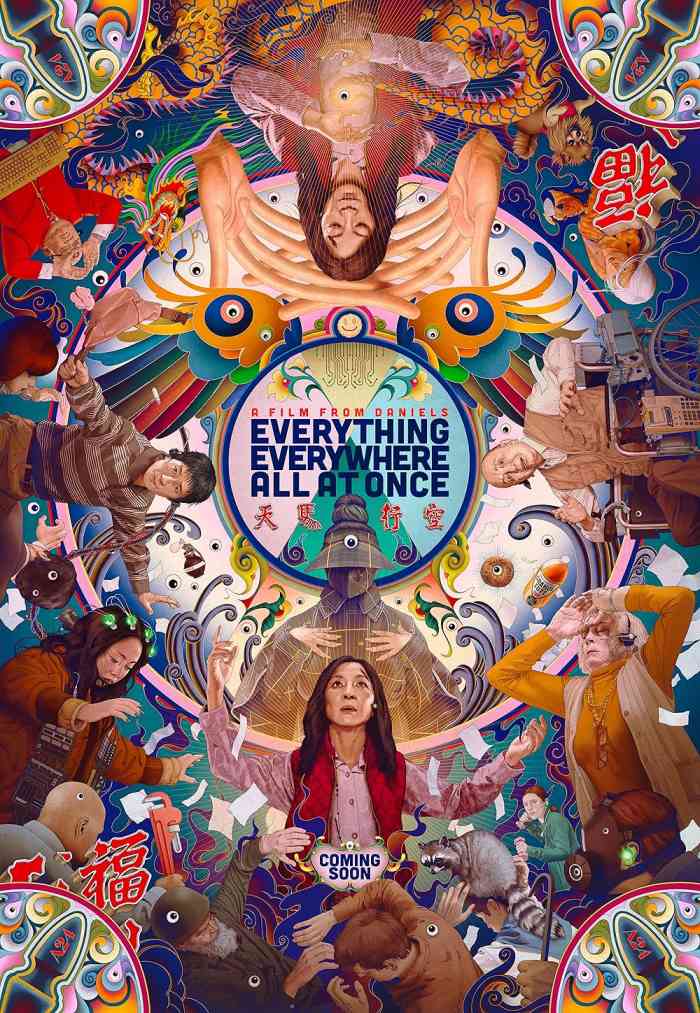
What these films share is not a common aesthetic. Their pacing, visual style, narrative structure and artistic ambitions differ dramatically. The only meaningful characteristic they have in common is that they were developed outside the traditional structures of major studio filmmaking. This is why describing a film as indie tells us surprisingly little about the experience of watching it. An independent film might be fast-paced or meditative, formally adventurous or conventionally structured, intellectually demanding or broadly accessible. It may aspire to become a festival favourite, or it may be designed from the outset to entertain the widest audience possible. Independence does not prescribe style. It merely describes the conditions under which style becomes possible.
That point is easily forgotten because independent cinema has historically provided space for filmmakers willing to take artistic risks that larger studios often avoid. The correlation is real. But it is still only a correlation. A production model should never be mistaken for an aesthetic identity. To understand why so many people nevertheless make that mistake, we have to turn to the other half of the equation: what arthouse actually describes.
III. Arthouse Is About Artistic Orientation, Not Ownership
If indie tells us how a film came into being, arthouse tells us something very different: what kind of artistic experience the film is trying to create. As the first essay in this series argued, arthouse is not a genre in the way horror, romance or science fiction are genres. Nor is it simply another name for films that premiere at international festivals or struggle at the box office. It is a broad cinematic tradition shaped by a distinctive set of artistic priorities; one that emerged through the history of modern cinema and has continued to evolve across different countries, movements and generations of filmmakers. Rather than asking first how widely a film might appeal, arthouse cinema often begins with a different question: what artistic possibilities can cinema explore as a medium?
That shift in emphasis produces many of the qualities commonly associated with arthouse films. Some privilege atmosphere over spectacle, ambiguity over certainty or observation over constant narrative momentum. Others experiment with visual composition, sound, performance or the relationship between time and storytelling. Many foreground the director’s personal vision in ways that commercial filmmaking does not always encourage.
None of these characteristics is mandatory. There is no checklist that every arthouse film must satisfy. Some are quiet and contemplative; others are energetic and politically confrontational. Some are formally radical, while others tell relatively straightforward stories with remarkable emotional restraint. What unites them is less a fixed style than an artistic orientation, a willingness to pursue expressive possibilities that may exist independently of conventional commercial expectations. That is why budget, financing and ownership cannot tell us whether a film is arthouse. A lavishly financed production can display unmistakably arthouse ambitions if its formal choices place artistic exploration above familiar commercial formulas. Equally, a modestly budgeted independent film may pursue broad entertainment without any particular interest in challenging cinematic conventions.
The distinction matters because it reminds us that production circumstances and artistic intentions belong to different conversations. One concerns the industrial conditions under which a film is made. The other concerns the aesthetic project that the finished work ultimately undertakes. Seen this way, the relationship between indie and arthouse begins to come into focus. One describes the road a film takes to reach the screen. The other describes what the film does once it gets there. The reason those roads so often seem to lead to the same destination, however, requires a different explanation altogether.
IV. Why They So Often Describe the Same Films
If independent cinema and arthouse cinema describe different things, why do they so often seem inseparable?
The short answer is that they frequently meet in practice, even though they begin from different principles. The kinds of formal experimentation commonly associated with arthouse cinema rarely promise immediate commercial returns. Films that embrace narrative ambiguity, unconventional pacing or highly personal directorial visions often appeal to more specialised audiences than broadly commercial productions. For investors and large studios, that can represent a greater financial risk.
As a result, many filmmakers pursuing ambitious artistic projects have historically found greater creative freedom outside dominant studio structures. Independent financing has often offered the autonomy to make films that might otherwise struggle to secure backing within more commercially driven systems. The relationship is therefore not one of definition but of circumstance. Arthouse films have frequently been independent because independence has made certain artistic choices possible.
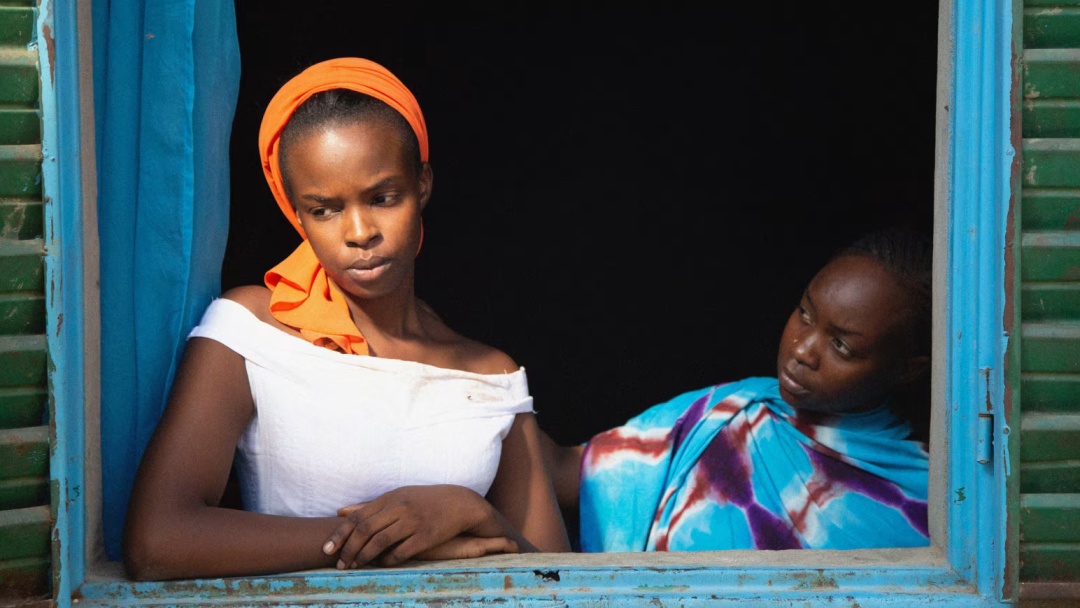
The reverse, however, has never been true. A film does not become arthouse simply because it was produced independently. An independently financed romantic comedy remains a romantic comedy if its artistic ambitions lie comfortably within established commercial conventions. Likewise, an independent horror film designed primarily to entertain through familiar genre pleasures does not become arthouse by virtue of its budget or production model alone.
This is why the overlap between the two categories should be understood as a pattern rather than an identity. They often describe the same films because the industrial conditions that encourage independent production also create space for artistic experimentation. But the overlap is neither complete nor inevitable. Each term continues to answer a different question.
This also answers a common point of confusion: can an arthouse film also be an indie film?
Yes, many are. Some of the most celebrated arthouse films of the past several decades were made independently, precisely because independent production gave their filmmakers the freedom to pursue unconventional artistic visions. In such cases, the two labels coexist comfortably because they refer to different aspects of the same work. One identifies its industrial circumstances; the other describes its aesthetic orientation.
The distinction becomes clearer if we imagine separating those questions. Suppose two filmmakers produce films with identical budgets outside major studio systems. One creates a conventional crowd-pleasing comedy, the other an introspective, formally adventurous meditation on memory and grief. Both films are independent. Only one would ordinarily be described as arthouse.
Now imagine the opposite scenario. A major studio finances an acclaimed filmmaker and grants them unusual creative freedom to pursue an uncompromising artistic vision. The resulting film may bear all the hallmarks of arthouse cinema despite having none of the industrial independence typically associated with the independent sector.
Once production and aesthetics are treated as separate axes rather than competing labels, the confusion begins to dissolve. What once appeared to be a contradiction turns out to be two different forms of description operating simultaneously. The real question, then, is not whether a film is indie or arthouse. It is whether we are talking about the film’s production or its artistic project. Only after separating those questions can we understand why some films belong to both categories while many belong to only one.
V. The Best Proof: When the Categories Come Apart
The easiest way to see that indie and arthouse are not synonyms is to look at films where the two categories separate.
Consider The Blair Witch Project (1999). Produced independently on an extraordinarily small budget, it became one of the most profitable films ever made. Yet its significance lies less in formal experimentation than in the ingenuity of its production and marketing. It is fundamentally a horror film, designed to immerse audiences in fear through the conventions of found-footage storytelling. Its independent status tells us how it was made, not what kind of artistic tradition it belongs to.
Little Miss Sunshine (2006) offers another useful example. It was independently produced and premiered at the Sundance Film Festival before becoming an international commercial success. Warm, funny and emotionally accessible, it certainly bears the hallmarks of independent production. But its storytelling remains broadly conventional, prioritising character, humour and emotional resolution over the kinds of formal exploration typically associated with arthouse cinema.



Nigeria has its own version of exactly this case, and it belongs to a director whose later work sits at the centre of the arthouse conversation. In 2014, C.J. “Fiery” Obasi made his debut feature, Ojuju, for what is, by any honest description, a zero budget: his initial ₦5 million ask found no investors, and the film that resulted was made on favours, borrowed time, and whatever equipment could be scraped together. Ojuju is a zombie film, set in a Lagos slum, about a water-supply infection turning residents into the undead, a straightforward, well-crafted genre picture, indebted openly to the Hollywood zombie tradition and to the horror novels its director grew up reading.
It won Best Nigerian Film at Africa International Film Festival (AFRIFF) and went on to screen at more than twenty festivals worldwide, praised by critics for its craft and its confidence on a nonexistent budget. It is, unmistakably, an independent film. It is not, by any reasonable definition, an arthouse one; it isn’t reaching for ambiguity or formal rupture, it’s reaching for scares and a good time, and doing that well is its own accomplishment. Less than a decade later, the same director made Mami Wata (2023): black-and-white, mythic, formally ambitious, funded in part through international grants and a landmark of contemporary African arthouse cinema. Same filmmaker, same basic condition of working outside the major commercial system, two entirely different answers to what the film was trying to be.

Ema Edosio’s Kasala! (2018) is another practical example. Edosio self-financed the film from her own savings (and with support from friends) and shot a fast, funny, deeply local comedy about four Lagos teenagers racing to fix a joyridden uncle’s car before he gets home. Nigerian cinemas rejected it outright at first; it found its life instead on the international festival circuit, playing more than ten festivals and picking up nine awards, before Netflix licensed it directly, without a distributor as intermediary, and it finally got a limited theatrical run at home on the strength of that. Kasala! is unmistakably independent by any definition of the word; self-funded, outside every institutional pathway this essay has described. It is just as unmistakably not arthouse: it’s a broad, warm, plot-driven comedy with no interest in ambiguity or formal rupture, built to make an audience laugh, not sit with discomfort.
The opposite pattern exists as well. Not every arthouse film is independent. Throughout film history, major studios have occasionally entrusted celebrated auteurs with substantial creative freedom, allowing them to pursue projects whose artistic ambitions extend well beyond conventional commercial formulas. Stanley Kubrick’s 2001: A Space Odyssey (1968), produced and distributed by Metro-Goldwyn-Mayer, remains one of the defining works of modern art cinema despite emerging from within the studio system. More recently, Martin Scorsese’s Killers of the Flower Moon (2023), backed by Apple Studios and Paramount Pictures, demonstrates that films with considerable institutional support can still privilege contemplative pacing, thematic complexity and authorial vision over formulaic storytelling.
These examples reveal something important. Neither financing nor artistic orientation determines the other. Independent production can give rise to broad commercial entertainment just as easily as it can produce formally adventurous cinema. Likewise, substantial studio backing does not automatically prevent filmmakers from creating works that belong comfortably within the traditions of arthouse filmmaking. Once that distinction becomes clear, the relationship between the two terms stops looking mysterious. They overlap frequently because industrial realities often encourage certain artistic choices. But they remain independent categories, capable of aligning or diverging depending on the circumstances of each film.
This also helps explain why the same film can attract both labels without any contradiction. Calling a film indie and arthouse is no different from describing a novel as both historical fiction and bestselling. One description tells us something about how the work reached its audience; the other tells us something about the work itself. The two coexist because they answer different questions.
VI. Why the Confusion Persists and How to Move Beyond It
If the distinction between arthouse and independent cinema appears straightforward, why do the terms remain so frequently conflated in Nigerian film discourse?
Part of the answer lies in the particular way Nigerian audiences have encountered many of the country’s most critically acclaimed films over the past decade. As the second essay in this series argued, Nigeria does not yet possess the extensive institutional ecosystem that has historically supported arthouse cinema elsewhere: a mature network of specialised cinemas, sustained public funding, a deeply embedded culture of repertory exhibition and a broad critical vocabulary circulating beyond professional film circles. In the absence of those institutions, audiences have understandably learned to recognise films through the industrial signals most visible to them: festival premieres, international co-productions, foreign grants, limited theatrical releases and critical acclaim abroad.
Because these signals so often appear together, they gradually come to stand in for one another. A film that arrives through the festival circuit is assumed to be arthouse. A film that is independently financed is assumed to be a festival film. Before long, indie and arthouse begin to feel like interchangeable descriptions of the same cinematic territory.

That conclusion is not irrational. It is an understandable way of reading the film culture that currently exists. The difficulty arises only when those practical shortcuts are mistaken for precise definitions. What begins as a useful description of recurring industrial patterns gradually hardens into a critical vocabulary, obscuring the fact that the words themselves were never created to answer the same question.
Fortunately, the distinction is neither difficult nor abstract once we know where to look. The next time a film is described as indie, ask one question: who financed it, and who exercised creative control over its production? The answer tells us something about the film’s industrial circumstances. Then ask a second question: what kind of artistic experience is the film trying to create? Is it primarily interested in formal experimentation, authorial expression and pushing the possibilities of cinematic language? Or is it working comfortably within familiar commercial conventions, regardless of how much money it had to make them?
The answer to that question tells us something about whether the film belongs within the broad traditions of arthouse cinema. Sometimes both answers will point in the same direction. Many of the world’s finest arthouse films are also independently produced. Just as many independent films have little interest in the artistic ambitions commonly associated with arthouse cinema. Neither possibility is contradictory, because the two labels describe different dimensions of the same work.
That, ultimately, is the distinction worth holding onto. Independent cinema tells us about the conditions under which a film was made. Arthouse cinema tells us about the artistic project the film pursues. Once those questions are separated, the relationship between the two becomes much easier to understand. More importantly, our conversations about cinema become more precise, not because every film suddenly fits into neat categories, but because we begin asking the right questions before reaching for the wrong labels.
Joseph Jonathan is a historian who seeks to understand how film shapes our cultural identity as a people. He believes that history is more about the future than the past. When he’s not writing about film, you can catch him listening to music or discussing politics. He tweets @Chukwu2big
Cover photo credit: Lingui, The Sacred Bond (2021)