


Fascination can very easily translate to an obsession over aesthetics at the expense of a people’s identity, to surface-level engagement devoid of real context, real knowledge, real experiences.
By Vivian Nneka Nwajiaku
When Tomi Adeyemi’s Children of Blood and Bone (2018) was first released, I was a bit of a fangirl. If you dig deep enough, you might find an early celebratory review of the book from my days as an amateur book critic. I barely remember the content now, but I’m fairly certain that the bulk of my praise came from fascination and gratitude. You see, I grew up on the Harry Potter movies and Nickelodeon’s Avatar animations. As a pre-teen, I was fortunate to get my hands on an in-universe illustrated Avatar book before I ever got a chance to see the animated series, but the Harry Potter books changed hands so quickly that I felt too defeated to even attempt to ask. Those were not in my junior school library, but you know what books were? Encyclopaedias and books on world history and geography.
I obsessed over Greek mythology, taking notes, fascinated by the history and culture that I had been exposed to in American books and movies. As a post-colonial Nigerian Christian, I had been trained to treat our traditional spirituality with suspicion, to consider our deities as demons. But I’ve always been a culture critic of sorts, before I even knew it, and I’ve always been able to appreciate fiction separate from cultural sensibilities, albeit without dismissing them. So I’d longed to see those stories of our traditional deities told in those fancy ways that Greek stories were told.
They were not in my catholic school library, but it sounded plausible to me. After all, Zeus was practically Sàngó, the Yoruba deity of fire and thunder (as you might recognise from Children of Blood and Bone), and Amadioha, the Igbo deity of thunder and justice whom my Igbo ancestors worshipped. So, of course, I fell in love with Children of Blood and Bone. It was a combination of many things I loved, things that defined my childhood, things that fascinated me. Harry Potter. Avatar. Mythology. And it was about people who looked like me in stories I had always wanted to read.

But I am no longer fascinated. Years of study, years of critical engagement with the arts, years of paying attention to global dynamics and where African stories fall on the map, and I now understand that fascination can very easily translate to an obsession over aesthetics at the expense of a people’s identity, to surface-level engagement devoid of real context, real knowledge, real experiences. With the Children of Blood and Bone adaptation by the American studio Paramount Pictures, several such concerns have been raised, especially with regard to the casting choices, triggering conversations around gendered colourism, representational politics, context-insensitive casting, and tokenism.
Before I go further, let me categorically state that come January 2027, I will watch the Children of Blood and Bone film adaptation. I still look back fondly on the books, the first instalment especially. And I am painfully aware that the film’s success, as an acquaintance put it, is tied to the future of the Black film funding ecosystem.
In a perfect world, that would not be the case. But we don’t live in a perfect world. We live in one where we’re constantly walking a tightrope, where our population as Black people is so high and steadily increasing that ignoring us is impractical, where our cultures are so vast that we are regarded as an infinite resource pool in a fast-paced content world, but where our financial and structural capacities are so limited that we’re considered too experimental, too unstable, too powerless. As it stands, every Black film on the global film stage carries that unfair burden of justifying the next Black film. And despite our concerns and criticisms, we share in that unfair burden. We must walk the fine line between supporting Black representation and critiquing its inadequacies.
Let me begin by establishing certain things. One: Children of Blood and Bone is heavily influenced by West African Yoruba culture and Nigerian geography. Two: Children of Blood and Bone is also an allegory for the modern Black experience and was inspired by the Black Lives Matter movement, as its Nigerian-American author has emphasised. Three: While Children of Blood and Bone is a black fantasy tale dealing with themes of racism, colourism, and oppression, it was also written to appeal to a universal audience. As Adeyemi put it, “Children of colour need a mirror to see themselves in. And then people who don’t have that experience, they need a window.” Four: Children of Blood and Bone, the adaptation, is a live-action American film aiming for a global audience and ultimately a return on investment.
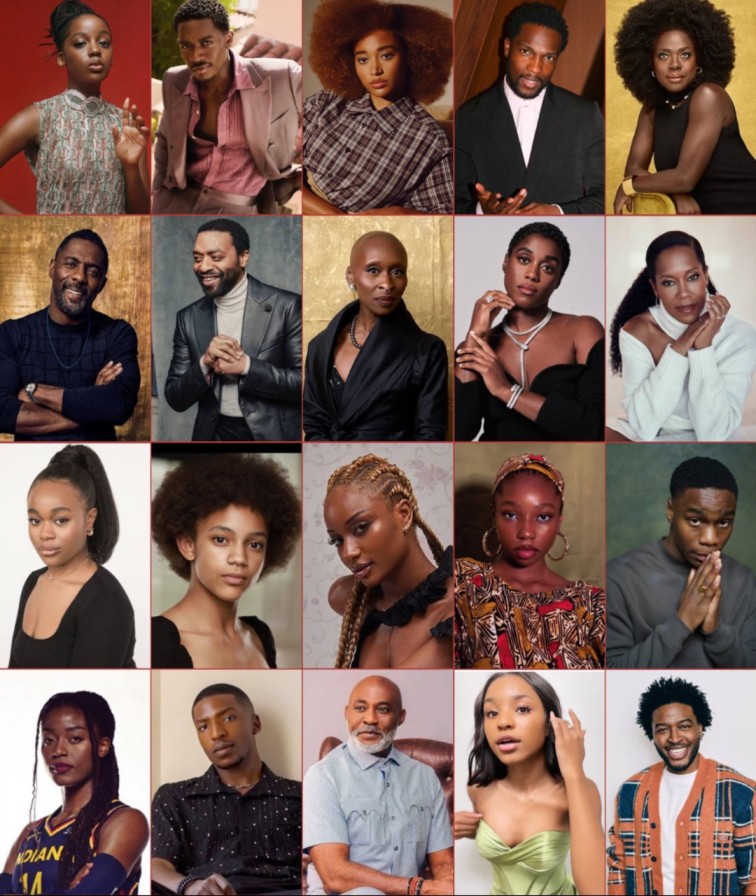
An ideal cast should take all of these factors into consideration, and granted, it is not the easiest feat to achieve. The casting team needs to score points for popularity, for representation, for non-Nigerian and non-American audiences, and for skill. How to combine all of this into a formidable cast? The Children of Blood and Bone team seems to have come up with an interesting formula: A cast that includes some of the most famous and acclaimed working Black actors in Hollywood—with varying degrees of melanin—many of whom happen to be Nigerian but also British, plus a Nigerian popstar with some international fame, and a few Nollywood names to boot.
The Viola Davis. The Regina King. The Idris Elba. The Chiwetel Ejiofor. All famous and critically acclaimed; two Americans; two Brits, one of whom is Nigerian, and the other of Sierra Leonean and Ghanaian heritage. Damson Idris, Cynthia Erivo, Zackary Momoh, Bukky Bakray, Tosin Cole, and Kola Bodunde—all British or UK-based Nigerians, five with Yoruba roots. South African Thuso Mbedu. American Amandla Stenberg and Saniyya Sidney. British-Jamaican Lashana Lynch. British-Ghanaian Diaana Babnicova.
Round out the cast with a few Nollywood names—Richard Mofe-Damijo (“RMD”), a Nollywood veteran who is not Yoruba but speaks the language and recently recorded a global hit with The Black Book; Pamilerin Ayodeji, a Nollywood teen actor who is Yoruba; and Shamz Garuba. And let’s not forget Afrobeats sensation Ayra Starr (born Oyinkansola Sarah Aderibigbe), or American-born Nigerian-British basketball star, Temi Fagbenle—both Yoruba.
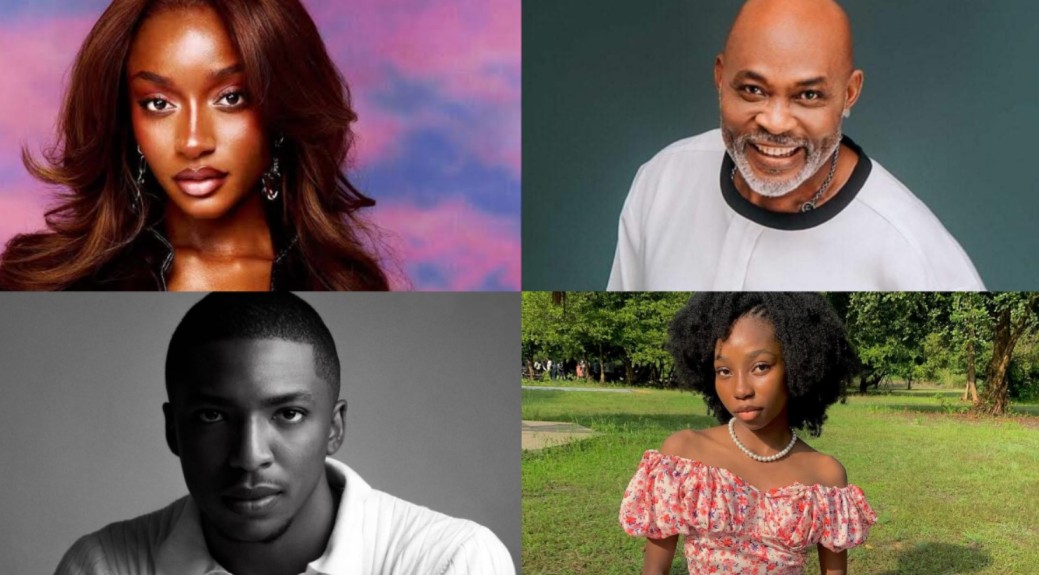
On paper, it appears to work. Yet, in context, certain essential casting choices are problematic, perhaps even offensive. Before I name them, let me emphasise that it is important not to frame the conversation as one that is about the specific actors involved but about what they represent. My goal is not to vilify these actors or place blame at their feet. My aim here is to situate the casting implications within a wider conversation, to highlight and interrogate patterns that could be potentially dangerous for African and Black representation.
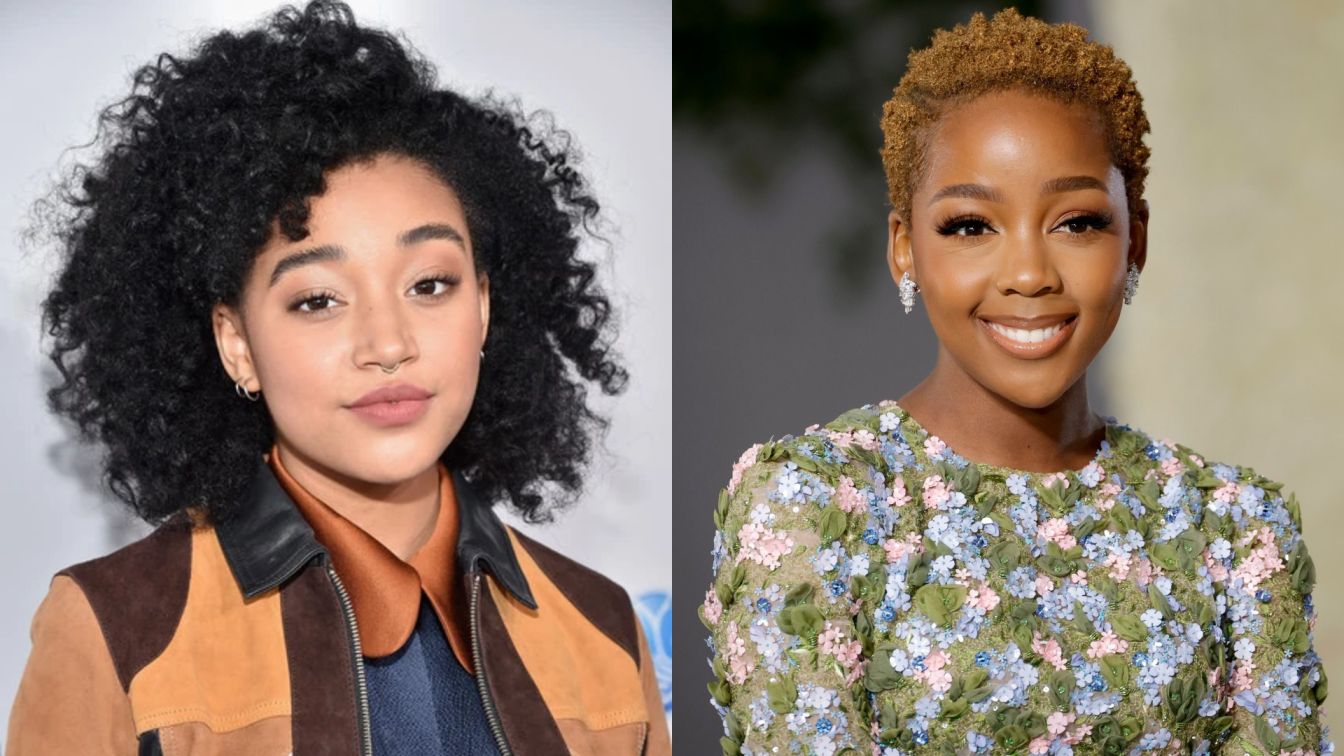
The most obvious Children of Blood and Bone casting controversy is Amandla Stenberg in the role of Princess Amari, one-third of the chosen trio in Adeyemi’s fictional world. I will come back to that. But first, the protagonist of the story: Zélie Adebola—the hero of the Legacy of Orïsha, the young maji of the Reaper clan, the daughter of Ilorin—is played by Thuso Mbedu, a South African.
If the world were as it should be, I might take no issue with a South African actor playing a West African protagonist. After all, we have had West African-British actors play American characters in Hollywood. Even in Nollywood, actors routinely portray characters from ethnic groups that they do not belong to. Of course, when the story is culture-specific and underrepresented, it is important to prioritise actors from the relevant culture. But in cross-cultural collaborations between groups that are both underrepresented—albeit one more than the other—especially where the risk of commercial success is primarily one-sided, concessions have to be made, provided that due cultural ownership is acknowledged and respected.
In the context of a film like Children of Blood and Bone, I appreciate and share the concerns about Hollywood treating all Black Africans as a monolith. But I also understand that Children of Blood and Bone is as much about the Black experience as it is about the West African Yoruba culture.
In fact, one might argue that the South African experience is an interesting meeting point between the two halves of the Children of Blood and Bone identity, considering the position that South Africa and Nigeria share as cultural and creative strongholds south of the Sahara, and the history of racial oppression and segregation which Black South Africa shares with Black America. Who better to embody that central, unifying role than Thuso Mbedu, an objectively skilled Black South African actor who, in the light of her relocation to Hollywood, now has an intimate understanding of the African Diasporan experience as well?
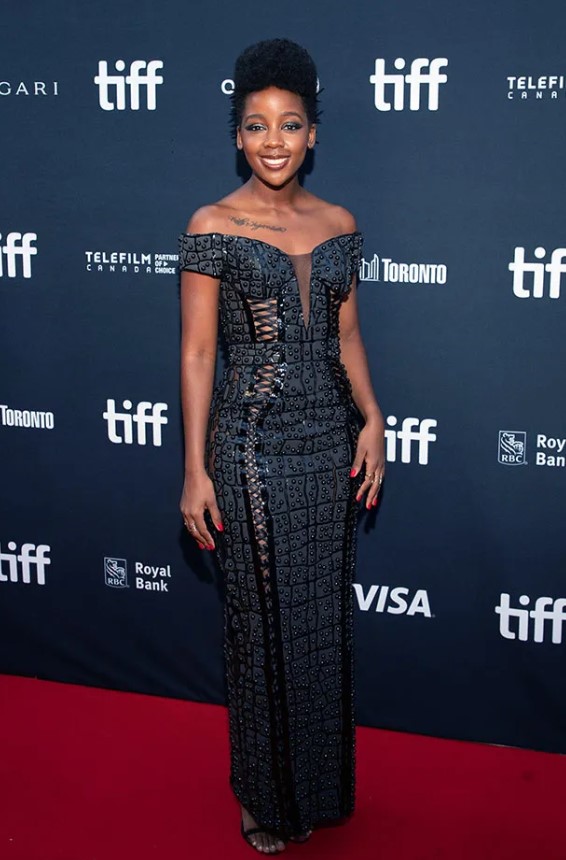
Yet, no intellectual justification can erase the very real sociocultural context in which this casting exists. Nigeria and South Africa have a tense relationship. There is a feeling that if the reverse were the case, if it were a Nigerian actor playing a South African protagonist in an expected blockbuster built on South African culture, it could trigger backlash, potentially even xenophobic hostility. This is, admittedly, speculative, as casting controversies like this are new terrain. But it is speculation rooted in a long history of xenophobia, specifically the Afrophobia variant, in South Africa.
It is not ridiculous to draw a line from accusations that Nigerian immigrants are taking South African jobs to the extreme xenophobic abuse that beauty queen Chidimma Adetshina, born in South Africa but of Nigerian heritage, faced as a finalist in the Miss South Africa pageant in 2024, forcing her out of the competition (although she would eventually become the first runner-up at Miss Universe 2024 after being invited to compete at Miss Universe Nigeria). It is not far-fetched to compare the harassment that Ayra Starr has been subjected to over claims that her style and signature dance moves are a cultural theft of those of South African popstar Tyla, with the destruction of Nigerian properties in South Africa following a misinterpretation of a harmless coronation of a symbolic king in an Igbo community as an attempt to usurp South African traditions.
That there is a slur specifically for South African women who date or marry Nigerian men—“jollofina”, a bastardisation of the very special Nigerian delicacy that also features in the Children of Blood and Bone book—is evidence of how deep-seated this unfortunate cultural tension is. And considering that such tensions have actually led to loss of Nigerian life and property, then it is legitimate for Nigerian audiences to question the casting of a South African to play a Yoruba protagonist on the global stage. It is not a leap to expect that a reverse case would result in harassment or violence against a Nigerian for taking a job that involves playing a culturally South African role.
The irony is that a similar situation has already begun to unfold. Just recently, a new musical drama about South African jazz legends Miriam “Mama Africa” Makeba and Hugh Masekela, and their Apartheid-era Graceland tour, titled The Road Home, was announced, with the European Studiocanal financing the film. While South African actor Thabo Rametsi will play Masekela, British-Nigerian singer and actor Cynthia Erivo (also cast in Children of Blood and Bone) will star as Mama Africa. Within hours of the announcement, pushback had already started to surface, with some South Africans querying the casting and even specifically calling for actors like Thuso Mbedu to have been cast instead. Even some Nigerians have taken to mockery, regarding it as tit for tat.
Such contexts warrant deliberate consideration in the casting for any film that draws from African culture or history, including Children of Blood and Bone and The Road Home. To not bear such contexts in mind signals a disinterest in the sociocultural dynamics and contexts of the African continent. To ignore the cultural conflicts that shape relationships between nations on the continent reinforces the idea of a monolithic and homogenous Africa. And to pull cultural history and aesthetics from a people without interest in the effects on their sociocultural realities and experiences borders on exploitative.
Frankly, it is a scary phenomenon for a continent that has historically been treated solely as a source for extraction to now be witnessing a pattern of extraction of its culture and history for global-minded films without care for these sociocultural realities. African stories getting shared and appreciated on a global scale would be immensely beneficial to the world’s entire Black population, but it should not be at the expense of the people who bear the names, who practise the customs, and whose identities and experiences will be shaped by and perceived based on the contexts that these globalised African stories have provided or failed to provide.
Africans in Africa are a double minority with respect to global representation, and if a stripped-down representation of African cultures, milked for their aesthetics, becomes profitable and is produced at scale, the Western world will reap the financial benefits, but for Africans in Africa, it will be our own cultural loss.
Now, back to Amandla Stenberg as Amari. In the Children of Blood and Bone book, Amari Olúborí is the crown princess of Orïsha, the runaway daughter of the oppressive royal family. She is described as having a dark brown copper complexion. Amandla Stenberg is a light-skinned biracial person. The disconnect is obvious. But on the surface, this should not be a big deal. It’s fiction. It’s fantasy. What’s the difference between this and Halle Bailey in The Little Mermaid or Paapa Essiedu as Snape in the upcoming Harry Potter series? Shouldn’t the capacity to deliver be all that matters?
And yet it’s not. Not when it fundamentally alters the essence of the story. You see, Amari doesn’t have a dark brown copper complexion just for the sake of it. In Orïsha, Adeyemi’s fictional kingdom, power is determined by complexion. The nobility are marked by their lighter skin and their deep-seated prejudice against the darker-skinned maji. As the one person with darker skin in the royal family, Amari’s complexion becomes a major source of conflict, subjecting her to intense colourism, abuse and judgment.
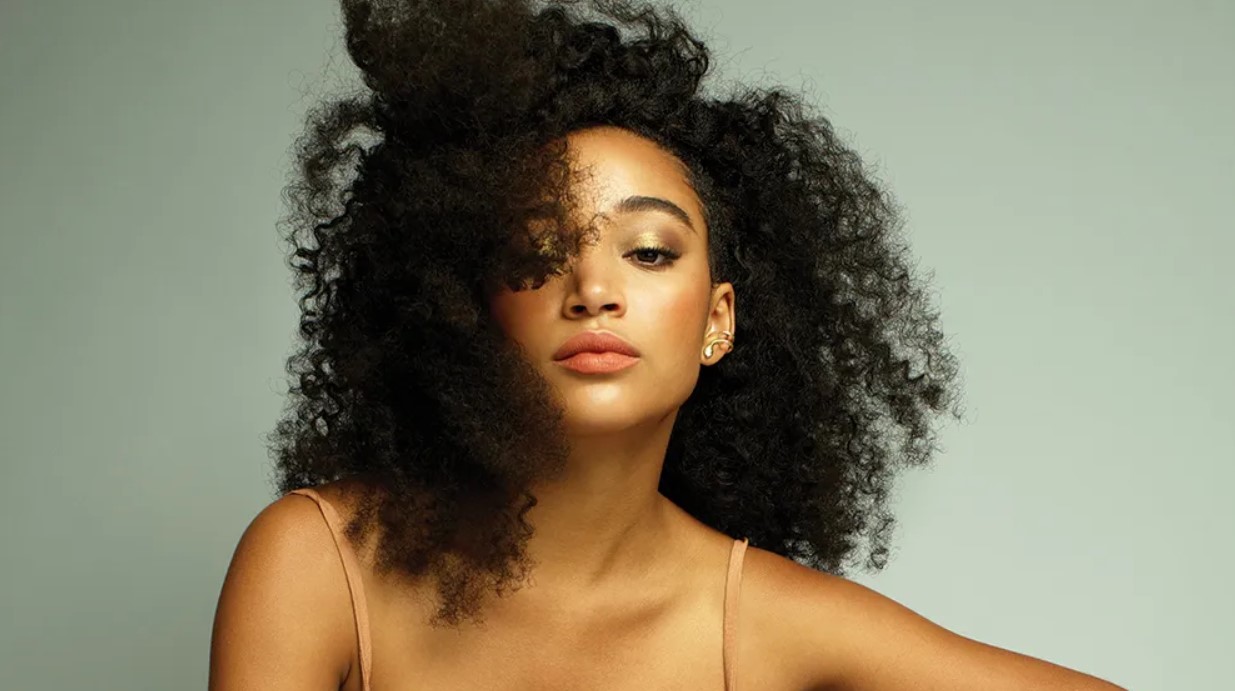
With Stenberg as Amari, the Children of Blood and Bone adaptation turns that dynamic on its head. Amari would fit right into the royal family, even more than her other family members, who are played by actors with more melanin, to speak plainly. It could be that the film will proceed with its themes of colourism and racism while providing some other justification for Amari’s rebellion. It could be that the film will drop the racism angle and stick with the fantasy-world-favourite fascism. That would certainly be more palatable to non-Black audiences. But for a book that gains much of its relevance from its exploration of colourism in its own right and colourism as an allegory for racism, I can’t help but wonder why any of these options would be on the table.
Besides, the problem here is not merely a deviation from the source material. Race or colour-swapping is never just a deviation from the source material. It’s all part of the more complex issue of representational politics. Let me attempt to simplify. “Black Ariel” or “Black Snape” involves swapping out a character whose race has always been considered the default for a character whose race has always been underrepresented. Also relevant is the fact that swapping out often happens in a story so mainstream that the initial racial description will never be forgotten. Paapa Essiedu will always be compared to Alan Rickman, whom no one will ever forget. And Halle Bailey will never truly replace the iconic red-haired White girl from the animations or the original Little Mermaid merch that will never go out of fashion.
The dynamics are fundamentally different with light-skinned Amari. Here, a character whose complexion has always been underrepresented is swapped out for a character whose complexion has always been the mainstream preference. And the swapping out happens in the very first visual iteration of a story that is specifically focused on platforming that underrepresented character. It is an erasure, deliberate or not.
Stenberg has addressed the criticisms, acknowledging that colourism is an insidious system that relentlessly impacts every facet of entertainment, but also highlighting that Adeyemi was inspired by the racism Stenberg faced for playing Rue in The Hunger Games. But is that sufficient? Again, this is not about the individual actors but about systemic issues within mainstream Black and African representation. In Adeyemi’s fictional world, which includes Black people of all kinds, there are a variety of roles that Stenberg could comfortably play.
Insisting on Amari effectively reduces already scarce opportunities for women with darker skin, women who face more marginalisation from Hollywood than light-skinned people. Especially considering that even Zélie, with her dark onyx skin as described by the books, is a tad darker than the actor playing her. For a film based on a book series that takes so much pride in Black representation to the point of treating darker skin as magical, these casting choices are indeed insidious.
The argument has been made that the offensive casting extends beyond Zélie and Amari. That the cast should have been a predominantly Nollywood cast. That predominantly local casting has been done before in fantasy adaptations like Iyanu, the HBO and Cartoon Network Yoruba mythology-inspired animated series. That casting non-Yoruba people to play Yoruba characters is inherently insulting. To which defenders of the film have retorted that those who criticise the film’s casting conversely celebrated Halle Bailey as Ariel and Paapa Essiedu as Snape. They have also likened the casting choices of Children of Blood and Bone to those of Percy Jackson, where non-Greek actors, including Black actors, have been cast in major roles.


I understand these positions, both against and in support, but they do strike me as a misconception of what the Tomi Adeyemi book series, and the film adaptation by extension, represent. The cultural identity of the characters in Children of Blood and Bone is a combination of Yoruba culture and the diasporan Black experience. In terms of representation, a predominantly local Nigerian cast would not capture that. And it would be, unfortunately, a much bigger risk at the global box office than a cast with Black Hollywood royalty.
We simply do not have that kind of soft power. Relying on Iyanu as a success story for Hollywood-produced Nigerian fantasies with an all-Nigerian cast neglects the value of star power in live-action projects (as compared to animations) as well as the fact that both the Iyanu series and the spin-off films have never been tested at a domestic box office, let alone in global theatres. It makes sense for the casting in Children of Blood and Bone to attempt to reflect a balance between both aspects of its dual identity, on one hand, and its commercial goal on the other.
On the flip side, comparisons between swapped castings in an Afrocentric story like Children of Blood and Bone and adaptations of Eurocentric stories are unfounded. Again, intra-racial casting is fundamentally different from race-swapping. Race-swapping provides mainstream representation for a historically underrepresented race with no real loss to the swapped-out race, since they have never lacked mainstream representation.
If anything, comparing race swapping in Eurocentric stories to intra-racial casting in Afrocentric stories works against the Children of Blood and Bone casting choices. As far as historical mainstream representation and cultural power dynamics on the global film stage go, between African actors on one hand, and Black American and Black British actors on the other, African actors are the more underrepresented group. So, it is really not the winning argument its proponents think it is.
The real issue is not just about the number of Nollywood actors or Nigerian actors or non-Nigerian actors. Nor is it just about which demography deserves more representation. The issue is in the context of the representation. The cast says something about Black Hollywood’s (and the African Diaspora’s) relationship with Africa, and how easy it is to strip the aesthetics away from the contexts and experiences of the people who live on the continent. It says something about Black Hollywood’s internalised gendered colourism, where even a story that uses colourism as an allegory for racism ends up casting lighter-skinned actors than the story, in its purest form, demands. And despite the number of actors of Nigerian and Yoruba heritage in the film, it still manages to engage in tokenism.
Yes, the Children of Blood and Bone adaptation attempts to find a balance in the cast, but it ultimately does not succeed at that attempt, mostly because of what the Zélie and Amari castings represent. While there are many Yoruba names in the confirmed cast, Yoruba women are in the minority, and none of them plays a main role.
Dark-skinned Yoruba women, the people who are supposedly centred in the story, are excluded from the central roles, while a dark-skinned main character is swapped out to create space for a light-skinned actor and the protagonist is played by a South African in the middle of heated xenophobic tensions that do affect Yoruba women. I’m not even Yoruba, but I can very clearly see how it would feel like a betrayal and an insult.
But who is surprised, really? We may be outraged, but are we really surprised? I know I’m not. As much as I was excited to read Children of Blood and Bone when it was first published, I am also aware of how extractive it is, how removed it is from the African context because it is not about the African context. The African experience and the Black experience are ultimately different experiences, and it is not a book that seeks to merge them. It is a book that uses the cultural aesthetics of the Yoruba people and the geographical identity of Nigerians to tell a story about the Black American experience. I can understand why the author, born and raised an American with Yoruba heritage, would arrive at that approach. I don’t fault it. And while I had hoped that the adaptation would handle the circumstances with more delicateness, I don’t fault it, either, for toeing the line of the book it is based on. But I do fault the othering of the people whose cultural identity it claims to represent.
I think about the talented Pamilerin Ayodeji, the Yoruba teenage girl whom Adeyemi announced as a “winner” of the open casting call in Nigeria. We still do not know what role she plays, but I hope it’s visible enough that it actually opens those coveted doors to her. I think of Bukky Bakray, whose role as Binta—the girl who triggers Amari’s rebellion—will be incredibly short-lived, if the books are anything to go by. I think of Ayra Starr and Temi Fagbenle, whose names are likely expected to motivate their fanbases, home and abroad, to buy tickets. I hear they play small roles. And I think of Anita Solarin, the young Yoruba woman who told Al Jazeera in 2024 that she has spent her entire life in South Africa but finds it safer not to disclose her West African roots.
I find it somewhat ironic that my last opinion piece, written over four years ago, was on African representation on the global stage. I was sceptical of what African stories, stories based on or, as in this case, derived from African people and cultures, would look like under the control of global powerhouses. The context was the Àlọ́ Writers initiative, a partnership between Nigerian media mogul Mo Abudu’s EbonyLife and Sony Pictures Television to discover “the best authentic African story ideas which will inspire and resonate with viewers across the globe.”
Nothing substantial seems to have come of that collaboration yet (and this is why we cling to projects like Children of Blood and Bone that actually make it out of the bureaucracy), but at the time, I was concerned about how different Abudu’s conception of African stories was from that of Nina Lederman, Sony’s then Executive Vice-President of Global Scripted Development and Programming.
The exact points of difference are not directly applicable here, but it does emphasise the dichotomy that exists between what the people who are supposedly being represented consider to be proper representation and what the people who are funding or providing the platform seek to achieve or gain. It does make me wonder how much of the Children of Blood and Bone decisions are studio-motivated decisions and not creative decisions. How many of them are negligent or deliberately exploitative choices, and how many are just plain misunderstandings of the people whose stories and identity they draw inspiration from?
The truth is, until Africa can tell her own stories deftly and adequately, and until our pockets are deep enough that we can put our money where our mouths are, we will continue to be in this limbo, and we can only hope we’re listened to. After all, as one X user derisively noted under a post I made on Children of Blood and Bone, we Nigerians (and might I add Africans, in general) are masters of hope.
So I hope that the Children of Blood and Bone adaptation will turn out to be more interested in the African context than its troubling casting choices hint at. I hope that future international projects that draw inspiration from our shores will look beyond aesthetics and connections to engage more fully with our cultures. And I certainly hope that one day, we can do this for ourselves, tell our own genre stories in the most imaginative ways and on the largest possible scales, knowing that no one will ever be able to mirror our truths more genuinely than us.
Vivian Nneka Nwajiaku is a writer and film critic writing from Lagos. She has a master’s degree in law but spends most of her time consuming, studying and discussing film and TV. She’s particularly concerned about what art has to say about society’s relationship with women. Connect with her on X @Nneka_Viv