
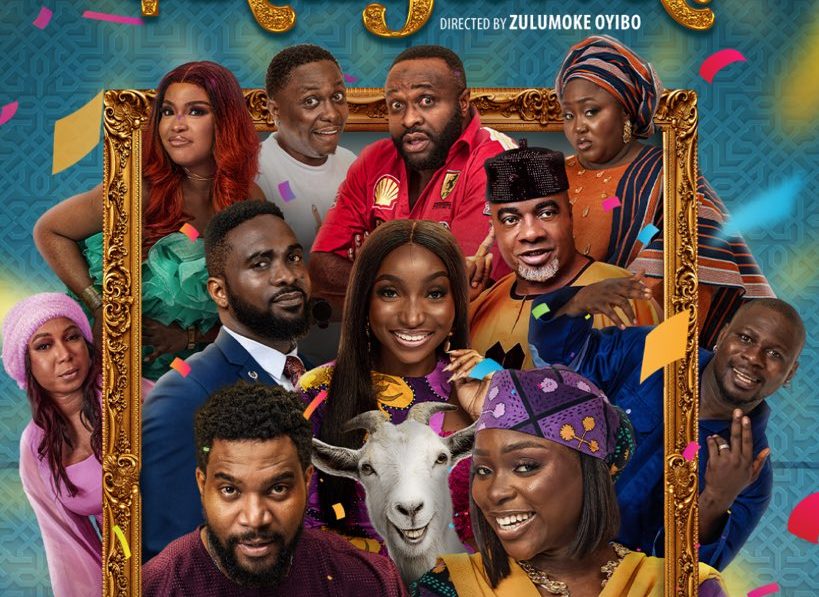


It seems that the entire point of Ọ̀kànjúwà is to dish out basic moral instructions, and without any real internal journey on the part of the characters who become the vehicle for those lessons.
By Vivian Nneka Nwajiaku
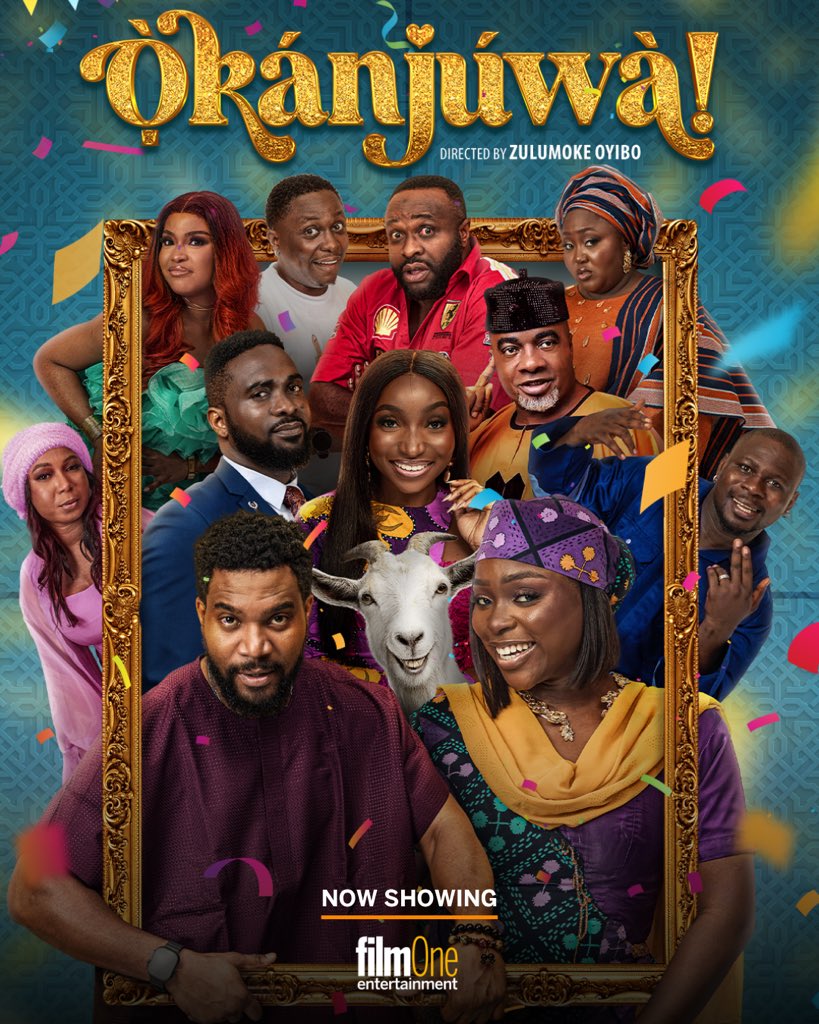
Somewhere within Ọ̀kànjúwà (2026), the latest “intentionally chaotic” love child of Inkblot and FilmOne, is an attempted commentary on “fake life”, contentment and integrity. I refer to it as an attempted commentary as an act of generosity. What the movie really offers is sheer didactism, and not even in a profound sense. It seems that the entire point of Ọ̀kànjúwà, which means “ambition”, is to dish out basic moral instructions without any real internal journey on the part of the characters who become the vehicle for those lessons.
Kunle Remi and Tomike Adeoye play Waheed and Aaliyah, a young Yoruba Muslim couple with big aspirations. While Aaliyah comes from a well-connected family, she is an internet influencer who has only just recorded a small success from a viral “Get ready with me” video. But at least, she has a financially stable background. Waheed does not, nor has he been able to make much of himself, beyond maintaining his pride.
Waheed’s multiple failed business ventures have become a punchline for his successful friend Maximus (Uzor Arukwe) and a source of mockery for Maximus’ wife, Mercedes (Omowunmi Dada), who encourages Aaliyah to put pressure on him. Even his father-in-law (Olaiya Igwe) consistently sneers at him, taking his financial struggles as proof that he is an inadequate match for Aaliyah.
When his latest business runs into trouble with the regulators, the proud Waheed reaches out to Maximus for help, hoping his friend’s political connections can save him—never mind that he has a father-in-law with both political connections and a vested interest in Aaliyah’s happiness. Somehow, this leads to Maximus inviting an important politician (Femi Adebayo) to Waheed’s upcoming Eid party, or Ileya, as it is locally called. The only problem is, Waheed previously had no Ileya plans, and now, he has to throw the hottest Eid party in Lagos, with little to no time to plan.
“One person needs to see you as important, and others will follow. Lagos 101,” says Maximus to Waheed. That’s the neatly packaged reason we get for the grand event that takes up most of the film’s screentime. But Ọ̀kànjúwà, directed by Zulumoke Oyibo (The Betrayed (2024)) and written by Fatimah Gimsay (Finding Me (2025); Lowkey Adults (2025)), ends up playing like a mere opportunity to throw an Ileya party and to put it on screens nationwide precisely during the real-world Eid celebrations. And that makes it a bit worse because the party is nowhere as exciting as one would expect any Nigerian party to be.

The party is as chaotic, though. In fact, so much time is spent on Waheed and Aaliyah jumping from commotion to pandemonium in the name of party-planning, with none of that havoc translating to any real impact on the characters’ development towards resolving their supposed internal and external conflicts. When the film’s central theme of ambition comes to bear in the third act, framed around a supposed moral dilemma, it could be the film’s grounding moment. But, of course, the stakes are overplayed yet underexplored, and the climax immediately segues into melodrama and unnecessary chaos, in usual Nollywood fashion.
I would jokingly call for some arrests, because there ought to be some moral consequence for the headache that I left the cinema with after watching this film. But the joke might be taken poorly, perhaps even misinterpreted as a call for censorship, considering that Ọ̀kànjúwà is a film that features a corrupt regulator in a clime where filmmakers now argue institutional censorship as justification for the inability to creatively design authentic portrayals of public institutions.

At least, Ọ̀kànjúwà does not rely on that poorly considered excuse in establishing its own believable in-world regulatory institution. In an era where the bar is on the ground, perhaps we should find some relief in basic attempts such as this. But should we have to grasp at straws to be generous to this high-energy, low-reward dramedy where the comedy is forced, and the drama is both superficial and exaggerated?
Rating: 1.6/5
*Ọ̀kànjúwà opened in cinemas on 22nd May 2026.
Vivian Nneka Nwajiaku is a writer and film critic writing from Lagos. She has a master’s degree in law but spends most of her time consuming, studying and discussing film and TV. She’s particularly concerned about what art has to say about society’s relationship with women. Connect with her on X @Nneka_Viv