

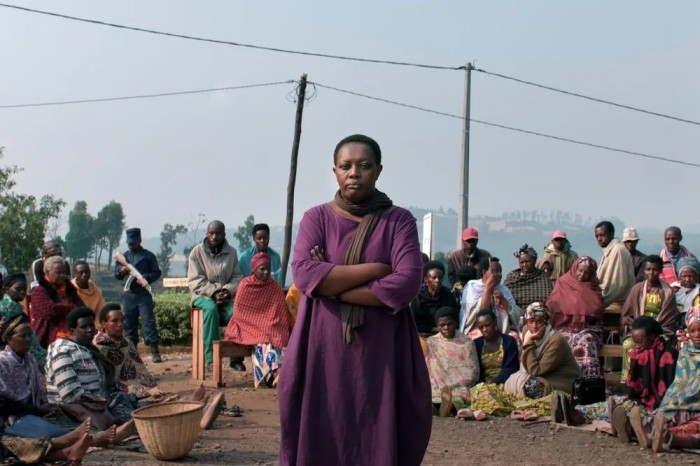

Ben’Imana explores hurt, unprocessed pain, and inherited trauma across three generations — interrogating what lies beneath the platitudes of moving on and healing.
By Jerry Chiemeke
It’s 2012, nearly two decades since the egregious Rwanda genocide, which lasted for exactly 100 days and led to the extermination of over 800,000 Tutsis by Hutu extremists. Since then, the government has implemented several concrete policies aimed at fostering reconciliation across the country, including the criminalisation of ethnic division and the establishment of community-led courts to adjudicate thousands of cases involving aggressors and victims of the violence. On the surface, the rebuilding process appears seamless, but how do the women of Kibeho District, who lost entire families, truly feel? Who is checking how they unpack their trauma? Are they able to forgive on their own terms, or are they at the mercy of legislative compulsion?
It is against this fractured backdrop that Ben’Imana (2026), the debut feature by Marie-Clementine Dusabejambo, builds its base and sets out on its mission to unpack the intricacies of healing, closure and letting go.
In the opening scene, Veneranda (Clementine U. Nyirinkindi) stands before a Gacaca court. She publicly declares that she has forgiven Karangwa (Aime Valens Tuyisenge), the man accused of murdering her family members, much to the displeasure of her sister Suzanne (Isabelle Kabano). We learn that Suzanne, who was directly affected by the violence, was also violated during the onslaught on her family, unfortunately causing her to contract HIV.
Veneranda runs a reconciliation programme called “Rwanditude.” She organises the women, creates community, coaches them on how to testify before the trials, and seeks to provide a safe space for survivors still carrying the weight of unprocessed trauma. As we will come to find, the peace is delicate, fragile, more like.
The two sisters have opposed ideas about how survivors should navigate their futures. Veneranda is keen on letting things slide and looking forward; Suzanne is paranoid and wary. In Peter Tosh-esque fashion, she prioritises justice over peace and firmly believes that Karangwe has not expressed sufficient remorse.
In the Rwanditude sessions, the women display depths of brokenness that make for uncomfortable viewing. The tension peaks when mothers of victims are made to sit across from mothers of perpetrators. Harrowing accounts of sexual assault emerge, down to the mutilation of body parts.
Outside the sessions, Veneranda’s home life is equally turbulent. Her teenage daughter, Tina (Kesia Kelly Nishimwe), is sent home from school for being pregnant. Veneranda, anxious about the scandal of an unwed mother, struggles to extend to her own daughter the compassion she preaches to others. The complication deepens when we learn that Tina’s boyfriend, Richard (Elvis Ngabo), is Hutu.
Also germane to the plot is Louise, mother to Veneranda and Suzanne, who suffers from dementia. Louise believes she is still receiving letters from her husband, who died in a 1975 conflict. Those letters, we discover, are actually being written by Veneranda.
Tina questions Veneranda for being absent from the Gacaca court during Suzanne’s testimony against Karangwe, which provides us with a window into some of the lurid details of the massacre. It is at this point that we really begin to question Veneranda’s stoicism: is she refusing to confront her own trauma, burying the darkness beneath a performance of forgiveness?
In Tina’s school, the terms of a scholarship have been arbitrarily altered to cater to orphans only.
This subplot helps us gain some perspective on the damage wrought by the genocide. Boys in proving their orphanhood are testifying how they lost both their parents in 1994. In another scene, Tina and her schoolmates argue about the size of their noses, amid other ethnic stereotypes. She internalises this, and against Veneranda’s wishes, she decides that she must unearth the identity of her father, who was previously unknown to her.
Each Gacaca session peels back a new layer of pain. These proceedings become vehicles of documentation, of witness, of holding a mirror to darkness and memory.
During one of the Rwanditude meetings, a woman yells, “The truth, we can’t stand it”, and this haunting sentence reverberates throughout the film, reflecting in the actions of the protagonists. As the story unfolds, it becomes increasingly clear how Veneranda is scared that the uncomfortable truths will shatter the bubble she has built around herself over the years.
The film explores hurt, unprocessed pain and inherited trauma across three generations — interrogating what lies beneath the platitudes of moving on and healing. Evocative and gripping, Ben’Imana provides a refreshing interiority to a tragedy that has previously been examined (albeit from an outside point of view) in productions such as Raoul Peck’s Sometimes in April (2005) and Terry George’s Hotel Rwanda (2004).


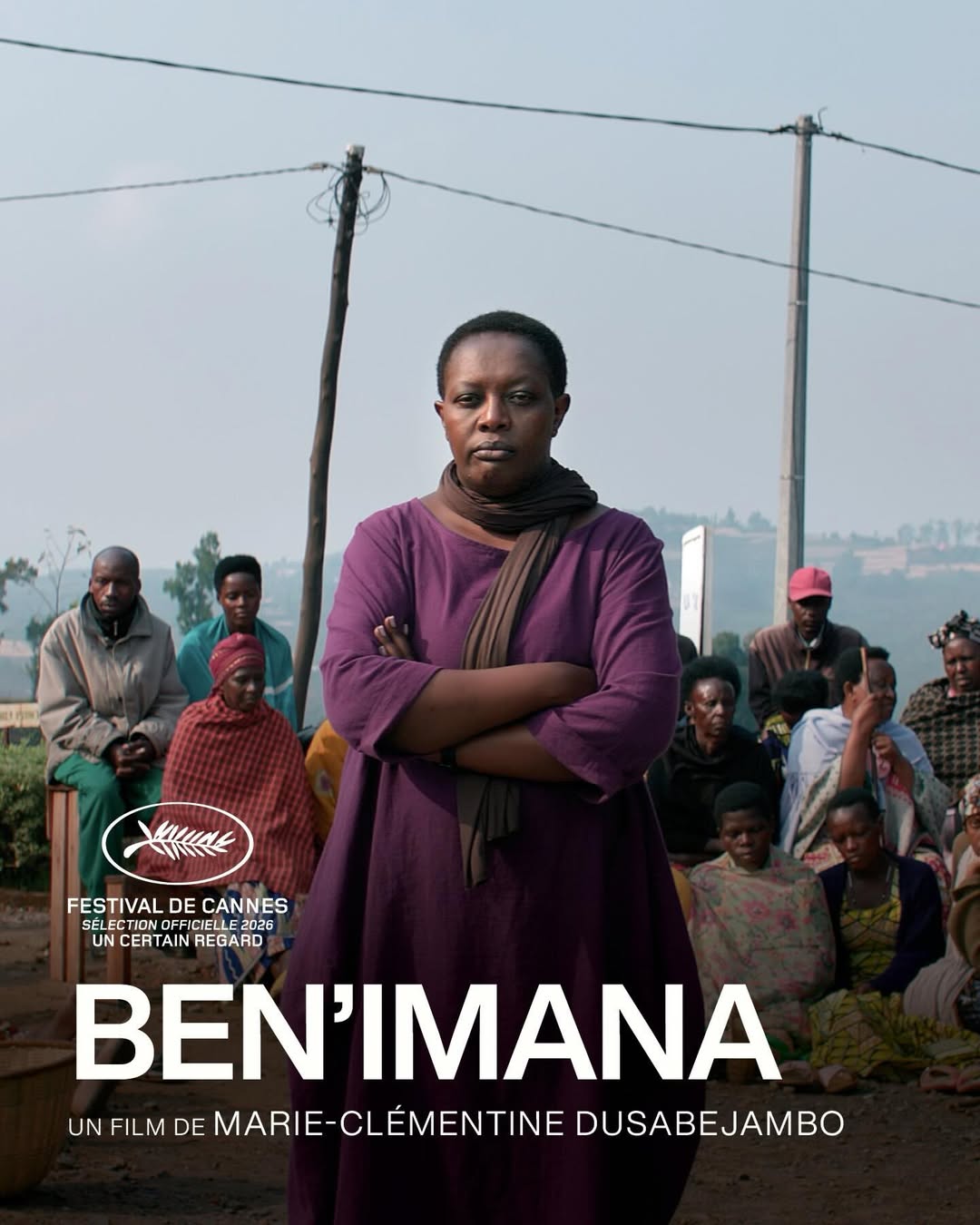
Kabano, Nyirinkindi and Nishimwe deliver convincing, measured performances that belie their relative inexperience — particularly the latter two. Together, they serve as effective conduits through which Dusabejambo’s screenplay (co-written with Delphine Algut) unspools into a narrative coherence that is genuinely impressive for a first directorial outing.
What makes Ben’Imana work is its deliberate commitment to humanising its survivors. We journey with them, watching how they navigate grief, and there is an emotional authenticity to the internal questioning they are forced to do. There is no trauma-mining for its own sake; nothing feels shoehorned. Dusabejambo handles a sensitive subject with the delicacy, empathy, and nuance it deserves.
No therapy sessions, affirmations, or worship songs can force healing or forgiveness until it happens on its own terms. But history must be documented so that others know the truth and take a few notes.
Ben’Imana could not be more timely, particularly in the wake of the escalating violence in South Africa, where xenophobic sentiment has reached alarming levels. It is equally instructive to observe the Nigerian situation, where ethnic tensions continue to fester more than fifty years after the Civil War, and state-backed bigotry proliferates across social media. The repetition of history remains the inevitable fate of those who refuse to learn from it.
Rating: 4/5
*Ben’Imana screened in the Un Certain Regard competition at the recently-concluded Cannes Film Festival, where it won the FIPRESCI Prize and the Camera D’Or.
Jerry Chiemeke is a Nigerian-born writer, communications specialist, culture journalist and lawyer based in the United Kingdom. His writing has appeared in publications like Die Welt, The I Paper, The British Blacklist, The Africa Report, Berlinale Press, The Johannesburg Review of Books, Olongo Africa, The Lagos Review, Agbowo, Culture Custodian, and elsewhere. Chiemeke’s work has won or been nominated for the Pushcart Prize, Ken Saro Wiwa Prize, Diana Woods Memorial Award for Creative Nonfiction, Best Small Fictions, and the Quramo Writers Prize. He is the author of the short story collection “Dreaming of Ways to Understand You” (2020), the poetry chapbook “Notes For Nnedimma” (2019), and the hybrid manuscript “The Colours In These Leaves” (2017). For his work as a writer and critic, Chiemeke has been invited to the Cannes Film Festival, Sundance Film Festival, Berlinale, Toronto International Film Festival (TIFF), BFI London Film Festival, and the Lagos Book and Art Festival (LABAF).