

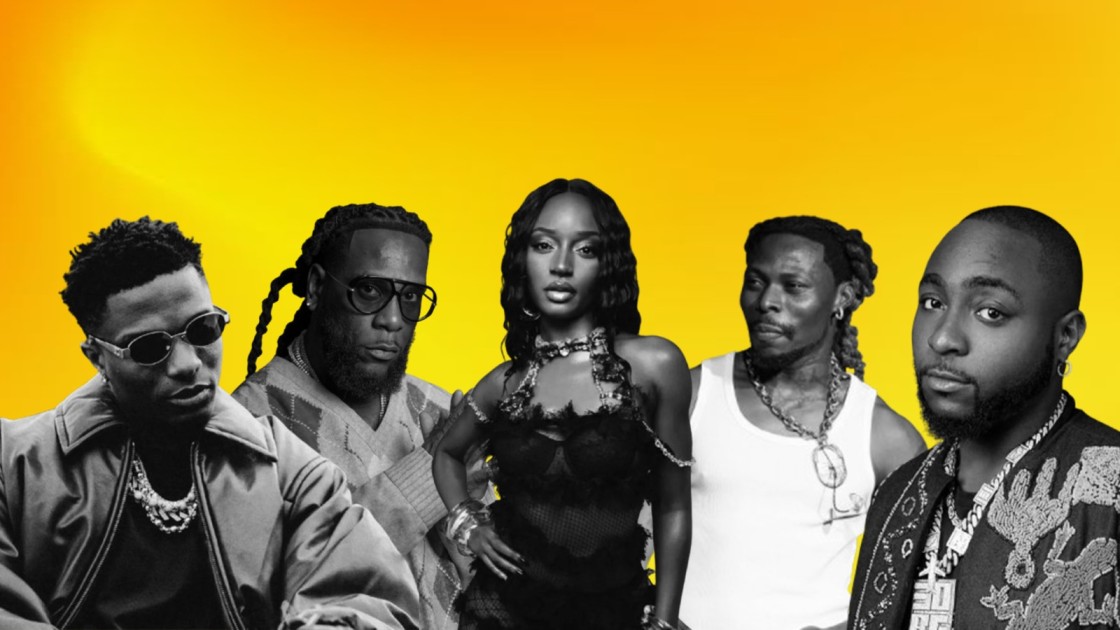

Afrobeats is the polar opposite of Afrobeat, musically and philosophically. Which raises the only question that matters: if Afrobeats insists on crowning Fela its patriarch, what exactly does it think he built?
By Ayomide Tayo
Omah Lay, Nigerian music star whose existential offerings have opened a new dimension in contemporary pop music, recently fluffed his lines in a bid to promote his delayed, highly anticipated sophomore effort, Clarity of Mind.
During the album listening session, the Port-Harcourt native said, “Afrobeats is mainly Lagos. It’s mainly Yorubas. Fela Kuti is the pioneer, we all know that, and he’s Yoruba. I’m from PH, and you have to break into Lagos. There are only two people from PH that you know: Burna Boy and me.”
Omah Lay’s statement was wrong on almost every count. Still, the content of his viral soundbite has stubbornly stuck in Afrobeats conversations and proudly recycled by media houses and music industry meeting rooms.
Fela Anikulapo-Kuti, as Afrobeats’ founding father, is a printer’s devil; not an actual event in music history, but a comedy of errors born from a lowercase ‘s’. This myth has proven remarkably resistant to correction, surviving documentary after documentary, essay after essay, as though repetition were the same thing as evidence.

The sound existed before the name. From the 1990s, groups such as Emphasis, Pretty Busy Boys, and Junior & Pretty experimented with fusing Western genres with indigenous sounds and vernacular vocal performances, the bedrock of Afrobeats. The latter scored a sizeable hit with “Monika” in 1992, a record historians have identified as the beginning of the movement.
From there, contributions from Weird MC, Zaaki Azzay, Baba Dee, Seyi Sodimu, Black Masqueradaz, and Dr. Fresh shaped the collective cultural emergence of 1999. As Nigeria returned to democracy and hosted the 1999 FIFA World Youth Championship, the soundtrack of the moment was “Sha Ko Mo” by Remedies. It was the big bang, the full coming of age of a generation.
For context, in the 1990s, this fledgling movement had not developed its authentic voice and expressed itself through rap. In the new millennium, Tony Tetuila, Plantashun Boiz, Eedris Abdulkareem, 2Baba, P-Square and D’banj orchestrated the explosion of this new sound. Towards the end of this decade, Internet culture and a vibrant diaspora, especially in the UK, exported this sound overseas.
By 2011, contemporary Nigerian pop music was impossible to ignore. On April 16th of that year, DJ Abrantee began a new show at Choice FM called Afrobeats with Abrantee.
On January 19, 2012, the UK Guardian published an article written by Dan Hancox, “The Rise of Afrobeats” — the first major international article on Nigerian pop music to use the word. Credit for the term went to DJ Abrantee. “At that moment, London DJ Abrantee, the man who gave the name ‘Afrobeats’ to the hottest scene in the UK right now…” Hancox wrote.
The name Afrobeats was not without controversy. When the term began to enter the Nigerian space, it was met with smirks and criticism. For many Nigerians at home, Afrobeats meant nothing. We knew Afrobeat, but this new label, coined to describe and export our music, felt alien, strange, and like a cheap attempt to piggyback off the legacy of Fela Anikulapo-Kuti.
And this is how the legendary musician was bundled into Afrobeats. By 2013, foreign journalists had started to confuse Afrobeat and Afrobeats. The FADER, for instance, described Davido’s 2015 collaboration with Meek Mill, “Fans Mi”, as Afrobeat.
“In England, they call it afrobeats…We have failed to control the narrative of Nigerian pop music,” I tweeted in 2015. In hindsight, narrative control had already shifted outward. Many media institutions were caught napping, and in the rush to cash in on Afrobeats, journalists without any foundational knowledge of Nigerian music followed the narrative blindly.
Today, the online media landscape is saturated with self-proclaimed Nigerian music commentators whom the algorithm rewards for rage bait and fabricated origin stories, rather than music history and facts. It is from this poisoned chalice, this polluted fountain, that the culture, including a new generation of artistes, has drunk, muddling the true origins of Afrobeats in the process.
For every generational success Nigerian pop achieved overseas, the little resistance to this fallacy withered until the tag was accepted, albeit not wholeheartedly. The alternative history was swallowed.
This much, however, is true: many Afrobeats artistes pay homage to the Abami Eda. But homage is not lineage. Afrobeats artistes sample his riffs, interpolate his lyrics, and borrow his melodies, but none of them is composing 25-minute polyrhythmic prosecutions of the ruling class. Afrobeats is the polar opposite of Afrobeat, musically and philosophically. Which raises the only question that matters: if Afrobeats insists on crowning Fela its patriarch, what exactly does it think he built?
There is no bigger contrast between Afrobeat and Afrobeats than on Burna Boy’s 2018 hit single “Ye”. The GRAMMY award-winning singer, with close ties to Fela, interpolates his lyrics from interpolates lyrics from “Sorrow, Tears and Blood” (1977).
“Sorrow, Tears and Blood” is an emotional narration of unknown soldiers burning the Kalakuta Republic and assaulting its occupants, among them women’s rights activist and politician Mrs Funmilayo Ransome-Kuti, in 1977.
In this magnum opus, Fela reveals why Nigerians act cowardly in the face of oppression. Burna Boy interpolates these lines and, rather than confront his oppressors, chooses escape: luxurious cars, expensive courtesans. “My nigga, what’s it gon’ be?/ G-Wagon or the Bentley?/ The gyaldem riding with me/ I no fit die for nothing.”
Afrobeat confronts injustice, corruption and oppression. Afrobeats escapes Nigeria’s failings through materialism and other well-known vices.
Sonically, the two are miles apart. Here is the distinction: Afrobeat is built on a polyrhythmic 12/8 framework rooted in Yoruba drum percussion. It incorporates full horn sections, multiple percussionists, electric guitar, bass, and organ in constant interplay, creating a delicate balance of interlocking grooves.

Afrobeats is structurally different from this. It is sonically built on a 4/4 pop structure with a kick-snare-hi-hat pattern popular in Western pop and hip-hop. What gives Afrobeats its African bounce and texture is that the syncopated percussion sits between the beats.
One is rooted in African percussion, while the other owes its foundation to Western pop drum structure.
To the culturally uninitiated, Fela’s displacement can be disorienting. If he is not the patriarch, then why does the ghost of his gangly frame continue to haunt the art form? The answer is simple: Fela is not the patriarch of Afrobeats, but he is its patron saint of counter-cultural edge.
Millennials and Gen Z relate to the Abami Eda because of his distrust of Nigeria’s ruling class and his frustration with the country’s persistently low quality of life. He is the avatar of angst, disappointment, and agitation.
“There is nowhere in the world where young people have serious emotional pains like in Nigeria. You can see it all over the whole place”, said Keji Hamilton, a pastor who oversees the House of Joy Rehabilitation Centre in Lawanson, Surulere, Lagos, in an interview I had with him in 2018. “The pain is very high, that is why they are going into drugs”, he further explained. Hamilton was a former drug addict who was part of Fela Anikulapo-Kuti’s legendary band, Egypt 80.
In my article, “Loud Nation”, I examined Afrobeats’ contribution to the weed culture. If Hamilton’s observation is accurate, many young Nigerians smoke cannabis to escape the physical, financial and mental traps of having to be domiciled in Nigeria. And who is the poster boy for marijuana? Fela.
Then there is Fela’s lifelong crusade for sexual liberation; he married 27 women simultaneously and ran a commune where desire operated entirely outside conventional morality. This, too, quietly seeped into Afrobeats’ cultural DNA, manifesting as an atmosphere of guilt-free sensuality that saturates the genre’s lyrics, videos, and dancefloors. Afrobeats inherited Fela’s smoke and his sex. It did not inherit his music or his rage.
Fela Anikulapo-Kuti is the ultimate rock and roller, and for a generation of artistes hungry for iconhood, he is the supreme template. But their version of Fela is a highlight reel, with everything that actually made him legendary edited out.
The stubbornness of this falsehood is not unique to Nigerian music history. Country music was, for a long time, depicted as an exclusively white genre. Rock and Roll was erroneously tied to Elvis Presley’s swashbuckling hips when, in fact, its origin was almost entirely Black.
To course correct history, a consistent retelling of truth across every medium: conceptual albums, exhibitions, essays, literature, podcasts, and documentaries is required. Without this, the alternative fact that Fela Anikulapo-Kuti is the originator of Afrobeats would continue to blur the truth.
Ayomide Tayo is an entertainment journalist with over a decade of experience in music and pop culture journalism. A towering and versatile presence across the industry, he was part of the founding team at Hip TV, served on the organising committee for The Headies in 2009, 2010, and 2013, and later helped grow Pulse Nigeria into one of the country’s leading digital news platforms. He has collaborated with brands including SoundCity, The Native Magazine, and Monster Energy. He co-hosts two pop culture podcasts, Loose Talk and +234 Essentials, and currently publishes Naija Times, a newsletter dedicated to Nigerian pop culture. He tweets @AOT2