

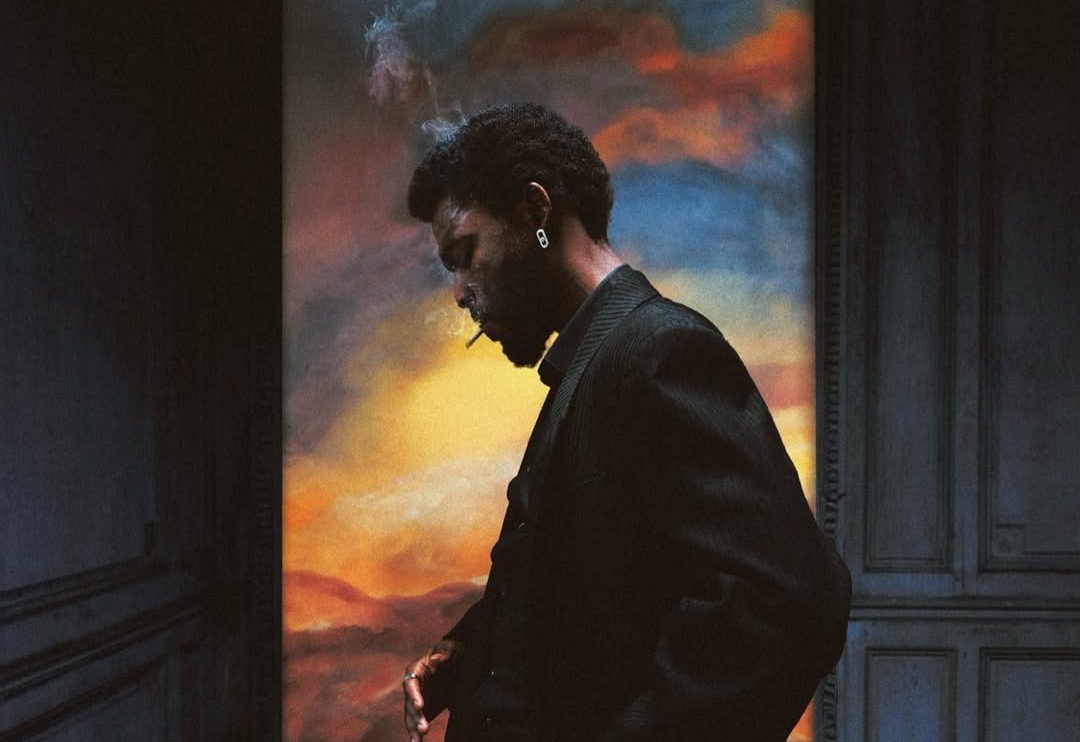

Clarity of Mind expands the boundaries of what is expected, both from Omah Lay as an artiste and from the genre itself, while deepening the narrative he has been building since his emergence.
By Yinoluwa Olowofoyeku
For Omah Lay, born Omah Stanley Didia, the release of his sophomore album marks a pivotal moment in a career that has, in a remarkably short span, redefined the emotional vocabulary of contemporary Afrobeats. Emerging from Port Harcourt with the breakout success of Get Layd (2020) and What Have We Done (2020), Omah Lay quickly distinguished himself as a voice of vulnerability in a scene often driven by bravado and escapism.
His music, steeped in melancholy, introspection, and diaristic honesty, resonated deeply with a generation navigating similar emotional contradictions. That early momentum culminated in his debut album Boy Alone (2022), a project that expanded his sonic palette while cementing his identity as an artiste unafraid to confront loneliness, desire, guilt, and emotional dissonance with striking candour.
With Clarity of Mind, that emotional dislocation gives way to something more deliberate and self-assured. Framed as a product of withdrawal, reflection, and recalibration, the album emerges from a period where Omah Lay consciously stepped back from the noise, choosing instead to focus inward, on self, family, and healing. This context becomes central to understanding the project, as it carries the texture of someone no longer performing their pain in real time but processing it with distance and intention.
Where Boy Alone felt like a man caught in the storm, Clarity of Mind presents the aftermath, the stillness, the attempt to make sense of it all. The writing and thematic direction reflect this shift, leaning into ideas of spiritual grounding, emotional clarity, devotion, and the complex intersections between love, desire, and self-awareness. There is a philosophical undercurrent that runs through the work, one that suggests a man learning not just to endure his emotions, but to inhabit them fully without being consumed.
In this sense, the album situates itself not just as a continuation but as a reframing of Omah Lay’s artistic identity. It arrives at a crossroads defined by expectation, both external and internal, placing him in conversation not only with his own past work but with a broader class of artistes whose sophomore efforts often determine trajectory.
Here, vulnerability is no longer just confession, but transformation. The intimacy remains, but it is now guided by a clearer sense of self, one that allows him to turn inward victories into outward expression. Clarity of Mind, therefore, becomes both a personal checkpoint and a cultural artefact, reflecting the tension between healing and performance, solitude and connection, and ultimately, between the artiste Omah Lay and the one he is actively becoming.
“Artificial Happiness” opens Clarity of Mind with a sweeping cinematic overture that feels almost like a prologue, setting a tense and uncertain emotional landscape before being abruptly interrupted by a crunchy, hard-hitting kick pattern and a flattened Afrobeats snare that immediately grounds the track in rhythm. Subtle hi-hats flicker in the background while staccato, filtered synth plucks and soft, sweeping key chords form a simple yet deeply effective melodic bed.
Beneath all of this, an extremely agile bass guitar line snakes through the arrangement, adding movement and quiet urgency, while sombre string accents drift in and out, colouring the atmosphere without overwhelming it. The instrumental is crisp, controlled, and intentionally spacious, leaving room for Omah Lay to assert himself vocally. He does so with striking clarity, his voice smooth, bright, and agile as he settles into the melodic contours of the beat. Working primarily in his chest register, he delivers simple but memorable melodies that immediately latch onto the listener.
As the song unfolds, heavily effected group vocals usher in distinct sections, each feeling like its own moment despite minimal instrumental changes. Omah delineates these segments through deliberate shifts in cadence, melodic phrasing, vocal tone, and texture, almost as if he is switching personas within the same song. Each section is self-contained and gripping, showcasing his ability to create structure and progression through vocal performance alone.
Lyrically, he confronts substance use and the pursuit of fleeting highs, chasing a sense of Nirvana that remains just out of reach, “Igbo is telling on me/ I like what it’s saying, make I no stop/ Before morning the feeling will wash off/ But tonight we die at the war front … One in the morning time, that’s how I start my day/ Advantage to see money clear, It’s either all or nothing … E get things wey I still dey find / Nirvana is one of them”. The outro returns to that cinematic space, with deep, rumbling bass synths, wailing strings, spiralling arpeggios, and distressed, heavily processed vocals creating a frantic, almost disorienting close that leaves the listener suspended, unsure of where the album will head next.
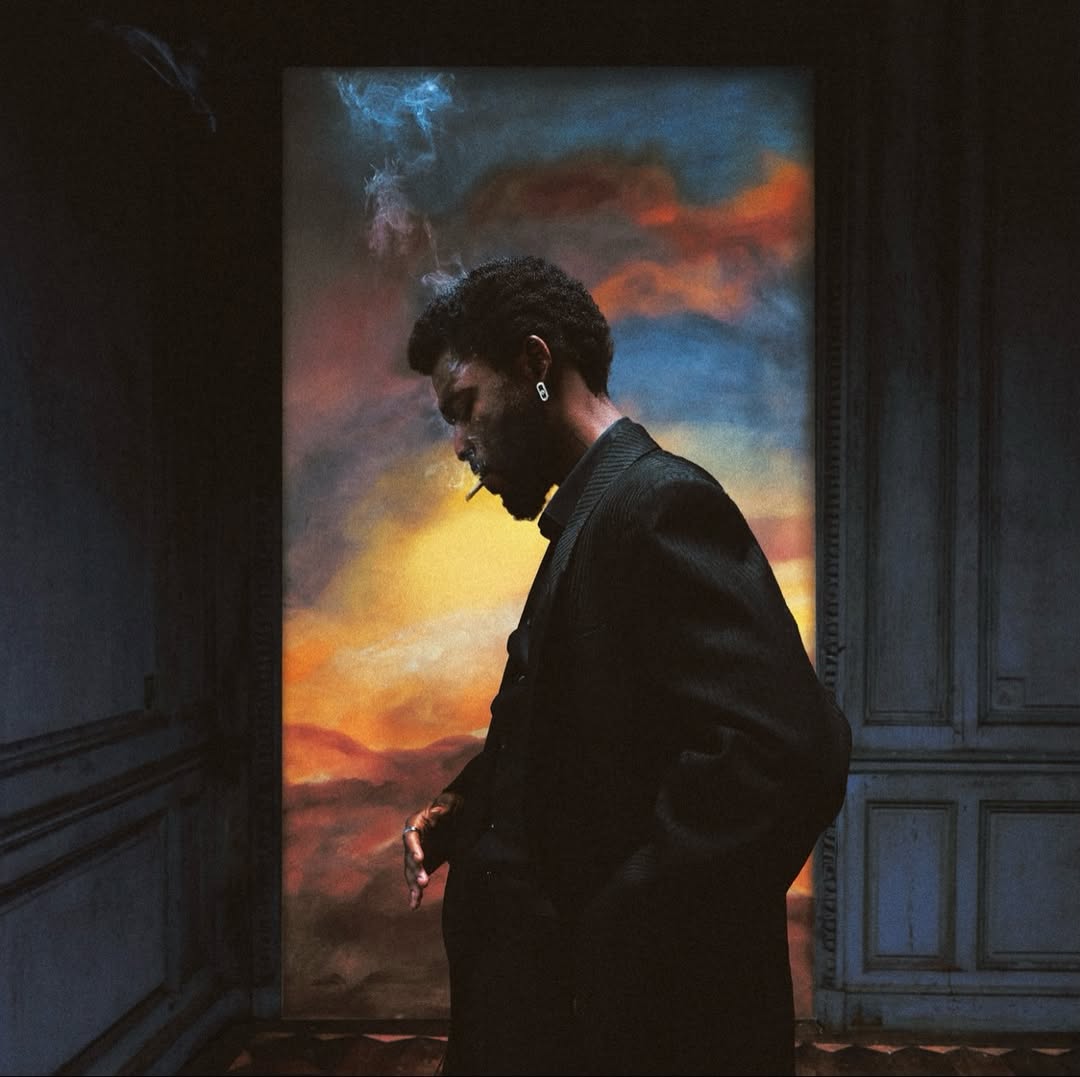
That sense of instability carries directly into “Jah Jah Knows”, where a soft, almost delicate introduction built on gentle string swells and a simple two-chord progression on keys is quickly overtaken by a crashing Afroswing rhythm. Thumping kicks land with weight, rattling shakers add a restless texture, and understated snares keep the groove tight and forward-moving. Yet, the most striking element here is Omah’s vocal delivery.
From the very first line, there is a palpable tension in his voice, each note trembling, slightly strained, as though he is holding back tears. The clean, controlled melodies of the opener give way to something more fragile and exposed, with a wavering quality that makes every phrase feel emotionally loaded. Backing vocals are used sparingly but with precision, entering at key moments to heighten the emotional intensity, almost like distant echoes or voices surrounding him.
As the track builds, the instrumental thickens, a prominent bass guitar joins the mix, and the strings grow louder, more insistent, rising toward the forefront during the chorus. The result is a dense, emotionally charged soundscape where the instrumentation seems to wail alongside him. In the chorus, he relinquishes any sense of certainty, “Tell Bisi make she no wait for me / As you see me, I no dey too sure / I don’t know what to do with my life / Everything I been know before, You can see me I don’t know no more”, his voice stretching and breaking slightly under the weight of the admission.
A brief instrumental break offers a momentary release, with guitars and sparkling synths softening the intensity, before the outro dissolves into an abstract collage of digital bleeps, bird chirps, and obscured vocal fragments, as if the emotional tension has unravelled into something intangible and scattered.
“Canada Breeze” marks a decisive shift in direction, both sonically and emotionally. The track is anchored by tightly syncopated, punchy kick drums that give it a grounded rhythmic pulse, while a simple electric piano progression lays out the harmonic foundation. A deep, rumbling bass guitar provides weight, but it is the introduction of those unusual, spaghetti Western and bluegrass-inspired guitar lines that truly define the song’s character. They slide, twang, and wail across the mix with a raw, almost dusty texture, creating a striking contrast to the more polished elements of the instrumental.
Against this backdrop, Omah Lay adopts a notably restrained vocal approach, settling into his lower register and maintaining a calm, almost detached tone throughout. There is a deliberate lack of urgency in his delivery, a nonchalant ease that contrasts sharply with the emotional volatility of the previous tracks. He revisits themes of substance use, but here they are framed as tools of escape and emotional regulation, “I breathe Canada breeze, and grow spiritually / Nothing dey bother me / Last year the things I did, wey been worry me / Now I’m over it”. The repetition of “highly spiritual / highly intellectual” during a gritty, marching breakdown section adds a mantra-like quality, reinforcing the sense of self-definition through altered states. Only in a brief moment does he break from this composure, rising into his upper register to recount a period of loss that drove him further into sedation. That fleeting emotional spike is quickly subdued, and the track returns to its baseline of controlled detachment, creating a sense of emotional suspension.
On “Water Spirit”, Clarity of Mind dives fully into themes of lust, desire, and indulgence, but strips them of any conventional romantic framing. The instrumental is built on a tight Afrobeats syncopation, with crisp, clacking percussive elements, subtle guitar synths, and a deep, resonant sub-bass anchoring the low end.
Lamenting string lines weave through the mix, adding a sombre undertone that contrasts with the song’s surface-level subject matter. The intro immediately establishes the tone with moaning vocal textures and the sound of running water, creating a sensual yet slightly unsettling atmosphere. Omah Lay’s delivery is strikingly cold and matter-of-fact, his tone devoid of the warmth typically associated with songs of intimacy. “She’s on her way to, Come and make it rain tonight / She’s on her way to, Come and soak my bed tonight / She’s on her way to, Come and wash my sins away food life / With enough water”.
Rather than sounding seductive, his voice feels detached, as though he is recounting events rather than actively participating in them. He introduces moments of contrast through higher-register backing vocals, particularly the piercing, almost haunting calls of “water, water”, while the chorus expands into bright, layered group vocals and ululations that evoke a ritualistic, almost ceremonial energy.
That atmosphere is disrupted again in the second verse, where his delivery becomes sharp, blunt, and staccato, “So I tie both hands and cover her eyes / Girl shut up ya mouth and learn how to relax / Learn how to relax / Make you no touch me / Baby don’t see me / Make you just feel am, Make you just feel am”, stripping away any lingering ambiguity and reinforcing the song’s stark emotional tone.
“Don’t Love Me” continues along that thread of emotional detachment, opening with stretched, warped vocal textures that bleed into a bed of sombre chords and arabesque string arrangements. The instrumental is rhythmically intricate, built around a percussive framework of open hi-hats, agogos, cowbells, and soft bongo patterns, all tied together by a steady, rounded kick drum and a grounding 808 bassline.
The result is a textured, layered rhythm section that feels constantly in motion. Omah’s delivery begins subdued and distant, his melodies simple but tinged with tension, as he establishes his emotional state, “I don’t feel nothing / I don’t feel like I’m alive / Hennesy no dey hit me again / Igbo no dey high me again … I paid for both she and her friends / I just wanna get in their pants”.
As the song progresses, his insistence intensifies, his voice gaining volume and urgency, stretching into higher notes and longer, more expressive phrases as he articulates his resistance to love, “I’ve been this way for way too long / Now I think it’s a habit or something / Kissing fire to see if it’s burning … I don’t want you to tell me you’re sorry / Cuz I’m heartless, I’m broken and rotten”. Each section feels vocally distinct, with shifts in tone, phrasing, and emotional weight that keep the performance dynamic. The outro features a sampled voice that echoes the song’s central theme, reinforcing the rejection of emotional connection in favour of physical experience.
“Coping Mechanism” introduces a noticeable tonal shift, both sonically and narratively, within Clarity of Mind. The instrumental leans into smoother, more optimistic territory, built on warm chord progressions, softly filtered synth pads, delicate plucks, and a rich, rounded bassline that provides gentle support. The percussion is understated but detailed, with rattling shakers, soft hand drum patterns, and occasional kick drum accents adding a subtle rhythmic pulse without disturbing the calm atmosphere.
At the centre of this shift is the presence of Elmah, the project’s sole featured artiste, whose soft, high-pitched, soulful vocals bring a sense of warmth and reassurance. Her delivery is fluid and expressive, her melodies rising and falling effortlessly as she layers her own harmonies and backing vocals, creating a lush, enveloping sound. “I know how you feel / I know what you need / I could be the shoulder you can cry on / Am I wrong? / Me I’ll never let them take away my peace / I want you to know you’re not alone, You’re with me”.
Her presence feels almost like a narrative intervention, offering empathy and support in response to the emotional turmoil that has defined the album up to this point. When Omah enters, his tone shifts noticeably. The guarded, detached persona softens, giving way to a more vulnerable and exposed delivery that recalls the emotional openness of his earlier work. “All I want, Feel good inside / All I want, By any means / Unhappiness is hurting me / I can’t feel my shoulders anymore / Is it cuz I carry all the load / So I go on tour around the world / Looking for where I might belong”. His voice carries a quiet weariness here, less performative and more confessional, as though Elmah’s presence has created space for him to let his guard down. In doing so, the song functions not only as a structural break within Clarity of Mind but also as a subtle turning point in its emotional arc.
From “Julia” onward, Clarity of Mind leans even further into sonic experimentation and textural play, beginning with a return to the gritty palette first hinted at on “Canada Breeze”. The track is driven by highly energetic, tightly syncopated kick patterns that give it a restless forward momentum, while those now-familiar spaghetti western, bluegrass-leaning guitars whine, bend, and slide across the mix with a rough, almost dusty character. Beneath them, a buzzing synth bass rumbles persistently, locking in with sporadic Afrobeats percussive hits that flicker in and out like sparks.
Against this dense and somewhat grimy backdrop, Omah Lay’s vocals take on an entirely different role. Rather than sitting cleanly atop the mix, they are heavily processed, diffused, and stretched across the stereo field, functioning more as an additional instrumental layer than a traditional lead.
Certain phrases rise momentarily into focus, but for the most part, his voice is embedded within the sonic fabric, blending with harmonies and group vocals that drift and dissolve around the listener. This creates a wide, immersive soundscape where vocals and instrumentation feel inseparable. Within that haze, the emotional core still peeks through, “I book table for twenty people, Last night / How I ended up being by myself, The whole time / Julia yeah you know, I rather be alone than with anyone else”, a fleeting but poignant admission of isolation that lingers even as the song moves quickly. The outro leans fully into disorientation, with jagged, distorted guitar stabs and an offputting, almost mocking laugh sample punctuating the final moments, leaving behind a slightly uneasy aftertaste.
“Waist” arrives with a more familiar Afrobeats structure but retains the album’s attention to detail and dynamic vocal performance. The song opens with delicate ukulele plucks that sketch out a warm, inviting chord progression, accompanied by Omah’s soft, breathy humming that gently eases the listener in. As the drums drop, the energy shifts immediately, rattling shakers, sharp, crisp, and highly syncopated percussive hits, and pounding four-to-the-floor kicks create a lively rhythmic foundation, all anchored by a smooth, rolling sub-bassline that gives the track weight and bounce.
Omah begins in his lower register, relaxed and unhurried, his tone almost conversational as he establishes a sense of ease and enjoyment, buoyed by his financial comfort. The melodies here are among the brightest on Clarity of Mind, catchy and fluid, gliding effortlessly over the rhythm. As the song progresses, his delivery becomes more animated, slipping in and out of different vocal pockets with striking ease, each shift marked by subtle changes in tone, inflection, and phrasing.
The hook captures his central fixation, “Jesu chai o, I’m making wrong decisions / Anytime I see ikebe, Anytime I see ikebe / Hmm hmm, Na two people something she carry for waist”, before he ascends into his upper register, unlocking a more urgent and expressive vocal quality. “I want to romance your body / Olokpa romance onye ohi / Omah Lay omemma, ommema / I will spray you in dollars / Throw your back back to sender / Na yansh wey big na him be ikebe oh ikebe … Wetin kill Samson na still ikebe oh ikebe”.
His ability to switch seamlessly between these modes, adapting his vocal colour and delivery like tools from a well-stocked kit, gives the song a constantly shifting, engaging feel, even within a relatively straightforward structure.

“Mary Go Round” pulls the energy back, settling into a more restrained and reflective groove. It is introduced by softly plucked guitars and gentle whistling that float over a bed of light, polished Afrofusion percussion, crisp metallic hits, rounded drum tones, and subtle tom patterns that move with a steady, unintrusive pulse. A simple sub-bass anchors the arrangement, allowing the melodic elements to breathe. Omah remains in a comfortable mid-to-lower register for most of the track, leaning into smooth, pentatonic melodies that rise and fall with an easy, almost absent-minded fluidity.
There is a calmness to his delivery, but beneath it sits a clear sense of resignation. In the lone verse, he briefly reaches upward, both melodically and emotionally, to reveal the underlying logic driving his detachment, “There is a tendency say tonight, You will be mine / There is a tendency say tomorrow, You will not / Girl it’s a normal something / Another person na another person boo / Another person love of my life, Na another person hoe”. The song moves quickly, concise and deliberate, making its point without excess, presenting a worldview where emotional uncertainty is sidestepped in favour of more immediate, tangible gratification.
“I Am” shifts the palette once again, opening with heavy, rhythmic breathing layered over buzzing, rising synth arpeggios that build a sense of anticipation. Smooth electric piano chords establish the harmonic base before Afrohouse-inspired drums lock in, with punchy kicks, tight triplet claps, and off-kilter percussive accents creating a driving, kinetic rhythm.
Despite the genre framework, Omah bends the track toward his own sensibilities, grounding it with the familiar melancholy of wailing string textures that weave through the mix. His delivery begins subdued, almost introspective, as he affirms his identity, “I am who I am, I am who I am / Nobody fresh like I am, Nobody sweet like I am / Nobody cool like I am, I am, I am …Everybody know say smoking is dangerous / But once I see marijuana I go light am / Money is the root of evil, But everyday I pack am oh”.
As the arrangement expands, so too does his vocal presence. The bassline becomes more animated, snares creep in more frequently, and the overall energy rises. In response, Omah’s vocals grow more assertive, brighter, and more forceful, moving into belted passages that feel almost combative, as though he is pushing against both internal doubt and external noise. The track is segmented into distinct phases, each marked by its own vocal tone and melodic identity, allowing what could have felt repetitive to instead evolve dynamically across its runtime.
“Holy Ghost” returns to a more familiar Afrobeats structure but centres itself almost entirely around the power of group vocals. The instrumental is built on sorrowful, swelling strings and spacious chord progressions, underpinned by thumping kicks, rattling shakers, and intermittent percussive accents that provide a steady rhythmic backbone.
The warmth and fullness of the group vocals dominate the track, creating a communal, almost celebratory atmosphere as Omah delivers repeated declarations of affection, “Holy Ghost fire, Supernatural / Boost my confidence / My cocaina, My heart desire / Give me nothing else / I no dey tire / Cause you give me ginger, for the dying minute / You’re my true lover, My Mami Wata / Give me happiness”.
The repetition gives the song a hypnotic quality, but within the layers, there is a fleeting moment where Omah’s softer, more vulnerable tone surfaces briefly, offering a glimpse of something more introspective before being quickly absorbed back into the dominant choral energy. The interplay between that brief intimacy and the overarching communal sound adds a subtle depth to the track.
“Amen” closes Clarity of Mind with a subdued, contemplative tone that feels both grounding and slightly disorienting. The instrumental is built around a light but intricately patterned percussive framework, flat rolling kicks, crisp metallic shakers, and steady rhythmic accents that give structure to an otherwise airy sonic space. Filtered chords, growling synthetic bass textures, soft whistling pads, and subtle log drum elements fill out the background, creating a layered yet restrained soundscape.
Omah’s vocals, after the opening lines, are often recessed into the mix, blending into the instrumentation rather than sitting prominently above it. “I trust my angels to cover me / All I want for the rest of my life, Is some peace of mind / Enough money to purchase anything wey I wan buy … Issa very little something I want / More money for inside pocket”.
In contrast, the group vocals are brought forward, their repeated “Amen” refrains clear, resonant, and almost meditative. The track takes on a slightly trippy, trance-like quality as these elements loop and overlap, gradually dissolving into one another. As the album draws to a close, there is no dramatic resolution, only a quiet, lingering sense of continuation, leaving Clarity of Mind suspended in its own reflective space.
Clarity of Mind ultimately reveals itself as something far more expansive than a conventional album, existing instead as a fully realised piece of sonic art, one that invites the kind of engagement typically reserved for films, novels, or paintings. It is layered, immersive, and deliberately constructed to reward attention, opening itself up to multiple interpretations through a complete and confident command of the artistic language at Omah Lay’s disposal.
Within the broader pantheon of Afrobeats projects, it stands apart because it does not feel like a simple progression or a routine follow-up. Rather, it feels like a continuation of an already established universe, one built on the foundations of emotional vulnerability, psychological exposure, and the blurring of lines between the artiste and the art itself.
The long-standing narrative around Omah Lay, often framed through the lens of “Afro-Depression”, has always positioned his music as deeply personal, but with Clarity of Mind, that narrative is not just continued, it is actively expanded and reinforced. The audience’s investment in his perceived emotional state, the genuine concern that has surrounded his public persona, and even the discourse leading up to the album through interviews and listening events all feed directly into the weight of the music.
There is a sense that the groundwork for this experience was laid long before the first note was heard, and yet, despite the heightened expectations and the risk of underwhelming, the album arrives fully formed, as moving, as idiosyncratic, and as artistically assured as one could have hoped.


At the centre of this achievement is a clear commitment to vision, one that is hinted at directly by the album’s title. There is a noticeable self-awareness in how Omah Lay approaches this project, not just as a person but as an artiste who understands the language he has built and the expectations that come with it.
That awareness manifests most clearly in the production, largely helmed by collaborators like Tempoe and Leeka Beats, alongside a wider network of instrumentalists and contributors who are given the space to explore and experiment. The resulting soundscape resists easy categorisation, pulling from a wide range of influences while remaining anchored in a consistent emotional tone.
Wailing strings, spacey pads, rich and sometimes restless basslines, and understated drum patterns recur throughout Clarity of Mind, forming a cohesive sonic thread that prioritises mood, atmosphere, and emotional weight over genre convention. The chord progressions are often simple, but they are enveloped in layers of texture and detail, while the drums function less as drivers of danceability and more as tools for rhythm and subtle propulsion.
Even at higher tempos, the focus rarely shifts toward physical movement, instead remaining firmly rooted in emotional immersion. The sonic palette leans heavily into sombre, heavy, and introspective moods, mirroring the themes of weariness, confusion, and self-realisation that run through the album.
Songs rarely resolve in clean, predictable ways, instead extending into layered outros that feel like collages, adding new context, reframing what has come before, or simply allowing the emotional residue of the track to linger.
Unlike earlier work, where the instrumentation might have signalled a plea for empathy, here there is a noticeable shift in tone. There is no overt search for validation or rescue. What remains is a quiet, almost unsettling assuredness, an acceptance of self, however fractured, that is communicated just as strongly through the production as it is through the lyrics.
That foundation allows the vocal performance to emerge as the defining element of Clarity of Mind, and it is here that the album reaches its most impressive heights. The sheer range and versatility on display are striking, especially considering that Omah Lay is the primary vocal presence throughout.
There is such a wide spectrum of tonal variation, emotional expression, melodic construction, and delivery style that it often feels as though multiple voices are at work, each tailored to the specific needs of a given song or even a specific section within a song. His voice bends and adapts continuously, shifting from the frantic, near-breaking wails of “Jah Jah Knows” to the cold, controlled detachment of “Water Spirit”, and further still into the segmented, character-driven performances of “Artificial Happiness”.
The layering of vocals adds another dimension, with group vocals, harmonies, and heavily processed textures functioning as independent elements within the mix. At times, they are pitched, warped, or pushed deep into the background, becoming part of the instrumental fabric rather than sitting in front of it. At other times, they rise prominently, adding weight, colour, and emotional emphasis.
This constant variation ensures that each listen reveals something new, a hidden harmony, a subtle ad-lib, a fleeting vocal texture that might have been missed before. It also reflects a deliberate openness to collaboration on a technical level, drawing on a broader pool of engineers and creatives to expand the possibilities of how the voice can be used.

Even the appearance of Elmah feels intentional in this regard; her distinct tonal quality and emotional presence not just add contrast but serve a clear narrative function, introducing a softness that momentarily shifts the emotional trajectory of the album. Across the project, Omah’s voice operates almost like a cast of characters, each delivery shaped by the demands of the moment, each performance aligned with the emotional script of the song.
The songwriting mirrors this same commitment to individuality and artistic intent. It is often unconventional, sometimes fragmented, occasionally repetitive, but always purposeful in its deviation from standard structures. Traditional verse-chorus formats are frequently abandoned in favor of fluid, evolving arrangements where sections blur into one another or repeat in ways that feel more instinctive than formulaic. Lines stretch or contract as needed, syllables bending to fit emotion rather than rigid rhythmic patterns.
Some songs hinge on a single verse surrounded by recurring refrains, while others unfold as a series of loosely connected segments without a clearly defined centre. This unpredictability keeps the listener engaged, preventing passive consumption and instead demanding active participation. The listener is required to follow, to adjust, to interpret in real time, as expectations are subverted and familiar structures are reshaped.
The lyrical content itself spans a wide emotional spectrum, from hedonistic indulgence to moments of stark introspection, from brash declarations to quiet confessions, often existing side by side within the same song. It is this tension, this refusal to resolve neatly into a single emotional lane, that gives Clarity of Mind its distinctive character.
Perhaps the most telling indication of the album’s impact is how difficult it becomes to fully encapsulate it through technical breakdown alone. Clarity of Mind resists being reduced to a checklist of production choices, vocal techniques, or songwriting decisions, because its power lies in how those elements combine to create something more abstract and deeply personal. It is an experience as much as it is a collection of songs, one that will likely resonate differently with each listener depending on their own perspective and emotional state.
There is an almost elusive quality to it, where interpretation becomes part of the engagement. Questions begin to surface naturally. Is the persona presented here an exaggerated artistic construct, a character designed to embody certain emotions, or is it a direct and unfiltered reflection of the artiste’s inner world? That ambiguity does not weaken the work; it strengthens it, opening the door for discussion, analysis, and varied reception. In that sense, the album succeeds not just as music but as art that provokes thought and invites dialogue.
In the end, Clarity of Mind stands as a significant addition to Omah Lay’s catalogue and to the broader Afrobeats landscape. It expands the boundaries of what is expected, both from him as an artiste and from the genre itself, while deepening the narrative he has been building since his emergence.
It is a project that lingers, that demands revisiting, that continues to reveal new layers with time. More than anything, it reinforces the presence of an artiste who is not only aware of his uniqueness but is willing to lean fully into it, crafting work that challenges, unsettles, and ultimately captivates.
Lyricism – 1.8
Tracklisting – 1.8
Sound Engineering – 1.9
Vocalisation – 1.7
Listening Experience – 1.8
Rating – 9/10
Yinoluwa “Yinoluu” Olowofoyeku is a multi-disciplinary artist and creative who finds expression in various media. His music can be found across all platforms and he welcomes interaction on his social media @Yinoluu.