


“If, for generations, entire languages were flogged out of people so that English could be the language I write in, then I insist on my language(s) appearing on the page first.” — Mubanga Kalimamukwento
By Azubuike Obi
Mubanga Kalimamukwento is at present one of Zambia’s biggest literary stars, but it did not start today. In her earliest memories, she recalls her mother reading fairy tales to her. At a young age, she lost both parents in quick succession, growing up a wounded woman, particularly because she was not allowed to understand the why. In many ways, she is writing back to herself, to understand the teenager she once was, to immortalise the “difficult women” she adores.
Across her oeuvre, Kalimamukwento pledges fidelity to wounded women. In her debut novel, The Mourning Bird (2019), she tells the heartrending tale of Chimuka, who loses both parents and, along with her brother, is flung against the backdrop of an unstable Zambia.
An agent would ask that the first six chapters be deleted, so that the story begins with the unspooling of the protagonist’s life, but Kalimamukwento would refuse, citing her unwillingness to let the novel be only about “her worst days”. The novel went on to win the Dinaane Debut Fiction Award in 2018 and appear on shelves the following year.
In Obligations to the Wounded (2024), she opens up the shared spaces of young women as they tussle amidst small and large forces. Booklist hailed the collection as “a sensitive work of compelling juxtapositions: neat and raw, soft and tough, victimised and empowered.” The collection won the Drue Heinz Prize and went on to receive the Minnesota Book Award and the Fire Cracker Awards in its publication year.
Also in 2024, she founded Ubwali Magazine, a volunteer-run online literary publication that spotlights Zambian and African writing, committed to telling stories “that nourish us.”
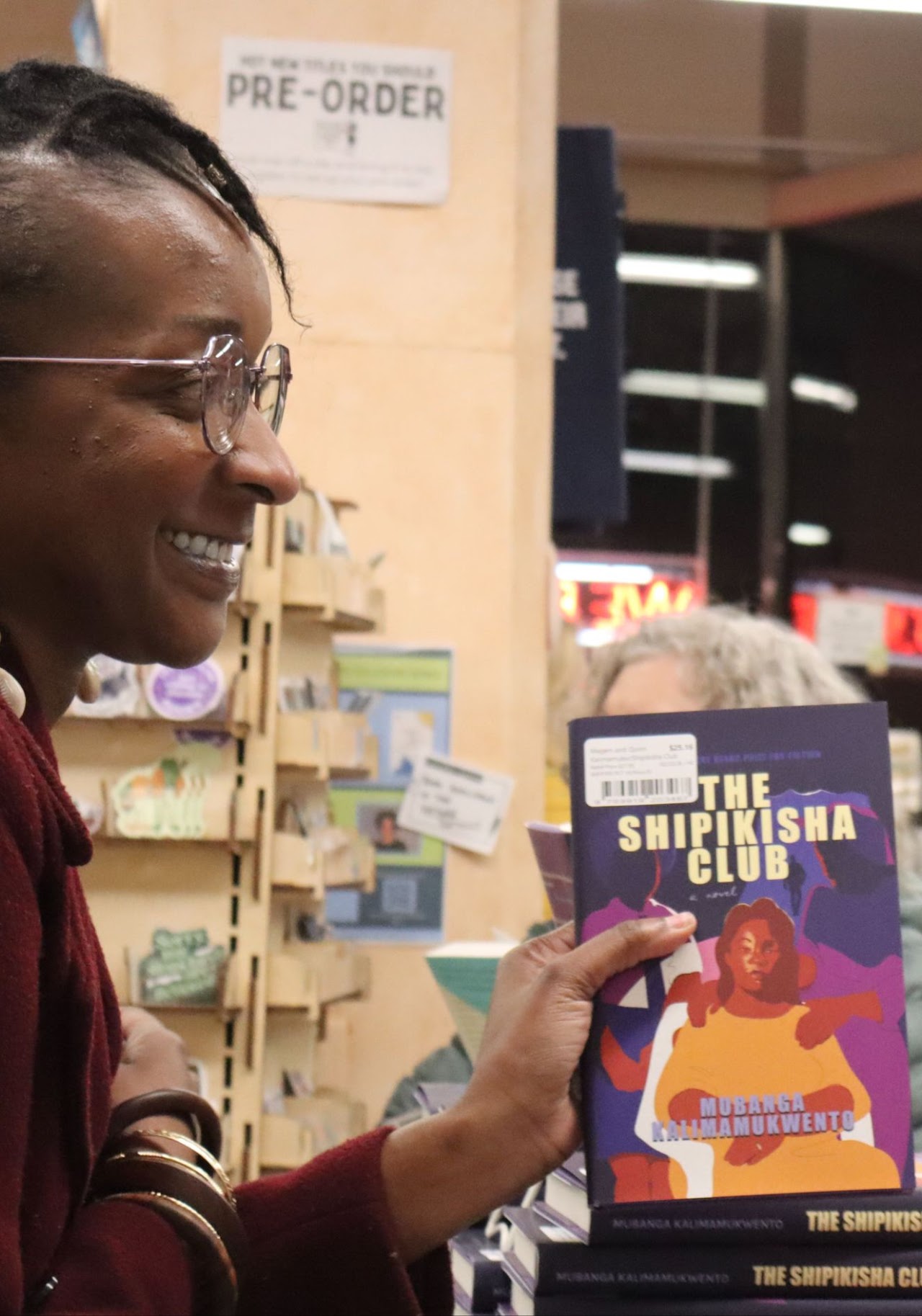
And, most recently, in her new novel, The Shipikisha Club, the fidelity to wounded women comes to what may be its truest realisation yet with the character of Sali. Across shifting perspectives, the novel follows a wife and mother on trial for her husband’s murder. The manuscript received the Dzanc Books Prize for Fiction in 2024.
Afrocritik spoke to Kalimamukwento about the stories she writes, how she juggles the many hats she wears, and the thinking behind her radical devotion to Bemba proverbs in her work.
Congratulations on your new novel. In your work, from your debut novel to the collection of stories, Obligations to the Wounded, to the hybrid, Another Mother Does Not Come When Yours Dies, and now to The Shipikisha Club, women’s lives are at the centre. Is this often a deliberate decision, or do you write and simply find this theme emerging time and time again?
Thanks, Azubuike. I don’t start writing anything, thinking of any themes, so this is definitely an organic emergence.
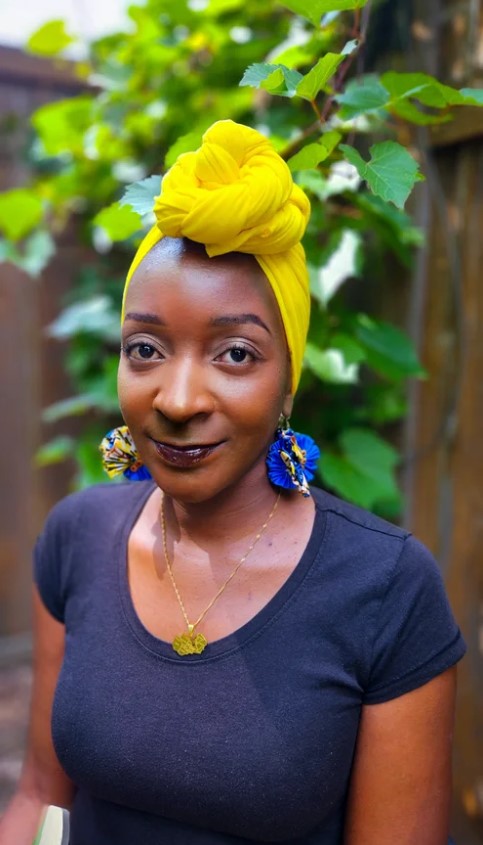
Every writer is, in some ways, the sum of what they have read. What was the literary world you grew up inside, and was there a particular book that made the decision for you — that confirmed, without negotiation, that this was the life you wanted?
My mother taught English Literature, so books were to me what toys were to others. I remember almost every toy I had because I had so few, but not the books, because we had so many. To start, she read to me, so my earliest reading memories are of fairy tales in my mother’s voice every night. After that, she let me read whatever was in the house, even if I didn’t fully understand the content.
My grandmother read a lot of newspapers, so when we were at her house, that’s what I read. As a teenager, I devoured the boxes of books my aunt had in her room; Virginia Andrews, Sydney Sheldon and Danielle Steel. I was also in high school, taking English Literature, so I ended up with some of the books my mother had at home when I was little, except now I could make meaning out of them.
So I got to revisit Things Fall Apart (1958), Mine Boy (1946), The Imprisonment of Obatala (1966), and read for the first time as a teenager, Animal Farm (1945). Although I was almost always writing as well, I didn’t think of myself as a writer until I was reading Sweet Medicine (2015) by Panashe Chigumadzi. I think that was 2016, about a year after it was published, which was a transitional period for me in both my career and personal life. That book was the first novel that felt texturally familiar in a way that made me want to write about my curiosities and observations. It’s the book that made me seek out more books from the region and then from Zambia, leading me to Ellen Banda-Aaku’s Patchwork (2011), which held my hand as I became a writer.
What books or writers do you find yourself returning to and why?
Lesley Nneka Arimah, I just really, really love her short story collection. I find that with a lot of work, the more I know about craft, the less I like the work, but with What It Means When a Man Falls from the Sky (2017), I always find something new to enjoy and learn.
After all this time inside fiction — writing and editing it — what still manages to surprise you about what the form can do?
How unwieldy it can be. I was talking to a writer friend yesterday about how, when we would listen to author interviews, we used to find it obnoxious when writers said “the story wrote itself”, but now that we write, we experience it. Some stories really do write themselves. Those are my favourites.
Let’s talk about the architecture of The Shipikisha Club. Did the structure precede the writing, or did it emerge gradually, something you discovered and assembled only once enough of the material existed?
The structure has been changing throughout the writing process, with some characters coming to the fore and others receding to the background. Sali’s entries have been around from the beginning, but the other POV’s not so much. This three-part structure was my agent, Carla Briner-Mercier’s idea during my last big revision. Once she said it, something clicked, and I was able to write what I needed to pretty quickly.

Sali’s sections begin in the first person, and we discover eventually that we have been reading her diary all along. There is something quietly radical about that revelation. What draws you to epistolary fiction? And, more broadly, how do you choose which point of view best suits the rendering of a character’s story?
First-person, I’d say, is my default, so when I feel myself moving to another POV, I really obey that. Mainly out of curiosity to see where that will lead. The entries were that way, though, because in early drafts it was Kasunga on trial, so they became a way for me to get her story onto the page.
I really liked them for her because she is often quite disobedient in private, even while performing obedience for whoever needs to see it. With a diary, she wouldn’t be expecting anyone to read it, so she could be as candid as she wanted. I wouldn’t say I am drawn to more than some stories need that structure to exist as their best selves.
Sali, for me, was the novel’s most arresting presence — her voice so distinct it feels almost physical on the page. How do you approach the question of voice in your work? Is it something you research your way into, something that unfolds from deep character work, or does it simply arrive, and you follow it?
Thank you, I adore her, and as a character, she has been with me the longest. I know her well, so perhaps that’s why her voice is so sticky. Like theme, I don’t think about the mechanics of voice when I am first writing or even revising, though I’m working on the voices throughout.
Each work asks for something different. Sali’s voice was always quite clear to me, especially her tone and sensibilities. From the beginning, she has sounded a very specific way, but in delivery, my best friend, who has read every draft, says she has evolved a lot. It’s hard to say how, because I tend to revise within the same document, so I don’t see some of the bigger changes along the way. Kind of like how a parent doesn’t see their child getting taller because they see them every day.
I did some mapping for character development, just so I would know the intimate details of their psyches, but, as you know, characters in stories eventually do what they want.
Your characters have very particular names. Peggy is the only one who bears an English name among the three women. I interpreted this as her being a product of her times, given the colonial history and the allure English names had at the time. Sali’s name was forged from joy and gratitude after her birth. Ntashe’s is an unexpected mutilation of “Na tasha” — a name that comes about as a thank you for the “speck of kindness” her arrival showered on her mother. How do you approach naming in your work, and more broadly, how would you describe your relationship to names?
In primary school, I remember really disliking my first name, because everyone I knew had a “home” name, which was a Zambian name, and a “school” name, which was a non-Zambian, usually English name, so I used to secretly experiment with names at school. One term, at a new school, I went by my middle name, which is an English name, and my mom didn’t find out until she was collecting my report card.
When I was in grade five, I think, I lamented about this to my Dad, who went by his English name and used his Bemba name as a middle name, because I felt that the difference between what he went by and what I went by was unfair. He told me that if I ever encountered an English woman named Mubanga, he would allow me to use an English name too. In my naming, Mubanga had been his choice, and my mother had selected my other name (which I won’t share here).
Anyway, at the time, I didn’t see sense in what he said, but over time, I did, and more than that, I grew into my name and loved it. I can’t imagine being called anything else. When I look in the mirror, I see Mubanga, and everything it means. I was also always really interested in other people’s names and what they meant, and I still ask people that pretty often. I have a running list of names for future characters.
Whenever I hear or see a name whose sound I like, I write it down. I often cycle through a few names before landing on the right one for each. Sali and Ntashe’s took a while, but Peggy’s I knew right away. Lately, I’ve been thinking about how, in my Dad’s family, the seven, including him, born before Zambia’s independence, all went by their English names first and their Bemba names second. The four born after 1964 all used their Bemba names first. That’s changed in recent years, and they all use their Bemba names first. Maybe a part of me had that in mind with the naming of Peggy, who, as you said, would be a pre-64 baby.
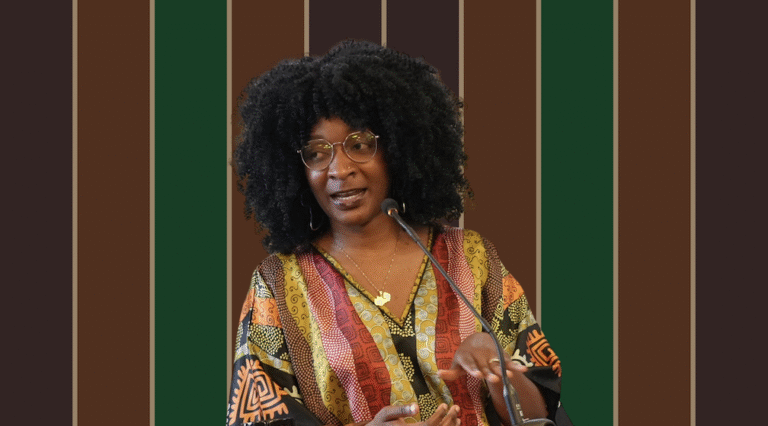
The dedication to epigraphs opening every chapter is admirable. That kind of commitment takes real work. In most of your work, from short fiction to essays, we have Bemba proverbs foreshadowing what is to come. This is a great way to digitalise oral literature, and it speaks to the tradition you’re working from and in. I especially took pleasure in how you anchored Sali’s portions of the book with bible passages, so as to illustrate the conditions of her coming of age in a home where her Christian father and the grip she too has on faith. What informed this radical devotion to proverbs?
Thank you. That part of the book didn’t always look that way. To start, I was just focused on the story unfolding. In terms of epigraphs, the Bible verses came first, actually, because I was thinking about a journal a friend had gifted me years ago, where each page was anchored by a verse, and I was thinking about how if I wrote in the morning, the phrase would kind of be instructive to how I was approaching my day, and if I wrote in it at night, I would probably find a way to connect my reflections to whatever it was saying. So I wanted to use that as a plot device, because I used to see so many of those kinds of journals, and sometimes still do.
The proverbs weren’t in my work until the chapbook unmarked graves (2019), which emerged from a poetry class during my MFA. Something about learning poetry through its rules, but reading poems that transgressed those rules in some way made me think about how the proverb is different to anyone. So, in that chapbook, the titles are proverbs, and the poems are a response to the proverbs, which sometimes contradict the interpretation of the proverbs that I grew up with.
I became more intentional about it in Obligations to the Wounded, which only exists because I was struggling to place The Shipikisha Club and pushing through some heavy imposter syndrome. My friend, Foday Mannah, had read the collection a few times and was convinced the right editor just hadn’t seen it, but I didn’t believe him because, well, self-doubt. He actually reminded me about the Drue Heinz Prize headline, and I honestly just sent it so that I could say I tried. I had submitted it to the prize the year before and didn’t really want to write any new stories to change it, so I added the proverbs as a kind of new introduction. I edited some of them lightly so that the conversations between them would be tighter, and pulled out one story, but that was it.
In placing the proverbs as an anchor to each story, I was thinking about how advice couched in proverbs can be given multiple times to the same person and mean something different each time. So many times, my aunt, who is mother to me, has said “Sungomukoshi Mubanga, ubulungu tabwa afya,” because I am a risk-taker and sometimes she worries about the consequences awaiting each risk, so that’s her way of saying “be careful”. The proverb means something close to “guard your neck, beads (necklaces) are not hard to find.” There are times when this advice has made complete sense, and I have just gone with her instinct, and others when it took time because I wasn’t ready or it wasn’t right for me, and other’s still when what she was perceiving as “the neck” was to me, just a “necklace”, meaning, I was willing to risk it and face whatever consequences came.
Because Obligations got a life before The Shipikisha Club, I was always working on it in the background, even, and actually, especially through the doubt. I really just believed in it as a story, and was adamant about that, even if it felt like no one believed in it the way I did. As the story itself became clearer, especially in form, it became clear that I needed the proverbs as well, so I started to revisit those chapters and think about what proverbs could best hold the story ahead.
Now, though, I do it in almost everything I publish. This happened, I think, because of how frequently I have been asked to give more context, to translate to the point of overtranslation, which I almost always resist. In my first book, I was still figuring this part out, and, in addition to there being no proverbs, you also see Zambian languages a little less, I think. I don’t read the work after publication unless I am at an event and I have to.

I write in English because that was the language of instruction in school, meaning the other languages I am fluent in exist, at least in my stories, only orally. So when I first started writing, there was always a pause when I got to a conversation because the way I converse with my Zambian friends means moving from language to language, even in the same sentence.
At first, I would italicise everything, but I think it was Yvette Lisa Ndlovu who said to me that the consistent italicisation sounded like an apology for my mother tongue. I honestly took that to heart and have been fortunate to work with people who understand how I want to write and be edited.
When I write dialogue now, there are places where a translation makes absolutely no sense, partly because sometimes there is no adequate translation, and the meaning dies if I force it to bend to English. Other times, it’s not necessary; the context reveals the meaning. And even then, English dominates. Anyway, that’s one thing I do on purpose now, writing in a Zambian language first. If, for generations, entire languages were flogged out of people so that English could be the language I write in, then I insist on my language(s) appearing on the page first.
You mentioned being a risk-taker. What are the biggest risks you took through the six years it took to write The Shipikisha Club?
The biggest one was probably moving from Zambia with my kids. My grandma was really nervous about my career as a lawyer, which had just begun, and she was concerned that I was giving up the stability of a government job that I seemed to love and was good at. I had just published my first novel, and even I didn’t know what my writing career would look like.
By myself, it would have been frightening, but even more so with my children, who trusted me completely and counted on me for everything, so I think, in writing it, at least at the beginning, I was feeling the pressure of all of that. It ended up taking longer than I thought, especially compared to my first book, and I wrote and published other books in between, but I was always kind of pining after this one.
You do it all. From the wide expanse of the novel to the distilled lyricism of poetry to the condensed form of the short story, and to the honest interrogation of self and place in essays. How do you approach working in these many different genres? I know that in your recent interview with Lesley Nneka Arimah, you spoke about cheating on one to get the other done. I’m curious about how you know what form an idea should take.
Form-wise, especially between creative non-fiction and fiction, it depends on how much of it feels like recollection versus imagination, but for poetry, I have no idea; it just comes like that.
What does a typical writing day look like for you?
For novels, I usually have a sketch of each chapter to start so that I don’t lose momentum when I really just need to get the work done.
Today is one of the good writing days. I just got feedback on a novel chapter, and it revealed a blind spot that made me excited to sharpen some parts. It’s also a weekend, so I don’t have classes to teach or attend, so I can take my time with the sentences.
Outside of reading and writing itself, are there other pursuits, perhaps intellectual, physical, spiritual, or otherwise, that you feel feeds the work?
Running for me. It hasn’t shown up literally, yet, but it really helps me be creative. Something about the monotony of running helps me be creative in an unconstrained way. I often find myself trying to run back home faster so that I can jot down all the ideas from the run.
You carry out the extraordinary practice of managing motherhood, law, teaching, editing, writing, and the community-building work of the Idembeka Creative Writing Workshop and your Ubwali Masterclass. How do you sustain all of it?
I don’t wear all the hats at the same time; it’s the easiest answer, and sometimes, some hats get dropped so that another can be worn better or for longer. I also have a lot of help in all of them. The Idembeka Creative Writing Workshop, for instance, only ramps up towards the end of the year, and Frances and Kasimma carry as much of that load as I do. My teaching is also part-time, and I haven’t lawyered in a while. Ubwali works because the editorial team is efficient, and the masterclass exists because my literary community continues to show up for me and the magazine.
As an editor receiving work from across the continent, you occupy a rare vantage point. Beyond the perennial question of funding, what are the deeper structural challenges facing African literary magazines today? And from inside the slush pile, what patterns do you notice — in what writers are reaching for, in what they are perhaps too afraid to try?
There seems to be a problem with Creative Nonfiction, in terms of quality, but also quantity. So it can be difficult to balance out an issue while also maintaining quality. I think another challenge is that most readers are writers or aspiring writers, and I often wonder what non-writers are reading.
What do you want your work to be remembered for?
I try not to think about that.
Azubuike Obi is an Igbo storyteller who believes in the transformative power of language. His fiction and nonfiction have appeared online and in print in The Republic, Efiko Magazine, Afapinen, Afrocritik, Naira Stories, and elsewhere. He was nominated for Chika Unigwe’s Awele Creative Trust Award and H.G Wells Short Story Competition in 2024, and is currently pursuing a Bachelor’s degree in English Language and Literature.