

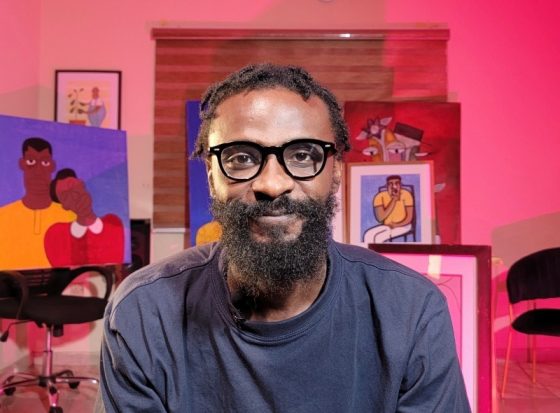

“Violence and abuse are usually not dramatic and easily recognisable as we would like it to be. The most damaging forms of abuse usually occur in places that we consider idyllic and even safe.” – Obase-Sam Ikoi
By Azubuike Obi
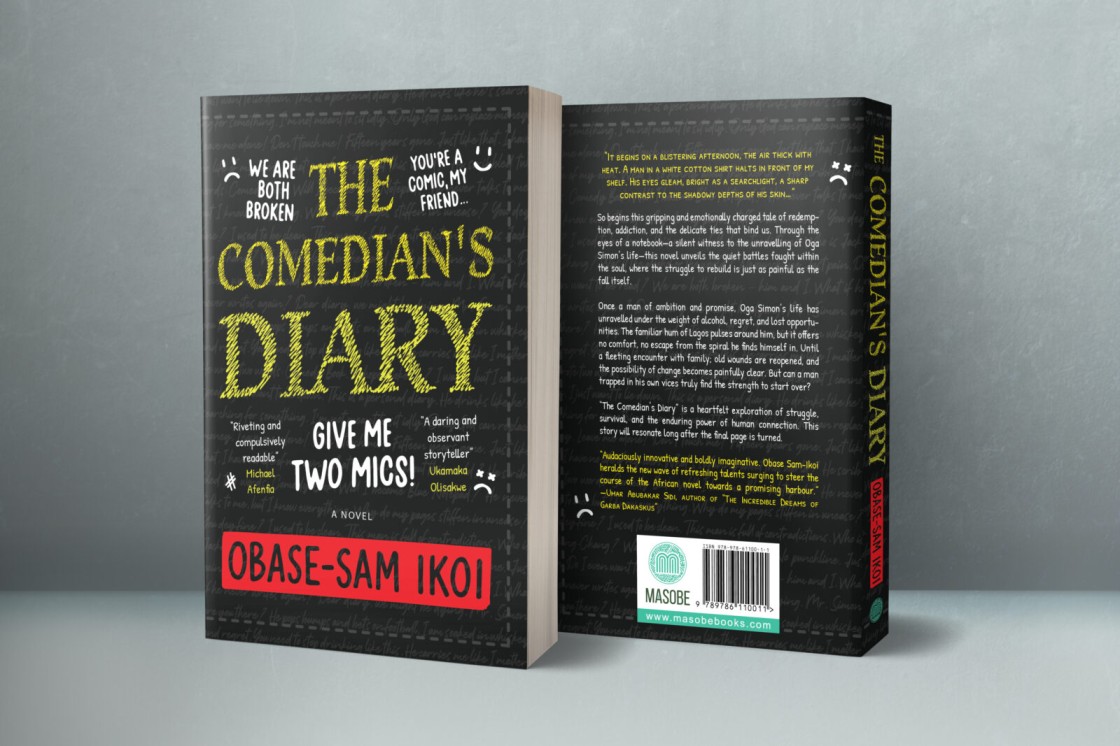
In a literary culture rife with gatekeepers whose gaze very often pander to traditional, fantastical portraits of Africa and its peoples, it is invigorating to find writers who are not feeding into stereotypical portraits of Africa, and even more, doing it in an “utterly inventive” manner. This is exactly what Obase-Sam Ikoi achieves with his debut novel, The Comedian’s Diary.
The Comedian’s Diary is lauded for its fresh approach to telling a necessary story of addiction, violence, and redemption. Ikoi is passionate about telling stories that reflect African culture—and this passion shines through the pages of the novel. In Afrocritik’s review of The Comedian’s Diary, the novel was praised for its “sobering portrait of the capability of community in the face of one man’s underemployment and addiction.”
Ikoi falls into the category of young writers who have, in the last two years, emerged with exciting debuts, including Micheal Chukwudera with Loss is an Aftertaste of Memories (2024), Esther Ifesinachi Okonkwo with The Tiny Things Are Heavier (2025) and Chukwuebuka Ibe with Blessings (2024).
Afrocritik sat with Ikoi for an exclusive interview where he shared his inspiration behind the story and unusual POV, what hope means to him, and why it is necessary for people trying to wean themselves off their addictions. For everyone, reader or writer, addict or occasional indulger, there are little nuggets of wisdom splattered everywhere for them.
For readers meeting you for the first time, who is Obase-Sam Ikoi?
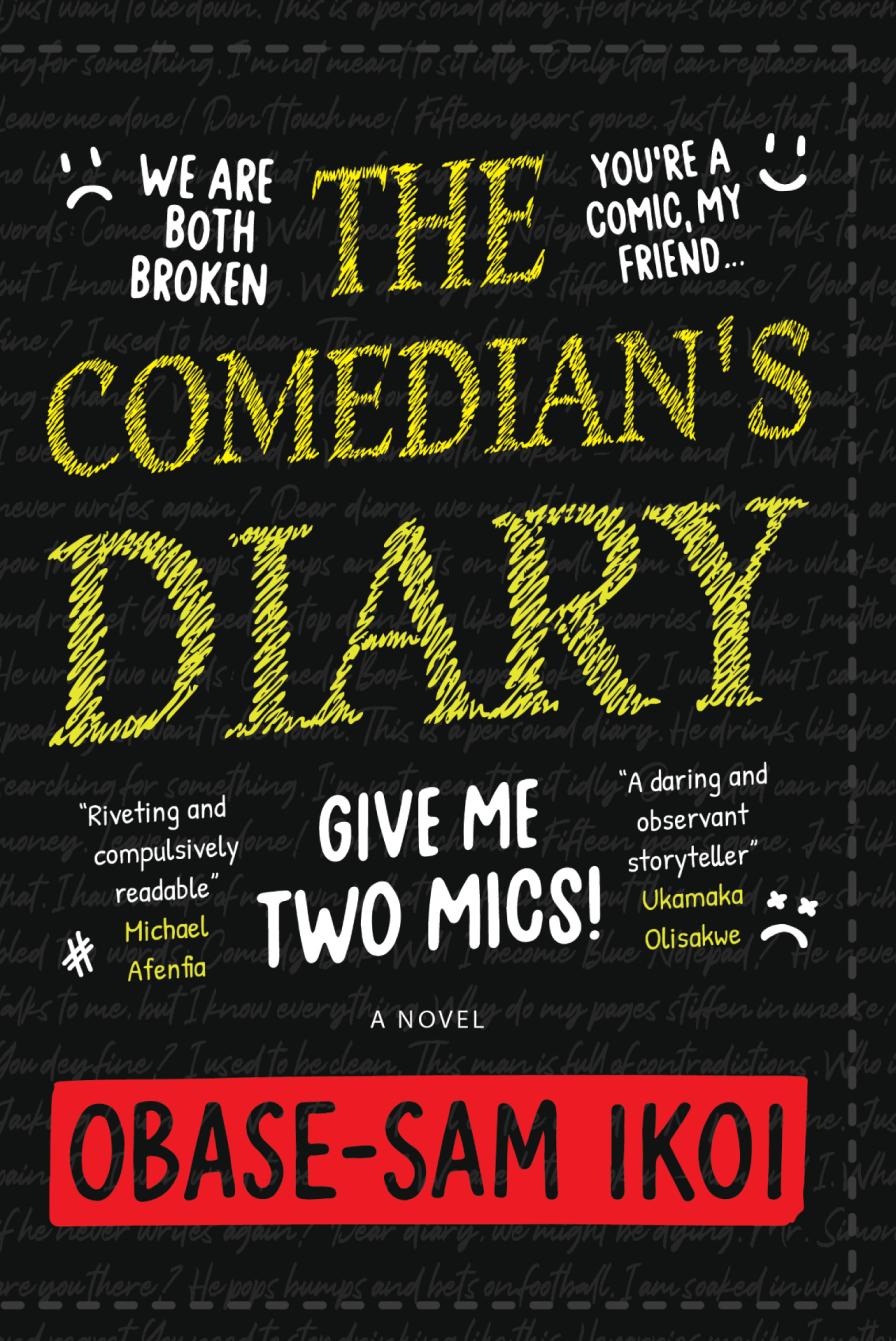
Obase-Sam Ikoi is a journalist, visual artist and the founder of Knots Stories. He is passionate about stories that permeate African lifestyle, heritage, and culture.
As artists, we can be drawn to several mediums of expression. What drew you to writing as an instrument for asking questions that could not have been explored any other way?
Writing evolved from a passion to a tool for expression. I understand my thoughts and perceptions better when I journal. Of course there are other engaging ways to ask and answer questions that intrigue the mind but I am home when I communicate through writing.
The Comedian’s Diary explores such heavy themes — addiction and withdrawal, self-worth, loss, community — in a humourous, sometimes playful tone. What did your process, from conception to execution and finishing, look like?
The Comedian’s Diary is an expression of the silent battles many humans grapple with in their quest for meaning. Fragments of my experiences are reflected in the plot. The idea of the book first blossomed uncontrollably in my core before the actual writing. I divided the project into a thousand words per day to give structure to the idea which I embarked on for 30 days to produce the first draft. Then I developed the characters, plot, and setting to reflect this core idea of internal and external struggle.
How did you combine the tasking practice of writing everyday with your day job? What concessions did you have to make?
It is important to adhere to writing time and cultivate healthy cues to establish this practice. I wrote every 4am and often had a curated playlist humming in the background. This dissolved a somewhat massive project into small, daily achievements.
In the novel, we encounter Nigerianisms such as “Oga Simon’s brain had a loose screw”, “Sista Philo”, “Missis Janny” and “Mista Simon”, and these aid in accentuating the story’s sense of place. Why was it necessary for you to capture this peculiar speech texture?
This peculiar speech texture is a manifestation of the colloquial mannerisms of Nigerians and a tool to drive home that unique relatability to fellow Nigerians.
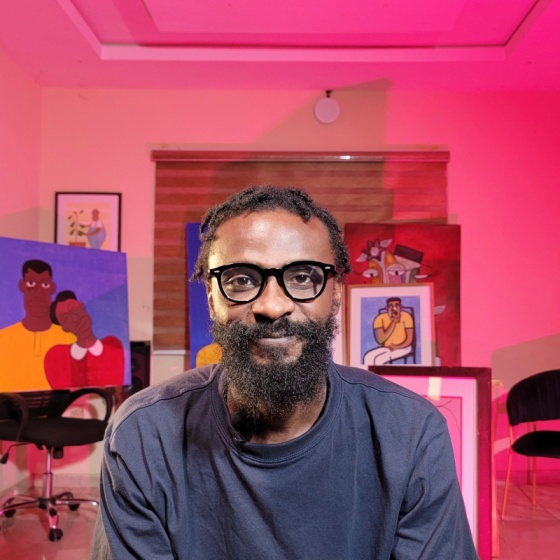
From the very first page of The Comedian’s Diary, the most interesting thing we encounter is its unique narrator. What informed this choice, and how did you decide that this story had to be told this way?
The diary, at the time, was the most exciting and intimate point of view to tell the story.
The notepad is granted the luxury of a back story, one of which tells the story of the small acts of violence that occur in unexpected spaces, and in this case, a bookstore. Jobs at bookstores are very often romanticised; they are not spaces where one would think of violence. What led you to this story?
Violence and abuse are usually not dramatic and easily recognizable as we would like it to be. The most damaging forms of abuse usually occur in places that we consider idyllic and even safe. The Comedian’s Diary challenges this assumption and depicts such occurrences in a rather child-like lens of the diary.
The Comedian’s Diary operates within a very interesting binarism. For the most part, the men are providers, quick to engage in brawls in defence of their dignity; the women, from Esther to Ayo to Mummy Ayo, are laden with the role of caregivers. Why do you think the story manifests in this way?
This mostly stems from the natural inclination of our African society to assign gender roles in its everyday dealings and like I noted earlier, this story is a manifestation of my observation of our immediate and extended environment. This depiction at its core is not to encourage or dismiss this fact but to adequately capture the reality of gender roles in an African setting.
In all of the bleakness that surrounds Oga Simon’s addiction, both to drinks and gambling, there’s also hope, especially with the kind of community he has. What does hope mean to you, and in what ways do you think it is important to hang onto hope for people struggling with addiction?
I will surmise hope as that force that wills one to muster the courage to face everyday as it comes with its woes and blessings. This is captured in the vicissitudes of Oga Simon’s experience. Hope is in fact a necessary ingredient for people living with addiction who are often lacking the courage to face their frailties.
Were there moments that surprised you in telling Oga Simon’s story?
The biggest surprise for me is when Oga Simon, whose personality is reserved, kind, and introspective, resorts to violence to earn the respect of his neighbours.


Versions that are not us can often manifest under tension. Why do you think this switch happened?
Sometimes desperation and the need for validation and acceptance can birth unfamiliar versions of us. It takes a good amount of internal and external conflicts to reach a resolve.
What books do you believe are necessary in understanding addiction?
Atomic Habits (2018) by James Clear is one book I will recommend to anyone battling an addiction.
Every writer is the sum of the books they’ve read. What writers or books do you find yourself returning to?
I am a lover of contemporary African novels. Contemporary works like The Fishermen (2015) by Chigozie Obioma and People of the City (1954) by Cyprian Ekwensi are literary masterpieces that shaped my writing.
Are there activities you do, whether professionally or for fun, that you think seep into your writing and further enrich it?
I am a conversationalist. Talking to people and understanding their motivation, perspectives, and yearnings has greatly informed and enriched my writing.
What can we expect from you next?
Readers can expect a new book from me pretty soon. I am particularly excited about it because it explores colonialism and tradition in the most contemporary and unconventional way.
What do you want your work to be remembered for?
I would like my work to be remembered for attempting to capture the imperfection of the human experience through an inanimate lens.
Azubuike Obi is an Igbo storyteller who believes in the transformative power of language. He won second place in The Republic Student Writing Competition (2025), and was nominated for Chika Unigwe’s Awele Creative Trust Award (2024). His fiction and nonfiction has appeared online and in print in The Republic, The Weganda Review, Naira Stories, Afapinen, Efiko Magazine, and elsewhere. He is a regular contributor at Afrocritik.