



Sweet Boy is an album deeply centred around vocal performance, and on that front, it delivers consistently.
By Yinoluwa Olowofoyeku
Few artistes have shaped the modern Ghanaian pop landscape of the late 2010s and early 2020s quite like Kuami Eugene. Born Eugene Kwame Marfo in Oda in Ghana’s Eastern Region, the singer, songwriter, and producer first emerged into national consciousness through MTN Hitmaker, where his vocal ability, melodic instincts, and charismatic stage presence quickly distinguished him from his peers.
That visibility would soon earn him a place at Lynx Entertainment, the influential Ghanaian label that became central to his rise and eventually positioned him as one of the defining commercial acts of its modern era alongside artistes like KiDi. From the outset, Kuami Eugene cultivated a sound rooted in Highlife tradition but modernised through Afrobeats, Afro-Pop, Dancehall, and Contemporary R&B sensibilities, creating records that felt unmistakably Ghanaian while remaining broadly accessible across the continent.
Songs like “Angela”, “Wish Me Well”, “Confusion”, “Open Gate”, “Ohemaa”, “Wa Ye Wie”, and “Monica” became major regional hits, helping establish him as one of Ghana’s premier melodic craftsmen and hook writers. His commercial rise was matched by industry recognition, with projects like Rockstar (2018), Son Of Africa (2020), and Love and Chaos (2023) documenting different phases of his artistic evolution while earning him accolades, including VGMA Artiste of the Year and multiple Highlife Artiste of the Year wins. Beyond singing, he also steadily developed a reputation as a producer and songwriter, expanding his role from performer into a more complete musical architect.
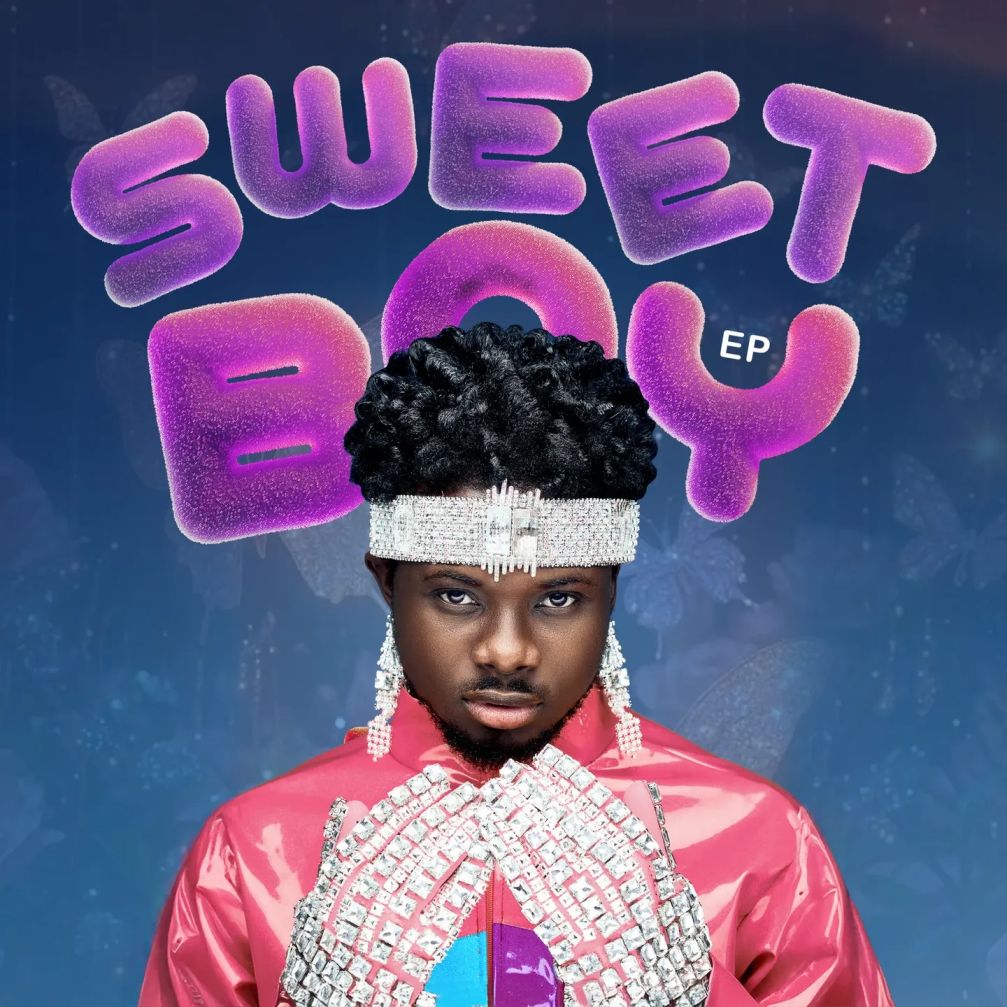
That broader context frames the arrival of Sweet Boy, which enters Kuami Eugene’s discography at a point where he is no longer proving himself as an emerging act but navigating the challenge of longevity and sustained relevance as one of Ghana’s most commercially successful stars.
Introduced through listening sessions in Accra and discussed by the artiste as a project intended to showcase different emotional and sonic dimensions of his artistry, Sweet Boy was framed as a body of work designed to connect broadly with listeners while reflecting his evolving creative interests and maturity.
The project also continues his increasingly hands-on role in shaping his music behind the scenes, with Kuami Eugene heavily involved in the production and sonic direction of the record. Coming after years of chart success, public scrutiny, and the pressures attached to maintaining the “Rockstar” persona he built over the years, Sweet Boy arrives as the latest chapter in the ongoing evolution of one of Ghanaian pop music’s defining modern figures.
Opening Sweet Boy with “Potomanto,” Kuami Eugene immediately leans into the bright, melodic accessibility that has long defined his artistry. The song begins with rich female ululations and layered choral vocals that almost resemble a children’s choir arrangement, their warm harmonies adding an immediate sense of brightness and communal energy before the instrumental settles into motion.
The production itself is rooted firmly in straightforward Afrobeats sensibilities, with pounding four-to-the-floor kick drums, rattling shakers, clacking syncopated percussion, and a thick bassline gliding beneath simple key chords and gentle guitar strums. It is an uncluttered instrumental palette that intentionally leaves ample room for Kuami Eugene’s voice to take center stage. The title itself references “potomanto”, a Ghanaian colloquialism often used to describe carrying emotional or romantic burdens and responsibilities, which fits neatly into the song’s romantic pleading and emotional framing.
Kuami sounds entirely at home here, delivering smooth melodic phrases with the confidence of an artiste deeply aware of his strengths. His vocal choices are particularly effective in the verse sections, where the sparse instrumentation allows his tone, phrasing, and occasional upper-register flourishes to stand clearly in the mix. The song’s emotional appeal is reinforced through lyrics like “I no go complain again / I no go beg you again / Wompe me a ka e / I go carry my potomato go my way,” before transitioning into more romantic declarations such as “Just make up your mind o / Odo wetin dey sup o / My pretty little thing / You act like you don’t want me no more”. The chorus gains additional warmth from the returning swarm of harmonies and choral backing vocals, creating a broad, celebratory feel that makes the song immediately catchy and easy to sink into.
On “Stranger,” Sweet Boy shifts into softer territory, enlisting Gyakie, whose airy vocal style and emotionally gentle delivery have made her one of Ghana’s most recognisable contemporary R&B voices. The collaboration is fitting, as Gyakie’s signature Twi phrasing and understated melodic approach naturally complement Kuami Eugene’s warm romanticism.
The instrumental remains intentionally sparse and spacious, built around subtle rattling shakers, staccato mallet chords outlining the familiar VI-IV-I-V progression, restrained rhythm guitars, and soft woodwind-like synth accents that drift in and out of the mix. The drums are similarly restrained, relying on clacking percussion and straightforward kick patterns that prioritise atmosphere over impact.
Within this warm sonic landscape, Kuami delivers one of the project’s simplest but sweetest romantic performances, serenading a love interest with lines like “Hey stranger, hey stranger / I don’t know you, but your body pretty banging / And your smile is contagious / Hey stranger, hey stranger / If you’re in trouble, shawty baby, get behind me / And I will come save you.” His delivery is laid-back and conversational, with harmonies appearing strategically rather than constantly, giving the song a natural, intimate flow.
Gyakie’s inclusion rounds out the narrative beautifully, adding a feminine perspective and balancing the emotional dynamic of the record. Together, both artistes lean fully into tenderness, allowing Sweet Boy to settle comfortably into the lane of warm, uncomplicated romance.
With “Adult Music”, Kuami Eugene pivots toward a more overtly sensual R&B direction, clearly attempting to channel the smooth intimacy and vocal-forward presentation associated with classic contemporary R&B records. The instrumental leans heavily into genre convention, with soulful keyboard chords, rattling hi-hats, soft snaps, and a relatively stripped-back drum arrangement designed to create an intimate atmosphere.
However, some of the percussive choices feel somewhat underpowered, with the snares and kicks lacking the fullness and punch necessary to fully carry the sensuality the track aims for. Even so, the song’s core concept remains clear, and Kuami commits fully to the performance, embodying a kind of Twi-inflected Trey Songz energy throughout the record.
His delivery becomes more physical and direct, leaning into seduction with lines like “You walk in with that confidence / I started losing this common sense / Your perfume got me confessing things / Oh oh enye wo ye me dei.” The romantic and sensual framing intensifies as the song progresses, particularly during moments like “I’m gon kiss you for a minute / Hold you down till I finish / Nea wo ya se me so wo mu ah / And I love that you admit it,” where the production briefly pulls back to foreground his vocals.
There are flashes of genuinely strong vocal presence throughout the song, especially when Kuami pushes into more expressive melodic climaxes, though some of those moments are slightly diminished by noticeable autotune processing that reduces the rawness and purity typically expected from more traditional R&B vocal showcases. Still, Kuami Eugene deserves credit for experimenting stylistically, even if the execution occasionally reveals that this is not yet his most natural sonic environment.
“Makola” returns us firmly to the melodic Afrobeats and Highlife-inflected comfort zone where Kuami Eugene has historically thrived. Lively rhythm guitars immediately establish momentum, dancing atop clacking percussion, rattling shakers, and a strong low-end bassline that gives the track a grounded groove. Filtered guitar textures drift through the verses while the kick drums remain firm and steady, creating a rhythmic bed that allows Kuami’s vocals to carry much of the emotional weight.
Notably, he trusts his lead performance here, avoiding over-layering and relying instead on the natural catchiness of his melodies and phrasing. The verses remain relatively sparse vocally, making the eventual arrival of the chorus feel fuller and more rewarding as grand choral harmonies sweep into the mix. The effect is warm and emotionally resonant, especially once the wailing string arrangements begin rising beneath the vocal stacks during the song’s emotional peaks.
Lyrically, the song leans fully into romantic devotion and unwavering commitment, with Kuami singing “Odo yewu, if e no be you / Then I don’t want anyone / ‘Cause I would rather wait and beg for love one more time / Odo yewu, if e no be you / Then I don’t want anyone / ’Cause I would rather craze for Makola / If that’s what you want”. The declarations continue with equally direct sincerity in lines like “Promise me say you no go leave me / Girl, you are everything I need / And when I go on my knees / You’re the reason I dey pray.” The result is one of the sweeter moments on Sweet Boy, a track driven less by complexity and more by the emotional effectiveness of strong melodies, heartfelt delivery, and rich vocal arrangement.
On “Save Me,” Kuami injects a brighter burst of energy into its Sweet Boy, leaning further into warm Afropop and highlife sensibilities over lively rhythm guitars, clacking percussion, rattling shakers, and a rich, bouncing bassline. The song carries an infectious upbeat spirit, driven by agile melodies and an animated vocal performance from Kuami, whose delivery feels light, warm, and naturally charismatic.

There is also a subtle gospel influence embedded within the melodic phrasing and vocal cadences, particularly in the way certain sections resemble the uplifting melodic style common in Ghanaian praise songs. That influence becomes fitting given the lyrical direction of the track, which blends romantic vulnerability with prayerful introspection.
Kuami sings “I tell you if I see you I don’t know what to say / Don’t know what to say, don’t know what to say / The little little little things you do to me yea / And I’m thinking you should be mine,” before pivoting into more emotionally exposed pleas like “Oh Father, Father please save me from my sins / I no fit control what adey feel for my body / O please save me from my sin.” Even moments of jealousy, “I get jealous when you standing with another another / That thing dey blow my mind”, are delivered with melodic sweetness and buoyancy, helping the song maintain its uplifting atmosphere throughout.
“Promise Me” brings Sweet Boy into one of its most emotionally tender moments, blending soft Afropop sensibilities with subtle Amapiano influences. Warm sweeping pads, melodic log drums, clacking percussion, gentle piano stabs, and a thick sub bass create a midtempo instrumental that almost resembles a modern hymn in its warmth and sincerity.
Kuami Eugene approaches the song with a restrained and emotionally weighted delivery, allowing simple melodic phrases and pauses to communicate the song’s vulnerability. Lines like “You come and lay by me / Oh don’t you let me go / Na you I love o, na you I love o / So don’t you let me go” establish the emotional core immediately, before deeper declarations such as “Promise me that you’ll be all I need / When nobody dey for me you’ll come for me / If I taya wey I no fit breathe” reinforce the song’s longing and devotion.
The chorus subtly expands through layered harmonies and occasional falsetto peaks, while the rolling log drums maintain a gentle bounce beneath the emotion. Johnny Drille arrives during a stripped-back emotional passage led by piano, his rich, dulcet vocals adding even more tenderness and emotional pull to the record. The collaboration feels natural and beautifully balanced, with the returning choral backing vocals wrapping the song in a comforting warmth that makes it one of the project’s sweeter highlights.
“Oh, Ah” pushes Sweet Boy further into lively highlife territory, embracing the genre’s playful bounce and rhythmic richness with confidence. Layers of brightly strummed electric rhythm guitars dominate the instrumental, dancing around one another with constant movement while a pulsing bass guitar and energetic live drums keep the momentum flowing underneath. The percussion work is unmistakably Highlife-inspired, from the rolling snare fills and clacking percussion hits to the triplet clap patterns that give the song its buoyant groove.
Kuami Eugene sounds entirely comfortable within this sonic pocket, delivering catchy melodies with bright charisma and playful ease. His harmonies are deployed sparingly but effectively, appearing at key moments to add warmth and fullness without overcrowding the arrangement, while brief instrumental breaks create little pockets for vocal punctuation and rhythmic interplay. Lyrically, the song feels more personal and diaristic than some of the earlier romantic tracks on Sweet Boy, with Kuami reflecting on his growth, resilience, and journey through success.
Lines like “Me I want to party but some people want to dull me / You can’t see me shining cos Apollo dey for w’eni / They say I getti tough skin / Melanin wey dey for body” establish that self-aware tone early, before he leans further into introspection with Twi passages such as “Me nhyira na w’enyi a esewara / Woko ku woho a esewara aa / Ma we ndwene me ho o / Oh ah nea Onyame ehyira na w’ehyira no” [“It is my blessings that make you jealous / You go around carrying jealousy yourself / Think about me well / Oh ah, whoever God blesses is truly blessed”]. Even with those reflective moments, the song never loses its vibrant energy, instead balancing personal storytelling with the bright, danceable spirit that has long made Kuami Eugene such a natural fit for contemporary highlife fusion.
Closing Sweet Boy is the bonus track “I’m Hurt,” a lively but emotionally weighted record that balances pain and perseverance against one of the project’s more energetic instrumentals. Smooth keyboard chords introduce the song alongside deep 808 bass, shimmering guitar accents, synth stabs, rattling shakers, and metallic percussive textures that constantly shift around the mix. The drum arrangement remains dynamic throughout, alternating between sparse syncopated grooves and fuller kick-driven passages that give the song a satisfying sense of ebb and flow.
Kuami Eugene uses that movement expertly, allowing his vocals to fill the spaces left by the instrumental transitions with agile melodies and emotionally expressive phrasing. Despite the hurt embedded within the writing, his delivery remains bright and energetic, creating an engaging contrast between emotional vulnerability and sonic uplift.
Lines like “Oh oh I’m hurt / Dea wo ka no dey burn my chest / Nti monsusu nkasa / Nti monsusu nka me ho asem” [“Oh oh I’m hurt / What you said burns my chest / So stop talking / Stop speaking about me”] establish the emotional tension immediately, before Kuami expands on the isolation and frustration beneath the surface with “I play cool but hey I’m hurt / I don’t take things seriously / Back to back continuously / On my grind Muhammad Ali.” The song’s chorus gains additional force from rich group vocal arrangements and layered harmonies that make the emotional declarations feel bigger and more communal, while select vocal runs and instrumental breaks add memorable flourishes across the runtime.
Even as the song explores emotional exhaustion, the instrumental never loses its momentum, maintaining a vibrant energy all the way through to its outro, where synth brass crescendos gradually dissolve into a softer piano-led ending that gently closes out the project.
There has never really been much doubt about Kuami Eugene’s talent. From his beginnings as a singing competition standout to becoming one of Ghana’s premier hitmakers, the foundation of his artistry has always been his voice. Across Sweet Boy, that reality remains the central pillar upon which everything else is built. His singing is consistently strong, clear, and controlled, whether he is stretching into bright upper-register moments, gliding through smooth melodic passages, or sitting comfortably within softer conversational cadences.


The technical assurance is obvious throughout the album. He trusts his voice completely, and because he understands that it is his greatest strength, the songs are intentionally structured to let it breathe. Verses are often spacious and uncluttered, allowing his melodies to take centre stage without being buried beneath excessive layers or overproduction.
Even the harmonic arrangements are handled with restraint and intelligence, appearing exactly where they are needed to add warmth, fullness, or emotional lift rather than overwhelming the lead performance. One of the project’s smartest recurring techniques is the deployment of group vocals and choral arrangements, often led by rich female choir textures that swell during choruses and emotional climaxes.
Those moments add depth, emotion, and dynamism to the listening experience, creating a satisfying ebb and flow where Kuami carries the songs individually before the larger vocal ensembles elevate them further. The featured artistes are similarly well selected, with Gyakie and Johnny Drille bringing their own distinctive vocal warmth and melodic strengths to complement Kuami Eugene’s performances. Altogether, Sweet Boy is an album deeply centred around vocal performance, and on that front, it delivers consistently.

That vocal focus is strengthened by Kuami Eugene’s increasing role as a producer and sonic architect across much of the project. The production throughout Sweet Boy is carefully tailored to platform vocals first and foremost, avoiding unnecessary complexity and over-layering in favour of clean arrangements that prioritise melody, bounce, and emotional clarity.
He demonstrates a commendable understanding of how to build instrumentals that support rather than compete with the vocal performances, crafting spacious verses, lively rhythmic pockets, and strategically layered choruses that allow the songs to move naturally between intimacy and grandeur.
There are occasional moments where sound selection or instrumental balancing could have been slightly sharper, and the autotune-heavy execution of “Adult Music” feels somewhat at odds with the purity usually demanded from more traditional R&B vocal showcases, making it one of the few slight blemishes on the album. Even then, it feels more like an understandable byproduct of experimentation than a major flaw, and experimentation from an already established talent looking to expand his repertoire is ultimately welcome.
Beyond the vocals and production, the songwriting across Sweet Boy is another notable strength. Kuami understands melody deeply, and that melodic intelligence carries directly into the writing itself. Whether the songs are playful, romantic, emotional, confessional, uplifting, or introspective, each track feels appropriately written for the emotional lane it occupies.
The project avoids leaning too heavily on empty clichés or random filler phrasing, instead consistently delivering catchy, memorable sections that feel intentional and naturally melodic. That instinct is hardly surprising from an artiste with Kuami Eugene’s proven track record as a hitmaker.
In the end, Sweet Boy succeeds as an enjoyable, bright, and highly accessible listening experience, filled with commercially viable songs that still retain enough emotional sincerity and musical craftsmanship to avoid feeling hollow. It is an album packed with melodies built for airplay, songs capable of crossing between Afrobeats and Highlife audiences with ease, and a reminder of the refinement that experience can bring to an already gifted artiste.
Kuami Eugene sounds comfortable in his artistry here, confident enough to trust his strengths while still showing a willingness to stretch into new territory, and that makes the prospect of where he goes next all the more exciting.
Lyricism – 1.5
Tracklisting – 1.5
Sound Engineering – 1.6
Vocalisation – 1.6
Listening Experience – 1.5
Rating – 7.7/10
Yinoluwa “Yinoluu” Olowofoyeku is a multi-disciplinary artist and creative who finds expression in various media. His music can be found across all platforms and he welcomes interaction on his social media @Yinoluu.