

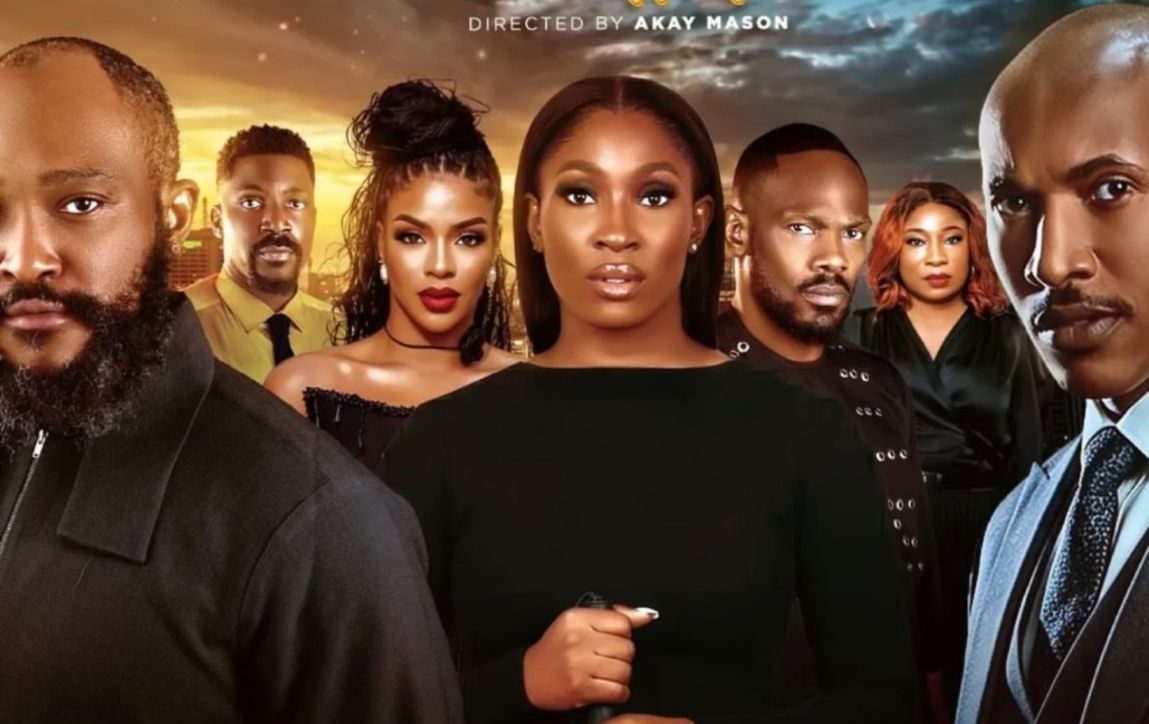

A Spark in the Dark is a film for which blindness is primarily a plot device and drama is the ultimate priority.
By Vivian Nneka Nwajiaku
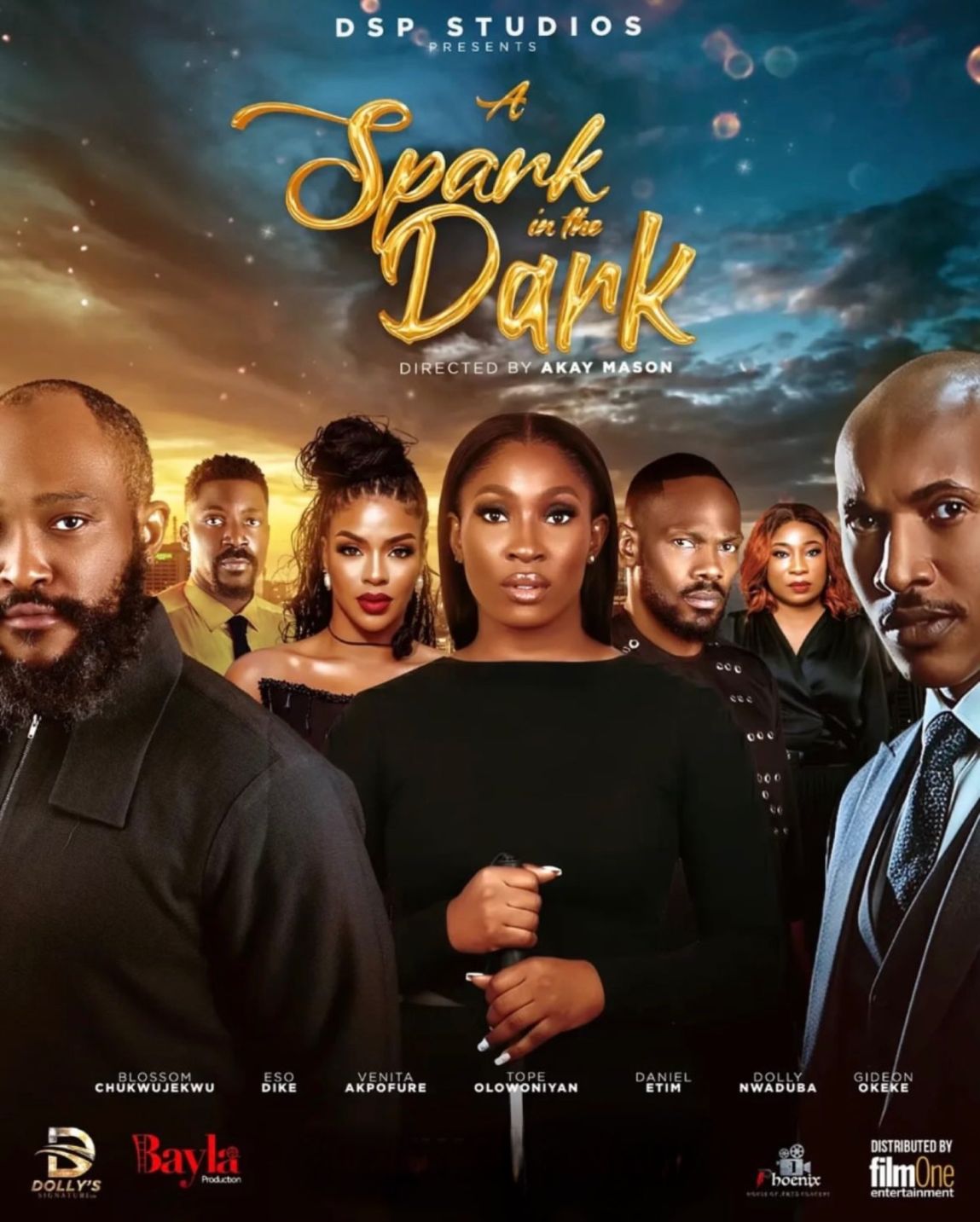
Can love survive unexpected tragedy? Can true love be found amid adversity? At least one of these existential questions is typically raised in films where happiness is interrupted by misfortune. Directed by Akay Mason (Red Circle (2025); A Very Dirty Christmas (2025)) from a screenplay by Abigail Timmann, A Spark in the Dark (2026) attempts to engage with both questions. But the film is either unaware of their philosophical nature or simply incapable of exploring them beyond their melodramatic potential, resorting instead to surface-level tensions and platitudes as plain as “Who was there for you?”
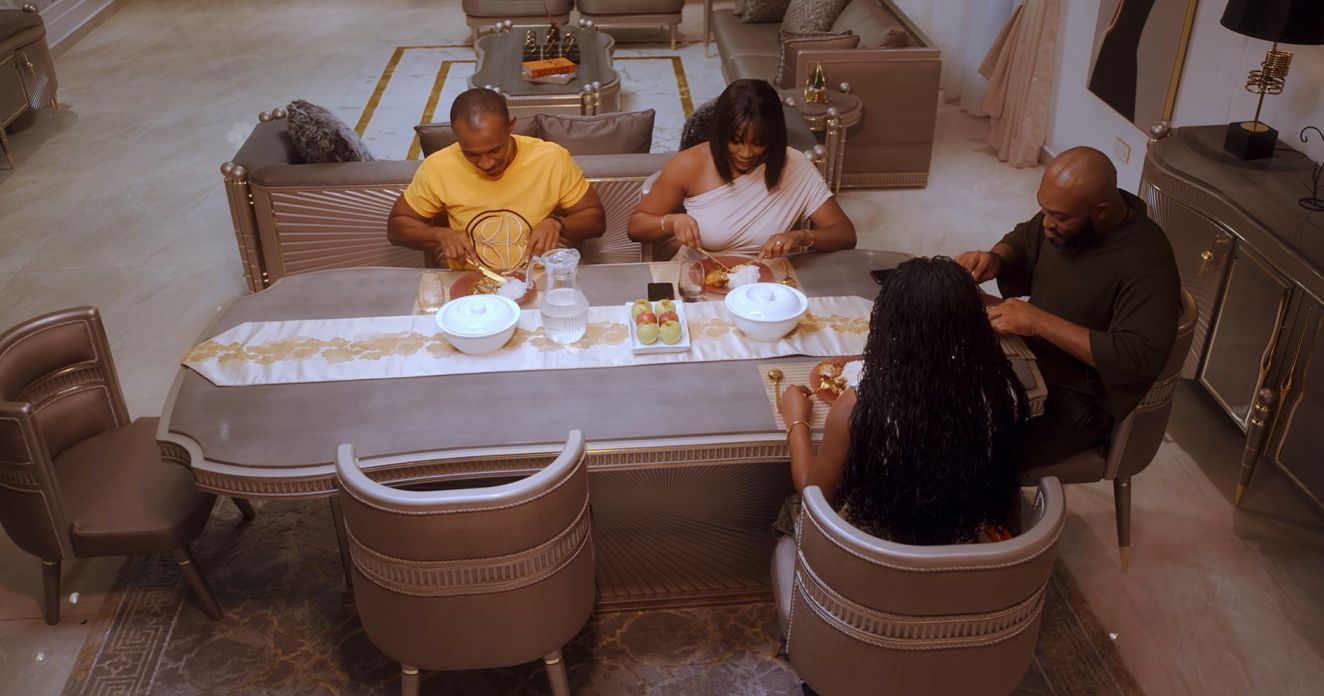
At the centre of the film’s story is Kate (Tope Olowoniyan), who is at such a good place in life that it’s inevitable that the gods of cinema will throw in a devastating disruption. She has a good job, lives in a pristine apartment with her dependable best friend Laila (Venita Akpofure), and is happily engaged to a man whose family loves her. Melvin (Gideon Okeke) is a boss at work, and while he lives with his delightful but ultra-responsible brother Muna (Blossom Chukwujekwu) and his doting sister-in-law (Dolly Nwaduba, the film’s producer), he is just about done with building his own home.
A Spark in the Dark dedicates quite some time to establishing this pleasant normalcy. Kate is giddy as she plans the wedding. Melvin is very much in love. Laila is eager to gift her best friend a lovely wedding dress. Muna and his wife have fun playing a card game. Kate and Laila tease each other about whose turn it is to cook. And then, suddenly, tragedy strikes. They say life is what happens while you’re making other plans. One minute, Kate is looking forward to happy-ever-after; the next, she’s blind in both eyes.
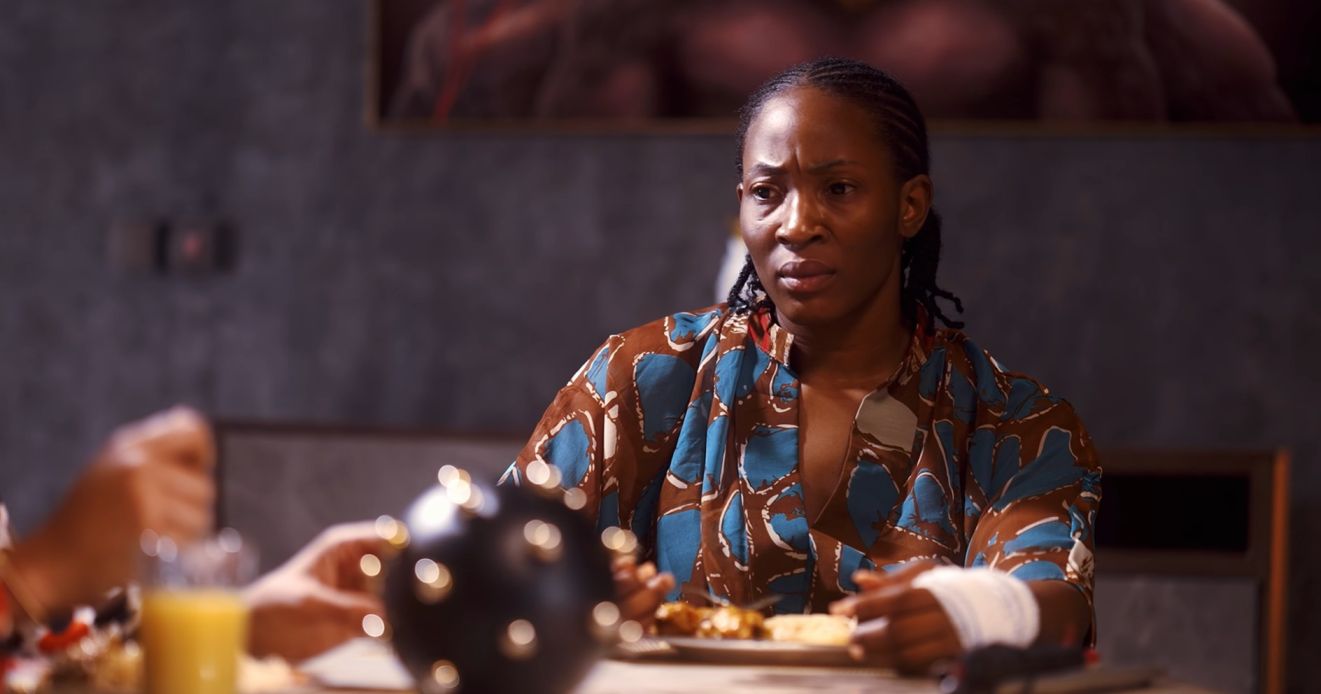
There are surely some practical realities involved in suddenly losing one’s sight after some thirty years with no visual impairments. But those are not concerns for A Spark in the Dark, a film for which blindness is primarily a plot device and drama is the ultimate priority. The diagnosis is corneal scarring. The treatment required is a corneal transplant surgery. But it’s very unlikely that a living person will donate their cornea, and Kate would rather remain blind than take a cornea from the dead.
Of course, Melvin sees things differently, so Kate pushes him away. And when he stays away, she gets suspicious and insecure, so she pushes him further away. There’s a lot of shouting and lamenting, but there is never inwardness to any of it. Neither is there tangibility to the situation. There is no sense of how Kate’s life has changed beyond her constant expression of a fear of permanent blindness, which is interestingly coupled with such heavy despair that the concept of healing is so far-fetched a possibility in her mind. And the overdramatised manner in which Olowoniyan handles her character’s blindness is too distracting anyway for her or the audience to find anything beyond the drama.
For all the space that Kate gives Melvin, he also gets no space to truly confront his changed reality. Instead, the screenplay immediately presents him as a “monster”, and Okeke lays on the villainy a little too thick for the character. A new woman appears out of nowhere. She is played by Timmann, the film’s screenwriter, and she calls herself Coco. She is eccentric and apparently crazy because she forces her way into Melvin’s life, even though he never really puts up a fight to keep her out. We’re supposed to enjoy the performance but dislike the character. It does not work. Neither of them is likeable.
Meanwhile, Kate gets to move on quickly, too. With the arrival of Chuks, a brand new man, halfway into the film, it becomes clearer what A Spark in the Dark is going for. Chuks is played by Daniel Etim Effiong, who has made a few interesting big-screen character choices in recent times, from his determined kidnap victim role in The Herd (2025) to his dual performance as rival twins in the political historical drama, The Masked King (2025). In A Spark in the Dark, he remains comfortable in his familiar love interest persona, even if the screenplay gives his character no personality beyond the titular spark in the dark for the protagonist.
With a couple of coincidences and machinated plot twists, Chuks’ presence in Kate’s life changes her situation in more ways than one. But drama is this film’s priority, remember? So, A Spark in the Dark invokes Okafor’s Law—the relationship theory, not the 2016 romantic-comedy film, although it is probably not a coincidence that Chukwujekwu, the lead actor in that film, also stars in this film—and attempts a love triangle. Then, it throws in heartbreaks and big fights. And why not add a little bit of fraud as the icing on the punishment cake for the man whom the screenplay is so desperate to villainise rather than explore and understand.
Perhaps we would not have this film if Kate had just let Melvin be there for her. Or, perhaps, she would have let him be there for her if he had attempted to be there for her in the manner that she needed and not in the way that he preferred. Or maybe we would still have had a movie, a better one even, if the screenplay itself understood this dichotomy and just sat with it, treating it as the conflict that it is and situating it within the reality of a condition as sensitive and real as blindness, rather than just switching male leads and jumping from one dramatic event to another.
The movie we do get is one that is shallow, hollow, and repetitive. A Spark in the Dark reduces blindness to a test—a way to supposedly reveal true colours—as opposed to a lived reality. We move from one incident to another with no hint of interiority. In fact, it is so action-crowded that too many consequential events take place offscreen even as many events onscreen happen just to happen.


Frankly, A Spark in the Dark has no emotional heft. Films such as this, at the very least, attempt to inspire or even manipulate emotional investment using certain technical choices. But with a poor soundscape and insipid editing—generously speaking—there’s just no saving this film. Nollywood theatrical releases are rarely cinematic anyway, but this one is a particularly dire affair.
The only real spark-in-the-dark here is watching Chukwujekwu enjoy himself in his supporting role as he manages to establish valuable chemistry with his co-stars. His scenes with Nwaduba are cosy, but his rapport with Okeke is particularly easy. There’s something to be said about how comfortable the brothers are when they joke, bond, or quarrel in their native Igbo language. At least, it’s relatable for those who are familiar with the language. But there are no subtitles, so that little pleasure is unavailable to audiences who are not.
Rating: 1/5
*A Spark in the Dark opened in Nigerian cinemas on 24th April 2026.
Vivian Nneka Nwajiaku is a writer and film critic writing from Lagos. She has a master’s degree in law but spends most of her time consuming, studying and discussing film and TV. She’s particularly concerned about what art has to say about society’s relationship with women. Connect with her on X @Nneka_Viv