

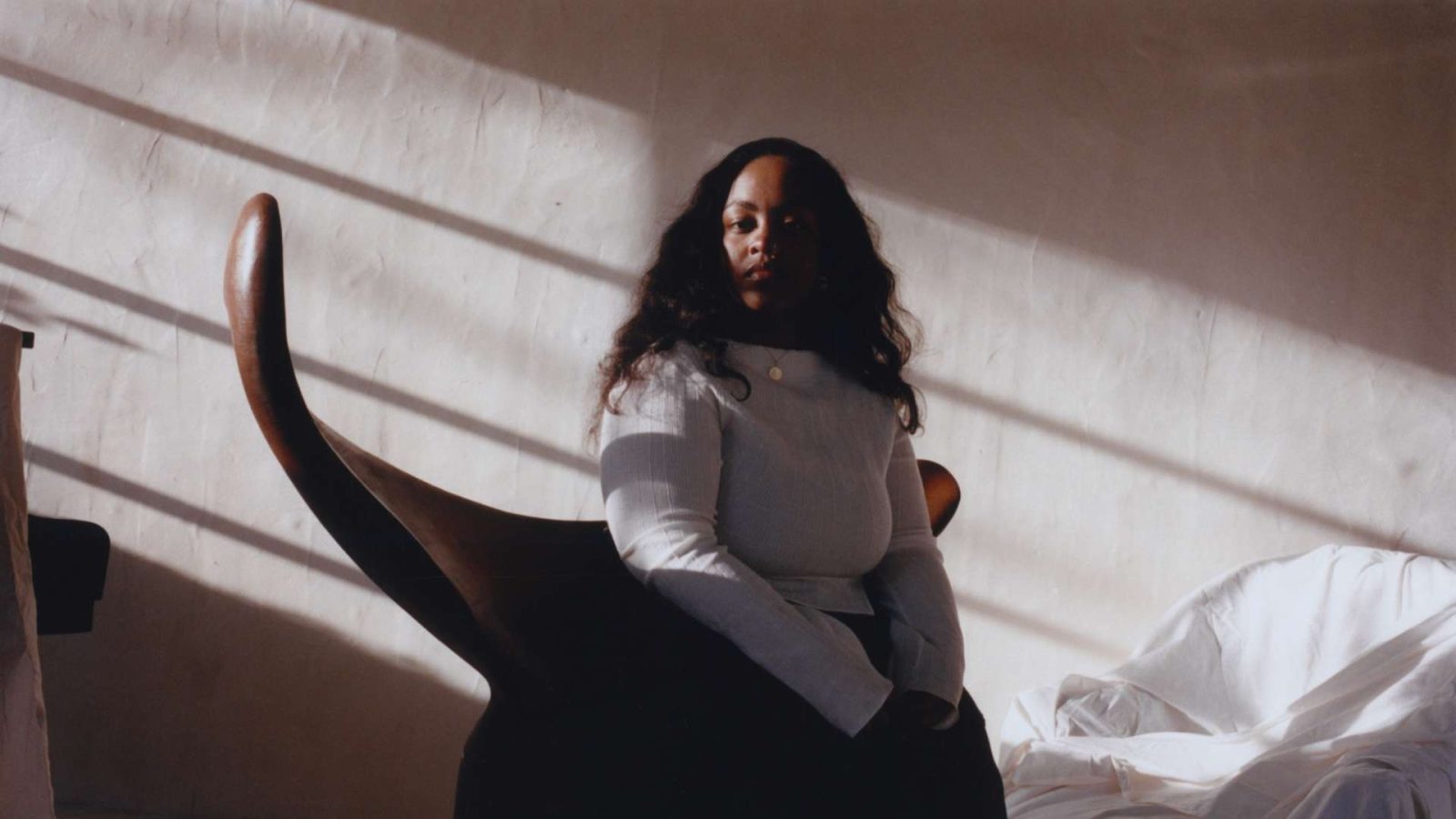

Map of Her Shadow is an impressive achievement on its own terms, but it is also a reminder of how much potential still lies ahead.
By Yinoluwa Olowofoyeku
French-Gabonese singer-songwriter Anaïs Cardot has quietly emerged as one of the more intriguing young voices operating at the intersection of African alternative music, soul, jazz, folk, and contemporary R&B. Born in Gabon and raised across multiple countries including South Africa, France, and Canada before eventually settling in Paris, Cardot’s artistic identity has been shaped by a uniquely transnational upbringing that exposed her to a wide range of musical and cultural influences from an early age.
Long before her recent rise within alternative music circles, she built an online following through multilingual singing videos and covers, gradually developing a style rooted in emotional intimacy, rich vocal expression, and genre fluidity. Her breakthrough arrived with the release of Pink Magnolia in 2023, a debut EP that introduced listeners to her lush songwriting and delicate blend of soul, jazz, folk, and Afro-influenced textures, earning acclaim across emerging music platforms and helping position her as one of the continent’s more promising alternative artistes.
That momentum continued through collaborations with major African stars including Asake and Wizkid, appearances on internationally visible projects, a COLORS performance, and growing recognition from publications and platforms spotlighting the next generation of globally minded African creatives. Alongside her musical ascent, Cardot has also become an increasingly visible advocate for accessibility within the arts, openly discussing her experience living with arthrogryposis and the ways it has shaped her relationship with performance, creativity, and self-expression.
That broader personal and artistic background provides important context for Map Of Her Shadow, Anaïs Cardot’s sophomore EP. In interviews surrounding the project, Cardot has explained that many of the songs emerged from reflections on family relationships, inherited emotional wounds, grief, vulnerability, and the process of understanding herself more fully. Rather than focusing primarily on romantic love, the project appears to draw from deeply personal experiences and conversations, including fears surrounding loss, ageing, and the emotional burdens carried across generations.
Sonically, Map of Her Shadow also sees Cardot continuing to expand the palette introduced on Pink Magnolia, leaning further into the Folk, Soul, Jazz, and Alternative influences that have become central to her sound while collaborating with producers and musicians including Venna, TSB, PRGRSHN, LJay Currie, and Marc Antoine. Arriving after a period of growing international recognition, Map of Her Shadow finds Cardot building upon the artistic identity she has steadily developed over recent years, offering her most personal body of work yet and setting the stage for the next chapter of her evolving career.
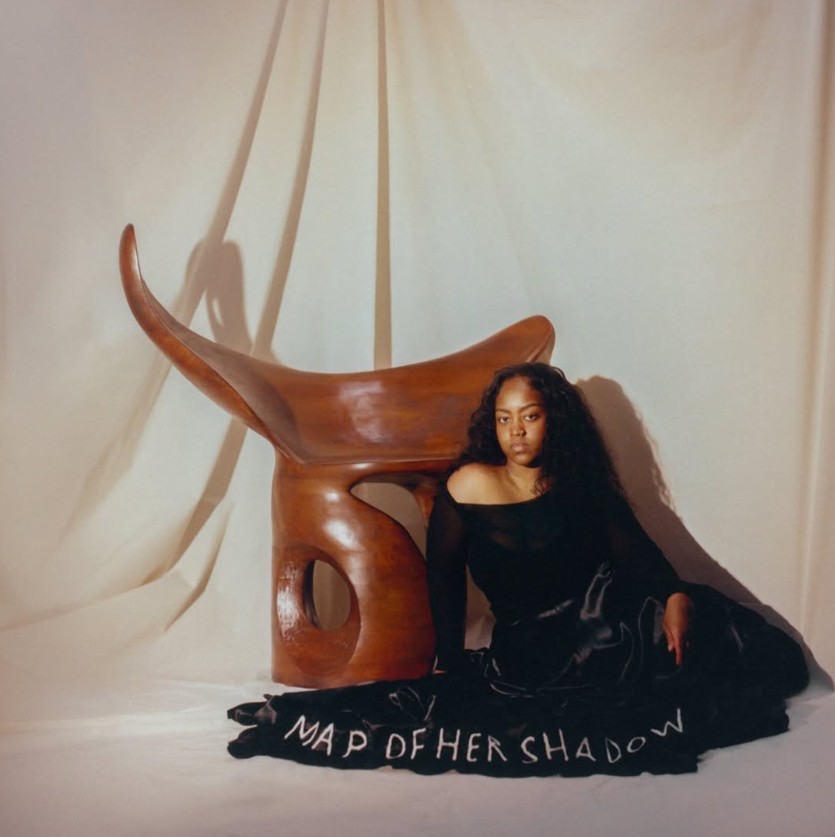
Map Of Her Shadow opens with “Beautiful Liar”, a song that immediately establishes the project’s cinematic sensibilities. A wailing string quartet sways dramatically through the introduction before descending into gentle guitar strums, over which breathy hums gradually give way to Cardot’s airy vocal performance. Her melodies feel almost conversational in their construction, rarely settling into predictable repetition, instead unfolding organically from phrase to phrase with only a single recurring line serving as an anchor.
Harmonies gradually emerge beneath the lead vocal, their lower register providing contrast and support as bass, additional guitars, strings, and subtle brass elements slowly fill out the arrangement. A smooth saxophone passage and a playful scat-inspired jazz vocal break add further movement to an instrumental that constantly evolves rather than looping through static ideas.
Lyrically, Cardot explores the aftermath of dishonesty and betrayal through poetic, allusive writing, singing, “Will I know what you been hiding from me?/ My dear/ Vague and dull, ya words aren’t thriving to my ears/ All kinda thoughts be growin’ in me/ Sinful melodies from your mind / Came to claim the beauty of a liar”, before eventually arriving at the resolute refrain, “No more trust and no more game/ No more venom in my rain/ Never thought that you’d be hiding from me, my dear/ No more lies here”. It is an elegant and understated introduction that immediately foregrounds both her songwriting and vocal dexterity.
The dreamy atmosphere deepens on the project’s lead single “FOMO”. Filtered acoustic guitar strums and a restrained drum pattern establish the foundation, with steady hi-hats and Latin-inspired kick patterns providing a gentle pulse. As the track unfolds, cymbal rides, characteristic three-two rimshot patterns, acoustic bass, and floating saxophone flourishes gradually broaden the soundscape without ever disturbing its sense of calm.
Countless subtle layers drift through the stereo field, creating an airy and immersive environment. Cardot responds with one of her most versatile vocal performances on the project, moving effortlessly between soft-spoken lower-register passages, breathy singing, delicate falsettos, and fluid melodic runs. The song wrestles with the fear of absence within a relationship, caught between wanting connection and struggling to fully inhabit the moment.
That emotional uncertainty is captured in lines such as, “Lately I’ve been keeping secrets/ They’ve been asking what I’m hiding from/ But I don’t know if you would hear me/ Or if that’s something that I’m ready for”, before resolving into the pleading refrain, “I hope you’ll wait/ Don’t let me, don’t let me/ Don’t let me, don’t let me go”, The combination of intimate songwriting and richly detailed arrangement makes “FOMO” one of the EP’s most immersive moments.
“The Sentimental Song” strips things back slightly, beginning with a filtered guitar arpeggio and a simple two-chord progression that immediately establishes a somber mood. Cardot’s lower register takes centre stage initially, carrying melodies that occasionally lean toward an almost cinematic, Arabesque quality. As bass and strings gradually swell beneath her, the song expands through vocal power and emotional intensity.
Her delivery remains controlled and graceful, though flashes of impressive vocal dexterity emerge through ad-libs and brief melodic flourishes. On paper, the song is remarkably simple, but its execution is anything but. The emotional weight comes through in the introspective lyrics. “Spare some time, don’t let me down/ My mind is fading/ All the memories inside me, can’t stop blurring out / Nights and days, I breathe your name”, Cardot sings as she reflects on memory, longing, yearning, and the lingering presence of someone she cannot quite let go of. It is a masterclass in how careful arrangement and nuanced vocal performance can elevate modest songwriting into something quietly affecting.
Cardot’s multilingual upbringing finds direct expression on “Coração”, where she moves comfortably into French while continuing Map of Her Shadow’s emphasis on emotional intimacy. Layers of strummed guitars create a constantly shifting backdrop, evolving subtly beneath ghostly synth textures and occasional piano flourishes. A warm trumpet solo anchors the midpoint before rich bass and delicate harmony vocals gradually take hold during the latter half of the song.
Throughout, Cardot maintains a soft, whispery delivery that feels intensely personal. The song’s lyrical imagery suggests heartbreak, disappointment, and emotional exhaustion, communicated through poetic lines such as, “Valeu/ Pour la place dans ton coração où baignent tes mirages/ Le vent dans ta voix parle/ Avec les vagues où tes yeux nagent”, [Thank you/ For the place in your heart where your mirages drift and bathe/ The wind speaks through your voice/ With the waves where your eyes swim] before arriving at the particularly striking image, “Le voile sur mon visage/ S’inonde de milles larmes.” [The veil over my face / Is flooded with a thousand tears].
The only featured appearance on Map Of Her Shadow arrives on “Another Day”, which pairs Cardot with French artiste, Lossapardo. His deep, smooth tenor immediately provides contrast to Cardot’s lighter timbre, creating a vocal dynamic that becomes central to the song’s effectiveness. Filtered piano chords and shimmering synth textures establish the atmosphere, while acoustic bass quietly sings alongside the vocal melodies, adding another layer to the arrangement’s harmonic richness.
The song centres on the passage of time, ageing, and the difficulty of watching loved ones grow older. Those concerns emerge clearly in lines such as, “Another day under the sun / Another night under the moon / I don’t like to see the wrinkles on their face / I wish I could be blind, instead I watch them growing old”. As the arrangement develops, saxophone textures, strings, and increasingly intricate vocal harmonies deepen the emotional impact. Particularly effective is the way Cardot layers angelic harmonies and floating melodic lines over Lossapardo’s grounded refrain, allowing their voices to intertwine beautifully before strings guide the song toward a cinematic conclusion.

“Second Hand” introduces the EP’s most rhythmically active instrumental. Bright guitar strums, lively electric guitar leads, thumping kicks, rattling snare textures, piano accents, and layered guitars combine to create a more immediate and energetic sound. Cardot adapts accordingly, opening with shorter melodic phrases before gradually expanding them into longer and more expressive passages.
Her chorus performance is particularly striking, reaching into an airy upper register that feels almost weightless. Beneath the bright instrumental lies a song about accountability, recurring behaviours, and recognising unhealthy relational patterns. The frustration embedded within the writing surfaces through lines like, “Guess we’re finding a new way to succumb/ I’m still waiting for this day to come/ You’re a poet in your rage, who knew,” before arriving at the pointed observations, “Same thing as before/ All me, never you/ Guess it’s me who has the flaws/ Would you ground me in your wrongs?”
Map of Her Shadow closes with “Wave Goodbye”, a brief but poignant farewell that distills many of the EP’s emotional qualities into just a few minutes. Solemn, heavily processed humming vocals open the song before gentle guitar strums emerge beneath Cardot’s breathy lower-register singing. The writing abandons conventional rhyme structures in favour of a more reflective, almost conversational approach, lending the song the feel of a final letter or parting thought.
Cardot sounds resigned yet peaceful as she reflects on emotion, distance, and acceptance, singing, “Hey, darling/ How you feeling?/ These are words they said/ All thinking that it was love”. The emotional centre of the song arrives in the devastating sequence, “And I’ll see the moon, right by the sun/ They’ll both look at me, and wave goodbye/ I’m sorry, I didn’t mean to leave you like that/ But it’s time to give up, time to fall back.” The song then slowly exhales, allowing humming vocals, sombre bass, electric guitar swells, falsetto ululations, and a muddled French voice note sample to carry Map of Her Shadow gently to its conclusion.
Map of Her Shadow is an emotionally accomplished work whose brevity does nothing to diminish its impact. If anything, Anaïs Cardot uses its concise runtime to sharpen every feeling, every gesture, and every sonic decision. The project stands as a testament to artistic intention and vision, demonstrating how simplicity, when approached with meticulous attention to detail, can become something extraordinary.
Every element is carefully considered and placed in the service of intimate emotional expression, creating a body of work that examines longing, memory, vulnerability, disappointment, and self-reflection with remarkable sensitivity. In that sense, Map of Her Shadow feels like a fitting title, tracing the outlines of emotions left unspoken and feelings that linger just beyond direct articulation.
At the centre of the project is Cardot’s vocal performance, which is nothing short of stunning. Her singing consistently raises the bar, showcasing immaculate control, refined technique, expansive melodic range, and a masterful command of dynamics. Whether operating in a whisper, a warm midrange, or reaching toward airy falsettos, she remains in complete control. Her voice is breathy and wispy when required, yet never fragile. It is soft without becoming quiet, powerful without becoming forceful.
She glides effortlessly through registers, ascending and descending octaves with a fluidity that feels frictionless. The intimacy of her lower register carries just as much impact as the floating heights of her falsetto, and while there is very little outright belting across the project, there is never any sense that more is needed. Even the featured vocalist seems chosen specifically to complement the emotional texture she creates, their voices blending seamlessly into her sonic world.
The harmonies are equally exceptional, layered with extraordinary care and warmth. Whether through stacked harmonies, gentle scatting, humming, ululations, vocal runs, or subtle ad-libs, every vocal choice serves the emotional landscape of the music. Her singing is so captivating that one could listen to her vocalise nonsense syllables for an entire album and still be emotionally moved.
The remarkable thing is that she does not rely on vocal beauty alone. She fills that flawless vocal vessel with songwriting of equally impressive quality. Supported by a talented writing team and clear evidence of tremendous craft, the writing throughout Map of Her Shadow is deeply introspective, personal, and poetic. The songs feel liberated from rigid conventions of structure, metre, and melodic expectation.


Lines bleed into one another, rhymes emerge and dissolve naturally, and melodies often feel free-flowing and almost improvisational. There are diaristic observations, poetic abstractions, moments of melancholic resignation, and simple realisations that feel both deeply personal and universally relatable.
The intimacy of the writing becomes even more striking when delivered in French, adding another layer of texture and nuance to the emotional experience. Pairing such thoughtful lyricism with vocal performances of this calibre almost feels unfair. It becomes a near-perfect recipe for the emotional connection that Map of Her Shadow so clearly seeks to create.
Wrapping everything together is production and engineering that understand precisely when to step forward and when to recede. The vocal arrangements are so compelling that these songs could almost function a cappella, yet the production provides an understated cinematic backdrop that elevates every moment. Soft acoustic guitars, delicate piano textures, heartfelt strings, gentle brass passages, warm bass foundations, and occasional saxophone flourishes create a soundscape rich in atmosphere without ever overwhelming the songs themselves.
Drums are used sparingly, often appearing more as texture or pulse than as a driving force. The result is a sonic palette that remains consistently restrained, allowing Cardot’s voice to occupy the emotional foreground. The engineering is equally crucial to the experience. Vocal layers drift in and out of focus, harmonies intertwine effortlessly, instruments occupy carefully crafted spaces within the stereo field, and sounds emerge and recede at the edges of perception. Falsettos remain as present and audible as the softest passages. Background vocals and instrumental details create width, depth, and immersion, producing a listening experience that feels expansive despite its intimate scale.
More than anything, Map of Her Shadow feels transformative. It is the kind of music that lingers long after it ends because it reaches beyond technical accomplishment and into something deeply human. There are traces of jazz, cinematic composition, folk influences, and contemporary singer-songwriter traditions throughout, but the project ultimately feels guided by something more fundamental: emotional truth.
Anaïs Cardot is operating at an astonishing level right now, and her continued ascent feels entirely deserved. Every release reflects a growing mastery of craft, a clearer understanding of her artistic identity, and an increasingly confident command of her creative vision. What makes it even more remarkable is that she remains so early in her artistic journey.
If this is the level of artistry she is already capable of delivering, it is almost daunting to imagine what further growth may bring. Map of Her Shadow is an impressive achievement on its own terms, but it is also a reminder of how much potential still lies ahead. One cannot help but be amazed by what Cardot has already accomplished, by everything this project manages to be, and by the exciting possibilities that await her in the years to come.
Lyricism – 1.8
Tracklisting – 1.5
Sound Engineering – 1.8
Vocalisation – 1.9
Listening Experience – 1.6
Rating – 8.6/10
Yinoluwa “Yinoluu” Olowofoyeku is a multi-disciplinary artist and creative who finds expression in various media. His music can be found across all platforms and he welcomes interaction on his social media @Yinoluu.