

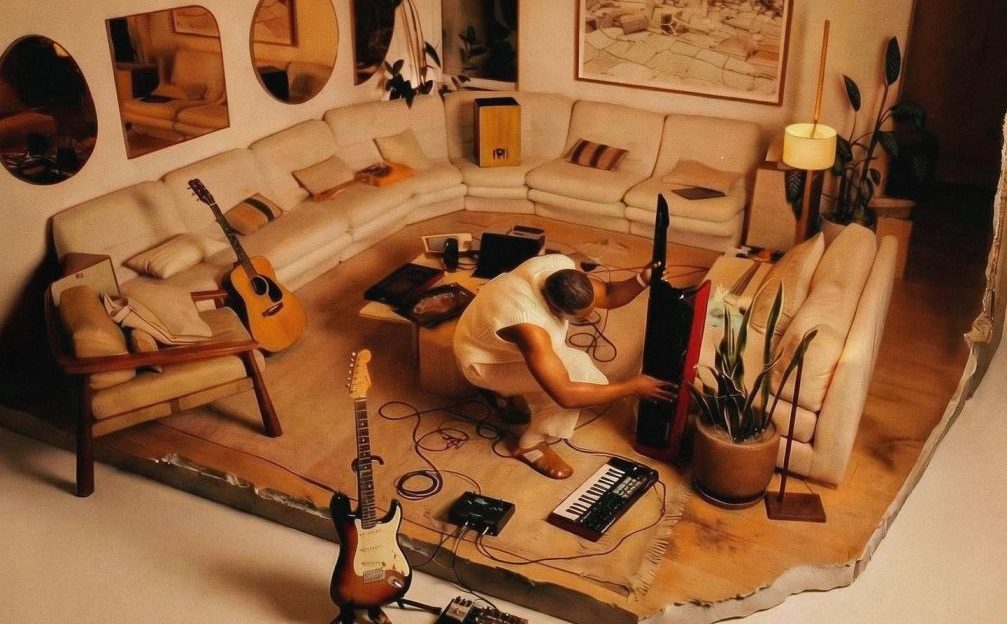

A Rii Set stands as an enjoyable and remarkably well-rounded listening experience [that] mirrors Pheelz himself: dynamic, adaptable, and constantly refusing to be boxed into a single role.
By Yinoluwa Olowofoyeku
Pheelz occupies a fascinating position within contemporary Nigerian music because he has successfully built two careers that many artistes spend a lifetime trying to achieve separately. Long before becoming a charting artiste in his own right, Phillip Kayode Moses established himself as one of the defining producers of his generation, helping shape the sounds of artistes such as Olamide, Fireboy DML, Davido, Teni, Runtown, Phyno, and countless others. His production fingerprints can be found across some of the most important Nigerian records of the last decade, from the YBNL era that helped redefine Street-Pop and Rap in the early 2010s to the more melodic Afro-Pop sounds that followed.
Yet despite earning widespread acclaim behind the boards, Pheelz gradually transitioned into the foreground as a performer, first through projects like Hear Me Out (2021) before achieving global breakout success with the BNXN-assisted smash “Finesse” in 2022, a record that transformed him from respected producer into bona fide pop star. Since then, releases such as Pheelz Good and Pheelz Good II have revealed an artiste increasingly comfortable balancing both identities, combining technical production expertise with a growing confidence as a singer, songwriter, and performer.
That duality sits at the heart of A Rii Set, a project that arrives during a particularly reflective period in Pheelz’s artistic evolution. Named after “Rii”, an alter ego that represents the producer side of his creative personality, the project appears to function as a meeting point between Pheelz the hit-making architect and Pheelz the expressive front-facing artiste. In interviews surrounding the release, he described the music as a direct reflection of his internal emotions and a product of a defining moment in his life, suggesting a project rooted as much in self-expression as entertainment.
A Rii Set is also his most collaborative project to date, bringing together artistes from across different corners of African music while allowing Pheelz to explore the full breadth of his musical instincts as producer, curator, vocalist, and songwriter. Arriving after years spent proving himself in both roles, the project finds him continuing to blur the distinction between creator and performer, further reinforcing his place as one of the most versatile and influential figures operating in African popular music today.
“Dirty Diana Riddim” opens A Rii Set with unmistakable intent. What sounds like sampled interview vocals quickly give way to a barrage of pounding Afrobeats drums whose infectious pulse is driven by energetic rolls, bongos, and heavily syncopated percussion hits. Around that rhythmic foundation, synth plucks, gyrating basslines, vocal stabs, and laser-like melodic figures dart in and out of the mix with relentless momentum, creating a soundscape where movement is the entire objective. Pheelz makes that purpose explicit through the repeated exhortation, “Gbeṣe nlẹ / Gbe body / Gbe soul ẹ / Gegeti” [“Dance on the floor / Move your body / Move your soul / Shake it”], turning the vocals into commands that mirror the song’s rhythmic insistence. With its Sarz-esque emphasis on synthesiser interplay, percussion, and groove over conventional songwriting, the opener serves primarily as an immersive vibe piece, establishing the kinetic world that A Rii Set intends to inhabit.
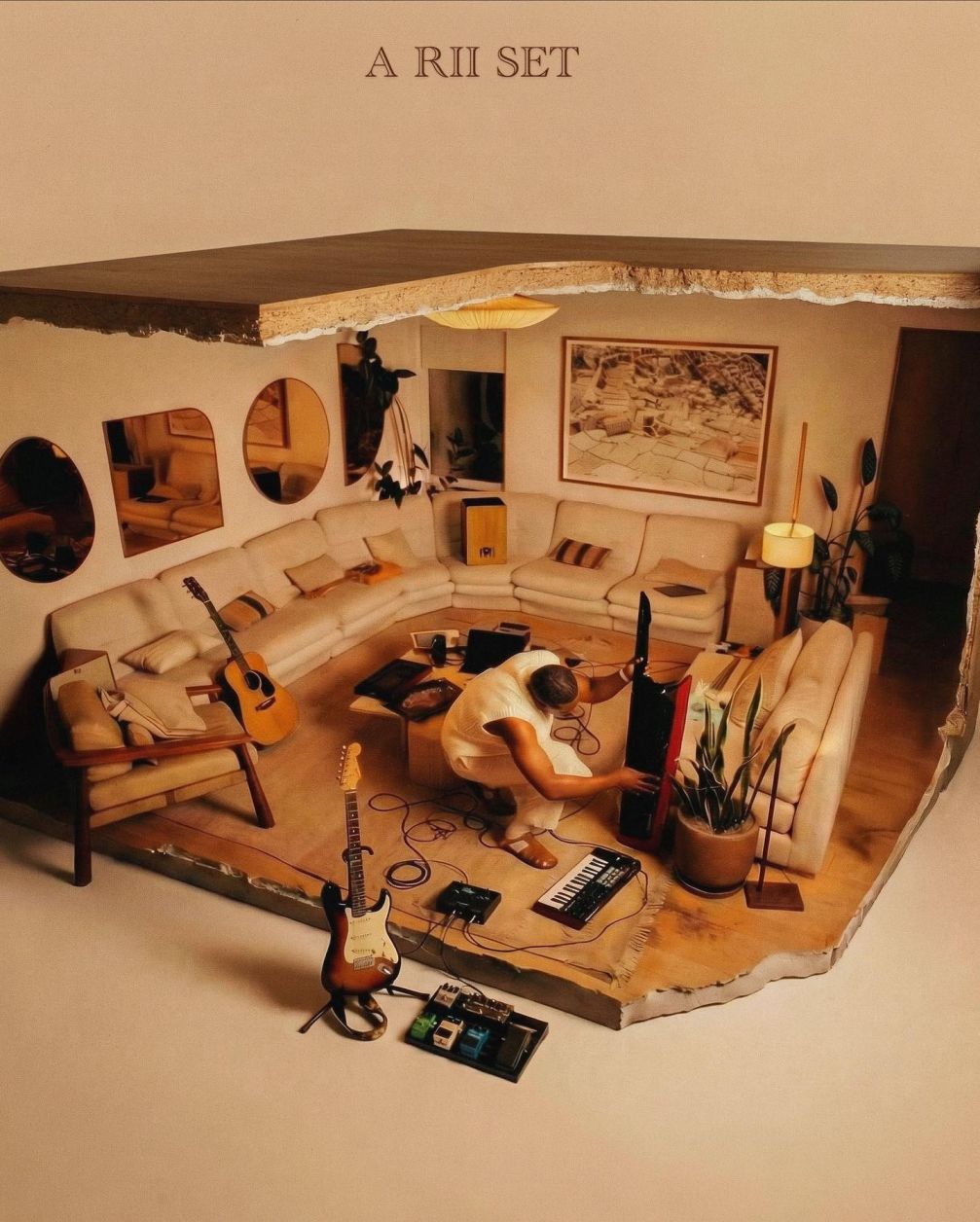
The transition into “All Night Long” cleverly carries over the recurring “Dirty Diana” motif while shifting into a warm Makossa-inspired palette built around rifling electric rhythm guitars, thrumming bass guitar lines, layered African percussion, Afro drums, and high-pitched whining synth melodies. Pheelz delivers the romantic narrative through smooth, relaxed vocals, his melodic instincts mirroring the contours of the instrumental itself and reinforcing his characteristic gift for memorable hooks. Choral group vocals swell through the chorus while his verses glide effortlessly across the evolving arrangement, which constantly shifts in expression to keep the record moving.
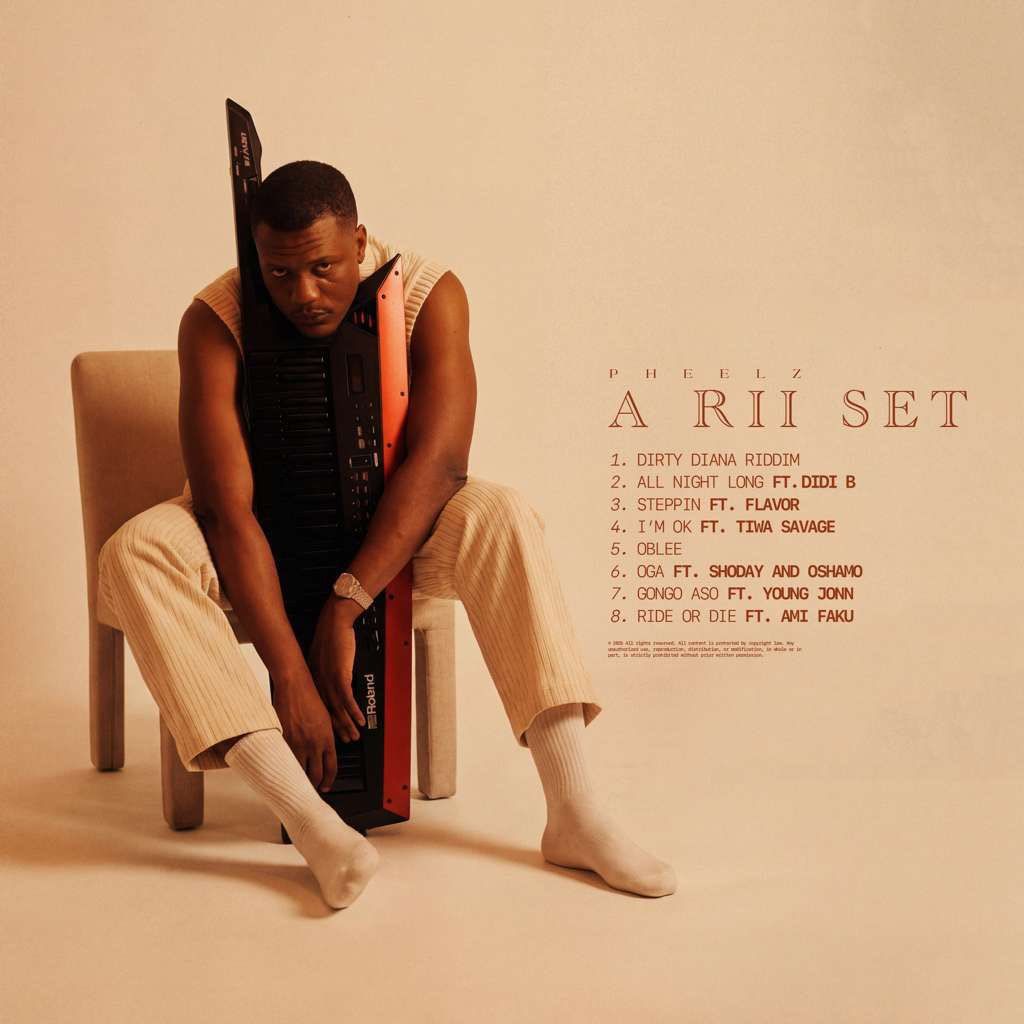
His intentions are laid bare in the affectionate confession, “Ọmọ ẹlẹ I’ve been searching for you / Jọwọ baby na you get my mumu button o / Gimme your love, gimme your love / Ah, tired of riding solo.” Ivorian artiste Didi B proves an ideal collaborator, his dynamic contribution blending naturally into the instrumental palette rather than disrupting it, adding another melodic dimension to an already fluid love song whose richness comes as much from its constantly evolving production as its affectionate sentiment.
“Steppin” begins with an instantly recognisable sample of Osita Iheme’s famous “biggie biggie heavy heavy” moment, chopping the vocals into the fabric of the record over midtempo triplet Afro drums before revisiting it throughout as a playful recurring motif. Beneath its humour lies an unabashed song of admiration, with Pheelz showering affection upon his lover through relaxed vocals and agile melodic phrasing that are constantly enriched by ear-catching staccato group vocals, inventive ad-libs, and carefully layered backing harmonies.
Smooth electric piano chords, lively bass guitar, tasteful 808 sub-bass, delicately plucked electric guitars, understated synth lines, and intermittent saxophone and brass riffs create a colourful but never overcrowded backdrop. The lyrics never stray from their adoration, celebrating that “Mi girl you sweet pass fine wine / Stepping like a queen and more / Her face card crazy, body captivating o pọ.”
Flavour, whose career has long been built around romantic charisma and melodic Highlife sensibilities, fits seamlessly into that atmosphere, matching Pheelz’s lover boy charm with an equally warm delivery before the recurring “Dirty Diana” reference resurfaces once more ahead of a striking synthesiser outro.
On “I’m Ok”, Pheelz pivots toward emotional introspection without abandoning his polished sonic identity. The midtempo arrangement centres around Afro-Adura-inspired drums, rattling shakers, sparse syncopation anchored by pronounced snare hits, and filtered electric piano chords that immediately establish a sombre atmosphere. Subtle vocal samples quietly ask whether one is alright while wailing strings and warm synth textures bloom through the bridges and choruses, gradually expanding alongside sub-bass to deepen the emotional weight.
The vulnerability at the song’s centre is captured in lines like, “Cos some days I’ve been so confused about where I’m at / But thank God say I dey alive, I’m grateful for that / Depression na alakoba / I’m okay-kay / Mo ni, I dey alri-right”. Pheelz’s heartfelt delivery is frequently interrupted and supported by harmonies and broad group vocals that add communal reassurance to an otherwise personal meditation on mental wellbeing and self-care. Tiwa Savage brings years of vocal experience to her feature, offering a soft, compassionate perspective whose warmth and emotional clarity contrast beautifully against Pheelz’s introspection, making the song feel both vulnerable and comforting.
Despite its title suggesting something more immediately festive, “Oblee” continues the subdued emotional current established by its predecessor. Gentle rattling shakers and percussion borrow almost as much from Afro-House as Afro-Pop, while soft electric piano chords and wailing ambient pads create an understated yet immersive soundscape. The drums maintain a delicate pulse without overwhelming the arrangement, leaving ample space for Pheelz’s subdued vocals to occupy their comfortable register with understated confidence.
His melodies remain consistently excellent, delivered with generous spacing that allows the surrounding sonic environment to breathe naturally, while heavily reverbed vocals across the chorus reinforce the sense of emotional distance and contemplation. Even when singing “Alala ololo / O ya take me there I wanna go there / Gbe mi de bẹ / Let’s go there”, the performance feels less like exuberant partying than quiet longing. Though the lyrics revolve around celebration and enjoyment, the execution remains introspective, with subtle interpolations of other songs woven neatly into the composition to quietly enrich an already affecting piece.
“Oga” reintroduces momentum through talking drums before quickly locking into energetic Afro percussion anchored by a prominent snare and layered rhythmic movement. The recurring “Dirty Diana” phrase appears once again, gradually establishing itself as something resembling a signature motif across A Rii Set. Beneath the straightforward instrumental lies a surprisingly intricate network of melodic elements, with humming that mirrors the lead synthesiser, wobbling guitars, basslines, pads, and chords all quietly interacting beneath lively group vocals that inject a communal energy into the record.
Street-Hop rising talents, Shoday and oSHAMO, naturally bring an earthier dynamic to proceedings, blending Yoruba and English with relaxed but groove-heavy deliveries that complement rather than overpower Pheelz’s own understated vocal approach. Their playful energy is reflected in boasts like “Baby o fantastic / Kind of love I no see / I love your aura / The way you buss your body down,” keeping the collaboration firmly rooted in charisma and groove while smart layering rather than excess drives the song’s appeal.

“Gongo Aso” wears its inspiration proudly, directly sampling 9ice’s legendary anthem through its pitched-up introduction while reviving the signature staccato synthesisers, lead melodic figures, and brass stabs that defined the original. Around those familiar references, however, Pheelz constructs something distinctly contemporary through percussion-heavy drums and thumping kicks that inject fresh energy into the nostalgic framework.
The chorus cleverly incorporates the famous phrase while the lyrics themselves lean into playful innuendo, with lines such as “Girl I want to eat your buffet / Beautiful tempta / Girl I wanna take you personal / And give you loving in my Benz ma” using charm and melody to soften their raunchier implications. Young Jonn, himself another celebrated producer turned successful vocalist, feels like an especially fitting collaborator here, with both musicians trading melodies and layering harmonies across one another in a meeting of two producer-vocalists whose chemistry reinforces the song’s effortless appeal.
The closing “Ride Or Die” gently brings A Rii Set to rest through an Amapiano-inflected atmosphere built from smooth pad chords, shimmering synth plucks, sizzling hats, restrained snares, rattling shakers, and carefully syncopated percussion. Soft vocals beckon loyalty and commitment while the instrumental gradually expands through synth strings, bubbling log drums, rich sub-bass, and tasteful saxophone accents that add melodic tension beneath the song’s soulful centre.
Pheelz’s vulnerability comes through in his plea, “I’ve been fighting battles / Been on another level / Give me a peace of heaven / Omo you kill my stress,” before the chorus asks simply, “Will you be my ride or die?” South African singer Ami Faku complements that tenderness perfectly, her smooth, sweet, sensual delivery intertwining with snaps, group vocals, and synthesiser chord stabs that broaden the chorus without sacrificing intimacy. Together they create a closing moment whose romantic warmth and understated elegance provide a fitting final destination for the project, ending A Rii Set not with spectacle but with quiet emotional assurance.
Even its title offers an early clue to its intentions. By calling the project A Rii Set, Pheelz frames it less as a grand statement and more as a carefully curated experience, a concise showcase of the duality that has come to define his artistry. It is the meeting point between Pheelz the vocalist and Rii the producer, each identity informing and strengthening the other.
The result is a project that feels collaborative by design, inviting a wide range of voices into its orbit while remaining unmistakably his. Across its runtime, A Rii Set explores multiple shades of Afro-Pop, borrowing from different regional influences, rhythmic traditions, and stylistic pockets while maintaining a cohesive identity that speaks to Pheelz’s versatility both behind the boards and in front of the microphone.
That background as one of Nigeria’s premier producers is evident throughout the project’s production. Pheelz demonstrates an exceptional understanding of groove, atmosphere, and sonic storytelling, crafting instrumentals that rarely rely on complexity for its own sake yet remain constantly engaging through subtle evolution and attention to detail. Layers quietly emerge and recede, rhythmic textures shift beneath the surface, and melodic elements weave in and out without ever distracting from the songs themselves.
Whether leaning into Makossa, Afro-Adura, Amapiano, or more straightforward Afro-Pop palettes, the production consistently finds fresh ways to manipulate feel and rhythm while leaving generous space for the vocals to occupy centre stage. At the same time, the beats never become passive backdrops, with synth melodies, basslines, percussion, and carefully placed instrumental flourishes commanding attention in their own right.
The vocal performances across A Rii Set are equally impressive and perhaps surprisingly so for someone whose reputation was built first as a producer. Pheelz never approaches the microphone as a technical showman concerned with vocal acrobatics, instead relying on strong melodic instincts, clear phrasing, expressive delivery, and an excellent understanding of his own register. His melodies are consistently memorable, his dynamics comfortably shifting between restrained intimacy and moments of greater power, while his tone remains warm and inviting throughout.


Just as importantly, he demonstrates remarkable command over vocal arrangement, using harmonies, layered backing vocals, and group performances not simply as decoration but as tools to add movement, texture, and freshness to the music. That understanding extends naturally to his collaborators, each carefully selected feature complementing rather than competing with him, their contrasting styles adding new dimensions that make many of these songs feel greater than the sum of their individual parts.
Lyrically, Pheelz retains the wit and playful charm that have long characterised his songwriting. He understands when a record demands introspection, as in the project’s more emotionally reflective moments, and equally knows when to loosen up and allow charisma and melody to carry the day.
Clever samples and interpolations further reinforce that instinct, revealing an artiste who is clearly a student of the game, comfortable drawing from familiar cultural touchstones and recontextualising them in ways that feel both nostalgic and fresh.
Rather than relying on one mode of writing throughout, he adapts his lyrical approach to the needs of each individual song, demonstrating an appreciation for the specific assignment at hand rather than forcing every idea through the same lens.
Altogether, A Rii Set stands as an enjoyable and remarkably well-rounded listening experience, one that encapsulates the breadth of Pheelz’s musical skillset with confidence and ease. It showcases the man behind the boards and the man in the booth in equal measure, revealing an artiste capable of directing every aspect of his creative vision while still sounding like he is having genuine fun in the process.
There is rhythm enough to fill the dancefloor, heart enough to sustain its quieter moments, sweetness enough to anchor its romantic turns, and versatility enough to keep each new idea feeling distinct from the last. In many ways, the project mirrors Pheelz himself: dynamic, adaptable, and constantly refusing to be boxed into a single role. It leaves the listener entertained while simultaneously reinforcing the sense that there is still plenty more for him to explore, making whatever comes next an enticing prospect indeed.
Lyricism – 1.4
Tracklisting – 1.5
Sound Engineering – 1.7
Vocalisation – 1.5
Listening Experience – 1.6
Rating – 7.7/10
Yinoluwa “Yinoluu” Olowofoyeku is a multi-disciplinary artist and creative who finds expression in various media. His music can be found across all platforms and he welcomes interaction on his social media @Yinoluu.