

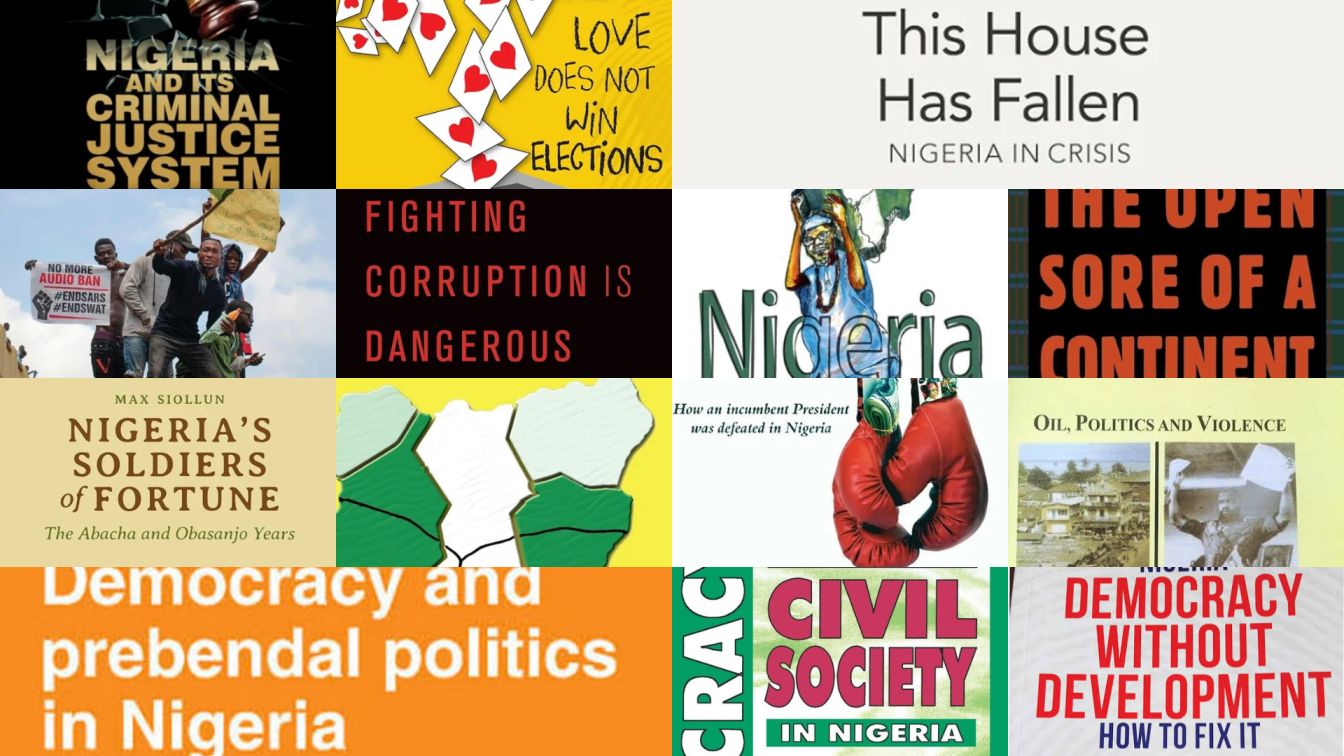

Afrocritik presents fourteen books that together form a serious reader’s guide to Nigerian democracy; its historical roots, its political logic, its failures in practice, and the arguments still being made about what it owes the people it governs.
By Joseph Jonathan
Ask most people what is wrong with Nigerian democracy, and they will tell you, quickly and with confidence: the leaders are corrupt, the voters are uninformed, and the system is broken. These are not wrong answers. They are, however, incomplete ones. And the problem with incomplete answers is not that they are false but that they foreclose better questions.
Nigerian democracy is twenty-seven years old. It has survived four peaceful transfers of power, multiple constitutional crises, a secessionist insurgency, and an economy that has contracted in per capita terms even as the population has grown. It has also produced some of the most spectacular governance failures on the continent: a public education system in chronic collapse, infrastructure that has barely improved across successive administrations, and a political class whose wealth is inversely proportional to the prosperity of the citizens it governs. That this democracy has endured is remarkable. That it has delivered so little is the more important question.
To that end, Afrocritik presents fourteen books that together form a serious reader’s guide to Nigerian democracy; its historical roots, its political logic, its failures in practice, and the arguments still being made about what it owes the people it governs. The goal is not comprehensiveness. Nigerian democracy has generated more serious writing than any single list can hold. The goal is orientation: a reading map for anyone who wants to move beyond the headlines and engage with what Nigeria’s democracy actually is, how it got here, and what it continues to cost.
Arranged roughly in the order a reader would benefit from encountering them — from historical foundation to contemporary practice to provocation — these fourteen books do not offer a diagnosis. They offer something more valuable: the tools to make your own.
Understanding How We Got Here
Oil, Politics and Violence: Nigeria’s Military Coup Culture (1966–1976) — Max Siollun
In January 1966, a group of army majors killed four of Nigeria’s five regional premiers and launched the first in a long series of military interventions that would shape the country for the next three decades. Siollun’s account of that coup culture is the essential starting point for understanding how Nigerian democracy became what it is. His central argument is quietly devastating: oil transformed the Nigerian state from a governing institution into a prize worth seizing, and once that transformation was complete, the logic of the coup (that power is taken, not negotiated) proved extraordinarily difficult to dislodge. The Fourth Republic did not emerge from nowhere. It emerged from this.
Nigeria’s Soldiers of Fortune: The Abacha and Obasanjo Years — Max Siollun
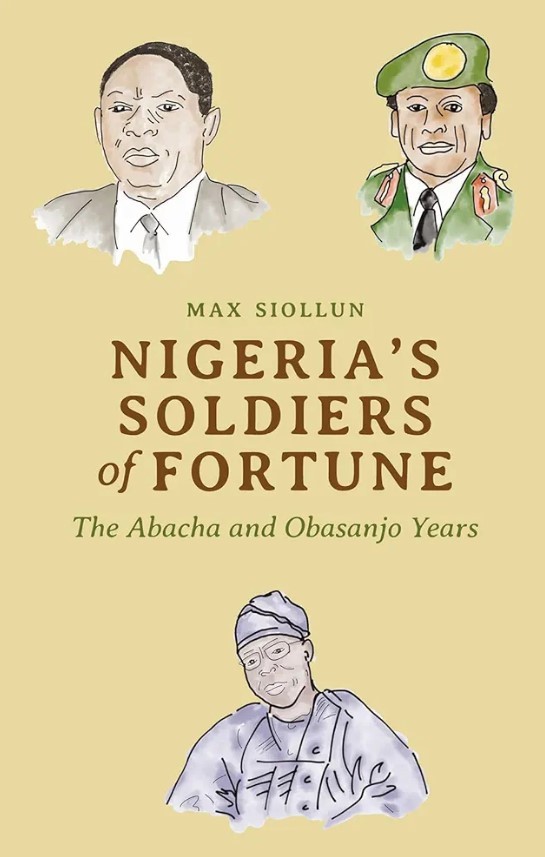
Where the first Siollun book establishes the deep structural roots of military rule, this one follows them to their most consequential expression. The annulment of June 12, the detention of Abiola, the assassination of Kudirat Abiola, the execution of Ken Saro-Wiwa, and Siollun cover all of it with the same forensic precision and political clarity that distinguishes his earlier work. He also covers the transition to Obasanjo, making this the indispensable bridge between the military era and the civilian order that replaced it. Taken together, the two Siollun volumes constitute the most readable and reliable account of how Nigeria arrived at democracy in 1999.
This House Has Fallen: Nigeria in Crisis — Karl Maier
A foreign correspondent’s account of Nigeria at the end of the Abacha era, written from inside a country whose formal institutions had largely stopped functioning. Maier travels across Nigeria to the Niger Delta communities bearing the environmental cost of oil extraction, to the northern cities navigating the Sharia debates, to Lagos in its permanent state of organised chaos and returns with a portrait of a country whose people have built elaborate parallel structures for survival precisely because the state cannot be relied upon. What makes this book valuable, alongside the Siollun volumes, is its texture. Where Siollun gives you the political architecture, Maier gives you what it felt like to live inside it. That texture is still recognisable today.
The Open Sore of a Continent: A Personal Narrative of the Nigerian Crisis — Wole Soyinka
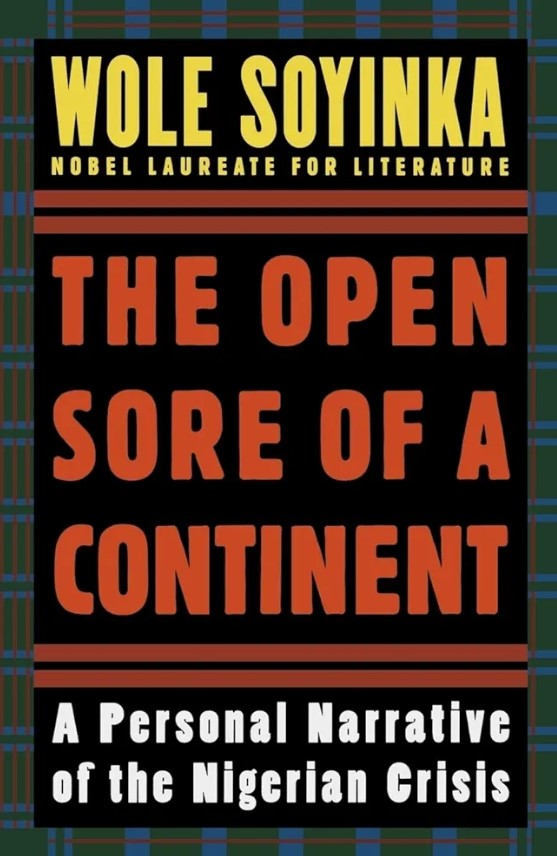
Written in exile in 1996, at the height of Abacha’s repression and three years after the annulment of the June 12 election, this is not a measured book. It is a furious, grief-stricken argument, against the annulment, against the international community’s silence, against the African leaders who normalised Abacha’s regime, and against a Nigerian state that had demonstrated, repeatedly, its capacity to destroy its best possibilities. Soyinka wrote from the position of someone who had watched a democratic mandate stolen and then watched the world move on. The specific political moment he was writing from has passed. The questions he was asking have not.
Understanding How Nigerian Politics Actually Works
Democracy and Prebendal Politics in Nigeria: The Rise and Fall of the Second Republic — Richard A. Joseph
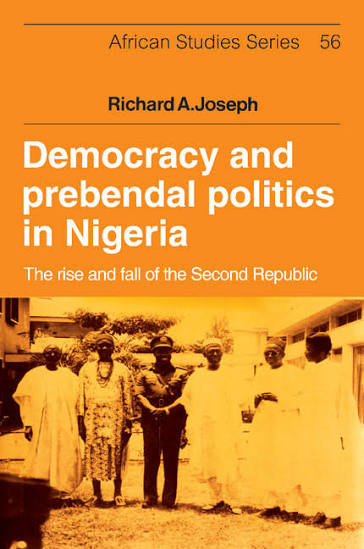
The foundational text for understanding why Nigerian political institutions behave the way they do. Joseph’s concept of “prebendalism” — the systematic treatment of public office as a personal entitlement to be distributed among supporters along ethnic and factional lines — was developed to explain the Second Republic, but its diagnostic power has proven stubbornly portable. Every subsequent republic has reproduced the same basic logic with different actors. If you have ever wondered why Nigerian politicians switch parties without apparent ideology, why state resources flow along patronage networks rather than public need, or why political reform efforts so consistently produce the same outcomes, Joseph is where the explanation begins.
Understanding Modern Nigeria: Ethnicity, Democracy and Development — Toyin Falola
Falola’s strength is breadth without superficiality. This book takes seriously the multiple, overlapping forces that shape contemporary Nigeria (colonial inheritance, ethnic arithmetic, democratic institutions, and development trajectories) and resists the single-variable explanations that dominate popular commentary. Reading it alongside Joseph creates a productive tension: where Joseph gives you the specific mechanism of prebendal politics, Falola gives you the wider environment in which that mechanism operates. Together, they are considerably more useful than either alone.
Democracy and Nigeria’s Fourth Republic: Governance, Political Economy, and Party Politics 1999–2023 — Wale Adebanwi (ed.)
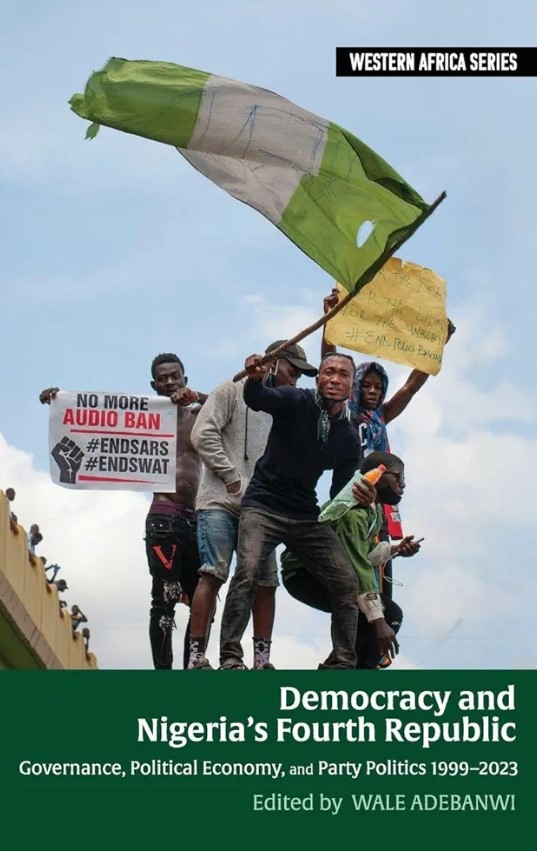
An edited volume assembling serious scholars of Nigerian politics to examine twenty-five years of the Fourth Republic across its key dimensions: federalism, party politics, oil and economic reform, electoral governance, civil society, and conflict. It is the most comprehensive academic account of the republic Nigeria currently inhabits, and it frames its inquiry around what is perhaps the most important paradox of that republic: that the Fourth Republic has lasted longer than its three predecessors combined, yet remains deeply contested. For readers who want to go further than any single argument can take them, this is the sourcebook.
Democracy and Civil Society in Nigeria — Matthew Hassan Kukah
Kukah writes about civil society not as an abstract category but as a lived political struggle. As a Catholic bishop and one of Nigeria’s most consistent public intellectuals, he brings to this subject a vantage point unavailable to most scholars: a participant’s understanding of how civic institutions, religious organisations, and grassroots movements sustain democratic norms against a political class that has consistently worked to narrow the space available to them. The book is a necessary corrective to accounts of Nigerian democracy that focus exclusively on elite behaviour, and a reminder that the most durable democratic infrastructure in the country has often been built not by the state but against it.


Understanding Democracy in Practice
Love Does Not Win Elections — Ayisha Osori
In 2014, Ayisha Osori, a lawyer and governance advocate with two Harvard degrees, contested the People’s Democratic Party primaries for a House of Representatives seat in Abuja and lost. This book is her account of why: the midnight meetings, the envelopes of cash, the ethnic arithmetic of her constituency, the kneeling before power brokers, the ways the political system systematically repelled someone who arrived with ideas rather than networks. It is one of the most honest books written about Nigerian electoral politics precisely because Osori has no incentive to protect anyone. She did not win. She has nothing to gain from flattery. What she has instead is clarity, and she deploys it with considerable wit.
Against the Run of Play: How an incumbent President was defeated in Nigeria — Olusegun Adeniyi
Adeniyi served as presidential spokesman under Umaru Yar’Adua and was positioned close enough to the 2015 Jonathan-to-Buhari transition to observe how political capital actually moves at the highest levels of Nigerian electoral politics; how alliances form and collapse, how decisions are made in rooms that cameras never enter, how the machinery of a presidential election operates beneath the surface of campaign rallies and manifesto launches. He has since returned to journalism and no longer needs to protect anyone, and it shows. What Osori’s book does for party primaries, this one does for presidential politics. Together, they cover the full vertical range of Nigerian electoral practice.
Fighting Corruption Is Dangerous — Ngozi Okonjo-Iweala
The title is not metaphorical. Okonjo-Iweala, twice Finance Minister and now Director-General of the World Trade Organisation, received death threats for her attempts to reform Nigeria’s public finance architecture from inside two successive administrations. This book is a firsthand account of what happens when technocratic intention meets political reality: the specific resistances, the specific trade-offs, the specific moments when reform runs into the limits of what the system will permit. It is also, quietly, a book about patience: about what it costs to keep working within a system that resists you, and why some people conclude it is worth the cost.
Nigeria Democracy Without Development: How to fix it — Omano Edigheji
The most directly diagnostic book on this list, and the only one that attempts sustained prescription. Edigheji argues that Nigeria’s democratic institutions have been consistently unable to translate political participation into economic development, not because democracy is incompatible with development, but because the specific form of Nigerian democracy has prioritised political survival over policy effectiveness. He then does something most writers on Nigerian politics avoid: he argues concretely for what institutional reform would need to look like for that relationship to change. Whether his prescriptions are sufficient is worth debating. That the debate is necessary is beyond question.
Challenging the Conventional Idea of Nigerian Democracy
The Trouble with Nigeria — Chinua Achebe

Published in 1983, on the eve of the military coup that ended the Second Republic, this is a hundred pages of controlled fury. Achebe’s central argument is deceptively simple: the trouble with Nigeria is a failure of leadership. It is a thesis that has shaped decades of Nigerian political commentary, become the default explanation for everything that goes wrong, and been quoted so often that it has almost stopped meaning anything. Which is precisely why it belongs here. The “failure of leadership” explanation is not wrong. But it is insufficient, and engaging seriously with Achebe means engaging seriously with what his argument leaves out: the structures that produce the leaders, the incentives that shape their behaviour, and the conditions under which citizens make their choices. Read it, take it seriously, and then ask what it cannot explain.
Nigeria and Its Criminal Justice System — Dele Farotimi
Published in July 2024, this ferocious book by lawyer and activist Dele Farotimi examines the Nigerian judiciary, specifically the way legal processes are manipulated by money, political influence, and the interests of the powerful at the expense of ordinary citizens. It became a bestseller not because of its initial reception but because of what happened after: Farotimi was arrested following a petition by a senior lawyer he had criticised, and the resulting publicity sent it to the top of Amazon’s charts. The book proved its own argument before it had finished being read. Most accounts of Nigerian democracy focus on elections, parties, and political figures. Farotimi focuses on the courts, on the institution that is supposed to be the last line of accountability when everything else fails. It is an angle most political writing ignores, and it is not a minor one.
Joseph Jonathan is a historian who seeks to understand how film shapes our cultural identity as a people. He believes that history is more about the future than the past. When he’s not writing about film, you can catch him listening to music or discussing politics. He tweets @Chukwu2big