

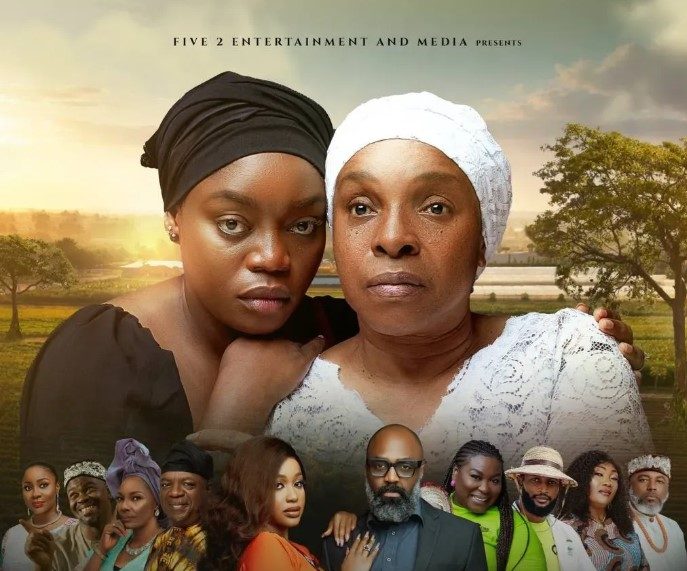

The truest adaptation is not the most faithful one but the most alive one. Remi & Nneoma is so enamoured of its source that it occasionally forgets to be a film.
By Joseph Jonathan
The Book of Ruth is, by any measure, one of the stranger texts in the biblical canon. It is a story about a Moabite woman (a foreigner, by the standards of ancient Israelite religious law, from a people regarded with suspicion and deliberate exclusion) who chooses, at the precise moment when her cultural obligations release her from any further duty, to bind herself permanently to a Hebrew mother-in-law and to the God of a people not her own.
Ruth’s declaration to Naomi — “where you go I will go, and where you stay I will stay” — has survived three millennia of translation, quotation, and cultural appropriation because it articulates something that religious boundary-drawing has always tried to suppress: that loyalty, at its deepest, does not respect the categories we build to contain it. Ruth should have gone home. She was Moabite. She was widowed. She was free.
The radical thing about her choice is not its devotion but its refusal; the refusal of the identity her origin assigned her, the insistence on constructing a new one through an act of will that her culture had no framework to accommodate. This is not a comfortable story. It is a subversive one, and the discomfort is entirely the point.
Remi & Nneoma, directed by Lyndsey F. Efejuku and produced by Bikiya Graham-Douglas and Solate Ovundah-Akarolo, which premiered in cinemas on June 26th, 2026, transposes this story into the textures of contemporary Nigerian life: Remi (Bisola Aiyeola) in the role of Ruth, Nneoma (Liz Benson-Ameye) as Naomi, the story relocated to Rivers State where both women navigate grief, cultural expectation, and eventual renewal after losing their husbands in rapid succession. The intention is clear and genuinely admirable.
The execution is careful, warm, and in the places that matter most, too careful by half. A film that draws from one of history’s most quietly radical texts owes its source more than reverence. It owes it the courage to be as unsettling as the original.
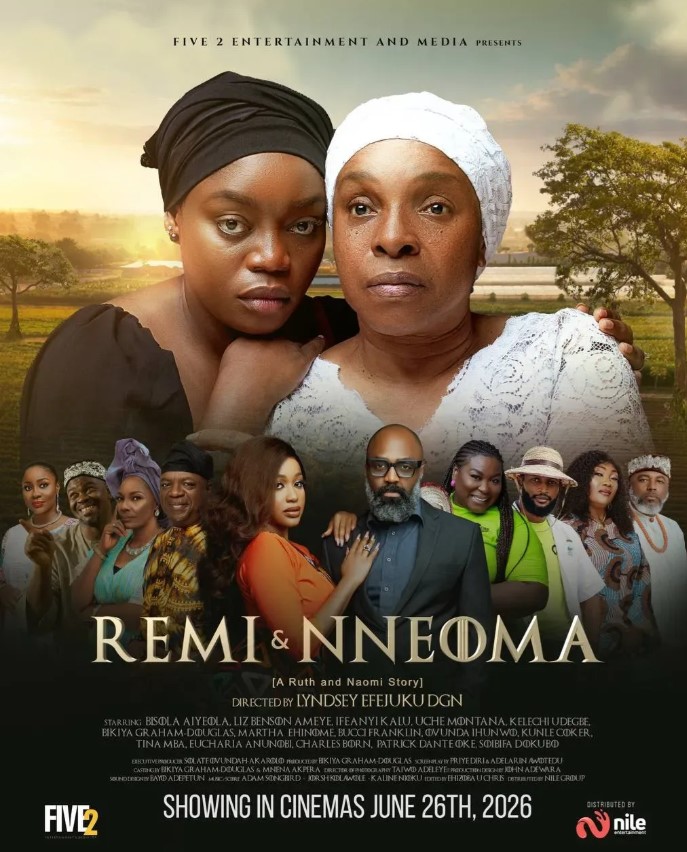
The casting of Liz Benson-Ameye as Nneoma is itself a cultural statement worth sitting with before the film’s narrative is even engaged. Benson-Ameye is not merely an actress in this context; she is one of Nollywood’s earliest and most dominant stars, a figure whose presence defined the industry’s formative VHS era in the 1990s across a range of roles and genres. That she featured in several faith-based productions during that period means her appearance in a biblical adaptation carries a specific resonance; her face activates audience memory, a set of associations with an era of Nigerian storytelling in which conviction, whether spiritual or dramatic, was worn openly and without apology. To cast her as Naomi (the grief-stricken, faith-tested matriarch of the Ruth narrative) is to layer Nigerian cinema history over biblical history in ways that add meaning without a single line of dialogue.
When Benson-Ameye’s Nneoma withdraws from God, when she sits in the specific loneliness of a woman who has lost everything she organised her life around and cannot locate the faith that should comfort her, the performance carries the weight not just of the character but of a career long enough and varied enough to know exactly what this kind of grief costs. This is the film at its most culturally layered, and it arrives almost incidentally, through a casting choice rather than a screenplay one.
The contemporary Nigerian setting offers the film its most significant and most underused dramatic opportunity. Widowhood practices in Nigeria (particularly within the Southern regions, which the film draws from in its construction of Nneoma’s world) remain one of the most documented sites of gender-based violence on the continent.
The expectations placed on widows: the mourning rituals that physically isolate them, the property disputes that leave women economically devastated in the immediate aftermath of their deepest grief, the communal scrutiny that treats mourning as a performance to be evaluated rather than a private experience to be honoured, these are not historical curiosities.
They are the lived reality of Nigerian women in 2026, and a film that sets the Ruth and Naomi story in this context inherits the full weight of that reality whether it chooses to engage with it or not. The film gestures toward this territory.
There is a moment where Remi faces what appears to be a traditional demand related to her status as a widow, a moment where the camera briefly enters the specific discomfort of a woman whose grief has made her culturally vulnerable. And then the film moves on. The gesture is real. The follow-through is not. In the space between what the film raises and what it examines lies the clearest evidence of its central failure of nerve.
The pivotal declaration scene — the moment the entire adaptation has been building toward, the contemporary version of Ruth’s binding speech to Naomi — arrives carrying dialogue lifted so closely from the biblical source that the actors seem to be performing scripture rather than inhabiting characters. The effect is the opposite of what the scene requires.

What should feel like the most personal and costly decision Remi has ever made instead feels like recitation, a scene that announces its significance rather than generating it. This is the film’s most fundamental tension made visible: the conflict between fidelity to a sacred source and the freedom required to make that source dramatically inhabitable. Biblical adaptation at its most successful, like Pier Paolo Pasolini’s The Gospel According to St. Matthew (1964), has always understood that honouring the spirit of a sacred text sometimes requires departing radically from its letter, that the truest adaptation is not the most faithful one but the most alive one. Remi & Nneoma is so enamoured of its source that it occasionally forgets to be a film.
The love story that constitutes the film’s Boaz narrative — Remi’s gradual connection with Ovundah (Ifeanyi Kalu), a farm owner whose corporate agricultural operation modernises Boaz’s field — is built on a foundation the screenplay never properly constructs. The farm meeting, in which Remi arrives not as a romantic prospect but as someone with practical agricultural solutions, is the adaptation’s most thoughtful single choice: it finds the spirit of the gleaning scene in the original text without forcing an awkward literal parallel, locating the working woman in the field, earning her place through competence rather than waiting to be chosen. This is a good instinct. The difficulty is that the instinct is not sustained.
Ovundah is written with a blankness that the film mistakes for steadiness; a man so cartoonishly oblivious to the romantic tension around him that his eventual emotional engagement feels scheduled rather than earned. Their interactions never excavate deep enough to create the specific knowledge of each other that desire requires as its foundation. We are asked, it seems, to supply the emotional history ourselves, using our familiarity with the source text as a substitute for the dramatic work the film has not done. The love story has no sparks, not because the performers cannot generate them but because the screenplay has not built the kindling.
The introduction of Oma (Uche Montana) as romantic rival and antagonist is the film’s most conventional dramatic choice and its most limiting one. The saint-seductress binary her function creates (her constant seduction positioned as counterpoint to Remi’s moral steadiness) is a structure as old as the biblical tradition the film is drawing from and as reductive. It removes from the love story the ambiguity and tension that would make it genuinely dramatic, replacing the complexity of a man navigating competing legitimate claims with the simplicity of a man unaware that a villain is pursuing him.


Bisola Aiyeola carries Remi with a warmth and quiet resolve that keeps the character sympathetic even when the script gives her insufficient material to contend with. The performance is steady where it needs to be steady, genuine in its emotional moments, but the screenplay’s insistence on Remi as primarily resolute (a woman defined by her devotion rather than her interiority) limits what Aiyeola can do with the role. The biblical Ruth is remembered for one extraordinary speech. What we know less about is her doubt, her private fear, the daily negotiation with a choice that her culture of origin had no language to honour.
The film is similarly incurious about Remi’s interior life, preferring to show us her decisions rather than the psychological landscape from which those decisions emerge. Benson-Ameye, given more emotional complexity to work with, rises to it with the specific gravitas the role demands, though the progression of Nneoma’s faith journey, from withdrawal to renewal, moves through its stages with an efficiency that occasionally feels more theological than human.
The dynamic between the two lead performers is the film’s most consistently convincing quality. They communicate a bond the dialogue sometimes takes too long to establish, their shared scenes carrying the specific warmth of women who have recognised something essential in each other.
Efejuku directs with a tonal consistency that prevents the film from tipping into melodrama while simultaneously preventing it from achieving the dramatic intensity its material could sustain. The cinematography is functional, the aerial farm footage gesturing toward visual ambition without quite achieving it, the remaining frames competent rather than expressive.
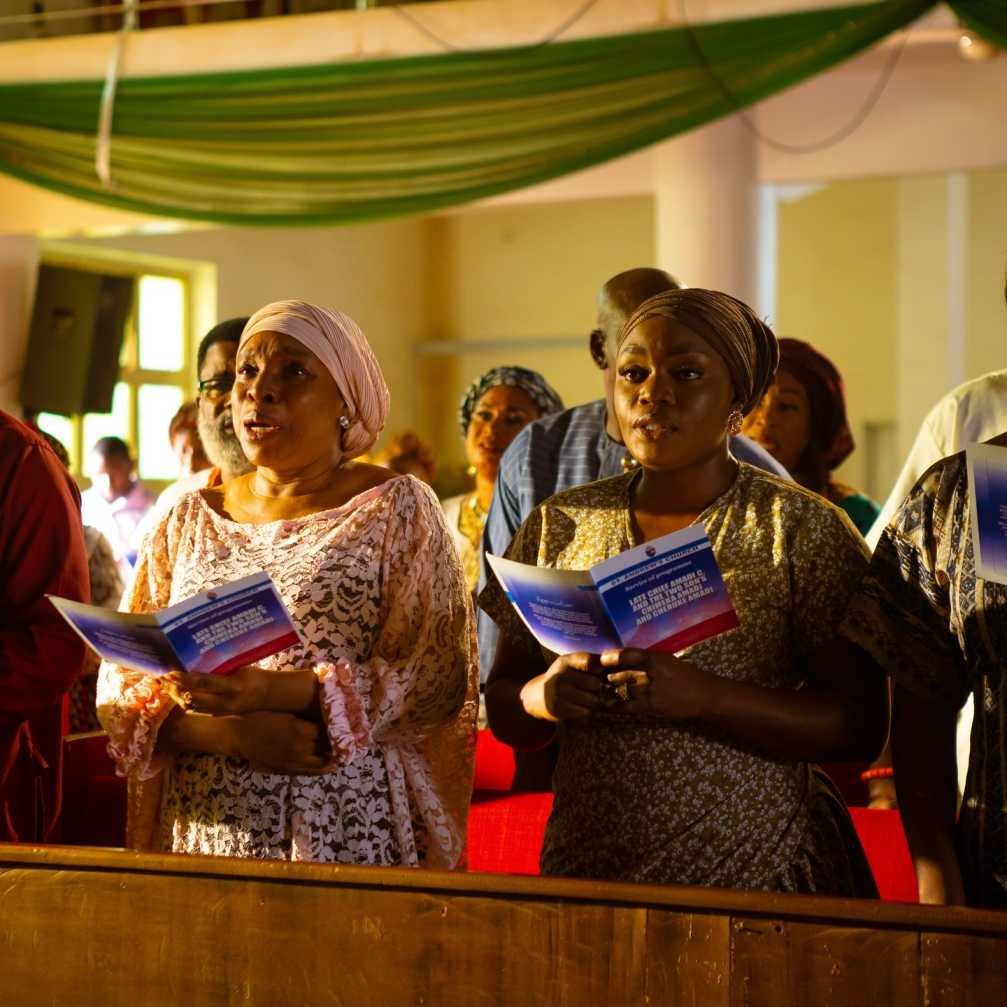
The cultural specificity of the funeral traditions and communal rituals is handled with the authenticity of people who know the world they are depicting, and these sequences carry a texture that the more conventionally dramatic scenes do not match. The production is clean throughout. It is made with care. It is not made with surprise.
Ruth chose Naomi when every reasonable calculation argued against it. The radical power of that choice has outlasted three thousand years of history precisely because it refuses the categories (ethnic, cultural, religious) that humans construct to organise loyalty and belonging. Remi & Nneoma tell that story with genuine warmth, genuine faith in its source, and genuine respect for the Nigerian women whose lives the story now inhabits. What it withholds is the radical power.
The Book of Ruth survived because it was specific, strange, and quietly subversive; a foreign woman building a new identity in defiance of everything her world had prepared her to be. This film loves that story too safely to fully become it.
Rating: 2.4/5
Joseph Jonathan is a historian who seeks to understand how film shapes our cultural identity as a people. He believes that history is more about the future than the past. When he’s not writing about film, you can catch him listening to music or discussing politics. He tweets @Chukwu2big