

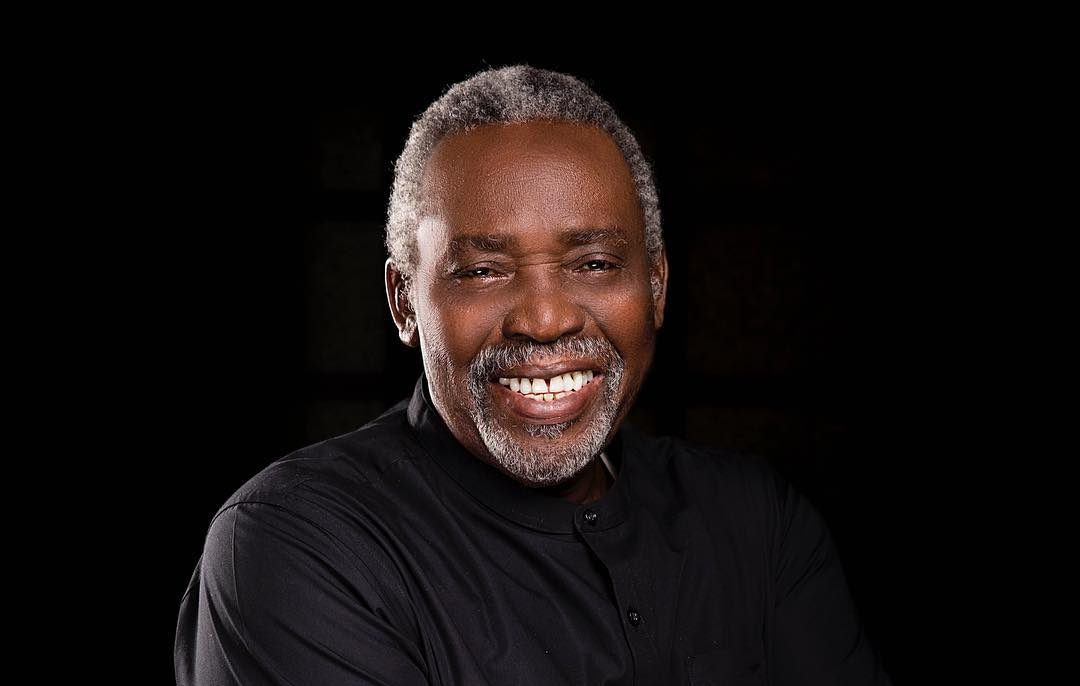

Perhaps the most fitting way to remember Olu Jacobs is not simply as a king, chief, patriarch or veteran actor. It is to remember him as a craftsman. A man who learned his craft, travelled with it, brought it home, practised it for decades, and eventually helped create structures through which others could learn theirs.
By Joseph Jonathan
There are actors whose entrances announce them before they speak. You hear the voice, see the posture, notice the stillness, and somehow the scene already feels different. Olu Jacobs was one of those actors.
He did not need to shout to establish authority. He could sit quietly in a scene and make silence feel like dialogue. His voice carried the weight of experience; his eyes often seemed to suggest that the character knew something the audience did not. Whether he was playing a king, patriarch, politician, businessman, elder, priest or simply a man carrying the burden of his circumstances, Jacobs possessed a rare ability to make his characters feel as though they existed before the camera arrived and would continue existing after it left.
On 16th September 2026, Nigerian cinema lost one of its most recognisable figures. Oludotun Baiyewu Jacobs, popularly known as Olu Jacobs, died at the age of 84. His family announced his passing in a statement that described him as “The Lion of Lufodo” and asked the public to respect the family’s privacy as they mourned. The lion has left the frame, but what an extraordinary frame he inhabited.
Olu Jacobs’ journey to becoming one of Nigerian cinema’s most revered actors did not begin in Nollywood, as we know it today. It began in Kano, where he spent his childhood after being born to Egba Alake parents. At Holy Trinity School, he participated in debating and drama societies, but it was a performance by Hubert Ogunde’s travelling concert party at the Colonial Hotel in Kano that helped convince the young Jacobs that acting could be more than an interest. It could be a life.
He travelled to Britain and trained at the Royal Academy of Dramatic Art in London. There, he acquired the theatrical foundation that would become so evident in the measured precision of his later performances. His early professional career took him through British repertory theatre and television. In 1972, he appeared as The Boy in A Taste of Honey at Sheffield’s newly opened Crucible Theatre. Six years later, he played President Mageeba in Tom Stoppard’s Night and Day. He also appeared in British television productions including The Goodies (1971), Till Death Us Do Part (1974), The Professionals (1979) and The Tomorrow People (1975).
Then came international cinema. Jacobs appeared in films including The Dogs of War (1980), Baby: Secret of the Lost Legend (1985) and Roman Polanski’s Pirates (1986). Long before Nollywood audiences came to associate him with kings, chiefs and patriarchs, he had already spent years navigating professional stages and screens beyond Nigeria.
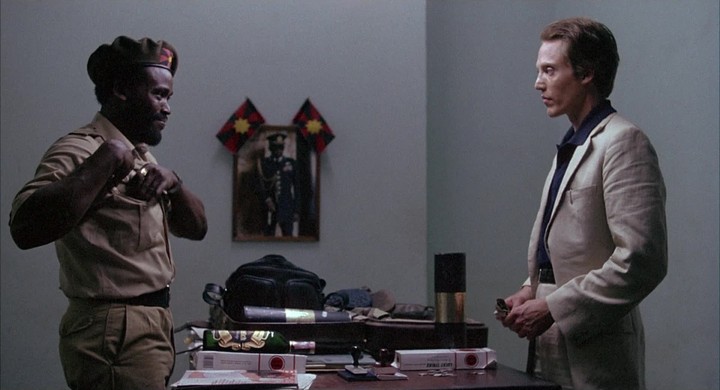
But Britain was not the only place where Olu Jacobs learned what it meant to be a professional performer. Between his British career and his eventual place in Nollywood was another important chapter: Lagos in the 1980s, when Nigerian theatre was experiencing one of its periods of remarkable activity.
Jacobs returned to Nigeria during a period when theatre was still a major part of the country’s cultural life. Companies and practitioners were creating spaces for professional performance beyond the university and state institutions, and Jacobs became part of that ecosystem. Ajo Productions, associated with playwright Fred Agbeyegbe and producer Jide Ogungbade, was one of the important theatre ventures of the period, while the PEC Repertory Theatre, founded by J.P. and Ebun Clark, was another. These spaces brought together playwrights, directors and performers who would become important figures in Nigerian theatre and, eventually, the wider screen industry.
Jacobs was not an outsider passing through this scene. He was part of it. His work during this period placed him alongside performers such as Joke Silva and Taiwo Ajai-Lycett, among a generation of Nigerian thespians who were helping to sustain professional theatre at a time when the boundaries between stage, television and film were still fluid. Ajo Productions’ The King Must Dance Naked, for instance, became one of the notable productions of that theatre boom; decades later, Jacobs and Silva would return to the play through Lufodo Productions, bringing a piece of that theatrical history back to the stage.
This is a less discussed chapter of Jacobs’ career, but an important one. He did not simply leave Britain, return to Nigeria and wait for the film industry to find him. He returned to a Nigerian performance culture that was already thriving, and became part of a theatre generation whose work would help shape the wider performing-arts landscape.
By the time the home-video industry began to expand, Jacobs had already spent years moving between stage, television and film, learning how each demanded something different from an actor. Nollywood, then, was not the beginning of Olu Jacobs’ Nigerian career. It was another stage in a career that had already been shaped by theatre.
In 1990, Jacobs took the lead role of Inspector Best Idafa in the NTA detective series The Third Eye. It was a role that would become central to the story of his rise in Nigerian popular cinema. By the time Nollywood began expanding into the cultural force we recognise today, Olu Jacobs was already an accomplished theatre, television and screen actor. He did not need Nollywood to teach him how to act. He had spent decades learning how to command a stage, inhabit a television character and carry a film performance. Nollywood simply gave him a new arena in which to deploy a craft refined across different forms of performance.
That distinction matters. Jacobs was not merely a veteran actor who happened to enter Nollywood. He belonged to an older tradition in which an actor was expected to move between stage, television and film, and to understand performance as a craft rather than simply a profession attached to one medium. By the time Nigerian home-video cinema began producing its own stars, Jacobs had already become the kind of performer who could bring an entire history of performance into a scene.
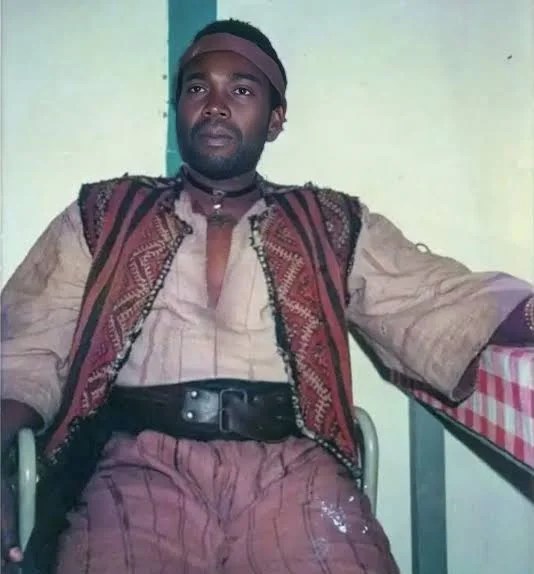
It is easy, when remembering Jacobs, to reduce his career to the familiar images: the king sitting on a throne, the stern father at the head of a family, the wealthy patriarch whose arrival changes the fortunes of everyone around him. Nigerian popular culture eventually developed an almost affectionate shorthand for the Jacobs character. If the man entered wearing traditional attire and spoke in that unmistakable baritone, someone was probably about to receive either wisdom, judgment, trouble, or all three.
One film that helped crystallise this screen persona was The Kingmaker (2003). Jacobs’ performance belongs to the tradition of the Nollywood patriarch whose authority is expressed through presence as much as dialogue. The film helped cement the image of Jacobs as an “Igwe” (King), a figure whose arrival could instantly give a scene the weight of ceremony, hierarchy and consequence.
But the robes, the title and the formal language were only the surface. What Jacobs brought to such roles was an understanding of physical presence: how to sit, how to look, when to speak and, perhaps most importantly, when not to. The king was convincing because the actor understood that power is also a performance. It lives in gesture, posture, silence and the expectation that others will listen when you eventually speak.
This was part of what made Jacobs’ authority on screen so distinctive. He rarely needed to force a scene into submission. He could allow a pause to carry the weight of a warning, or a glance across a room to suggest that a decision had already been made. His characters often seemed to possess a history that extended beyond the scene itself, as though the authority they carried had been accumulated long before the camera arrived. That quality may have been partly theatrical training, partly instinct, and partly the accumulated wisdom of a long career. Whatever its source, Jacobs possessed it in abundance.
His performance in Dancing Heart (2006), for which he won the Africa Movie Academy Award (AMAA) for Best Actor in a Leading Role in 2007, offered one formal recognition of a talent Nigerian audiences had already known for years. He later received the Industry Merit Award at the 2013 Africa Magic Viewers’ Choice Awards (AMVCA) and a Lifetime Achievement Award from the Africa Movie Academy Awards in 2016. In 2011, he was also conferred with the national honour of Member of the Order of the Federal Republic (MFR).
Yet, some of his later performances were interesting precisely because they moved him away from the familiar image of the all-knowing patriarch. In Oloibiri (2016), Jacobs played Timipre, a character whose presence carried the weight of history, violence and consequence rather than the ceremonial authority of a traditional ruler. His performance earned him a nomination for Best Actor in a Supporting Role at the 2017 AMAA.
And then there was The Royal Hibiscus Hotel (2017), which gave audiences one of the most quietly pleasurable late-career glimpses of Jacobs. Playing Richard opposite Joke Silva’s Rose, Jacobs was not required to summon the full machinery of the intimidating patriarch. Instead, he was allowed to simply be charming.
There was something particularly enjoyable about watching Jacobs and Silva play an older married couple in love. By then, their real-life partnership had become part of the cultural imagination, so seeing them inhabit affection, teasing familiarity and domestic intimacy on screen carried an extra warmth. The film was also one of his final screen performances, making its gentler register retrospectively poignant. Jacobs did not leave audiences with another throne-room pronouncement or another stern patriarchal decree. He left them, instead, with something soft and heartwarming.
Awards are often inadequate measures of an actor’s cultural presence. How do you quantify the effect of an actor whose face becomes part of your memory of growing up? How do you measure the contribution of someone whose voice can transport an entire generation back to the living room, when Nigerian films were watched on VCDs and DVDs, when families gathered around television sets, when Nollywood was still figuring out what it wanted to become?
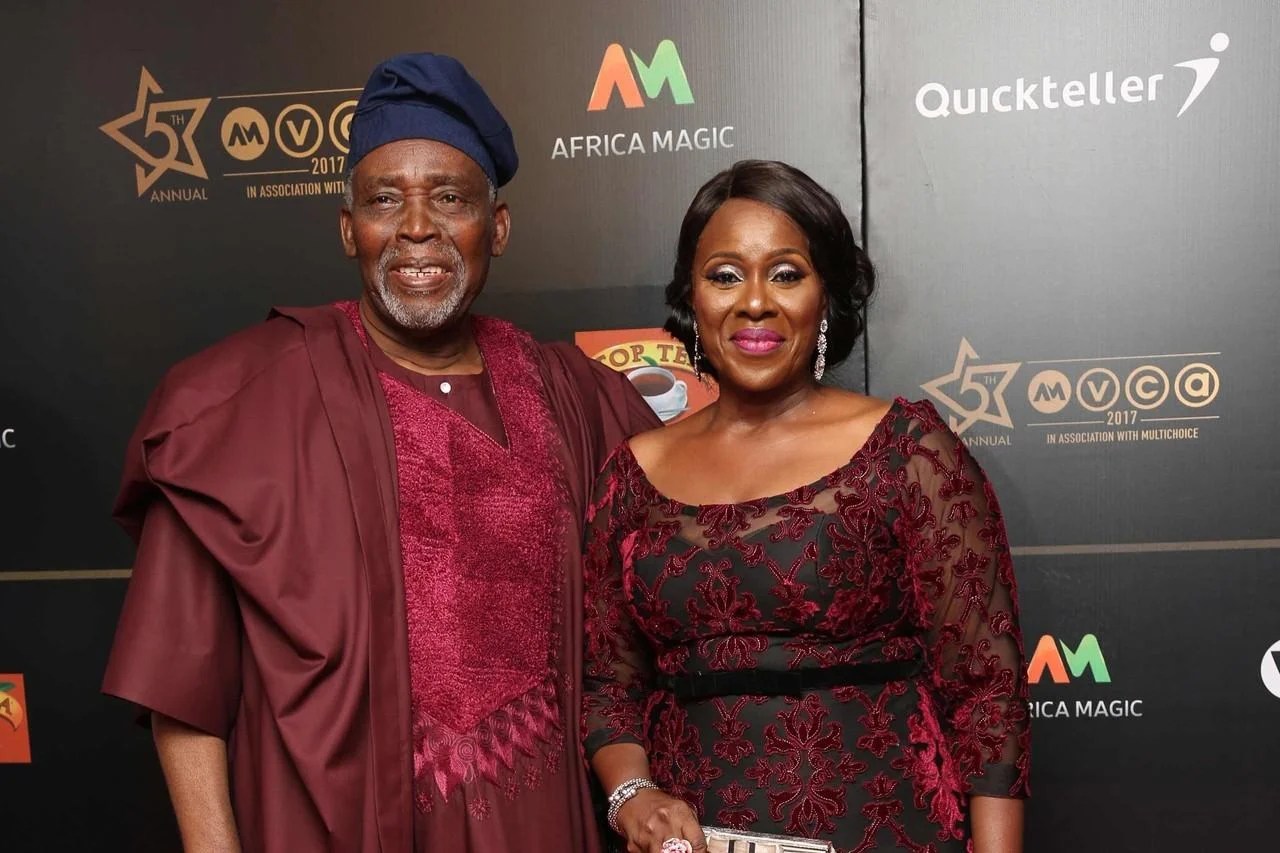
Olu Jacobs was there. He was there as Nollywood moved from the home-video boom into a more formalised film industry. He appeared alongside generations of performers, from the veterans who preceded him to the younger actors who inherited the industry he helped build. He became, in the process, more than a performer. He became a reference point.
This is perhaps the most enduring aspect of his legacy. Great actors give us performances. Great cultural figures give us a vocabulary through which to understand those performances. Olu Jacobs became part of Nigeria’s vocabulary for gravitas. And his influence extended beyond the screen. Together with his wife, fellow veteran actress Joke Silva, Jacobs co-founded the Lufodo Group and the Lufodo Academy of Performing Arts. The academy and the wider group have been involved in developing and producing work across the performing arts.


This part of his legacy deserves particular attention because it brings his career almost full circle. The boy who was inspired by Hubert Ogunde, the young actor who trained at RADA, the performer who returned to Lagos and worked within its bustling theatre culture, eventually became someone helping to create spaces in which other performers could learn the craft.
Through Lufodo, which he co-founded with Joke Silva, Jacobs was not simply preserving his own career. He was participating in the same cycle of transmission that had shaped him. There is something almost circular about that journey. A performance inspired a boy. The boy became an actor. The actor became a teacher, producer and institution-builder. And the institution became another possible beginning for somebody else’s story.
This is how cultural legacies survive. Not merely through nostalgia, but through transmission. Perhaps this is why the death of someone like Olu Jacobs feels larger than the death of a celebrity. Nigeria has lost an actor, certainly, but it has also lost one of the living connections between several generations of its performing-arts history.
He belonged to theatre before Nollywood became a household word. He understood television before streaming transformed how Nigerians encountered stories. He worked internationally before the global appetite for African cinema became as pronounced as it is today. And when he returned home, he became one of the recognisable faces of an industry that was still finding its feet.
His career was, in many ways, a map of Nigerian performance itself. It moved between theatre and film. Between Nigeria and the wider world. Between an older generation of performers and the generations that followed. Between the discipline of classical theatrical training and the unruly, inventive energy of Nollywood.
For those of us who encountered Nollywood while growing up, Olu Jacobs was never simply “that actor from that film.” His work accumulated across years and roles until the distinction between actor and cultural memory became difficult to separate. You might not remember the plot. You might not remember the title. You might not even remember the name of the character. But you remembered Olu Jacobs. You remembered the voice. You remembered the face. You remembered the pause before the next line. You remembered that when Olu Jacobs walked into a scene, somebody important had arrived. That is a rare thing for an actor to achieve.
And yet, there is another irony in remembering him now. For years, Nigerian audiences became accustomed to seeing Jacobs play men who represented continuity: fathers, elders, rulers, custodians of family and tradition. He often embodied the past speaking to the present. Now the present must speak about him in the past tense. There is something profoundly cinematic about that. An actor spends his life entering scenes, inhabiting other people’s lives, carrying stories that are not his own.
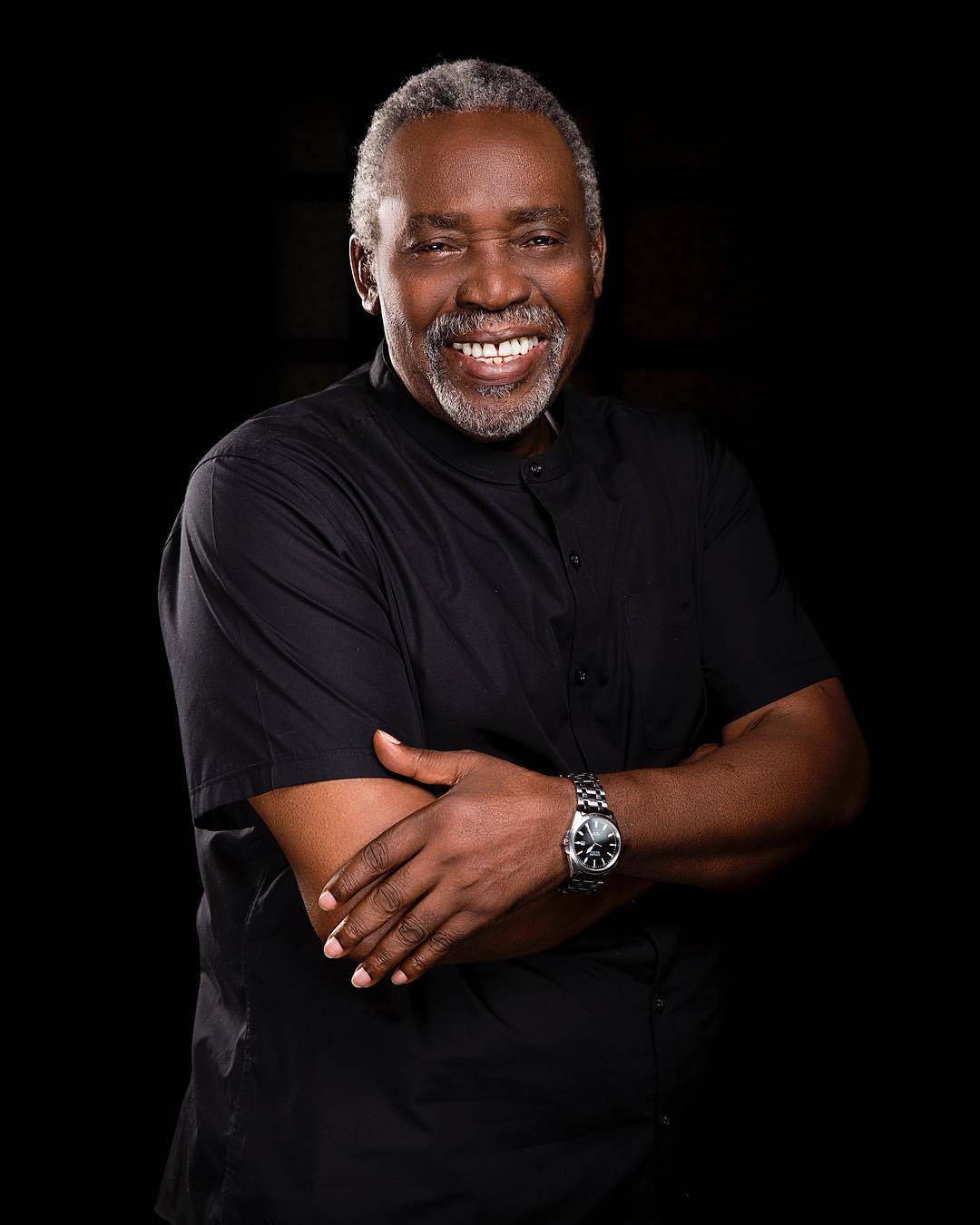
Eventually, there comes a final exit. The camera remains. The story continues. Other actors enter. Other voices fill the silence. But some departures alter the atmosphere of the film entirely. Olu Jacobs is one of them. Nigerian cinema will continue without him, as it must. New actors will emerge with different voices, different techniques, different understandings of performance. The industry will evolve, as every living art form does. Perhaps the Nollywood of the future will look very little like the Nollywood in which Jacobs became a household name.
However, evolution should not require amnesia. If anything, the arrival of each new generation makes remembering its predecessors more important. Because before Nigerian cinema became an industry with global ambitions, there were artists who gave it dignity through the seriousness with which they approached their craft. Before the world began paying closer attention to Nollywood, actors like Olu Jacobs had already spent decades demonstrating that Nigerian performers could command stages and screens anywhere.
He did not merely act in Nigerian cinema. He helped give Nigerian cinema a sense of itself. And so, perhaps the most fitting way to remember Olu Jacobs is not simply as a king, chief, patriarch or veteran actor. It is to remember him as a craftsman. A man who learned his craft, travelled with it, brought it home, practised it for decades, and eventually helped create structures through which others could learn theirs.
The boy in Kano who watched Hubert Ogunde perform might not have known what that afternoon would become. He might not have known that the theatre would take him across continents. He might not have known that decades later, an entire country would recognise his voice. He might not have known that the industry he would help shape would one day mourn him as one of its fathers. But perhaps that is the strange beauty of a life in the arts. You make the work. You enter the scene. You say the line. You leave the frame. And if you have done the work well enough, the scene continues to carry your presence long after you are gone.
Olu Jacobs has left the frame. The scene, however, is not the same without him. We appreciate the craft, the presence, the stories, and the generations he helped inspire. The lion has left the frame, but the roar remains.
Joseph Jonathan is a historian who seeks to understand how film shapes our cultural identity as a people. He believes that history is more about the future than the past. When he’s not writing about film, you can catch him listening to music or discussing politics. He tweets @Chukwu2big.