

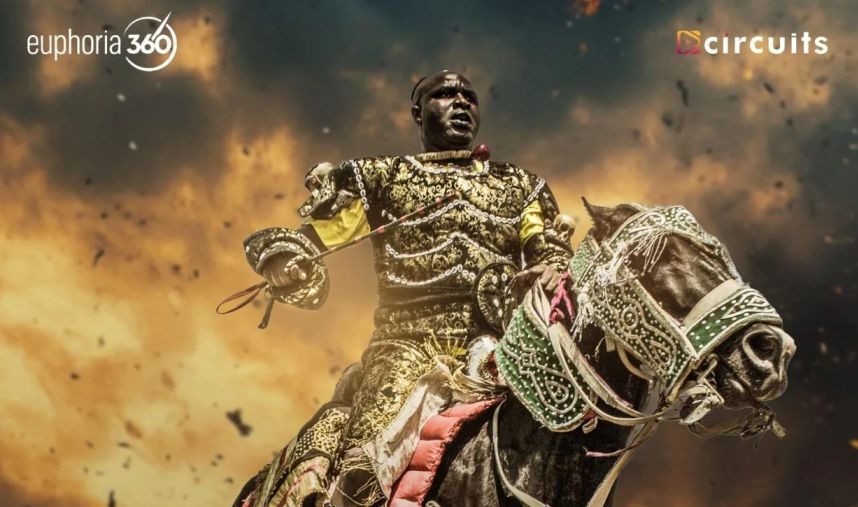

Agesinkole: King of Thieves 2 is an unusual sequel. It succeeds more as an act of world-building than as a tightly constructed drama.
By Joseph Jonathan
King of Thieves (Agesinkole) (2022) arrived at an interesting moment in Nollywood’s renewed fascination with Yoruba historical epics. Alongside films such as Jagun Jagun (2023), Aníkúlápó (2022), and House of Ga’a (2024), it demonstrated that audiences still had an appetite for indigenous stories told on an ambitious scale, combining mythology, history, and spectacle.
While the first film was hardly flawless, it understood one fundamental principle of epic storytelling: momentum. Its world was driven by constant intrigue, shifting loyalties, and the looming presence of a legendary outlaw whose actions shaped the destiny of kingdoms.
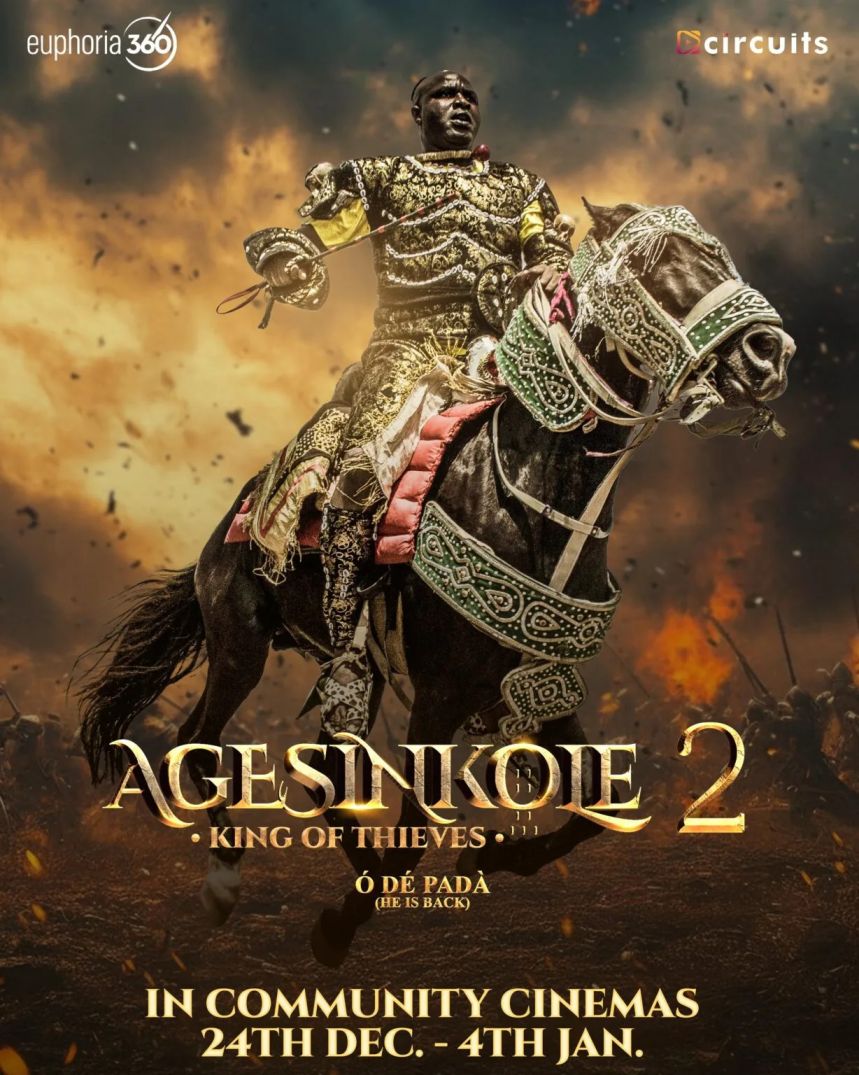
However, Agesinkole: King of Thieves 2 arrives with a different ambition. Released first through a successful community cinema tour across South West Nigeria in December 2025—where it grossed over ₦425 million—before making its Netflix debut on July 24, 2026, the sequel attempts something larger than simply resurrecting its titular hero.
Rather than continuing directly from the original narrative, directors Femi Adebayo, Tope Adebayo, and Adebayo Tijani, working from a screenplay by Olugbemiga Soyombo-Oluyombo, Yinka Laoye, and Adebayo Tijani, reposition Agesinkole from an outlaw to a legend, transforming him into the moral foundation upon which an entire kingdom rests.
Many years after the first film, Agesinkole is no longer merely remembered; he is worshipped. In Ajeromi Kingdom, kings are expected to swear an oath in his name before ascending the throne, symbolically binding themselves to justice. But King Adenitan (Yemi Solade), aided by a circle of corrupt chiefs, sidesteps this sacred ritual, suppressing the deity’s influence through forbidden rites while plundering the kingdom’s wealth and violently silencing opposition. Inevitably, the imbalance between power and justice summons Agesinkole back into the story.
On paper, this is a compelling premise. It reframes the legendary thief as something larger than a folk hero, asking what happens when a society institutionalises virtue only for those entrusted with protecting it to become its greatest violators. There is a potent political allegory beneath the fantasy, one that mirrors contemporary anxieties about leadership, corruption, and the ease with which institutions meant to ensure accountability can themselves become compromised. Yet Agesinkole: King of Thieves 2 struggles to trust the strength of this central idea.
The premise is, in its bones, a political allegory with genuine contemporary resonance. The king who evades his oath of accountability, the chiefs who enable and profit from his impunity, the sacred institution of justice whose powers are suppressed by the very men it was designed to check, this is not merely ancient Yoruba political mythology. It is a description of governance structures that Nigerians navigate daily, a portrait of institutional decay so familiar it barely requires dramatisation.
A film with the courage of its own premise would press into this allegory with the seriousness it deserves, would let the political resonance sharpen the dramatic stakes, would understand that the most powerful Yoruba epics have always been moral arguments dressed in spectacle rather than spectacle that happens to contain a moral. The difficulty with Agesinkole 2 is that the screenplay, for all its mythological ambition, does not fully trust the power of its own central conflict.
The problem begins with architecture. The story’s spine is clear and strong (corrupt king, suppressed deity, inevitable reckoning). In the hands of a disciplined screenplay, this architecture would be sufficient to carry a film of considerable dramatic weight. What the script does instead is populate the space around this spine with subplots that justify their inclusion insufficiently. They exist, but their existence does not strengthen what surrounds them. They consume screen time and audience attention without depositing equivalent dramatic returns, and their cumulative presence transforms what should be a film of mounting, focused intensity into something more diffuse; a story that arrives at its destination having taken several unnecessary roads to get there.
The consequence of this narrative overcrowding is a pacing problem that is likely to exhaust the viewer rather than immerse them. The first Agesinkole established a specific contract with its audience: intrigue, intensity, and action accumulating with the logic of a story that knows where it is going and is moving there with purpose. This sequel does not consistently honour that contract.
There are stretches (particularly in Agesinkole: King of Thieves 2’s middle section) where the momentum stalls, where the accumulated weight of underperforming subplots slows the engine that the premise has built, and where the audience’s patience is drawn upon without equivalent emotional compensation. In a Yoruba epic, pacing is not merely a technical concern. It is a mythological one. The masquerade that moves too slowly loses its terror.
The third act is where the screenplay’s structural debts come most visibly due. What should be the convergence point of everything the film has been building — the moment where the tension of the first two acts finds its resolution in dramatic action whose stakes the audience has been prepared to feel — arrives instead with the quality of a scene written in a hurry, as though the writers suddenly remembered that the film needed to end and constructed a conclusion from whatever materials were immediately available.
The build-up to a film of this type should carry the accumulated tension of everything that preceded it, should arrive with the specific inevitability of justice that the mythological premise has been promising. Instead, it arrives abruptly, resolved with a speed that is inversely proportionate to the patience the film asked of its audience in the preceding hour. You are left wanting more, not in the productive sense of a story that has opened something genuinely larger than itself, but in the unsatisfied sense of a meal that ended before the main course was properly served.
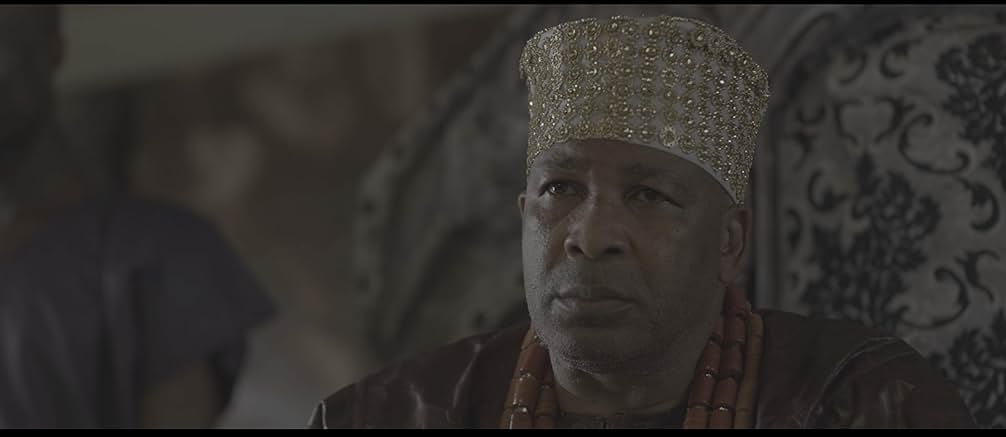
Fortunately, the performances consistently prevent these structural weaknesses from overwhelming the film. Yemi Solade as King Adenitan is the film’s most fully realised performance, bringing to the role the specific quality that corrupt authority requires on screen: the confidence of a man who has convinced himself that his impunity is his right, the specific blindness of someone whose power has insulated him from the consequences of his own choices for long enough that he has forgotten consequences exist.
It is a performance of controlled menace rather than theatrical villainy, and it gives Agesinkole: King of Thieves 2’s central conflict a human face that the screenplay does not always provide through its writing. Gabriel Afolayan and Kolawole Ajeyemi bring comparable control to their respective roles, their scenes operating at a register of craft that the material around them does not consistently match. The performances, across the major cast, are the film’s most reliable achievement: actors doing more with the screenplay than the screenplay deserves, which is both a tribute to their craft and a quiet indictment of the writing that constrains them.
Technically, Agesinkole: King of Thieves 2 represents another encouraging step for contemporary Nollywood historical epics. Its production design demonstrates an admirable commitment to creating a kingdom that feels inhabited rather than assembled for the camera. Costumes, architecture, props, and environmental details collectively reinforce the illusion of a functioning precolonial society instead of merely serving as decorative backdrops. Equally notable is the film’s use of extras.


For some time now, one recurring weakness of Nollywood epics has been their inability to convincingly populate kingdoms, often presenting supposedly powerful empires with suspiciously empty courtyards and sparsely attended royal ceremonies. Agesinkole: King of Thieves 2 largely avoids that problem, giving its world a welcome sense of social density.
The directors also display growing confidence in staging scenes spatially. Rather than relying exclusively on static shot-reverse-shot compositions, characters frequently move with intention through physical spaces, allowing blocking to communicate shifting relationships, hierarchy, and tension. It is a subtle but significant evolution in visual storytelling, one that suggests increasing sophistication behind the camera.
If there remains an area where the film could have pushed further technically, it is sound. The score capably supports the emotional register of individual scenes, but the overall sound design rarely amplifies the atmosphere in ways the material seems to invite. Stories rooted in mythology and spiritual conflict benefit enormously from carefully constructed sonic environments, moments where silence itself becomes unsettling, where unseen forces are suggested as much through sound as through image. Here, that dimension often feels underdeveloped.
Still, perhaps the sequel’s greatest achievement lies less in perfect execution than in its willingness to expand the possibilities of its own universe. Rather than simply reproducing the formula of the original, it attempts to transform Ageshinkole into a myth whose legacy extends beyond one man’s lifetime. That ambition deserves recognition, even if the screenplay lacks the discipline to fully realise it.
Agesinkole: King of Thieves 2 is therefore an unusual sequel. It succeeds more as an act of world-building than as a tightly constructed drama. Its ideas about justice, leadership, memory, and institutional corruption remain compelling throughout, but they compete with a narrative that too often loses sight of its own priorities.
With fewer distractions, a more focused screenplay, and a finale worthy of its setup, this might have stood comfortably alongside the strongest entries in Nollywood’s ongoing renaissance of indigenous epics. Instead, it settles into something more frustrating: a good film whose reach consistently exceeds its grasp.
Rating: 2/5
Joseph Jonathan is a historian who seeks to understand how film shapes our cultural identity as a people. He believes that history is more about the future than the past. When he’s not writing about film, you can catch him listening to music or discussing politics. He tweets @Chukwu2big