

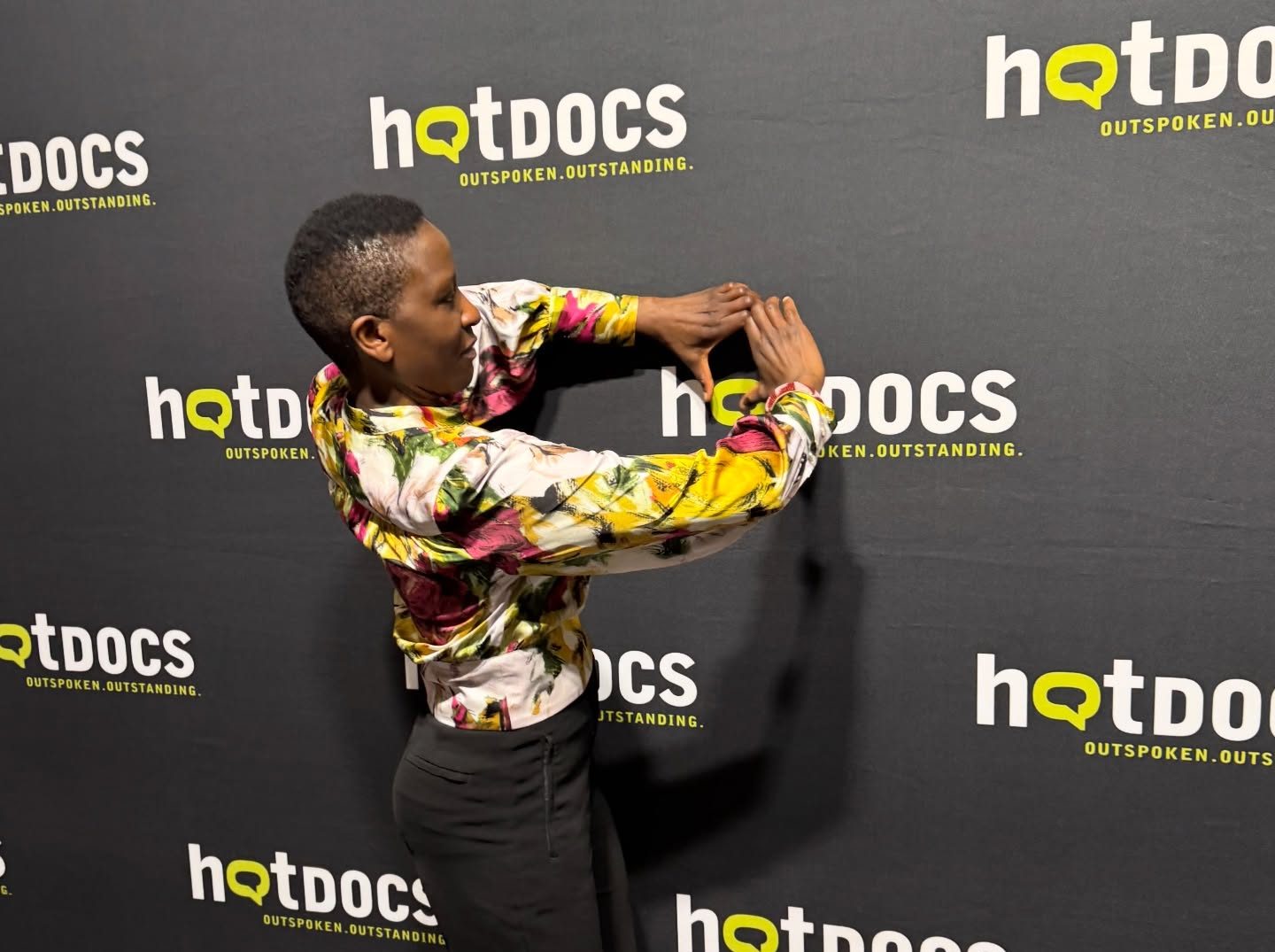


“I would wish that people have appreciation for women doing these kinds of jobs or just essential work and support.”— Zipporah Nyaruri
By Adedamola Jones Adedayo
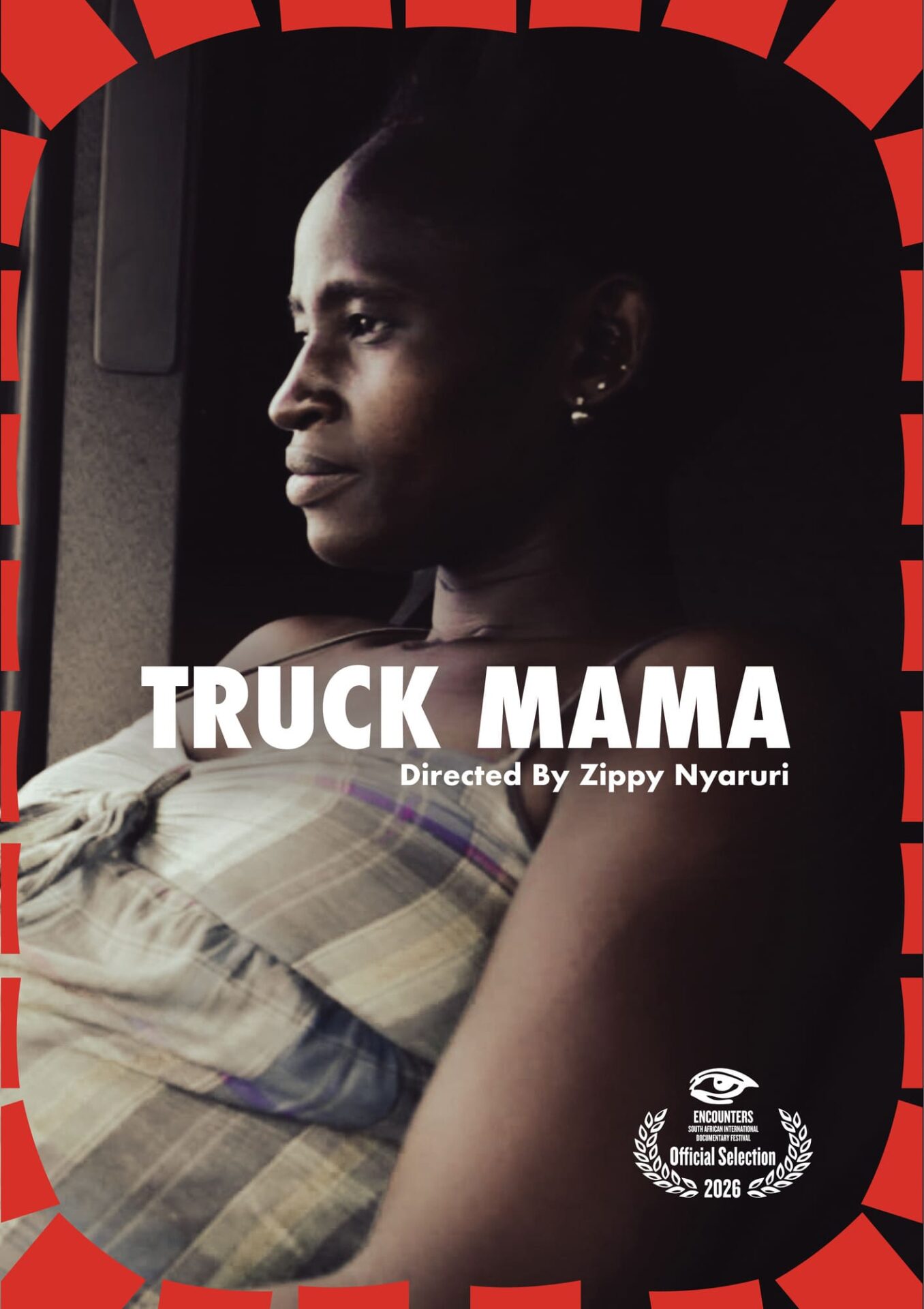
Some of the most compelling documentaries draw their strength not from fame but from telling the stories of ordinary people doing extraordinary things. The feature documentary Truck Mama, centred on the trucking industry and intra-regional border travels in East Africa, adopts this tradition. The title is self-revelatory, as it follows the life and road adventures of Evaline Mumbua Mutuku, a female heavy-duty truck driver plying sensitive borders across East Africa.
Directed by Zipporah Nyaruri, who also spearheads the cinématography alongside Richard Claus and associate director Peggy Mbiyu, Truck Mama explores the work-life dynamics of a woman in a male-dominated industry, with the protagonist equally serving as a microcosmic reflection of the working class in society striving for financial autonomy and dignity. Nyaruri’s directorial vision enlivens the script by Phil Jandaly and Ricardo Acosta, as the documentary presents a mosaic of motherhood, humanism and survival.
Truck Mama had its world premiere at the 2025 International Documentary Film Festival Amsterdam (IDFA), where it won Most Outstanding Documentary Project, after which it competed at the Red Sea International Film Festival the same year. A co-production involving Kenya, South Africa, Saudi Arabia and the Netherlands, it recently journeyed to the 2026 Encounters South African International Documentary Festival, marking another milestone in its festival circuit.
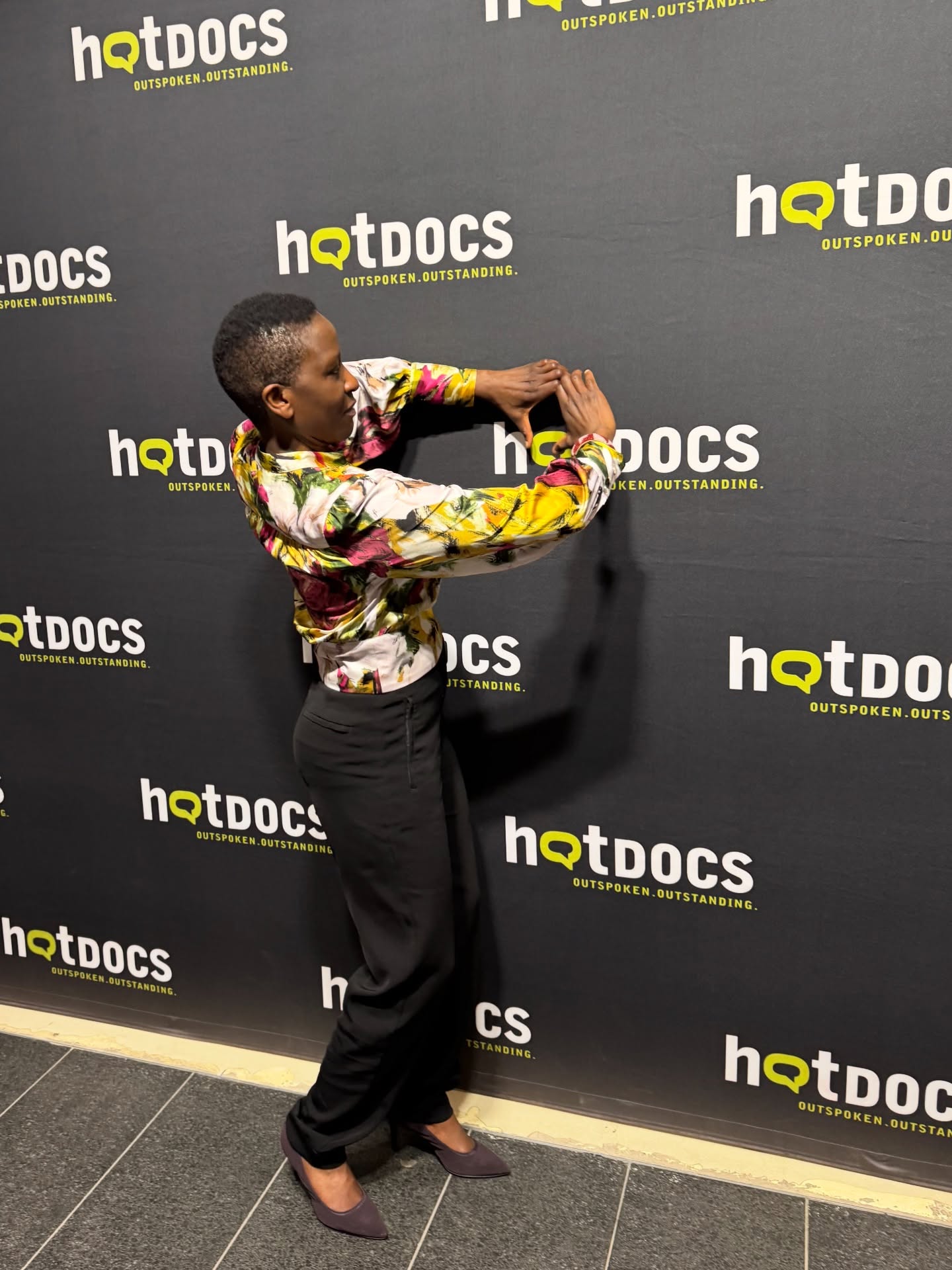
“It was like our dream festival for the whole team to reconnect,” Zipporah Nyaruri reacts on a Google Meet regarding the documentary’s latest outing. Discussions over the production had taken off in Cape Town, where Nyaruri lived and met South African co-producer Portia Cele, so returning to the country for the festival felt like a homecoming, an opportunity to celebrate the film in the very place where its seeds were planted.
Before Nyaruri reached out to the documentary subject Evaline Mutuku, she had first taken interest in the highway. Though Kenyan, she had spent parts of her early life as a student in Uganda, which often required her to travel by road since it was the most affordable way to return to Kenya. This highway, she says, became a significant part of her life. But it also serves as the major transport corridor for the landlocked countries of East Africa. Since Kenya has the region’s major seaport, goods destined for countries like Uganda, Rwandan Burundi and South Sudan all pass along this route.
For Nyaruri, at first, this highway morphed into a character, its spiritedness catching her interest. Years later, when she heard about a female truck driver plying the highway, the producer-director went in search of her.
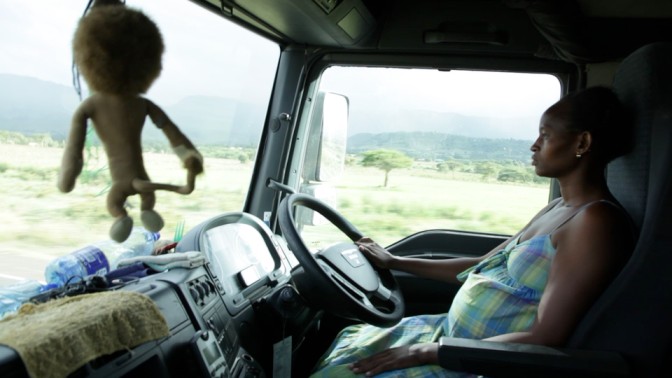
When Nyaruri finally met Mutuku for the first time and discovered she was eight months pregnant, the director decided the documentary format had to be intimate enough. This meant working with a small crew, filming from within the truck, and getting into Mutuku’s personal space. The idea was to present the narrative as much as possible from Mutuku’s perspective, differing from conventional road travel narratives where the camera often emphasises sweeping landscapes and spectacular scenery.
Initially, it seemed having three cinematographers on the project would be problematic. But it turned out to be advantageous as Nyaruri operated the camera during some parts of the journey. The flexibility helped in situations where only one of them could film, making it easier to work.
Still, making Truck Mama came with its challenges. For one, they never knew where they were heading in advance during the journey. Unlike some documentary productions where locations are planned and coordinated with local contacts, Truck Mama afforded no such privileges, banking on the spontaneity of real life, projecting Mutuku’s journey and encounters as they unfolded. The crew had no prior knowledge of where Mutuku would stop to eat, where she would spend the night, or what would happen next, so they had to constantly adapt during her journey across the region.
There were also moments when people around became either suspicious or hostile towards the crew when they saw the camera. “In Kenya, you can walk with the gun more easily than with the camera,” Nyaruri says, explaining the scepticism. “When people see a camera, they change their behaviour.” The director also recalls that the team sometimes faced even harsher treatment whenever their main cinematographer, who was male, was not present. At times, the crew even had to seek protection with other truck drivers around.
Truck Mama offers an intriguingly observational portrait of Mutuku’s personal and professional affairs. As a single parent with two children, including a toddler, who is also working to make ends meet, she cannot be sufficiently present for her children. The camera peers into her home management and family affairs, capturing how she outsources responsibilities to a nanny that she does not trust.
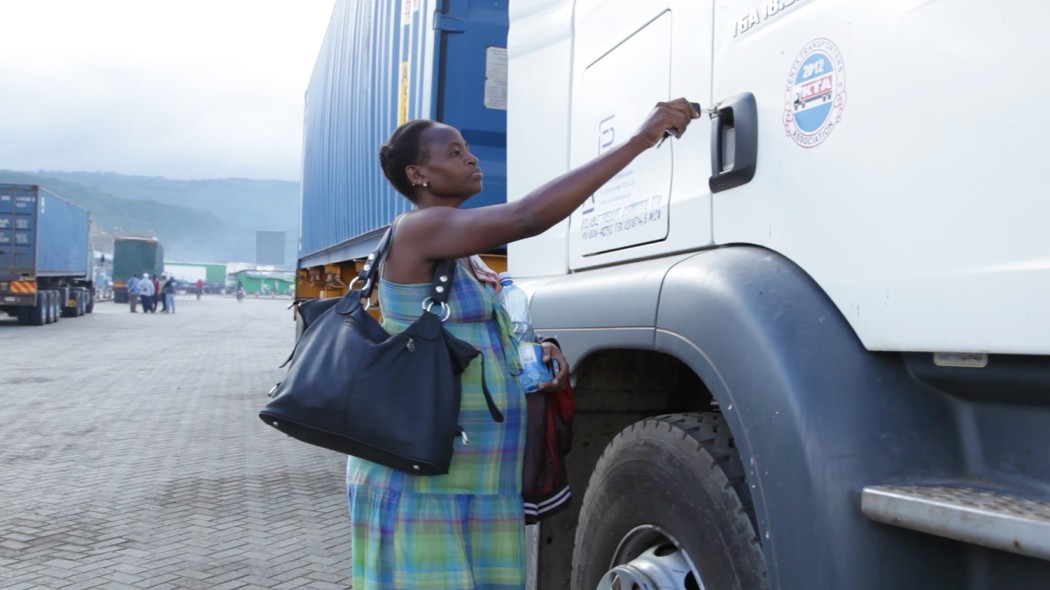
However, certain aspects of her world remain off-screen. For instance, the documentary opens with Mutuku heavily pregnant, but this period is short-lived and deliberately left unexplained as the narrative soon jumps forward by two years. We also never hear the perspectives of the people around her, such as her child’s nanny and her work colleagues. The documentary neither uses direct interviews nor draws from multiple points of view. Nyaruri explains that the team chose to let information emerge organically through Mutuku’s everyday engagements. Fortunately, moments such as her visits to her family and conversations with fellow truck drivers showed the emotional and social dimensions of her life without interference.
“It has to be 80 minutes; otherwise, it might end up being longer,” Nyaruri says, justifying the time jump. “Of course, the gap can be felt, but not so much. Between there, she lost her job. She had a court case to try to get her job back. And I didn’t want to take away from the duality of her being a mother and truck driver. We were filming the court case or trial as she waited to look for another job, but this was not going to add up to the story structure in a good way.”

Although Mutuku’s legal struggles constituted part of her journey, the filmmakers were convinced that giving them more prominence than required would shift the focus of the documentary as a travel-esque film and portrait of a woman swimming against the tides of societal conventions in pursuit of fulfilment. For the protagonist, truck driving becomes a pathway to economic independence, challenging traditional gender norms and stereotypes surrounding the profession.
Because the project took several years to complete, Truck Mama had collaborations and support systems at different times. Nyaruri had first worked with co-scriptwriter Ricardo Acosta, who is also an editor and story consultant. She had barely settled in Europe when she got connected with Acosta, who stepped up to shape that story structure and provide guidance remotely. Other collaborators contributed to the project at different stages, including Phil Jandaly. In the final stages, Amsterdam-based editor Sander Vos came into the picture after Nyaruri decided she wanted to work with someone geographically closer. “With Ricardo, it was a lot remote,” she says. “But it’s never the same when you’re with someone for a few days and just go through the footage together.”
Then came Portia Cele, as the project shifted into a collaboration between South Africa and Kenya, albeit one negotiated outside the framework of any formal treaty-level co-production agreement. “We had to find a way,” Nyaruri recalls. “A very creative way, where the collaboration would make sense as a co-production, not in the legal treaty way.” Brazilian chief editor Jordana Berg, with expertise in documentary, also joined the team, since Nyaruri felt the editor understood what Mutuku was going through and came from a cultural background that shared similarities with Africa’s.
In addition, Truck Mama has received institutional support from film funds such as Red Sea Fund and Docubox East African Documentary Film Fund, as well as authorities like South Africa’s National Film and Video Foundation (NFVF), each playing a unique role towards the realisation of the indie project.
What Nyaruri ultimately wants to inspire among audiences is a shift in perspectives. “I would wish that people have appreciation for women doing these kinds of jobs or just essential work and support,” she says with optimism. Meaningful supportive gestures from both men and women can be transformational.
In a society where certain professional roles and responsibilities are traditionally ascribed to a particular gender, films like Truck Mama invite audiences to question long-held assumptions, recognise the dignity of labour and have a more inclusive understanding of gender in relation to profession and career prospects.
Adedamola Jones Adedayo is a film journalist and critic with special interest in African cinema. Through writing and audiovisual mediums, he creates conversations around cinema in Africa and the Diaspora. You can find him on Instagram @jonesthegoodboy and X on AdedamolaAdeda4.