

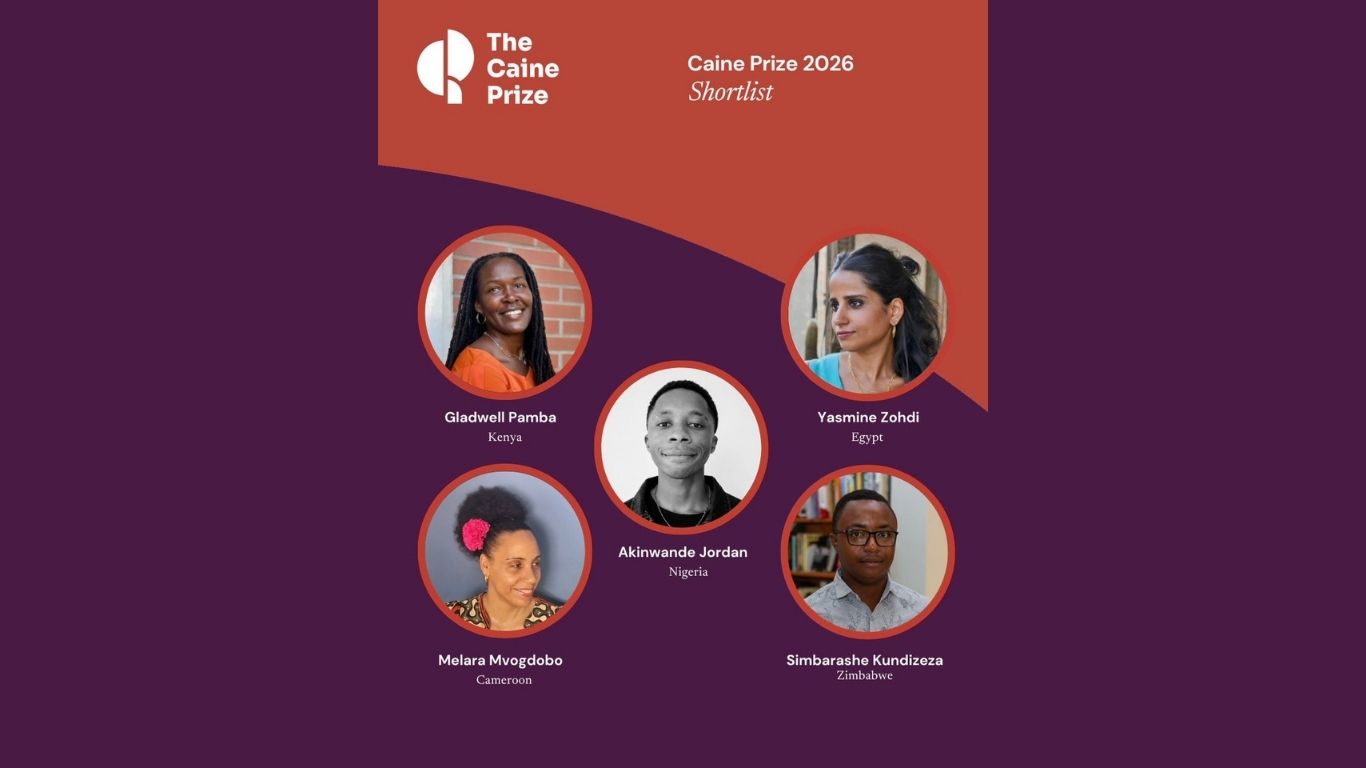


What I keep returning to is that none of these five stories on the 2026 Caine Prize Shortlist asks to be read as representative of anything — a country, a generation, a continent — and that refusal is itself the most contemporary thing about the shortlist.
By Immanuel Fabian
“You cannot salvage it”. That’s what the coffin-maker in Gladwell Pamba’s “The Last Shop” says to a boy who has just dropped a bag of sugar in the dirt outside her shop. She’s talking about spilt sugar. She might as well be talking about everything else on this year’s Caine Prize shortlist, which is a collection of stories about things that cannot be salvaged: a marriage, a father’s dignity, a cousin’s body, a woman’s freedom, a family’s class position.
Read these five stories side by side, and a case for a new intimacy in African short fiction makes itself. There is very little here in the way of coups, wars, or magic. Instead, there is no shortage of bedrooms, kitchens, and ledgers. But the more time I spent with these stories, the more I became convinced that the interesting story isn’t the retreat from the political into the private. It’s what happens to politics once it gets inside the private house: it turns into arithmetic.
Every one of these five stories, in remarkably literal ways, is about money. Not money as backdrop, the way a novel might mention that a character is poor without letting poverty touch the sentences. But money as an active ingredient, present in specific and countable sums, appearing at the exact moments when love, grief, or desire are supposed to be doing the work instead. In “Dieu Merci!” by Melara Mvogdobo, a marriage between a Cameroonian woman and a Congolese man in Switzerland is priced at twenty-four thousand Francs, paid in instalments, the machinery of romance replaced outright by the machinery of a residence permit.
In Simbarashe Steyn Kundizeza’s “The Blue Fighter”, a family’s entire emotional weather is dictated by the difference between a father’s aquarium hobby and a Zimbabwean electricity bill, settled at last in bearer’s cheques so large in denomination and so worthless in value that the story doesn’t need to editorialise about hyperinflation; the numbers do it.
In Yasmine Zohdi’s “The Absence of Stains”, a young woman’s body is discussed by her family in terms indistinguishable from an appraisal: what she’s worth on a marriage market, what a cousin’s “proof” of virginity might purchase in the way of a family’s peace of mind. Even the two stories that look, on their surface, least interested in cash keep circling back to exchange.
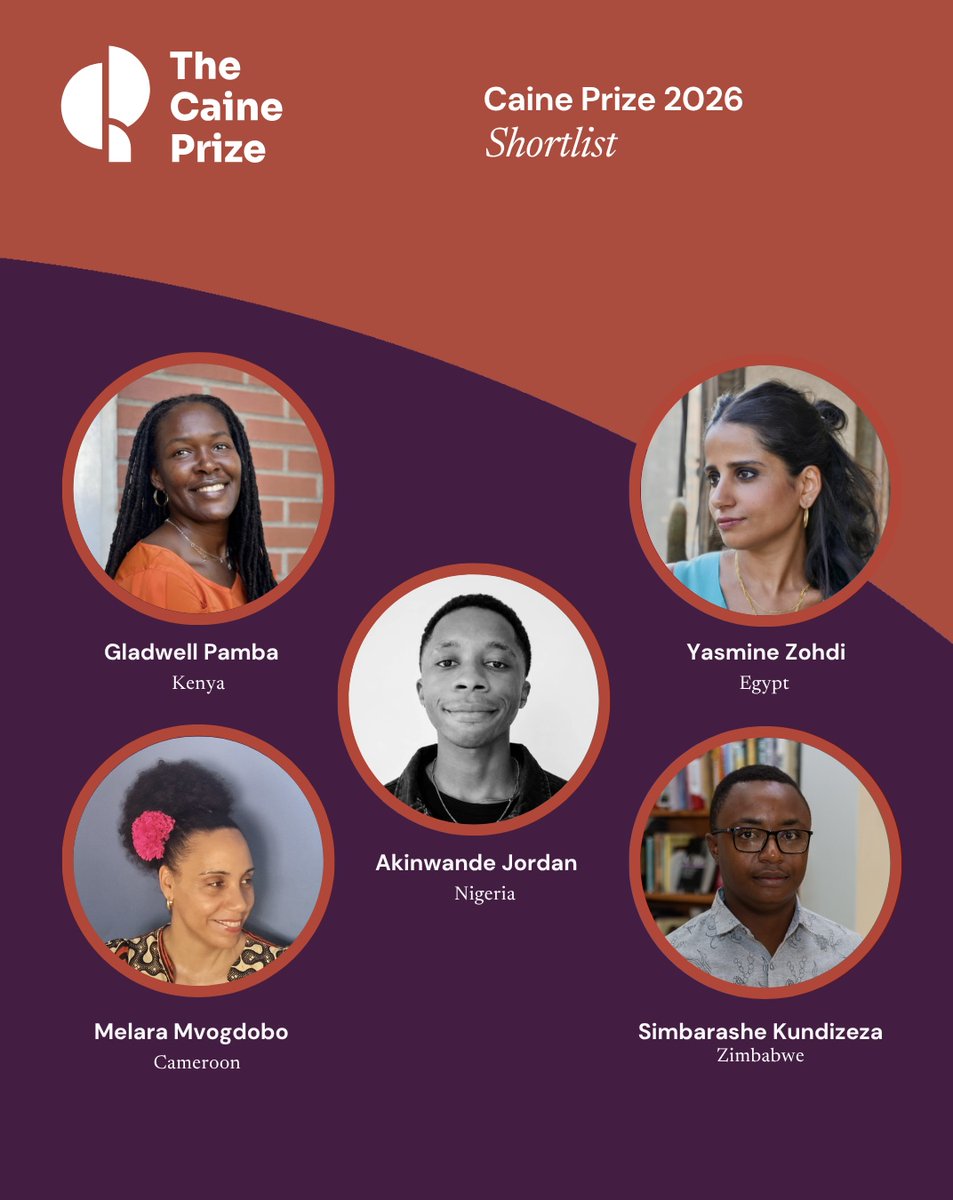
Akinwande Jordan’s cuckolded mathematician in “So Long Now It’s Starting To Look Like Eternity” cannot stop translating his marriage into rates, functions, and solved equations — a different denomination of the same instinct. And in “The Last Shop, the coffin-maker gave up sculpture, which she calls a talent, for coffin-building, which she calls “a learned skill”, the distinction being, essentially, that one of them pays.
The weak claim is that these stories are intimate — interior and emotionally close-up. That is true and not very illuminating; most contemporary short fiction is intimate in that sense. The stronger and stranger claim is that these stories use intimacy as a formal and political method: they don’t just happen to be about love and family.
In “The Blue Fighter”, Tinashe’s father spends the family into a township flat because he cannot stop building aquariums he cannot afford, chasing something that looks very much like an artist’s compulsion, misapplied. His wife is the one who does the sums, joins a savings club, learns to haggle, and eventually sells his fish tanks to a secondhand dealer while he’s at work, keeping back a single tank “for Tinashe”, a fiction they both allow to stand.
The story’s best line belongs to her, delivered to her son in the dark after the electricity has been cut: the problem with his father was never the dreaming, she says — it’s that he forgets to wake up. Kundizeza sets an entire national economic catastrophe — the bearer’s cheques, the queues at the communal tap, the family’s fall from a “leafy mid-density suburb” into a two-bedroom rental with sweating walls — inside one small domestic argument about aquarium filters, and lets the domestic argument carry all of it.
“The Last Shop” and “So Long Now It’s Starting To Look Like Eternity” use almost opposite technical strategies to arrive at a similar discovery: that a person who has organised their whole self around competence and control turns out to be the last person to understand what’s actually happening to them.
Pamba’s coffin-maker, Madam Supreme, is a former sculptor who, after a night of violence in which a man killed her children, and she killed him in turn, served a prison sentence and rebuilt her life around a trade that lets her handle death at a professional remove. She tells the stuttering boy who narrates the story that she is most afraid, not of dying, but of dying with no one to choose the right coffin for her.
It’s a devastating admission specifically because of how controlled it is; she has spent the whole story teaching the boy to master his fear the way she’s mastered hers, and the confession reveals that mastery wasn’t synonymous with peace. Adeyemi, the mathematician in Jordan’s story, discovers his wife’s affair on her open laptop and reads the lover’s terrible poem three times, fixating on its slack metaphors — bad syntax is a problem he knows how to solve, and a wife who has stopped being knowable is not.
He later notices, almost involuntarily, that the man’s name appears seventeen times in her inbox; he counts it the way he counts everything, because counting is the only grip he has left. His wife eventually tells him, more or less directly, that he treats her like an equation he’s trying to solve rather than a person who might simply refuse to resolve.
Both stories put a highly rational, competence-driven character next to a fact that cannot be computed, and let the gap between the two do the emotional work. In Jordan’s case this is a genuinely virtuosic structural bet: the entire story is narrated as if by Adeyemi’s own mathematical habit of mind, so that the prose rhythms themselves — the compulsive precision about the clock that’s three minutes slow, the exact duration of a marriage — become symptoms of the disease the story is diagnosing.
It isn’t true that this shortlist is formally quiet in the sense of formally simple. It’s formally quiet in the sense of formally interiorised: the ambition has moved from the level of visible structure — the kind of thing you’d notice from across the room, a nonlinear timeline, a chorus of narrators, a speculative premise — to the level of sentence, metaphor, and voice, the kind of thing you only notice by sitting close.
Jordan sustains the mathematics conceit for an entire, largely dialogue-driven story without once letting it become a gimmick, because he understands that Adeyemi’s habit of translating love into functions is the tragedy, not a decoration on top of it. Kundizeza opens “The Blue Fighter” with an epigraph — credited to an unpublished poem about a father’s fish tanks — that tells you before the story even starts that you’re going to be asked to read an aquarium as a psychological instrument. Pamba renders her narrator’s stutter directly on the page, in broken, repeated syllables, a genuinely risky typographic choice that would be easy to mistake for a gimmick, or worse, condescension; instead it does real work, making the reader feel the cost of every sentence the boy manages to finish, so that his silences carry weight equal to Madam Supreme’s confessions.
The story that resists this interior mode most directly, and that genuinely complicates any tidy claim about a shortlist-wide aesthetic, is Zohdi’s “The Absence of Stains”. It’s the most structurally fragmented of the five, cutting without warning between a present-day affair in Cairo, a wedding, a childhood memory of a pharmacy, a cousin’s assault — asterisk-marked sections that refuse to signal their own chronology, so the reader has to assemble Mariam’s history the way you’d assemble a person’s history from overheard conversation. This is visible formal experimentation, closer to collage than to the sustained single-image control of “So Long Now” or “The Blue Fighter”.
The pharmacy scene, where a mother steers a child away from a shelf of products meant for people wearing wedding rings, recurs like a motif precisely because it is where the story locates the origin of a whole economy of shame and worth. Zohdi’s central image — the absence of stains, a family’s obsession with a young woman’s blood as evidence of value — is the shortlist’s most direct treatment of the marriage market’s arithmetic, more direct even than the literal marriage-price of “Dieu Merci!”, because it operates through bodily evidence rather than banknotes. Mariam never marches, never argues doctrine. She watches her cousin submit to a virginity test she doesn’t want, and the reader understands the whole structure of control from that one scene better than a page of exposition could manage. Zohdi’s story doesn’t confirm the pattern the other four suggest — it’s the shortlist’s live counterexample, and worth taking as one rather than folding back in.

The most surprising story on the list, for my money, is “Dieu Merci!”, and the surprise is a formal one as much as a plot one. Mvogdobo begins in a mode that reads, for its first several pages, like conventional migrant-precarity fiction: a woman married off for papers, dependent on a resentful husband, extorted by family back home.
Then, almost without warning, the narrator reveals a second life as a dominatrix in Geneva, and the story’s whole architecture reorganises itself around that reveal. What makes this more than a twist is the essayistic digression Mvogdobo allows herself just before it — a passage about “le roi des Mbenguistes”, the returning African migrant lionised and drained by his own community, written in a register that briefly abandons scene for something closer to sociological commentary.
The swerve works because the essayistic passage has already taught the reader to think in systems — so when the story pivots from wife-for-papers to dominatrix-for-hire, it reads as the same system worn on the other side. When the narrator later takes control of her own instrumentalisation, monetising dominance instead of submitting to it, the story isn’t offering triumph so much as a mirror. She has learned the system’s own logic well enough to profit from it, and the story is honest enough not to pretend that’s the same thing as escaping it.

Nothing on this shortlist reaches for the spectacular the way a recent Caine shortlist sometimes has. In 2023, two of the five selected stories came out of Africa Risen, a speculative-fiction anthology, and were shortlisted specifically as horror: actual ghosts and supernatural machinery.
Nothing on the 2026 list works that way, and it isn’t for lack of good material; the Prize received a record 407 entries this year. (2025 isn’t a fair comparison point at all — the Prize skipped its normal cycle to run a twenty-fifth-anniversary retrospective of past winners instead of shortlisting new stories.) So, the shift from spectacle to interiorised form isn’t only a readerly impression.
At least one recent cycle went in the opposite direction, which makes this year’s restraint a choice rather than a default. These five writers have relocated their ambition rather than reduced it. They are asking form to disappear into character so completely that a reader has to go looking for it: the stutter that becomes a philosophy of patience, the fish tank that becomes a national economy, the derivative that becomes a marriage’s diagnosis, the asterisk that becomes the shape of trauma’s memory, the sculpture abandoned for the coffin. Somebody, in every single one of these stories, is counting.
If that’s right, it suggests something a little uncomfortable about what this particular set of judges responded to. It isn’t vulnerability for its own sake, and it isn’t suffering dressed up as importance; these stories are too controlled, too suspicious of their own characters’ self-narratives, for that. Madam Supreme’s confession doesn’t redeem her; the narrator of “Dieu Merci!” doesn’t ask to be liked; Mariam doesn’t get a clean verdict on her choices. “The Blue Fighter”, for all its control, ends in a reconciliation that feels a shade tidier than the mess it has so carefully built — the father chastened, the money handed over, the single remaining fish standing in a little too neatly for hard-won wisdom. It’s the story here most willing to grant its characters relief, and I don’t think that’s a failure of nerve exactly, but it is a different kind of risk than the others take: the risk of resolution, rather than the risk of leaving a reader in the equation unsolved.
What I keep returning to is that none of these five stories asks to be read as representative of anything — a country, a generation, a continent — and that refusal is itself the most contemporary thing about the shortlist. There’s no anxiety here about explaining Africa to an outside reader, no scene that pauses to translate its own context.
If there’s an insight worth carrying out of this shortlist, it isn’t that African writers have turned inward and away from history. It’s that several of the sharpest among them have figured out that the most exact way to register what history costs a person is to put them in a room, alone or with someone they love, and make them do the sums.
Immanuel Fabian is a literary fiction writer and editor based in Abuja. His writing spans grief, mental illness, and the quiet fractures within friendship and love in contemporary Nigeria. He is currently working on his debut novel. You can find him on X @Nkaelid62097