

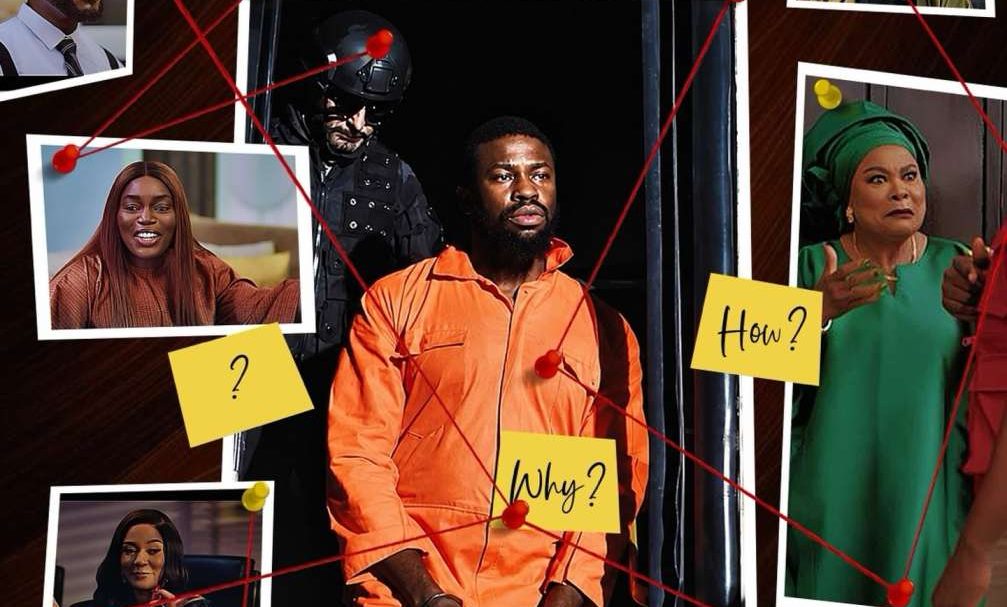

19 is a film with something worthwhile to say, and enough good filmmaking to make that argument worth hearing, but not enough dramatic precision to make it unforgettable.
By Joseph Jonathan
Tola Odunsi’s 19 is interested in a question more uncomfortable than why people commit cybercrime: what happens when a society makes the rewards of crime more visible than the consequences of it?
Written and directed by Odunsi, the film follows Ndubuisi Madueke (Stan Nze), a young man whose intelligence and ambitions collide with poverty, a struggling family and a society increasingly obsessed with the appearance of success. Set around Nigeria’s early internet era, 19 traces his journey from an impressionable young man into the world of internet fraud and, eventually, its consequences.
Ndubuisi is not introduced as a criminal mastermind, a delinquent, or even someone particularly interested in breaking the law. He is a product of a recognisable Nigerian anxiety: the fear of growing up without enough. His father is an honest civil servant whose inability to provide becomes inseparable from a system that has failed him; his mother watches the family’s circumstances deteriorate; and Ndubuisi, bright and increasingly aware of what money can solve, grows up surrounded by the humiliations that poverty makes ordinary.
When the internet arrives as both a new technology and a new economic frontier, the cybercafé becomes more than a place of access. It becomes a place where another version of his life appears possible.
The title’s play on 419 — the section of Nigeria’s Criminal Code historically associated with advance-fee fraud and a number that has become culturally synonymous with scam culture — initially suggests a film about the crime itself. But 19 is ultimately more interested in the conditions that make crime persuasive. Its central question is not simply why Ndubuisi commits fraud. It is why the world around him makes the pursuit of illicit wealth increasingly difficult to distinguish from the pursuit of success.
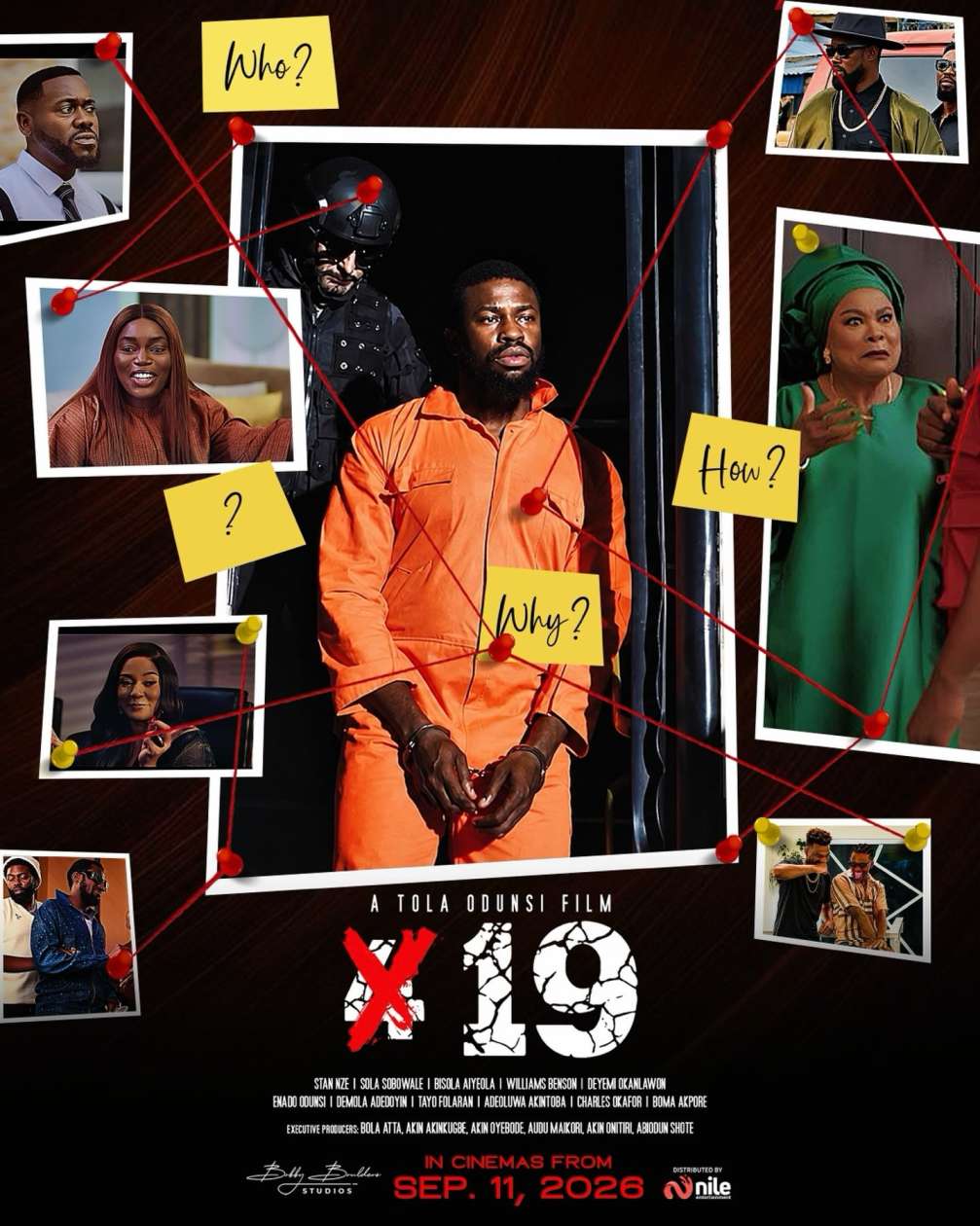
The uncomfortable question in 19 is not always “Is this wrong?” but “Why shouldn’t I?” When legitimate avenues to financial security appear limited, while fraudulent wealth attracts admiration, status and opportunity, criminality can begin to look less like a moral rupture and more like an available route to success.
Unfortunately, the film is not always as sophisticated in dramatising this idea as it is in identifying it. Odunsi’s writing sometimes explains what the audience has already understood instead of allowing the characters and situations to carry the argument. The result is a film whose social commentary can feel stronger than its drama.
That unevenness affects Ndubuisi’s characterisation. The film gives us enough of his circumstances to understand his trajectory, but not always enough emotional complexity to make every stage of that transformation resonate. Stan Nze gives a controlled performance, resisting the temptation to play Ndubuisi as a larger-than-life criminal, while Adeoluwa Akintoba effectively establishes the younger version of the character.
Sola Sobowale brings emotional weight to the family story, and William Benson’s Usuanlele is particularly useful as the embodiment of the seductive mentorship and social validation that legitimate institutions fail to provide. But the supporting characters are sometimes less developed than the ideas they represent. People can begin to feel like vehicles for the film’s argument about poverty, corruption, family or ambition rather than fully realised individuals. That makes some of the emotional beats feel predetermined.
The film is also caught between being a social drama and a crime thriller without completely mastering either. Its quieter moments—particularly those involving Ndubuisi’s family and his changing relationship with money—are often more compelling than the mechanics of his criminal ascent. Yet the pacing occasionally drags, and some dramatic transitions lack the force required to sustain the film’s momentum.
The period setting presents another problem. A film about the emergence of internet fraud in Nigeria has an opportunity to reconstruct a fascinating moment in the country’s technological and social history. 19 gestures toward that world, but its period recreation does not always possess the specificity or consistency necessary to make the early internet era feel completely convincing.



There are, however, moments when Odunsi gets the balance right. The film’s strongest scenes recognise that the consequences of cybercrime extend beyond the person committing it. Families benefit from questionable money. Victims lose more than money. Communities learn to associate wealth with success without necessarily asking where it came from. In these moments, 19 becomes more interesting than a conventional cautionary tale because it examines the ecosystem that allows the crime to become ordinary.
And that is ultimately what makes the film worth engaging with despite its shortcomings. 19 does not excuse Ndubuisi’s choices, but it tries to make those choices understandable. That distinction is important. Poverty does not make cybercrime inevitable, just as hardship does not remove personal responsibility. But ignoring the conditions surrounding crime makes it much easier to misunderstand why certain forms of criminality become attractive in the first place.
The problem is that 19 occasionally seems more confident in what it wants to say than in how it wants to say it. Its central idea is strong; its execution is less consistent. The performances provide several of the film’s better moments, and Odunsi’s attempt to locate cybercrime within Nigeria’s broader social history gives the story relevance beyond the usual fraud narrative. But uneven pacing, underdeveloped characters, some overly explicit writing and an inconsistent period recreation prevent the film from becoming the incisive crime drama it could have been.
19 is therefore neither an empty morality tale nor the fully realised social thriller its premise promises. It is a film with something worthwhile to say, and enough good filmmaking to make that argument worth hearing, but not enough dramatic precision to make it unforgettable.
Rating: 2.8/5
Joseph Jonathan is a historian who seeks to understand how film shapes our cultural identity as a people. He believes that history is more about the future than the past. When he’s not writing about film, you can catch him listening to music or discussing politics. He tweets @Chukwu2big.