

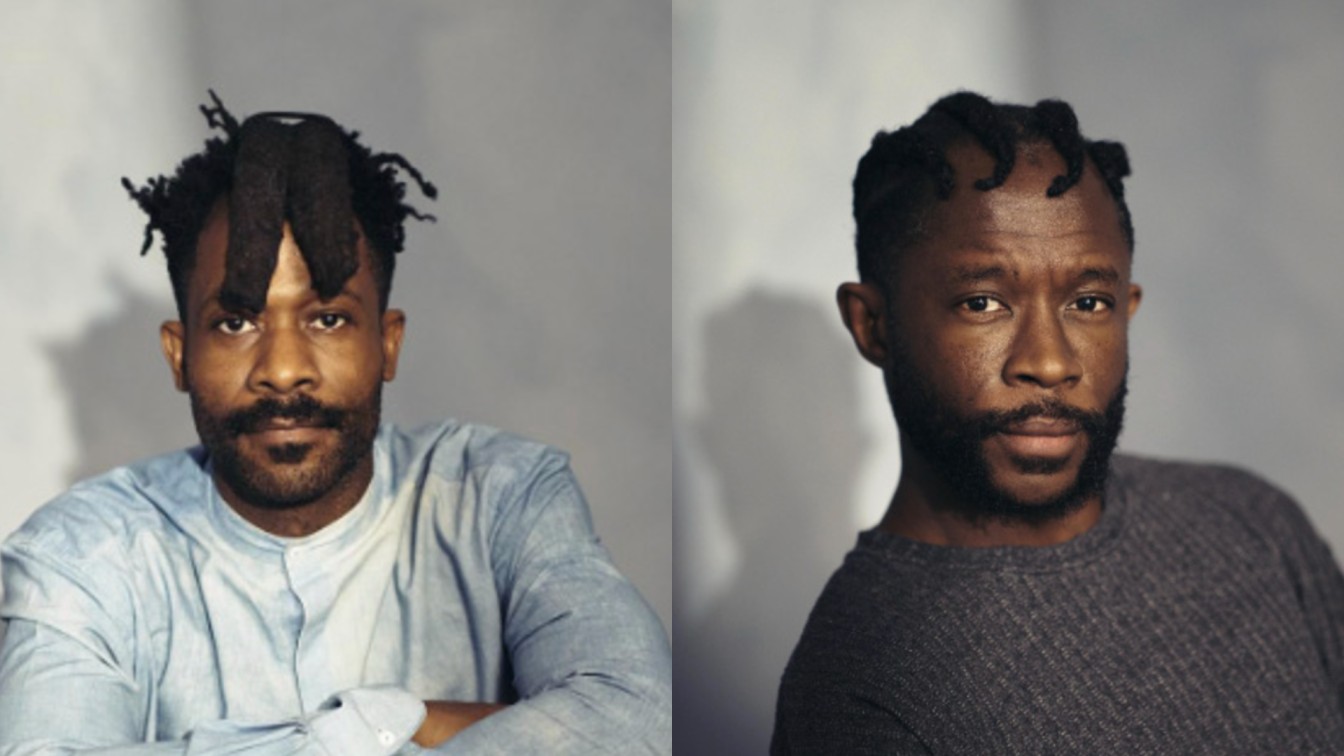

“Nigeria, the nation, shares a lot with Clarissa Dalloway, the person, in the sense that there was this great hope and promise that came with independence. And then, you know, things have not quite worked out.” – Chuko Esiri
By Vivian Nneka Nwajiaku
Eponymous titles. Nigerian settings. Separate storylines with small connections. Celluloid film. Chuko and Arie Esiri’s Berlinale-premiered debut feature, Eyimofe (This Is My Desire) (2020), and their Cannes-premiered sophomore feature, Clarissa (2026)—which has just screened at the BFI London Film Festival—share these things. But they could not be more different, especially in the classes of people they primarily centre, and especially given that Clarissa is a reimagining of Mrs Dalloway, the 1925 novel by Virginia Woolf, one of the most influential English authors of the 20th Century.
Mrs Dalloway follows the eponymous Clarissa Dalloway, a 51-year-old upper-class socialite, throughout a single day in 1923, in post-World War I London. As Clarissa makes preparations for a party she will host in the evening, and during the course of the party, the story travels through time to explore Clarissa’s life and the social structures within which she lives. In particular, her memories return to the countryside in Bourton where she spent time as a young woman, and to old friends and love interests, causing her to reflect on the choices that have shaped her life. Elsewhere, a First World War veteran called Septimus is suffering from post-war trauma, and Clarissa comes to hear of his tragic story at her party.
Of course, the Esiri brothers could have adapted any book, even a Nigerian one. They still could, in the future. But why a Nigeria-set reimagining of Mrs Dalloway? “Well, she’s one of my favourite authors,” writer and co-director Chuko Esiri tells me, referring to Virginia Woolf. “Mrs. Dalloway is a book I read, like, every decade. I read it the first time when I was like sixteen, seventeen, and then like every decade since then, I’ve kind of read it. And every time I read it, it reveals more and more about life. The humanity of it becomes more evident to me. And it was a thing of just sort of really starting off as a fan of the book.
“And in the reading, there’s obviously the shared colonial past, there’s post-war trauma. But a thing that I came to realise in the reading and in the writing was that Nigeria, the nation, shares a lot with Clarissa Dalloway, the person, in the sense [that] there was this great hope and promise that came with independence. And then, you know, things have not quite worked out, and we’re now in this place of like, ‘Is this life? Is this what it is? Have we settled?’ And so, there was this parallel running between the two that became evident as I was writing.”
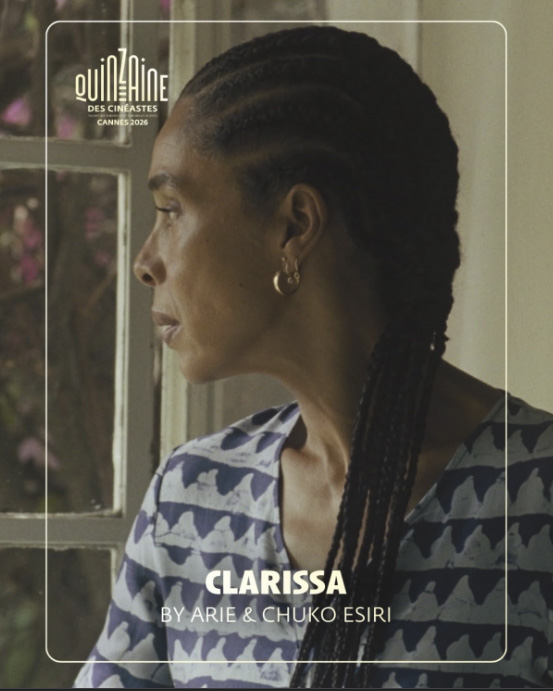
In their Nigerian adaptation, starring Sophie Okonedo, David Oyelowo, Nikki Amuka-Bird, Jude Akuwudike, and Danny Sapani (with their younger selves played by India Amarteifio, Toheeb Jimoh, Ayo Edebiri, Ogranya Jable Ossai, and Kehinde Cardoso respectively), many surnames change, but first names mostly remain the same. London becomes Lagos while Bourton becomes Abraka, Delta State. Big Ben becomes the Muslim Call to Prayer, a consistent presence across multiple timelines and consciousnesses. And many of the themes are imported, adapted to the Nigerian circumstance.
Disillusionment is with the Nigerian political and social structures. Meditations on Britain’s colonial legacy are undertaken by citizens of a country formerly colonised by Britain. And the Post-Traumatic Stress Disorder experienced by Septimus (Fortune Nwafor) is triggered by the War against Boko Haram, although the Nigerian Civil War comes with its own long-term effects.
Theoretically, one can see how it can work. But really, how does one make a film like that actually work beyond just theory? “I write my way to the answer. So, it’s like a feeling, an instinctual thing,” Chuko Esiri says. “And then I just keep writing and telling the story and, eventually, these things kind of emerge and find themselves there. Then, there’s just the reality of, you know, emotions carry across cultures, across time. People know what it is to love and not be loved back. People know what it is to wonder, ‘Did I marry the right person? Did I settle in life?’ All those universal truths exist and they were in the book. And I just started writing it. And then, small by small, you put it together and you have a film.”
Clarissa is thematically wide, touching on everything from the Nigerian-Biafran War, Military Rule and law enforcement brutality, to military corruption and infrastructural collapse. Some themes are explored with more depth than others. After all, most of the main characters are upper-class people who rarely experience Nigeria’s troubles in the visceral way that most people are familiar with.
It has already been established that class is a subject of great interest for the Esiri brothers. Eyimofe was a film about the current state of Nigeria, and Clarissa is a film that is more interested in how Nigeria got to that state over time, but both features are films that are preoccupied with class. “Living in Nigeria, being in Nigeria, there’s just the big question of, you know, we deserve better. And so, class is always at the front of our minds,” Chuko Esiri notes. But as to making the decisions around what other themes would make it into the film, and to what extent, Chuko Esiri believes that it comes from telling the story as honestly and as sincerely as possible.
When I mention the film’s critique of Nigerian artisanship culture, Chuko Esiri laughs. “From just the experience of living in Nigeria, every Nigerian knows what it is to say, ‘I want you to put this shelf here’. And so, if the character is asking someone to put up a shelf or something, they are probably going to run into this issue. And it’s just a reflection of the country,” he responds.
“We’re not, we’re not doctrinaire or dictatorial in what we say. We present it as is, and then, ideally, it’s for the audience to discuss how it made them feel, what they think. That’s our objective. It’s the same thing with the corruption [in]the military. Obviously, there’s a version of the story where you don’t deal with or touch on it at all. You can go in a different angle. But it’s a reality of what’s happening there. And so, it’s included. That’s how it happens. It’s like, what is the thing that would happen? And that gets included. And over the course of one and a half, two hours, it paints a portrait of things as they are,” he adds.
This philosophy is not new information to any person who is familiar with the Esiri brothers’ oeuvre, or who has seen the critically acclaimed Eyimofe. Indeed, in a 2021 interview with film journalist Jerry Chiemeke for Afrocritik, the brothers described that approach as the overriding aim, emphasising that, in their words, “We wanted to portray life as it is.”
Co-director Arie Esiri brings home the conversation to one of the country’s most famous challenges, making reference to a scene in the film’s final act where there is a power outage in the middle of Clarissa’s strenuously planned party. “It’s something that we’ve always said. We said, every movie we make, unless it’s science fiction, NEPA will take light. You know, there is going to be a power cut in every single movie we make.” Almost like a chorus, both brothers add: “Until there are no power cuts.”
Midway into the conversation, we settle on a particular scene from the film which was recently shared publicly, via The Graham Norton Show, and has been generating discourse on social media. Most of the conversation has been about accents, specifically the British and British-coded accents that the film appears to adopt for its upper-class characters, most of whom are indeed played by British-Nigerian actors.
The Nigerian-born directors themselves, as they have publicly shared, went to schools in England from when they were eight years old, returning to Nigeria during the Holidays. Clarissa and her friends seem to be modelled in that tradition. Though the film does not explicitly state it, it does imply it through the young son of one of the friends, Sally (Amuka-Bird). Likewise, as Okonedo, who plays the older Clarissa, told Deadline around the time of the film’s world premiere, the directors made it clear that she only needed to sound like a posh version of herself. But Edebiri, who plays the young version of Sally, is notably American. Consequently, her British accent in the released clip, and the film by extension, has dominated the virtual conversation.
However, as partly interesting and partly infuriating as that conversation has been, that clip is worth much more than a showcase of Edebiri’s accent work. In the publicly available clip, the young cast are dining around a garden table while they discuss the loss of identity that married women tend to experience in a patriarchal society like Nigeria. What the clip does not contain is the discourse that follows afterwards, including around Chinua Achebe’s Things Fall Apart (1958) and Wole Soyinka’s Death and the King’s Horseman (1975), both of which emphasise the film’s interest in colonial legacy, as well as a tense inter-class interaction. There is a case to be made for that scene as the film’s defining scene, for how it localises literary conversations in a film adapted from a British book, for how it captures many of the film’s themes in a few minutes, and for what it reveals about each of the characters at that table.
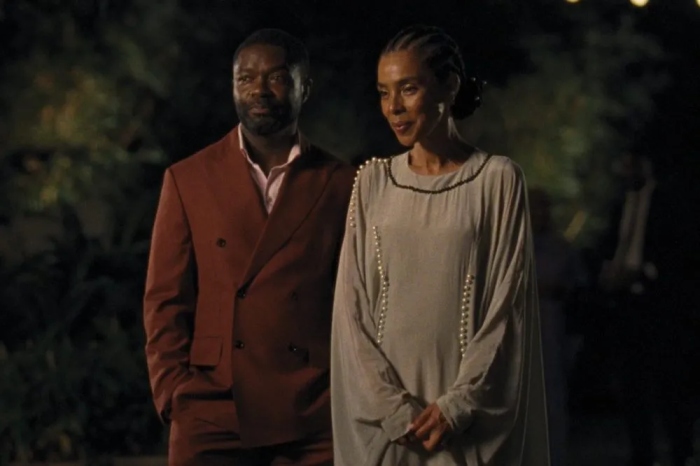
“That was probably the scene that went through the most versions,” Chuko Esiri explains. “That was the most distilled scene in the film. And it kind of lands somewhere in the middle of the script. The script is very short; the script is about 82 pages. And that kind of lands around the middle. But a lot of it came from these discussions [I’ve had] with friends in the past. [I’m] still having these discussions. Things Fall Apart is a book that’s very near and dear to me. Arie is always saying, ‘In case you’re wondering who Chuko is, he’s Clarissa. He’s the one who says that this is the greatest Nigerian novel. So, it came out of all of those things, all of those meditations and discussions.
“And it was right in the first version. Then, I just continued refining, refining, refining. That’s probably the most, I would say, manufactured scene, if that makes sense. It’s really the one that I sat with, went through over and over, [with] a lot of sanding, a lot of polishing, to try to make it feel natural, but also to get across all the various thoughts and ideas and symbolisms.


“And I also feel like there’s something unique about how politically engaged Nigerians are, as a population, as a people, and how often we sit down and we discuss how we got here. Everybody has their theory. Everybody has their solution. So, it was just a lifetime of having these conversations, a lifetime of thinking these things. And I will continue to think these things because no one has yet found the answer to the riddle that is Nigeria,” Chuko Esiri remarks.
I find it particularly interesting that while the group debates, Edebiri’s Sally, who is somewhat disinterested, is right there at the dining table reading Dambudzo Marechera’s The House of Hunger (1978), a book that is quite different from Things Fall Apart, though they both engage with the theme of colonisation. “Actually, the decision to read that, that’s not in the script,” Chuko Esiri acknowledges. Arie Esiri reveals that it was his idea.“But she (Edebiri) jumped on it. She had read it,” he adds.
“It came from a place of her feeling that Sally is not your typical young woman. Like, it came from that space of ‘The character is counterculture’. And so, we’re thinking, ‘What would her references be?’ And she had this idea that Death and the King’s Horseman and Things Fall Apart are sort of, for lack of a better word, basic references, whereas she (Sally) is reading books from other parts of Africa. She’s spreading her net wider than her peers,” Chuko Esiri explains.
Reading turns out to be a defining trait for Sally who, as the brothers note, reads Ken Saro-Wiwa’s Prisoners of Jebs (1988) at the beginning of the film and ends her onscreen reading with Ben Okri’s The Famished Road (1991). “I think she chose those other books,” Arie Esiri says of Edebiri. “I threw [in] The House of Hunger; she ran with all those [others].
Connections to African literature also appear in unexpected areas. An intriguing tangential conversation in response to the dining scene clip has identified similarities between Sally’s mannerisms in the dining scene in Clarissa and Genevieve Nnaji’s portrayal of Miss Adebayo in similar gatherings in the late Biyi Bandele’s 2013 film adaptation of Chimamanda Ngozi Adichie’s Half of a Yellow Sun (2006). I do see the picture, so I take the opportunity to ask the directors about the possible connection, as well as other filmmaking references and influences. “Well, that definitely was not a reference,” Arie Esiri responds. “Half of a Yellow Sun. Although, of course, I admire it. I was a camera trainee on that shoot.”
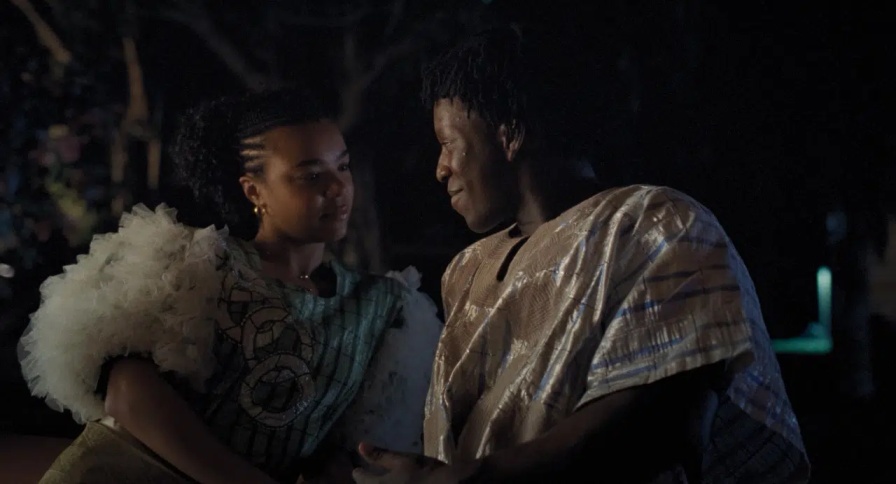
“The actual reference for that scene was Éric Rohmer films,” Chuko Esiri clarifies. “Éric Rohmer is a French filmmaker; he makes these movies [where] it’s a lot of characters talking philosophy, basically. So, we had a number of stills from a couple of his films.” “We watched Babette’s Feast, Fanny and Alexander,” Arie Esiri adds. “We watched a lot of scenes where a lot of people are around the table, congregating and speaking.”
For their general reference, it turns out that Indian cinema was the way to go, with the brothers looking to Govind Nihalani’s Party (1984). The events of Nihalani’s film unfold across a single day, ahead of and in the course of an evening party hosted by a wealthy middle-aged widow in honour of an award-winning literary artist. As the night plays out, truths and secrets come to light amidst conversations revolving around Indian culture, art, and sociopolitics. Elsewhere, another literary artist, whose story permeates the conversations at the party despite his absence, unfortunately encounters tragedy. The film itself is also an adaptation, based on Mahesh Elkunchwar’s 1976 play of the same title.
Adaptations remain few and far between in Nigerian cinema, a curious fact for a country with a remarkable literary history and a great potential for universally resonant stories, considering the cultural history that it shares with several countries. However, Clarissa is one of two Nigerian adaptations with Africa-based funding screening at this year’s BFI London Film Festival after screening at the Toronto International Film Festival, with international theatrical releases planned for December of this year—Daniel Oriahi’s new adaptation of Lola Shoneyin’s The Secret Lives of Baba Segi’s Wives (2010) being the second. Perhaps there is a stronger future ahead?
Vivian Nneka Nwajiaku is a writer and film critic writing from Lagos. She has a master’s degree in law but spends most of her time consuming, studying and discussing film and TV. She’s particularly concerned about what art has to say about society’s relationship with women. Connect with her on X @Nneka_Viv