

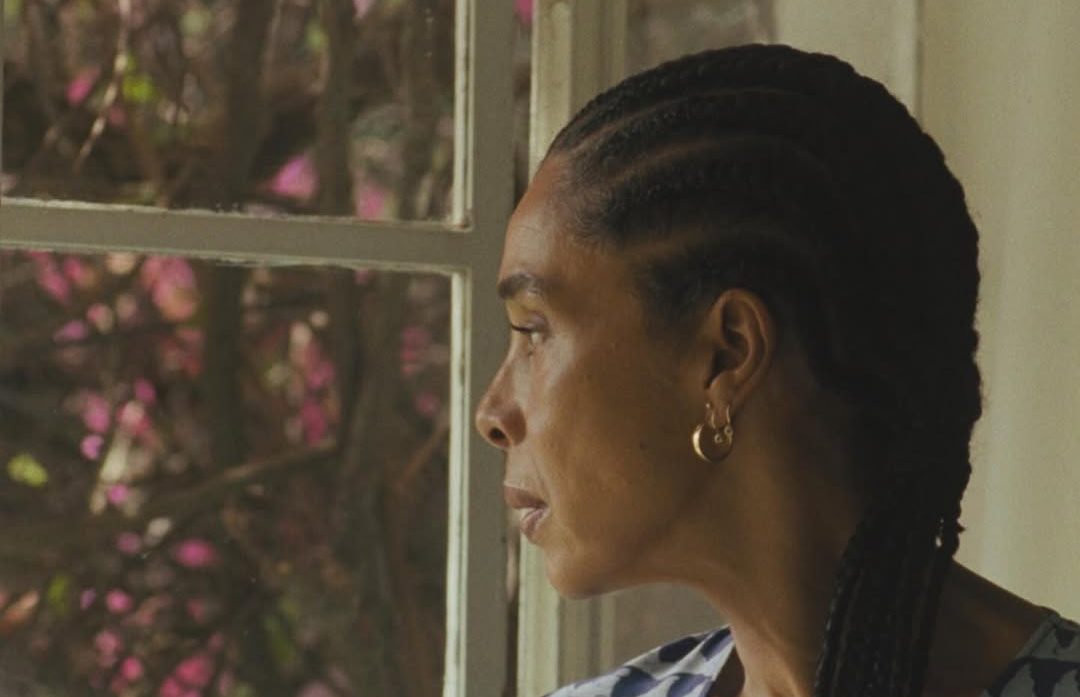

Clarissa is a bold, curious exploration of class and colonialism, which, in a sense, works as a Nigerian interpretation of Woolf’s original vision.
By Jerry Chiemeke
How do you transplant an English literary classic into a uniquely Nigerian context, while preserving the core thematic leanings and sensibilities of the original?
This is what Arie and Chuko Esiri — directors of the critically acclaimed Eyimofe (This Is My Desire) (2020), widely regarded as one of the finest modern Nigerian films — set out to do with Clarissa (2026), a reimagination of Virginia Woolf’s iconic novel Mrs Dalloway (1925).
Set across multiple timelines in Lagos and Abraka, the Esiri brothers’ ambitious second feature film boasts a formidable ensemble which includes Sophie Okonedo (Hotel Rwanda (2004), The Secret Life of Bees (2008)), David Oyelowo (Selma (2014), Queen of Katwe (2016)), Danny Sapani (The Ministry of Ungentlemanly Warfare (2024), Black Panther (2024)); Jude Akwudike (Eyimofe (2020)), Nikki Amuka-Bird (Knock at the Cabin (2023), Persuasion (2022)), India Amarteifio (Queen Charlotte: A Bridgerton Story (2023)); Toheeb Jimoh (Ted Lasso (2020)), Ogranya Jable Osai (Something Sweet (2025), Ayo Edebiri (The Bear (2022), Bottoms (2023), Inside Out 2 (2024)); Fortune Nwafor (Eyimofe (2020)), Modesinuola Ogundiwin (Wura (2023)), Norbert Young (Something About the Briggs (2025), The Black Book (2023)); Jessica Gabriel’s Ujah (Lady (2026)), Ozzy Agu (Over The Bridge (2023)), and Chuks Joseph (Dark October (2023), Afamefuna (2023)), among others.
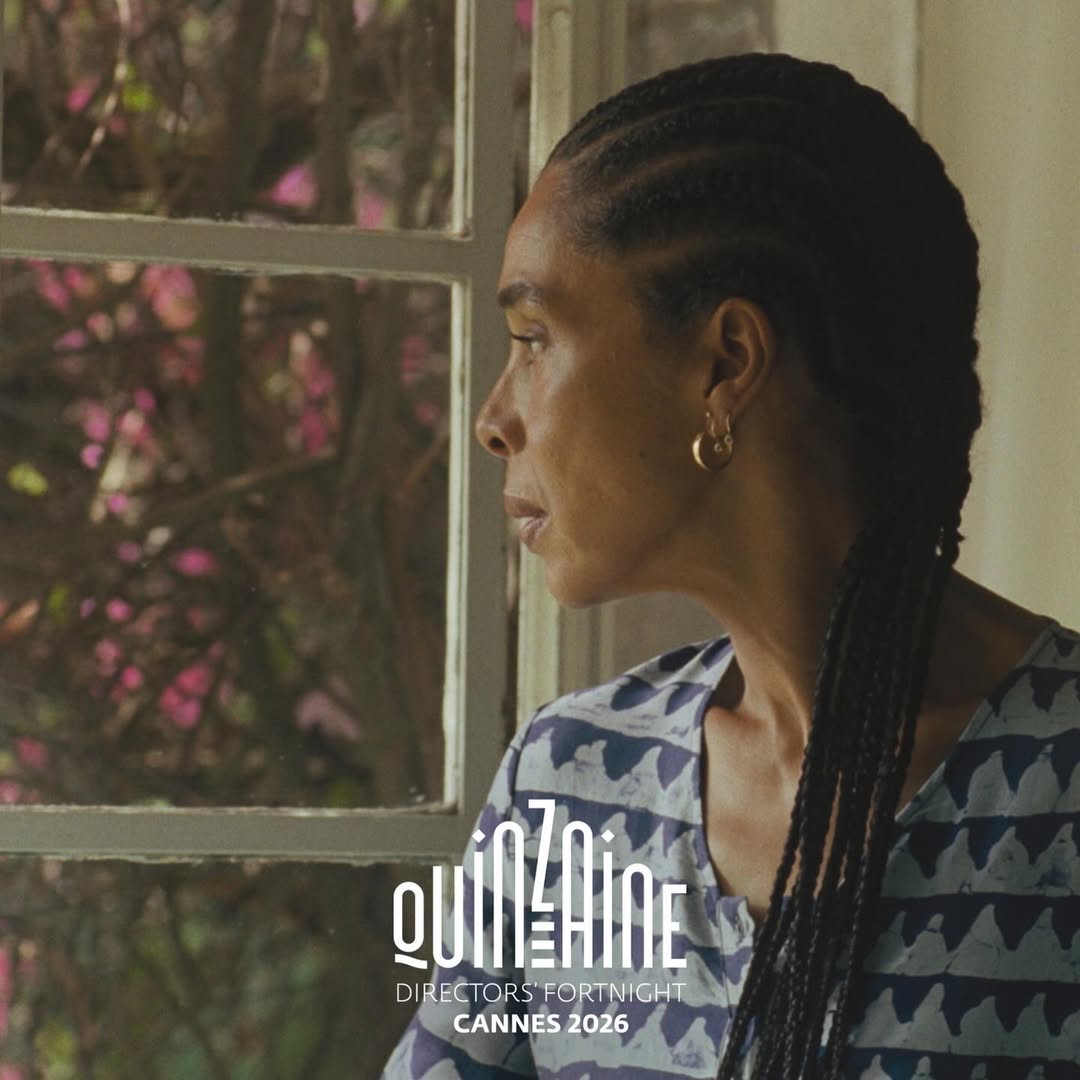
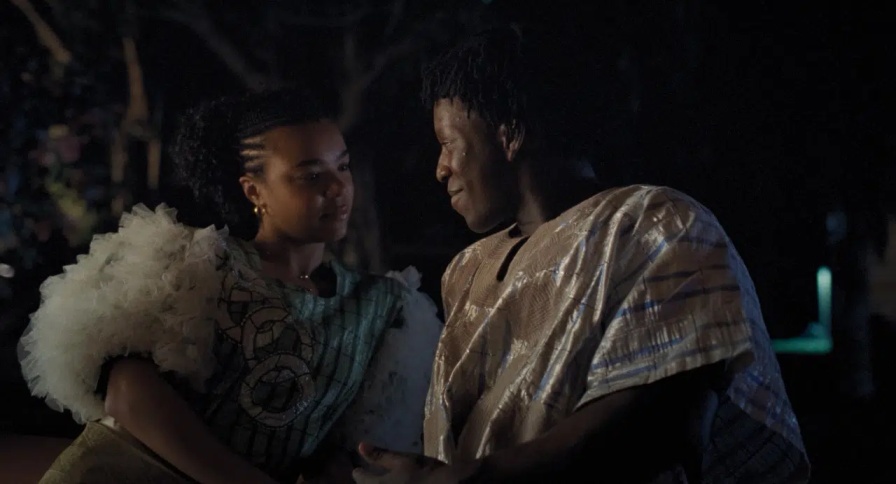
In the opening montage, we see a young Clarissa (Amarteifio) leave the apartment of her lover, Peter (Jimoh), and then in the next scene, we find them huddled by a river. Their relationship is steamy, but its direction is unclear, and the life choices that crystallise from this impasse set the tone for everything that follows.
We are swiftly ushered into the present, where the older Clarissa (Okonedo) reveals what the decades have wrought. Finicky, precious, and exacting, she is now a socialite, married to Richard (Akwudike), a well-earning but uninspiring man who works in Shell and has political connections. In contrast, the older Peter (Oyelowo) is alone, divorced, and down on his luck as a failed writer.
As with the source material, Clarissa is planning a high-society party for her husband, and as she issues orders, she takes a few moments to reminisce: friends from early adulthood, an old love that may not have faded, and an unexplored lesbian attraction. Peter saunters into Clarissa’s residence hours before the party, and memories come flooding in.
Across the city, we find Septimus (Nwafor), a fine soldier who has seen horrors at the army base, between the bloodiness of a failed mutiny and the unrelenting Boko Haram insurgency. He sinks deeper into the abyss of post-traumatic stress disorder, while his wife Aisha (Ogundiwin) scrambles to get him help.
Through these characters, Clarissa maps Nigeria across two epochs: the post-independence 1960s, shimmering with possibility, and the 2010s, where that promise has curdled into a diagnosis of spectacular underachievement. Just as Woolf used the chime of Big Ben to anchor her characters’ streams of consciousness to time’s passage, the Esiris deploy the Adhan, its call drifting across rooftops and waterways, as a timestamp as well as an instrument to measure the city’s pulse.
The film is a bold, curious exploration of class and colonialism, which, in a sense, works as a Nigerian interpretation of Woolf’s original vision. It oscillates smoothly between eras, drawing us into Clarissa’s story and using the stream of consciousness narrative in the original Woolf novel to strong visual effort. Particularly noteworthy are the performances of the younger cast — Amarteifio, Jimoh, Ogranya, and Edebiri — whose vivid portrayals anchor the transitions between timelines.
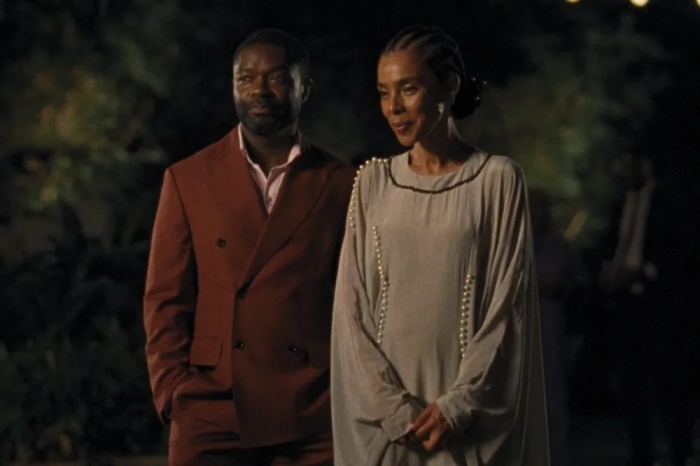
Okonedo dazzles as the titular character, replete with her mood swings, her eyes bearing the accumulated weight of abandoned dreams, unresolved longing, and disillusionment. Is she happy? Does she regret her choices? Where did the firebrand anticolonialist of her youth disappear to? Her mien holds all of these questions in exquisite, unresolved tension.
Nwafor and Ogundiwin deliver convincing interpretations of their respective roles as Septimus and Aisha, whose dynamic illustrates the delicate fragments of the Nigerian condition amid an interethnic romance, the country’s cavalier disposition toward mental illness, and the illusory consolations of religion.
The Esiri brothers make it clear that they have a unique approach to filmmaking, as the narrative structure of Clarissa is engineered with a strong sense of style. They clearly possess a strong directorial voice and genuine urgency in their politics. But the film exposes some of the strain of steering so many ambitions to the finish line. The first act deploys too many establishing shots to the point of fatigue. The pacing is not necessarily the culprit, and the capturing of Lagos is picturesque, amid photos of Obalende, the water, and the interior city, but there’s a soul missing, which is surprising because they achieved this effortlessly with their previous effort in Eyimofe. If Lagos is meant to function as a canvas for an alternate reality, that argument can be made, but the city still feels stripped of its essential character. Traffic, telecommunications billboards, and waterways alone do not conjure it.
The production design also struggles to commit to a specific time period. The soundtrack — featuring Victor Uwaifo’s “Mami Water” and “Happy Day” — places the younger versions of the characters in the late 1960s or early 1970s, yet in one of the film’s scenes, the younger Sally (played by Edebiri) holds a copy of Dambudzo Marechera’s The House of Hunger. The book was first published in 1978.
The dialogue occasionally misfires, too. There is something incongruous about Okonedo’s Clarissa following “I am going to make food for Oga” with “waka first” in the same breath. It’s equally jarring when Norbert Young’s character pivots from “Vrendo” (an Urhobo greeting response) to “Bawo ni” (a Yoruba greeting) in a matter of seconds.

In the film’s penultimate scene, the older Sally (played by Amuka-Bird) quips that “Lagos has a way of making the world feel small”. Her statement is poetic because it inadvertently indicts the film. Abraka, the place that shaped the formative years of Clarissa, Sally, Peter, and Richard, is perpetually swallowed by Lagos’ gravitational pull. For a setting so central to the characters’ emotional histories, its landscape is never sufficiently brought to life.
The challenge of adaptation transcends fidelity to theme, and fundamentally, it’s a question of language. The best reimaginations develop their own narrative dialect, unfolding organically from the world they inhabit rather than being grafted onto it. Yukiko Sode’s All the Lovers in the Night (2026), adapted from Mieko Kawakami’s novel of the same name, offers an instructive contradistinction. Sode smartly translates her protagonist’s continuous internal monologue, and the result is a film that seamlessly mirrors the spirit of nocturnal Tokyo. The world Sode constructs is built around warm, lovely images — a book-lined studio apartment, quiet coffee dates, nights spent contemplating the nature of light — and it successfully deconstructs the subtleties of human connection precisely because the cultural texture is so completely inhabited.
The Esiris are clearly capable of the same depth of immersion — Eyimofe proved as much — and Clarissa aspires to the same intimacy with its Nigerian milieu, but that intimacy is, too often, forced into its frames. The Adhan is a masterstroke; the city that surrounds it, less so. Where All the Lovers in the Night feels inseparable from its place, its Lagos counterpart sometimes feels placed in its setting rather than emerging from it.
From a narrative standpoint, the Esiris manage to interpret the original text without butchering it. In exploring and dissecting local nuances, they succeed in opening salient conversations around class, the vestiges of colonialism, and the still-stigmatised terrain of mental health, as well as the intricacies of regret and memory. But one leaves the film with the nagging sense that the distance between their vision and its realisation here is just a little bit too wide. Clarissa is by no means a mediocre second outing for the twins, and the world should absolutely look forward to what these mavericks do next. This time, however, something remains just out of reach.
*Clarissa screened in the Directors’ Fortnight section at the recently-concluded Cannes Film Festival.
Jerry Chiemeke is a Nigerian-born writer, communications specialist, culture journalist and lawyer based in the United Kingdom. His writing has appeared in publications like Die Welt, The I Paper, The British Blacklist, The Africa Report, Berlinale Press, The Johannesburg Review of Books, Olongo Africa, The Lagos Review, Agbowo, Culture Custodian, and elsewhere. Chiemeke’s work has won or been nominated for the Pushcart Prize, Ken Saro Wiwa Prize, Diana Woods Memorial Award for Creative Nonfiction, Best Small Fictions, and the Quramo Writers Prize. He is the author of the short story collection “Dreaming of Ways to Understand You” (2020), the poetry chapbook “Notes For Nnedimma” (2019), and the hybrid manuscript “The Colours In These Leaves” (2017).
For his work as a writer and critic, Chiemeke has been invited to the Cannes Film Festival, Sundance Film Festival, Berlinale, Toronto International Film Festival (TIFF), BFI London Film Festival, and the Lagos Book and Art Festival (LABAF).