

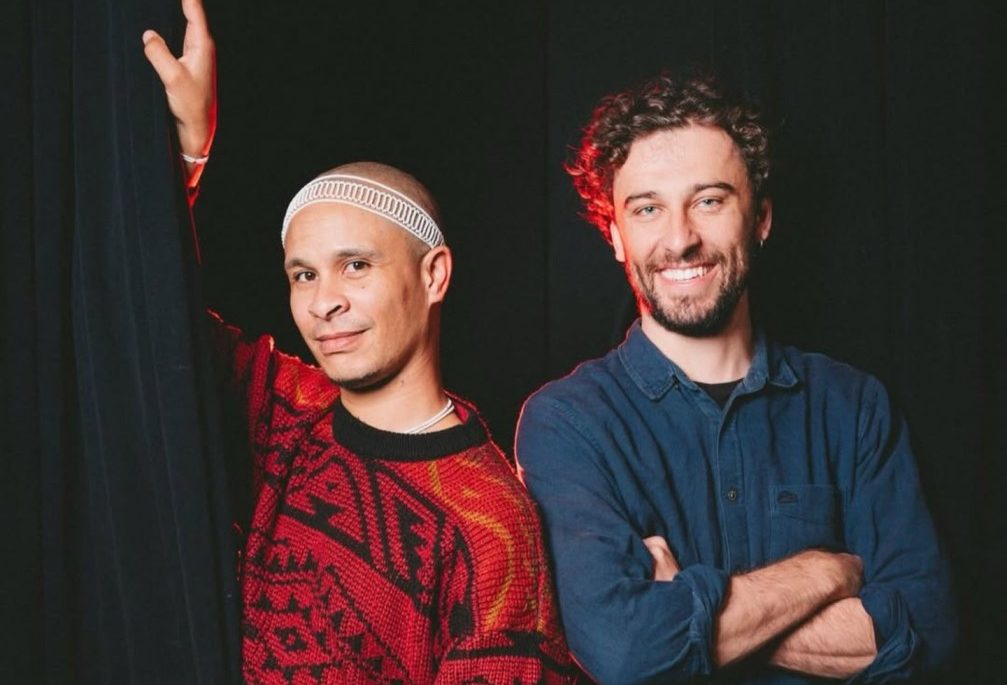

“The film’s inspiration came from conversations that we had with my grandmother, Hettie. One thing that stood out was her remembering her father, who is my late great-grandfather, how he went to the Second World War and returned with a pair of boots and a bicycle, and how the community has been applying for reparation funding from the government for many years.”— Jason Jacobs
By Adedamola Jones Adedayo
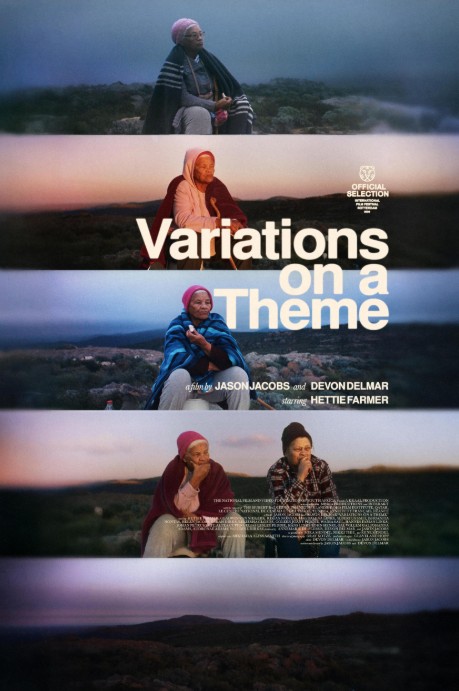
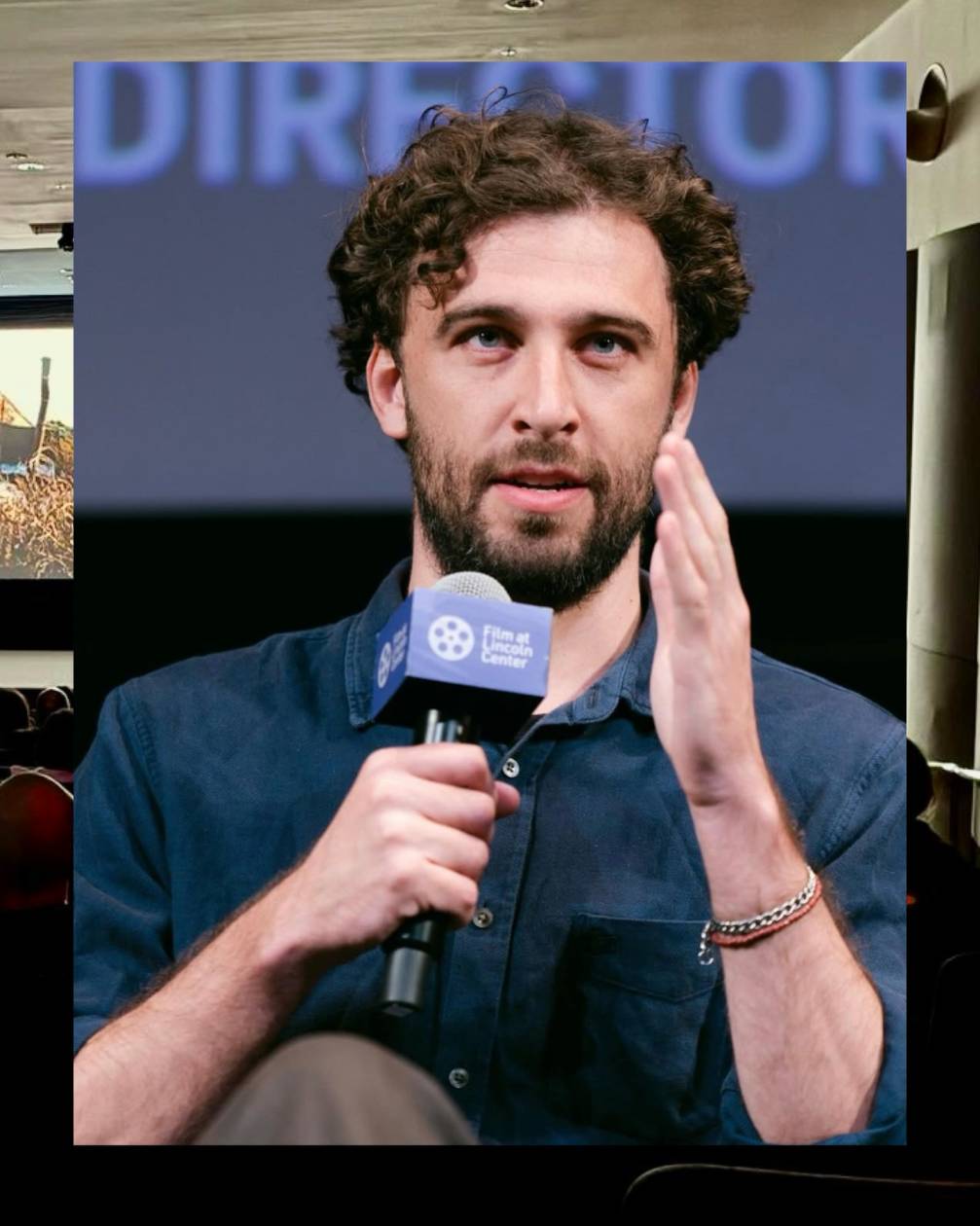
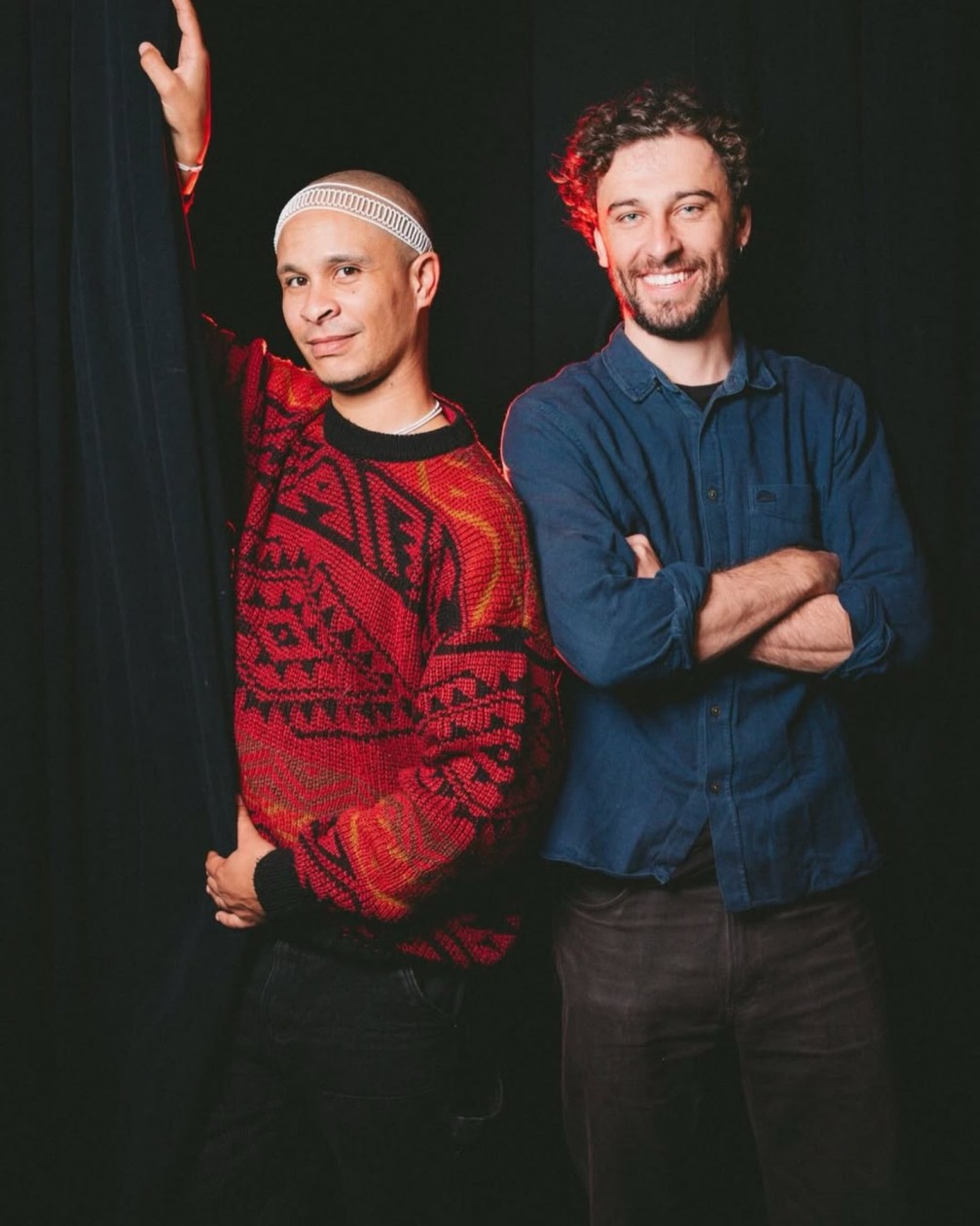
One of the responsibilities of cinema is amplifying the lives of ordinary people, a duty handled with recourse to history, memory and technical finesse in Variations on a Theme (2026), directed by South African duo Jason Jacobs and Devon Delmar. Straddling fiction and reality, the film follows Ouma Hettie (Hettie Farmer), an elderly goatherder from Kharkams, a remote settlement in the Kamiesberge region of South Africa’s Northern Cape.
Taciturn and deeply attached to her goats, Hettie becomes the intimate centre of a story that also expands to examine her community’s history and its experience of systemic racism and administrative neglect. This tension comes sharply into focus through a fraudulent reparations scheme in which members of the community, including Hettie, are persuaded to pay processing fees for compensation they ultimately do not receive.
As co-director Jacobs, Hettie’s grandson, narrates her story in Afrikaans, the film brings together her quiet routines, memories and relationships into a wider portrait of a community caught between historical injustice, vulnerability and exploitation.
Variations on a Theme is Jacobs and Delmar’s sophomore feature, following Carissa (2024), which premiered at the Venice International Film Festival and was set in the remote town of Wupperthal. In a previous interview with Afrocritik, the filmmakers recalled spending time in the community where real-life stories inspired how they approached the film.
The same commitment to community carries into Variations on a Theme, where real people and lived experiences once again form the basis of the narrative. Through their latest work, the filmmakers launch a poetic inquiry into a community burdened by a nagging past and an uncertain future. As observed in Afrocritik’s review, the film is about “what history does to a place when it never fully leaves.”
Before its screening at the BFI London Film Festival 2026, Variations on a Theme had its world premiere at International Film Festival Rotterdam (IFFR), Netherlands, where it won the Tiger Award for Best Competition Film, screened at BlackStar Film Festival, where it won Best Feature Narrative, earned the Best African Film accolade at the 2026 Joburg Film Festival, and screened at the Melbourne International Film Festival 2026 (MIFF). In September, the film was announced as South Africa’s official entry for the 99th Annual Academy Awards (Oscars) in the Best International Feature Film category.
In this interview with Afrocritik, Jason Jacobs and Devon Delmar talk about the process, backstory and influences behind Variations on a Theme and how it validates their experimental, personalised, yet community-driven approach to filmmaking.
What inspired Variations on a Theme, and how does the film reflect your personal experiences, considering ties with the protagonist?
Jacobs: The film’s inspiration came from conversations that we had with my grandmother, Hettie. One thing that stood out was her remembering her father, who is my late great-grandfather, how he went to the Second World War and returned with a pair of boots and a bicycle, and how the community has been applying for reparation funding from the government for many years. Like, religiously applying all the time, consistently. And they always get the same responses back, where they have to start the process again because there’s something wrong with the process.
We found this very interesting, and we also found it very deeply sad that the people who are asking the elders to apply for this fund are more like charlatans in the community. The rest of the team went out and did a lot of interviews with people with similar stories. That was the catalyst. And from that, we wrote the script and shot the film over five days.
You both collaborated on your debut feature, Carissa, and now you’re back with your second feature. How has your creative partnership evolved between the two films, and what have you learnt about directing together over that time?
Delmar: I think this is a creative partnership that continues to evolve with every project. It really is an enormous blessing, at least in my life, to be able to work with someone that comes from a very different background. Our histories are different, so the fact that we can come together and co-create something not generic is because of how different we are, but at the same time how similar Jason and I are. We somehow co-create as a way of therapy.
Your work is highly community-centred, especially around the coloured community, with residents influencing the stories you tell. What continues to draw you to these spaces, and what stories or perspectives do you feel are still underrepresented in cinema?
Delmar: The idea of involving the community was just to ask questions. It’s what we’ve done in Carissa and in Variations on a Theme as well. We ask the people in this community, and in this case, it’s very easy to go around because Jason was born there. This is where he lives, and he knows everyone intimately. For those interviews, we took a very long time to sit back and hear, especially from elders, asking them questions and getting stories in return.
Jacobs: I also think that we find communities that are not necessarily looked at as communities of value to story and to cinema. We look at it differently. We’re quite excited about looking in spaces and looking at characters that feel unseen, and I think that when you’re working in this way, you need to be strict with yourself in terms of the ethics and how you engage with people’s lives and stories. Because the work becomes so intimate because the script is written for the environment where we’re going to be shooting and also the people that we’re going to be working with.
There’s so much joy that comes from working in a place like Kharkams, working with people who are so eager to learn and eager to participate. Also, there’s something in the waters in the Northern Cape where people can literally do anything that you ask them to do.
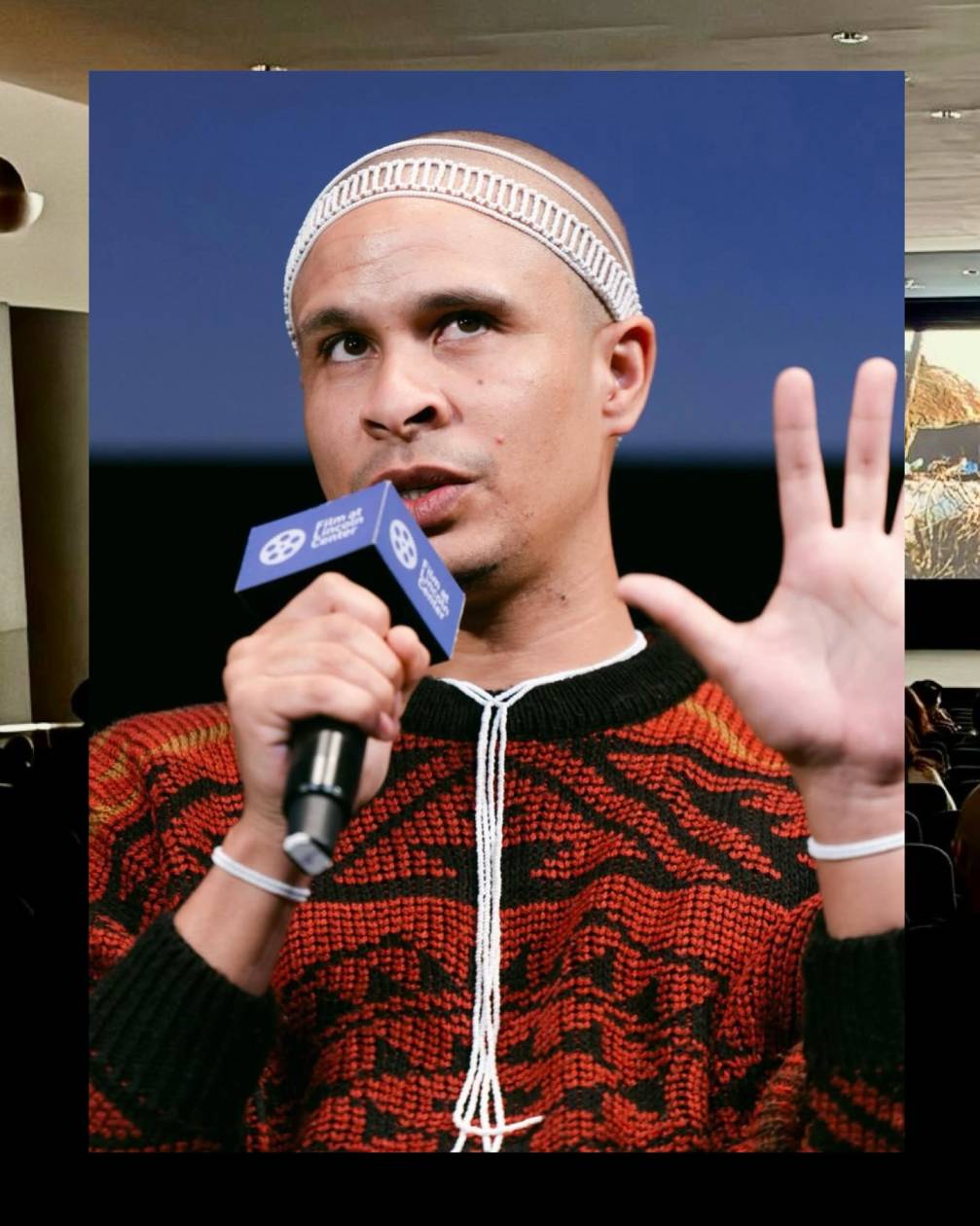
Delmar: There’s something very particular about the performances that have come out of Kharkams and from Wupperthal. It blows my mind how strong the performances are. And it comes from casting, Jason in particular, leading the casting and writing according to people’s lived experiences. They’re (the cast) in their clothes, and they’re playing versions of themselves. That helps performance. But there are moments in this film that are completely improvised. I mean, all dialogue in this film is largely improvised. We were there as directors just to make sure that every scene fulfils its function.
We knew what every scene meant within the greater scheme of the narrative at large. It’s like these building blocks that add up to our story. However, the way we got there in every scene was largely through the imaginations of the performers. And it still blows my mind that the things that happened on that set came out of pure inventiveness and humour, because there’s so much stuff that is absolutely hilarious and poignant and just surreal that came out of those improvised texts.
Variations on a Theme speaks to a variety of themes, including grief and loss, remembrance, solitude, detachment, nature, and family life, all of which Hettie experiences and embraces. To what extent were you intentional about embodying these various themes through Hettie’s character during the writing process?
Jacobs: It was very intentional to write a character that is very passive, someone who has lived a very long life, but also someone who refuses, someone who finds solitude and rest by staying where she is and where she builds her life and her family. It was also intentional for us to speak to the idea of what happens with our elders when all of the kids have left the house, gone to university or built their own lives separate from the village and town of their upbringing.
What does that mean for our elders today who are, in a way, left behind and have to find their own way in the world, but who are also stuck within this routine of things that they really want to do again, the way that they designed their lives, but struggle because of age and frailty?
With the character, you sense that she’s lonely, which is a reality for so many elders. What’s common in this region is that it’s mainly women, grandmothers who are left behind. They are left behind in houses full of memory, ghosts that haunt them, but they have a stubbornness about them where they refuse to leave, which is, I think, also about holding on to a past and holding on to the memories you’ve built your whole life.
Variations on a Theme relies heavily on Jason’s voiceover to guide us through the story, while Hettie, the central character, doesn’t speak. Can you talk about that creative decision? How did you decide what should be voiced, what should remain unspoken, and how you wanted audiences to engage with Hettie’s perspective and the perspectives of the other characters?
Jacobs: We decided on narration quite early on in the process, abandoned the idea, and then we went back to it again. The narration is about exposition and about trying to get people to understand what they’re looking at and the multiple stories that they have to follow. But the narrator or the narration is, in a way, holding the pieces together with glue and, in a big way, remembering an event that happened.
I’m the grandson of the lead actor, and her father is my great-grandfather. So, there’s like this familial connection that is being made, which is also quite beautiful and interesting to think about. For me, what it does is bring the world into a reality [that is] current and forces the audience not to think of the film or look at it through a romanticised lens, even though it’s a fictional story. Then, we decided on devices that fed the story and supported the vision that we’re trying to bring across. The narration, and also the language that is being spoken, is very poetic. It’s not the layman’s language. It’s not a common use of Afrikaans. It’s very intentionally prose-like and imagistic.
Delmar: There are two sorts of avenues to this that I can speak to. The first was this recognition that Jason and I have of this phenomenon that we witnessed—of the elderly losing their independence and their right to decide things for themselves as they get older. We’ve witnessed this happening to people who are extremely able-bodied, able-minded, who still feel that they have a lot to give and that they can be autonomous in their choices. But there’s an increasing pressure from their families to move in with them, move in with the family, give up their homes, give up their day jobs, make maybe the worst [choice], or really just a difficult choice, to go into an old age home.
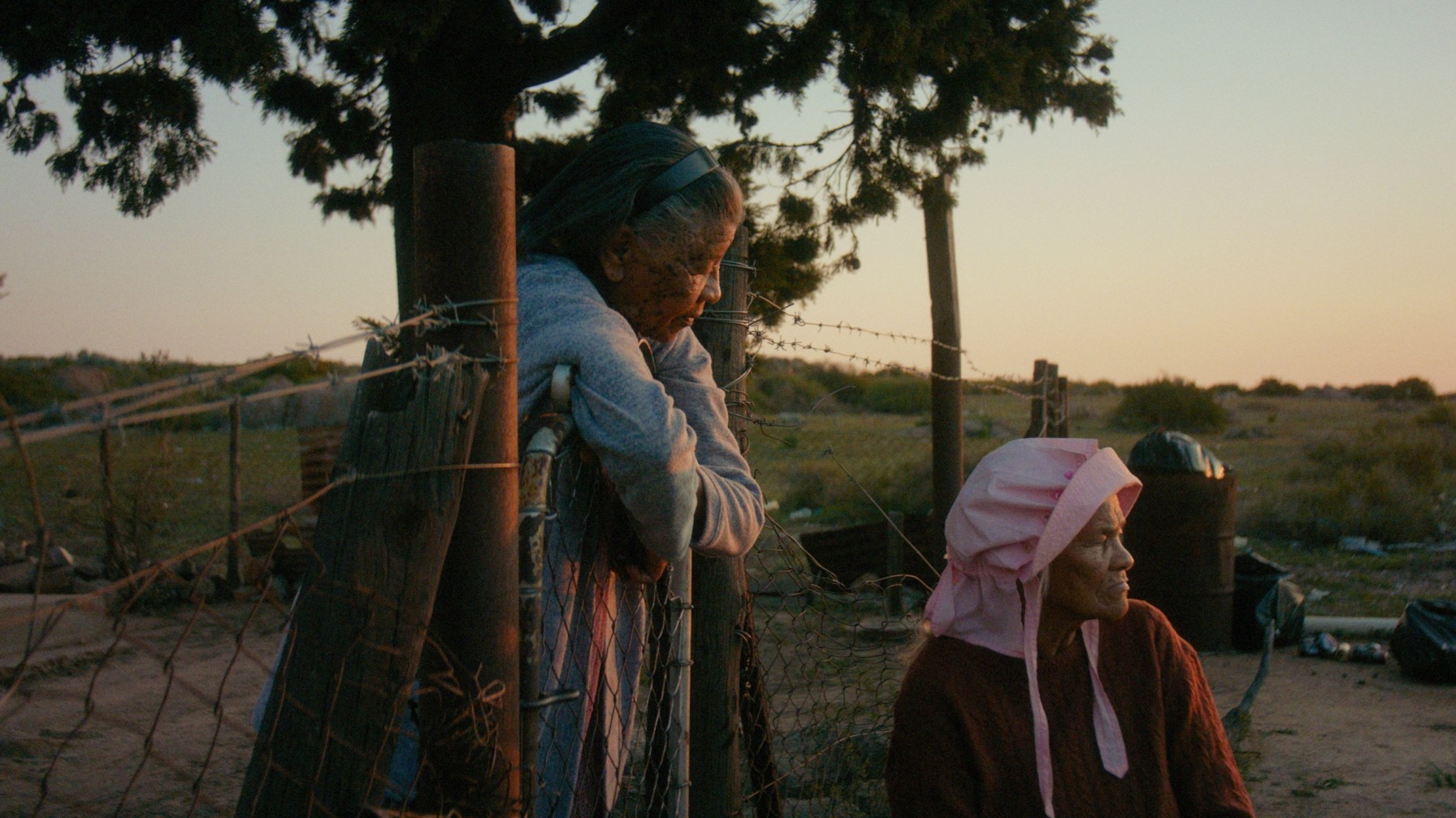
There’s a lot of sadness and grief in that for someone who feels that they still have their own lives to live. We were interested in this in particular. We realised there’s a very strong motif of people speaking for and on behalf of grandma, and she actually never once speaks in the film. The other thing is that Ouma says everything we’ve realised through her face, performance and gestures. There is so much communication happening through Hettie’s performance that words almost become redundant. Everything that you need to know about her agency and reluctance to play along with the script set upon her by her family, and obey their wishes, is written on her face.
The voiceover was meant to convey emotion through storytelling. While you’re watching a still frame, you’re listening to Jason narrate something that is, in itself, a story. And we really enjoy what that does to the human brain. Then, there are layers and layers being added upon the image. And so, there’s this kind of palimpsest that occurs where the images are porous. You can access a still frame of Ouma Hettie in bed. But because of what Jason’s doing with his voice, you are going into spaces there that otherwise, through dialogue, would not have been accessible.
The character of Trampie is seen constantly digging beneath the foundation of his house, convinced that early settlers buried diamonds there. Was this inspired by a real incident, or was it a piece of dramatic licence used to convey a broader truth about the community and the myths that shape it?

Jacobs: It’s an idea that we came up with ourselves. In a big way, it’s a metaphor for the whole community, for the people in the film who are digging for better opportunities, but also digging themselves into a hole that is sometimes difficult to get out of. It also represents much of colonial history because of the mining industry in the region. I think it is a beautiful thing how the character dreams about diamonds under his bedroom floor and believes it, which also speaks volumes to the ways of the community and their connection to indigenous beliefs in dreams as spaces of messaging and stuff like that. But it’s completely fictional.
Delmar: What I always say about the film, about that scene, is that it really captures something hard to capture through a purely documentary, sort of realist way of looking at things. That fantastical magical scene captures a truth in its fiction that is more than most of the other scenes in the film. I love it. It’s the favourite thing I think we’ve ever done. I love the diamond digging there.
Like your previous film, Variations on a Theme features non-professional actors, some of whom are essentially playing versions of themselves. What does working with non-actors allow you to capture which trained performers sometimes can’t?
Delmar: I think that’s also something that we are discovering in terms of our work with actors, irrespective of whether you have experience or not. We’ve developed a way where we rely on the actor to give us a response to what we are offering them, so that it becomes a conversation, especially in the beginning phases of trying to discover who this person is, and for the actor to also figure out how this character sits in their body and how they respond to situations that are thrown at them. I also think when we write, we tend to be inspired by people that we’ve met before, not writing for them specifically, but writing with them in mind to guide us through the process. There are things that no writer can write, that you find on the day if you allow yourself to be a co-author in a moment with an actor.
Jacobs: For all of the films we’ve made, there isn’t a difference in terms of how you approach someone with more experience and someone with less experience. There isn’t a difference in terms of how you treat them and how you work with them on set. But there is, of course, an excitement about doing something for the first time that you also feed off as a director because you are also excited with this person.
But I think what people offer you is radical honesty. You cannot bullshit them, because they will give you what you want, but they will also challenge your thinking and challenge what you have in your mind in terms of what a perfect performance is.
Delmar: There’s a joy in spontaneity that I think can occur with a first-time actor that no one else has access to, that level of detail and knowledge about how something works. There is a comfort and knowledge embedded in that person’s body that you’re going to struggle to find anywhere else.
Jacobs: If you look at Carissa, the lead actor Gretchen Ramson was raised and comes from a similar community as Wupperthal, and has a very particular relationship with the family that Carissa also has with her family. So, it’s about pulling from what you know and what you have in your lived archive and not becoming performative, which is what drives us, which is what makes us excited.
You have several co-producing partners on this project: Annemarie du Plessis, Nikki Thie, and Mira Mendel. What informed the partnerships on the project?
Jacobs: Devon and I are travellers. We travel long distances, and as we travel, we meet different people who stay and who leave us behind. The people who are part of our team work with us on multiple projects or different stories. We are very close to the community of creatives, producers and makers.
It’s about finding your family and community that you want to work with. And we are very privileged and honoured to have these people in our lives who believe in our stories and in what we want to do and achieve. It’s beautiful to have a collective of people who have vastly different experiences in life and come from different fields of study as well sometimes, and learning from them as they learn from us to actualise our work.
Having already screened at festivals across and beyond Africa, what is the next step for the film, and how much further do you see yourselves continuing to evolve as a directing duo?
Jacobs: We have a very big vision for the stories that we would like to tell. We’d like to grow in scale. We would like to be challenged. We were challenged recently with a more commercial film that we finished, which meant that we needed to learn different skills and needed to expand how we tell stories. That’s the goal and the aim for us.
We also don’t envision locking ourselves down to one thing only, one kind or means of storytelling. We are interested in different mediums, in different ways of bringing narratives across. And we hope to be able to still work with communities like this in the future, but on a much larger scale with high-concept, fast-paced narratives as well. And yeah, definitely festivals, distribution, streaming platforms, but in essence, expanding what we have and making space for others to join us.
Adedamola Jones Adedayo is a film journalist and critic with special interest in African cinema. Through writing and audiovisual mediums, he creates conversations around cinema in Africa and the Diaspora. You can find him on Instagram @jonesthegoodboy and X on AdedamolaAdeda4.