


African cinema can be regional, sure, just like any other cinema. But it is also global, boasting active industries and diverse cultures that feed into a global melting pot of cinematic history and tradition.
By Wilfred Okiche
It is 2026, and if there is one concept that was routinely challenged by the events and developments of the past year, it is the “African film”.
When the term African film is mentioned, an idea certainly comes to mind, but what is this idea? Is the African film one that is made by Africans or one that parades a predominant cast of Africans? Is it funded by Africans or one that is produced and set on the continent? Is it African because the Oscars say it is or because Africans decide for themselves?
Globalisation and transnationalism continue to factor in strongly in today’s world order, even as the most established proponents seem to be reverting course and shrinking towards nationalist sentiments. It is therefore a ripe moment to reconsider the idea of the African film. Who is this title for? Who does it engage and who does it exclude? Has this term simply become quaint? What do borders and platforms bring to the foreground when it comes to discussions on African cinema, and what do they eliminate?
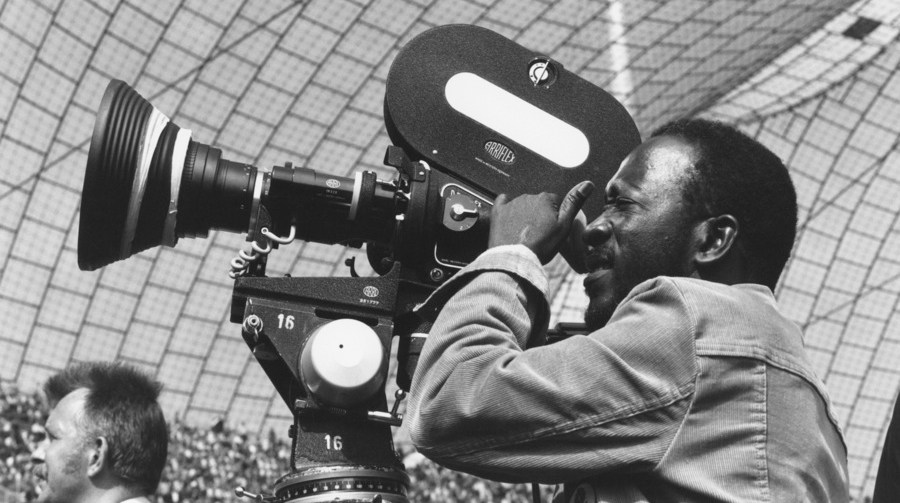
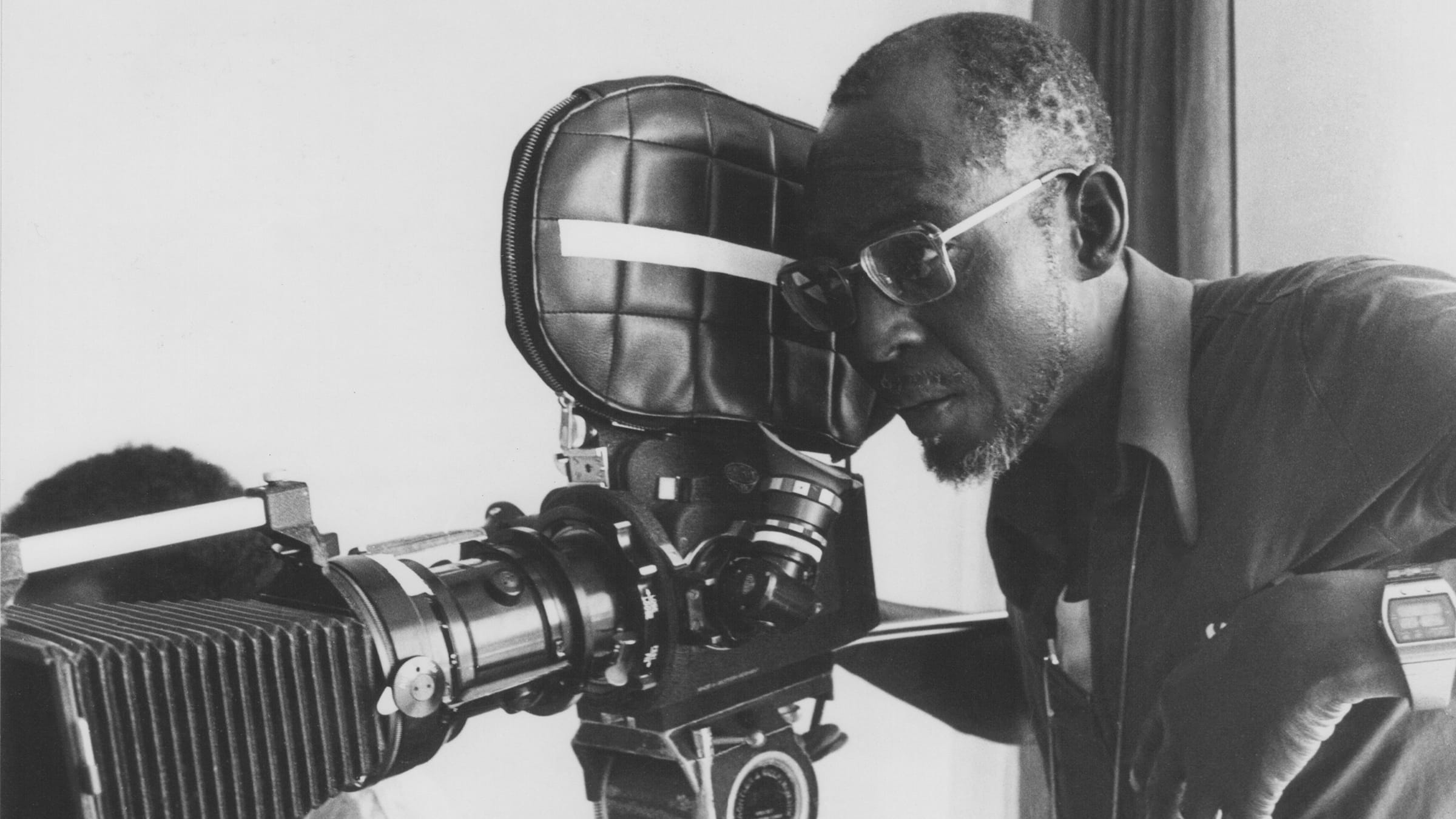
Historically, African film is considered the cinema of Ousmane Sembène, Paulin Soumanou Vieyra, Souleymane Cissé, as well as the other founding fathers and mothers. There was filmmaking activity in and around the continent prior to the arrival of these key figures. But these filmmakers, who themselves individually represent a variety of histories and styles, heralded a joint tradition that is now considered to be African even though many of them differed in style and sensibility. So, in a sense, this question of the African film isn’t a new one but a tale as old as time.
Despite advancements in innovation since the origins of African cinema in the sixties, it remains as challenging to make a film today. Contemporary filmmakers find that in order to make and present their films to audiences, they have to operate in environments shaped by constant negotiation. Not only with funders and the economic powers that be, but also with the apparatus that will deliver the film to the end user.
These negotiations—some of which have always existed—are ultimately reflected in the body of work that continues to emerge and be identified as the cinema of the continent. It is all wonderfully complicated, and this is why any definition of the term African cinema has to allow for plenty of wriggle room for context—political, individual, social and historical.
Nollywood, for example, is a huge, money-generating industrial complex that continues to be the pride—and envy—of many other film industries on the continent. The films tend to provide maximum pleasure, hyper-specific as they are, and reflect the experiences of the primary audience. But they travel across borders within the continent and also speak to audiences in search of familiar media representations. However, perhaps because of the specific visual language of Nollywood films that comes across as made for television, the films routinely fail to find viewership beyond this core and specific audience.
The biggest Nollywood hit of the year at the local box office, Behind the Scenes, was supplied by the ever-reliable megastar Funke Akindele who has made a habit of breaking her own box office records while almost single-handedly propping up the country’s theatrical business. Despite Akindele’s homegrown popularity, Behind the Scenes barely made a dent in international markets where it was placed in limited release to capitalise on interest from diaspora audiences.
Instead, the most successful Nigerian film of the year, in terms of reaching a crossover audience, wasn’t a Nollywood film—at least not in the traditional sense. Akinola Davies Jr.’s family drama, My Father’s Shadow, made history when it was announced as the first film from Nigeria to be programmed in the official selection of the Cannes Film Festival. Starring British actor—of Nigerian descent—Ṣọpẹ́ Dìrísù, My Father’s Shadow is a moving memory capsule about two young brothers who spend a day exploring Lagos with their estranged father.
Born in London to Nigerian parents, Akinola Davies Jr. represents a fast-growing wave of filmmakers who operate in the diaspora but stay rooted to their home cultures. Davies Jr. has identified as a Nollywood filmmaker and expressed his admiration for the industry’s output. But formally, with its deliberate pacing and auteur imprint, My Father’s Shadow owes more to European-style indie traditions than the fast-paced, easily digestible melodrama of Nollywood. Davies Jr. acknowledged this tension in a chat with OkayAfrica: “There is this tension where people talk down on Nollywood because it has its own aesthetic going on that not everyone understands. But I think… the sensitivities of Nollywood and Hollywood at some point have to overlap.”
A co-production between Nigeria and the United Kingdom, My Father’s Shadow was financed with funds and institutional support from BBC Films and the British Film Institute. Streaming platform MUBI stepped in to acquire distribution ahead of the Cannes debut. In every way, My Father’s Shadow was set up primarily for wide foreign spectatorship even though it did score a brief theatrical release in Nigeria. Is it still a Nigerian film? Obviously.
It is very fine, confident filmmaking that Davies Jr. pulls off with his debut, but My Father’s Shadow also plays like it has a duty to explain Nigeria to an outward audience. This burden, which is absent in homegrown Nollywood films, can make for a knotty viewing experience, especially for local audiences. This is perhaps inevitable considering My Father’s Shadow is also a British film, and was selected to represent the United Kingdom at the Oscars, where it was not ultimately shortlisted.

This kind of co-production arrangement may be a relatively new way of working in Nigeria, but it is de rigueur in Francophone Africa and the Maghreb. Proximity to Europe, as well as historical contexts and relationships, have led to these regions receiving significant institutional support in terms of funding and talent resources.
National film funds set up by Senegal and Tunisia have made it easier for filmmakers to be able to match funding at home while receiving support from bodies like the Berlinale’s World Cinema Fund, France’s National Cinema Centre (CNC) and the Hubert Bals Fund, to name a few. Burkina Faso joined the fray last October, setting up the one billion CFA-endowed Faso Film Fund to support film production at home and abroad. The Middle East has also been an emerging source of funding, with partnerships from Saudi Arabia’s Red Sea Fund and the Doha Film Institute helping greenlight films last year, like Tunisia’s Where the Wind Comes From directed by Amel Guellaty and the Sudanese collective documentary effort, Khartoum.
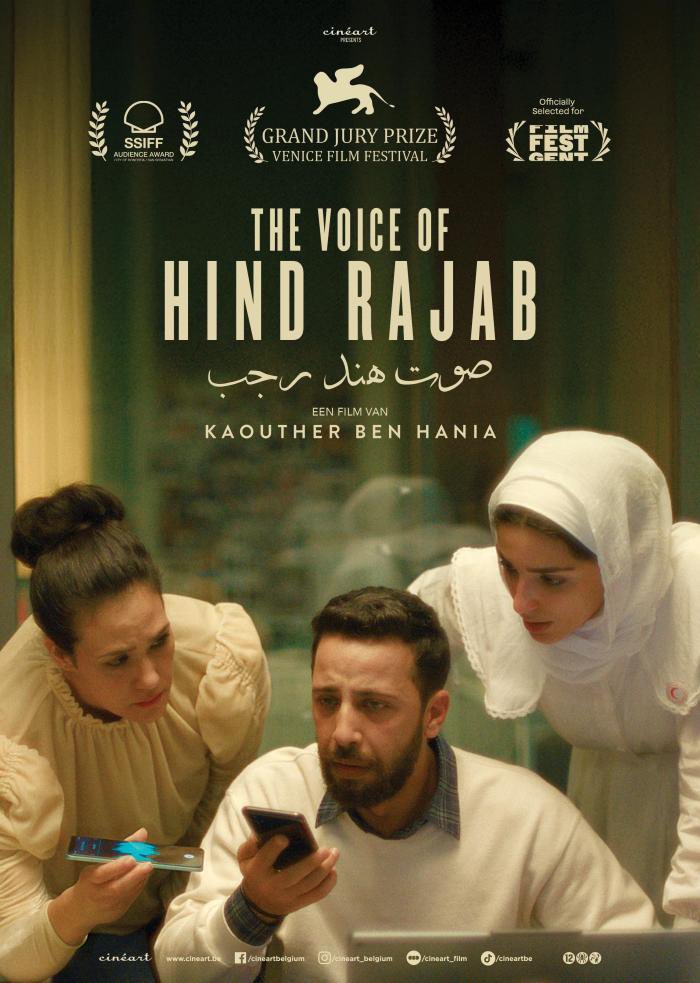
This kind of institutional support was responsible for the existence of The Voice of Hind Rajab, an angry renunciation of the ongoing genocide in Gaza by Tunisian maestro Kaouther Ben Hania. Perhaps the most important African title of the year, The Voice of Hind Rajab is a harrowing feat of experimentation, demanding accountability for a real-life tragedy—the killing of a five-year-old girl by Israeli forces.
Long before receiving a record-setting 23-minute standing ovation at its Venice Film Festival premiere, The Voice of Hind Rajab was supported at home by Tunisia’s film fund and abroad by the Doha Film Institute. As word of mouth built around the film internationally, more international backers would join, including Brad Pitt’s Plan B, Joaquin Phoenix and Alfonso Cuarón. Due to the political landscape in the United States, The Voice of Hind Rajab struggled to land distribution for some time but was acquired, eventually landing Ben Hania her third Oscar nomination. African cinema can indeed look outwards to find a shared humanity.
There are several routes to and for an African film.
A country like South Africa exists in a different context because while it supports commercial filmmaking, it has a robust infrastructure made capable by state support that has attracted co-productions and Hollywood studios looking to make films cheaper. South Africa has, for some time now, been the de-facto location for any Hollywood project set in Africa. Last year, Viola Davis’ political thriller G20, Gore Verbinski’s Good Luck, Have Fun, Don’t Die, and the sprawling Netflix adventure One Piece were just some projects that helped further enshrine South Africa’s bonafides as a global production hub.
Long a stronghold of animation on the continent, South Africa managed to score big at the global box office with the Biblical epic, David—based on the miniseries Young David—directed by Brent Dawes and Phil Cunningham. Box office receipts stand at $83 million with rollouts still to come in markets across Europe. This impressive effort went almost unnoticed, probably because no one expects a polished major animation project to come from the continent.


Over on the indie side of town, things are a little more challenging, particularly for first-time filmmakers. Zamo Mkhwanazi went the traditional route for her feature debut, the arresting Laundry (Uhlanjululo). She developed the project at the Atlas Workshop run by the Marrakech International Film Festival on its way to a Toronto International Film Festival debut. The Joburg-set period drama about members of a Black family navigating the tensions created by the apartheid system is a Swiss co-production, with Mkhwanazi hiring Swiss creatives as heads of department.
The journey to making the film took at least ten years as Mkhwanazi struggled to land financing. Then, there was the debacle of dubious collaborators. She recalls, “I had a producer try to steal the project from me. At a certain point, a Swiss producer found himself another South African producer, a white dude that no one in the industry has any relationship with. All because he did not want to work with any Black woman.”
Imran Hamdulay, whose debut feature, The Heart Is a Muscle, was selected to represent South Africa at the Oscars, went a different route to realise his vision. Frustrated by the lengthy process of getting his earlier work off the ground through grant applications and lab support, he decided to bet on himself. With the blessing of his producers, private funds were raised to see the project through principal photography. It wasn’t until post-production that the film received some support from the national film fund. “I didn’t want to wait six to eight months before I heard back from someone, so I thought, fuck it, I am going to shoot with or without you.” Hamdulay recalls. The Heart Is a Muscle debuted at the Berlinale.

There is no shortage of paths available to the African film, and each filmmaker is destined to go on their own respective journey as they realise their creative vision. The more avenues that exist, the more opportunities tend to be available for filmmakers and the more diverse the stories and traditions that will emerge under the umbrella of African cinema.
Private funding remains the biggest source of funding for filmmaking on the continent, but it is clearly not sufficient. Creative industries on the continent need more investment for profit-making to grow the local industries. Just as important is the wholesale support of artistic expressions that can shield filmmakers from the tendency to conform to market demands or a certain bias in terms of how their stories are told. Both of these perspectives can co-exist, but on a more sustainable scale than what is currently available.
The recent pullback by American streaming platforms from operations in the region has demonstrated that a lot of this hard, unsexy work of building film infrastructure will have to be done on the continent by the continent and for the continent. And no, making films for YouTube cannot be the sustainable fix, regardless of how profitable they might be for now.
What is the African film today?
It is still hard to outline a coherent definition without some context. One thing it is not, however, is a cinema that exists on the margins to be mentioned only for the sake of completeness. African cinema can be regional, sure, just like any other cinema. But it is also global, boasting active industries and diverse cultures that feed into a global melting pot of cinematic history and tradition. On some level, the answer to this question doesn’t even matter. And one day, it really won’t. But the work to get there is still in its early stages.
*This essay, among other cultural essays, is published in The Afrocritik Report 2025. Download the report here.
Wilfred Okiche is a Rotten Tomatoes-certified culture critic and film programmer. His writing has appeared in Variety, Financial Times and The Continent, among other publications. He has a master’s degree in cinema and media studies from the University of Southern California’s School of Cinematic Arts.