

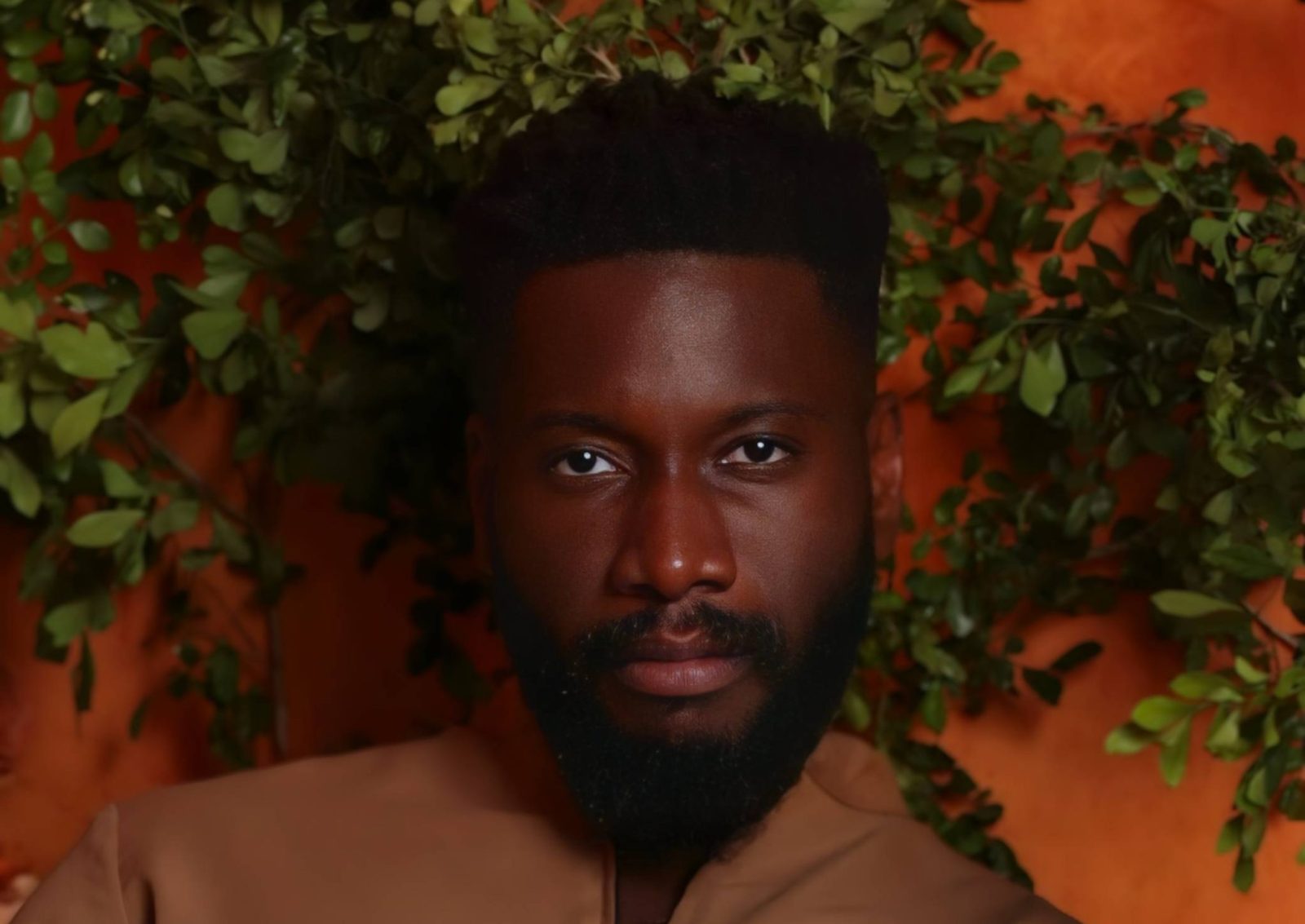

“I hope that more film festivals start to see the fullness of the African experience. This is because African cinema can be joy, it can be love, it can be happiness, it can be all those things.” – Kaelo Iyizoba
By Jerry Chiemeke
How do you render a “coming-of-age” story about a middle-aged Nigerian woman whose identity and sense of self are tethered to labels assigned by society (like wife and mother) in a manner that is as hearty as it is rambunctious?
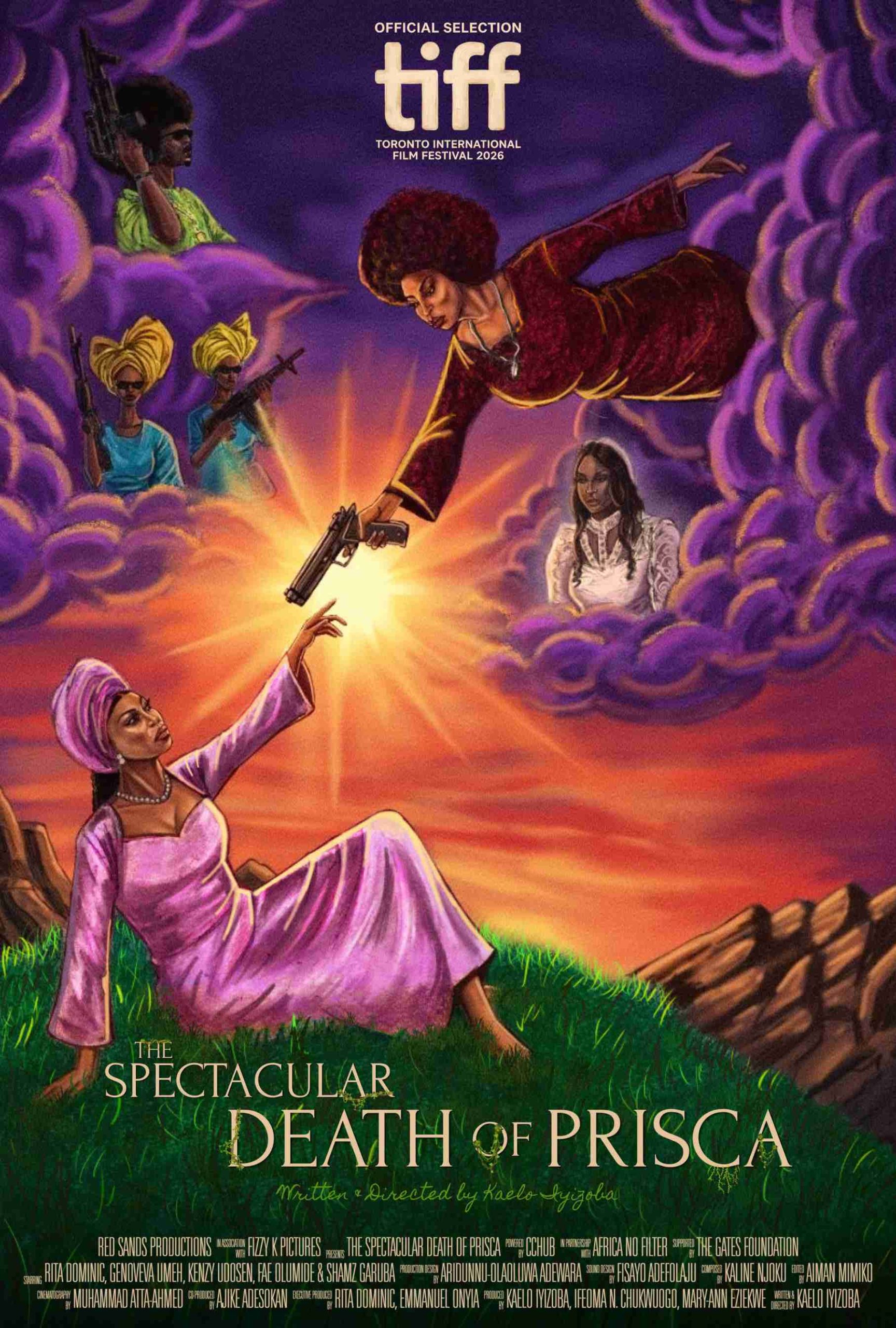
Nigerian-American filmmaker Kaelo Iyizoba (Before We Fall Asleep, Boy Meets Girl), Sundance and Berlinale Talents fellow, takes an ambitious swing at this with his boisterous, whimsical short film The Spectacular Death of Prisca (2026), conceived by an Africa No Filter pitch and developed in last year’s Toronto International Film Festival (TIFF) Directors’ Lab.
For this riotous 23-minute ride, the pharmacist-turned filmmaker assembles an eclectic cast which includes Rita Dominic (La Femme Anjola, 76, The Meeting), Genoveva Umeh (Baby Farm, Breath of Life), Fae Olumide (On Different Grounds), Shamz Garuba (A Lagos Love Story, Lowkey Adults), Amaka Ukuta and Kenzy Udosen, with production entrusted to Ifeoma Chukwuogo (Phoenix Fury, Bariga Sugar) and Mary-Ann Eziekwe.
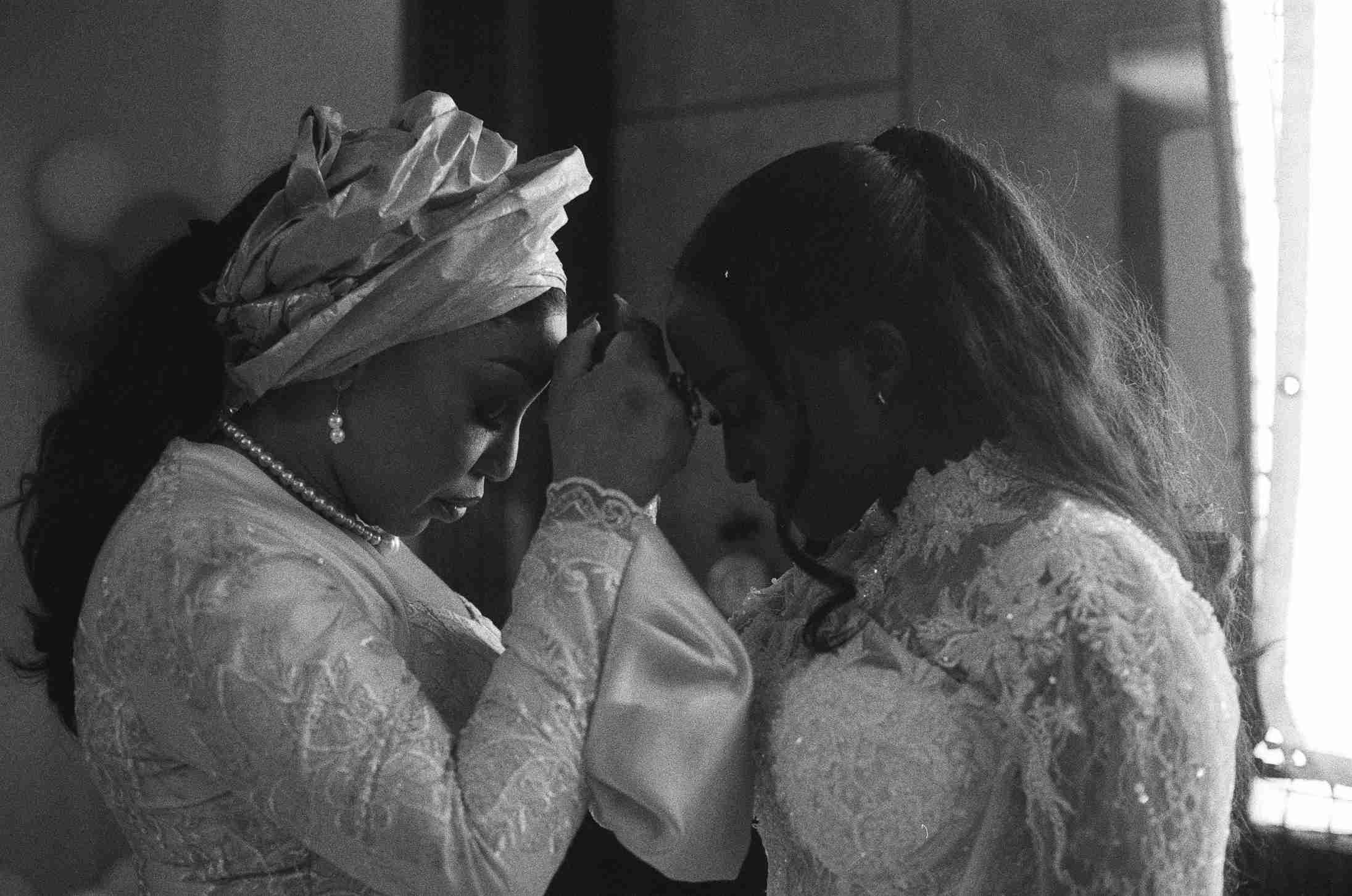
Prisca (Dominic) is in her fifties and divorced; her financial stability barely conceals the weariness in her eyes as she seeks comfort in 2000s Nollywood films. Her daughter Chimdi (Umeh) is on the cusp of matrimony, but Prisca struggles to make peace with the looming reality of an empty nest and can’t rein in her overprotective, domineering streak.
The film opens on Chimdi fretting over the absence of a wedding photographer, her anxiety persisting even as her friends, the mischievous Yetunde (Ukuta) and the flamboyant Richard (Udosen), try to reassure her. An argument between Prisca and Chimdi deepens the fissure between them, and the matriarch slots Abuja Connection in the VCD player to cool off, but she reckons without the intoxicating effect of Yetunde’s brownies.
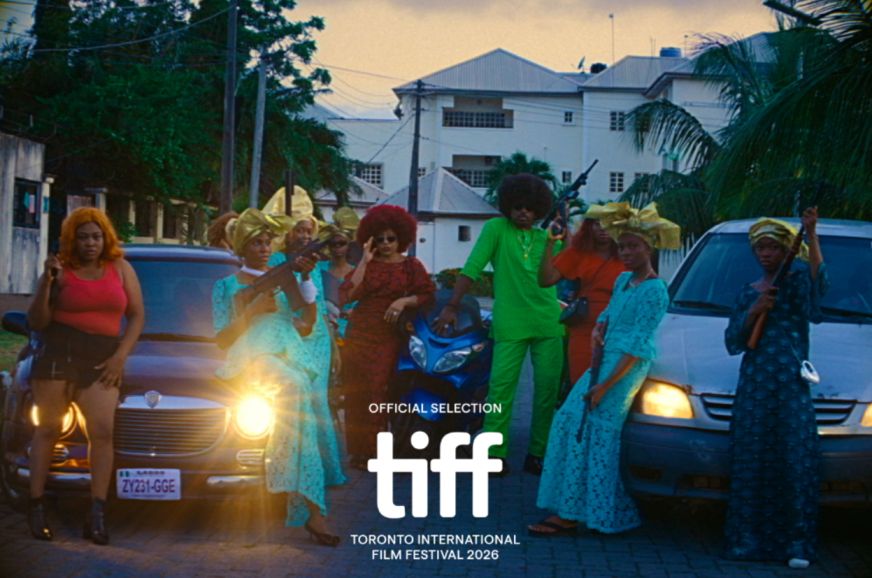
As she drifts off, she is swept into the universe of a Nollywood chick flick that could have been directed by Chico Ejiro, or Teco Benson, or Ossy Affason or Lancelot Oduwa-Imaseun, or any other director in the mass-producing era. In this psychedelic, substance‑induced fantasia, she becomes Madam P, the leader of an all-girl syndicate who has to rescue her lieutenant Princess (Umeh) from the trigger-happy Kingpin (Garuba), but first she must stomach forging an uneasy alliance with a sworn enemy, Jennifer (Olumide).
Think Girls’ Cot, think Black Bra and War Game, think rental shops, think Ebinpejo Lane and Pound Road. That’s the atmosphere Iyizoba conjures with this zany screenplay that unfurls as part homage, part time capsule. The wigs are outlandish, the makeup is excessive, and the sound effects are gleefully exaggerated, but then (if you are Nigerian) you are reminded of your mother’s penchant for monopolising the remote control two decades ago.
Dominic’s shapeshifting is complemented by Udosen’s and Olumide’s impressive comedic chops, culminating in an enthralling short that manages to strike a balance between evoking nostalgia and avoiding caricatures. Significant input from Tolade Anibaba (makeup artist), Suliat Ogusanya (hairstylist), Opeyemi Adenokun (costume designer), and Dozie Cornelius (wardrobe manager), plus colour work by Company 3 and Visual Effects by Abilite Media, helps to steer this campy production into aesthetically pleasing territory. Muhammad Atta Ahmed’s adroit cinematography and Kaline Njoku’s lively score amplify the film’s already anarchic energy.
Whether Iyizoba can sustain all of this across a feature-length effort remains to be seen, but The Spectacular Death of Prisca offers vignettes that signal genuine promise.
In an exclusive interview with Afrocritik, the Columbia University alumnus discusses bringing all of the chaos to life, the intricacies of extensive collaboration, and the current direction of Nigeria’s film industry.
*This has been edited for length and clarity.*
What was your relationship with the cultural phenomenon that was Old Nollywood in your younger years? What were those thematic and stylistic nuances that stayed with you, to the extent of making this bold creative decision?
Growing up, Old Nollywood was a staple; it was always playing on the TV side-by-side with Hollywood. I remember we used to cringe at the films and point to the quality (or lack thereof) of the graphics, but we still sat to watch.
That’s why I got interested in pursuing this path, and ultimately, this film. Even with the absence of a budget and all the other things that were apparently “wrong” with Old Nollywood at the time, it was still true to us, and it was the only way we could see ourselves on screen. Also, it wasn’t just Nigerians who were watching, the Caribbean and the entire Black Diaspora had their eyes on our movies too. I think it was such a powerful thing to do with an industry that basically was an upstart and did not have any support.
My sisters loved Nollywood at the time, so I would always watch with them. We saw Uncle Wayward so many times that the CD began to crack, as well as Ukwa, One Dollar and Alice My First Lady, among others. We really laughed, and there was something about those films that made us stay glued, and it competed with blockbuster Hollywood flicks that had $20–30 million budgets.
Now that I am older and happen to be a filmmaker, it feels like a responsibility to find out what was working back then and what we have lost in this time that has passed. Production quality and cinematography are better, but I feel like somewhere along the line, in trying to make “better” films, we started making more Western films. We started making films that felt less like us, and that’s what I’m trying to figure out with this foray into paying homage to old Nollywood, trying to find out what’s that thing which made it uniquely ours.
For instance, you put on a Bollywood film or a K-drama production and within two minutes, you know exactly what you’re watching. They don’t shy away from their tropes, they don’t cringe at them. So for me, I think the key thing is to stop cringing at the things that make us who we are, and instead kill the things that could make me want to cringe. So maybe, melodrama or drama in the way that we see it is not always bad. It (cinema) doesn’t have to be a slow, meditative piece. It can just be us. It can be as insane as Nigeria proves itself to be every day.

Last year you were selected for the TIFF Directors’ Lab. How immersive was the process that culminated in the birth of this short?
I think I wrote the script almost two and a half years ago. In fact, I had written the feature version, or at least the first draft of the feature version of this script, sometime in 2021. I’d been pitching it, trying to garner interest and get it made. I kept stumbling on a creative roadblock along the lines of “What does this Nollywood world feel like? We haven’t seen anything like that. What would it feel like? How is it going to be different from the real world?”
So it became clear to me that I needed a proof of concept to show people what this world would look and feel like, because words can only do so much. In doing that, I intentionally wrote a script that was very different from what the feature film would be, but still explored the same “Nollyverse”.
The TIFF Directors’ Lab was incredible. I went in September (2025), and we shot The Spectacular Death of Prisca at the end of October. One of the instructors at the Lab, Miranda Harcourt, was particularly wonderful. I knew the challenge I was facing was that this film is set between two worlds – there’s the “real world” and the “Nollywood world” – but each world has an acting register that is completely different from the other, so how do I make it true in both senses?
She (Miranda) suggested that I create some sort of scale for each world where it’s like, “his emotion reads as a two here, but inside your Nollywood world, it reads as a five or a four”. So I felt like I was doing scientific work; I was trying to modulate and figure out how to transfer those performances across the two worlds. She would tell me, “Make sure it’s still true. It can look like a melodrama, but if there’s truth in it, there’s no problem”. So that’s the mindset with which I went into the crafting of both worlds, and that lab helped shape the performances in the film. She also had very interesting techniques for getting your actors connected.
Nostalgia can be a very tricky concept, in that it can serve as the perfect foil and at the same time be a hindrance, as we see with some 80s-themed albums. Did you have these reservations while building the world inhabited by Madam P, Sparrow and Kingpin?
I think the work I did in writing the feature really helped inform what happens in the short, because in the earlier drafts of the feature, I figured out that nostalgia can’t be the only thing this film is hinged on, especially if you’re trying to hold people’s attention for two hours. So I knew that at the heart of it—which is something they would drill into us at Columbia (University) —it needed to be about story. It needed to be about love, essentially, which is what I try (for) all my work to be about. I knew that even with the comedy and the tongue-in-cheek moments, it still needed to have a heart and a centre.
If I had to condense the types of films that I want to make in one phrase, it would be “heart and spectacle”. That’s what I tried to do with this film, that’s what I will try to do in my future films, and I think it’s only going to get better.
I also had to be careful even while attempting to conjure nostalgia with this film, because I think there’s a thin line between a homage and a parody. It was really important for me that this film was not making fun of Old Nollywood. I needed it to show love to Old Nollywood.
“Death” in usage and context bears a slightly different meaning from what the title suggests. Not to throw in any spoilers, but what influenced this approach?
First off, in an earlier draft, this film was (tentatively) titled Madam P after the protagonist’s name in the alternate Nollywood universe, and it was Madam P for a very long time, but as we were editing and as the film had started to take shape, I told myself, “This film’s name needs to be as extra as the film that we have made”. I knew it needed to have the same level of insanity as the film, and we even considered Prisca Must Die because it felt very ghen ghen in true Old Nollywood fashion, but we decided that it was too close, hence, The Spectacular Death of Prisca.
The film is about identity in a certain way, especially how female identity is shaped in Nigeria, and how a lot of women are reduced to labels. This story was about throwing those labels away and finding out who she is to herself. Even when the film starts, she’s not necessarily a heroine yet. She is maybe the antagonist, and then somehow, through this escapism that the (Old) Nollywood universe provides, everything changes. I also realised something from watching all the classics like Girls Cot and Abuja Connection: there’s a certain level of agency that was given to women (in those films) that I don’t even think reality in Nigeria had caught up to at that time.
The look, feel, and tenor of this production involve contributions from costume and wardrobe, as well as colour and visual effects. Describe the subtleties of how these departments collaborated to ensure that the aesthetics of this short film translated in a manner that aligns with your vision.
Writing the script, I had a general idea of what I wanted everything to look like, but the vision gets even better when people can pour themselves into it and take ownership of it. So, right from when we started engaging with costume, makeup and everyone else on this project, my thought process was, “This script is pretty much just scaffolding. I want you to fill it up, I want you to bring yourself to it, I want to see what you envision and what you want out of it”. My job as the director is knowing that spine and that central scaffolding is still there, and then allowing everybody else to bring their unique skills and quirks to the script.
Tolade was wonderful with makeup, and for whatever gaps we had with costume, people were ready to fill them in because they took the story in a manner that showed they knew what it was meant to be. Mo (Muhammad Atta Ahmed) was incredible as director of photography, and it helped that we had previously worked together on Before We Fall Asleep (2026). It was important for me that the people on set were more experienced than me, and he fit the bill perfectly. He’s also just a fun person to work with, no problems, no issues. Even if everything is falling apart, Mo will still be smiling, and you know it’s going to be okay.
What was it like working with Rita Dominic, and how did she get convinced to be on this from the jump? Was this written with her in mind?
Getting Ms. Dominic was our “golden arrow”, if I must say. I reasoned that whoever would play the role of Prisca and Madam P needed to be a Nollywood icon, somebody from that golden era. I remember I had reached out to Mildred Okwo, a director who has collaborated frequently with her. I sent Mildred the script, and she said it was insane, but she would send it her way. Rita read it and reached out to me saying she wanted to meet, so we scheduled lunch. I remember being so nervous that day, and she told me she honestly just wanted to meet the “mad” person that wrote the screenplay. By the end of lunch, she had a lot of questions. For her, it was more about knowing my intention behind making this, and when she saw that this was really coming from a place of love and respect for all the work that she and her peers did in those times, she was sold. Working with her on set was incredible.


Tell us about the process with the rest of the cast.
With Rita and Genoveva (Umeh), I loved how I was able to step out of their way and let them do their thing. All I needed to do was provide them with the material, provide the environment for them to fly, and leave the rest to them. A big thing on this set was trust, and for me that’s the most important thing to establish with any collaborator. Anything is possible after that.
For our first day on set, Rita was really watching us, curious about what we were doing. Within a few hours, she saw that we meant business. She immersed herself in the role and really gave it her all, same as Aunty Fae (Olumide).
Kenzy (Udosen) shocked the hell out of me. We didn’t have any rehearsals with him – zero, but he showed up as a star and stole the show. He blew me out of the water. I was so impressed, and I’m happy everybody’s going to see just what he’s capable of.
They all took the material and ran with it. I think that’s what really made this special. Even on the days that we had to shoot really late because of downtime and a few setbacks, they exhibited high levels of professionalism through it all.
Away from the visuals, there’s also a deliberate infusion of music that defines the era. What informed the specific choices for the soundtrack?
Music is something that is very integral to my writing. It’s part of my writing process. For every script that I write, I have a playlist for that story. Anytime I want to write, I turn that playlist on, and I’m immediately sucked into that world.
While writing the script for The Spectacular Death of Prisca, I had songs like “Ijoya” and “Action Film” in there, which allowed me to start hunting for the licences way before the film was shot. I was hitting up Weird MC on all social media channels. I can say that all the music in the film was given gratis by recording artistes who read the script, saw what we were trying to do and believed in us. It involved a bit of begging for months (laughs). For the Abuja Connection clip, we had to trace the copyright holder, who was gracious enough to let us insert it in the film for free.
The composition of the score was just as important. After I had seen Breath of Life (2023), I enquired about who scored it, and I started following Kaline (Njoku) on Instagram. I got familiar with her work, then reached out to her and sent her the script. She quickly began to think about what kind of music would fit, and when we got some footage across to her, she was so excited. We started discussing how the music needed to match the aesthetic and also had to sound fresh. I also knew I wanted to have an almost fantastical feel with the music, similar to a Disney fairytale.
Kaline was incredible. She was able to make music for these two parts of the film that were so distinct. We had references from Lijadu Sisters and other Nigerian musicians from the 70s, 80s and 90s whose works I had not previously interacted with.
More often than not, African films that find their way into the international festival circuit take on (relatively) sombre themes. What made you confident about going against the grain, opting instead to send in a film that is so campy and imbued with humour?
There’s a whole thing about film festivals, especially the European ones, about the types of African films they select and endorse. They seemingly have to be “serious” and political and deal with social issues and be “important” in that way. It almost feels like, as Africans, we’re not permitted to just be weird or have joy, unlike films from the Global North. There’s this specific tone to what the West believes an “authentic African film” should look like, and it affects us in more ways than we care to admit because it influences what directors get to make. People want to make honest films, but they also crave international success, and (un)fortunately these festivals are the ones still holding the keys to the kingdom.
I do have to give TIFF their props because way before now, since the 2010s, the festival has been platforming Nigerian films, from Abba Makama’s Green White Green (2016) to Izu Ojukwu’s 76 (2016) and Kemi Adetiba’s The Wedding Party (2016). There’s been a history of TIFF platforming Nollywood in ways that other major festivals have not caught up to yet. I’m grateful for that, I hope they do more, and I also hope that other international festivals start to see the fullness of what an African experience can be. African cinema can be joy, it can be love, it can be happiness, it can be all those things.
There are arguments about the spirit and texture of the films from back then, compared to what passes for Nollywood today. What’s your take on how the industry has evolved from the era of VCRs and DVDs, with emphasis on the quality of storytelling?
Nollywood has come a long way. It’s been like what, 30 or 40 years of this industry, maybe 50 if you stretch it? From the ragtag origins of zero budget and zero distribution, there has been remarkable progress, and I think we should be proud of it. I think it’s grown so much, it’s employing so many people, it’s now a centre for so many people’s dreams. But I also think there are things we have left in the past, things that are uniquely our style, which we need to study and pay attention to.
We should have some introspection regarding the films we make as we move forward into the future. Even in preparing to make this film, I watched and rewatched so many movies from the 2000s era. With these “new” eyes as a filmmaker and an adult, I find that there was actually a lot of style in those films, even down to directing with cathodes. It’s worth going back to look at, so that we can redefine what our style is. I think we can take a few elements from the past, bring them into the future and ultimately forge something new. But I don’t think we can look forward without looking back.
*The Spectacular Death of Prisca is screening in the Short Cuts Programme of the 2026 Toronto International Film Festival.
Jerry Chiemeke is a Nigerian-born writer, communications specialist, culture journalist and lawyer based in the United Kingdom. His writing has appeared in publications like Die Welt, The I Paper, The British Blacklist, The Africa Report, Berlinale Press, The Johannesburg Review of Books, Olongo Africa, The Lagos Review, Agbowo, Culture Custodian, and elsewhere. Chiemeke’s work has won or been nominated for the Pushcart Prize, Ken Saro Wiwa Prize, Diana Woods Memorial Award for Creative Nonfiction, Best Small Fictions, and the Quramo Writers Prize. He is the author of the short story collection “Dreaming of Ways to Understand You” (2020), the poetry chapbook “Notes For Nnedimma” (2019), and the hybrid manuscript “The Colours In These Leaves” (2017). For his work as a writer and critic, Chiemeke has been invited to the Cannes Film Festival, Sundance Film Festival, Berlinale, Toronto International Film Festival (TIFF), BFI London Film Festival, and the Lagos Book and Art Festival (LABAF).